


More news on this day
Air travel across the Gulf is facing a new wave of disruption as international airlines extend cancellations on routes to Dubai and Saudi Arabia, while Saudi forces continue to intercept missile and drone attacks targeting key airports and infrastructure.
Get the latest news straight to your inbox!
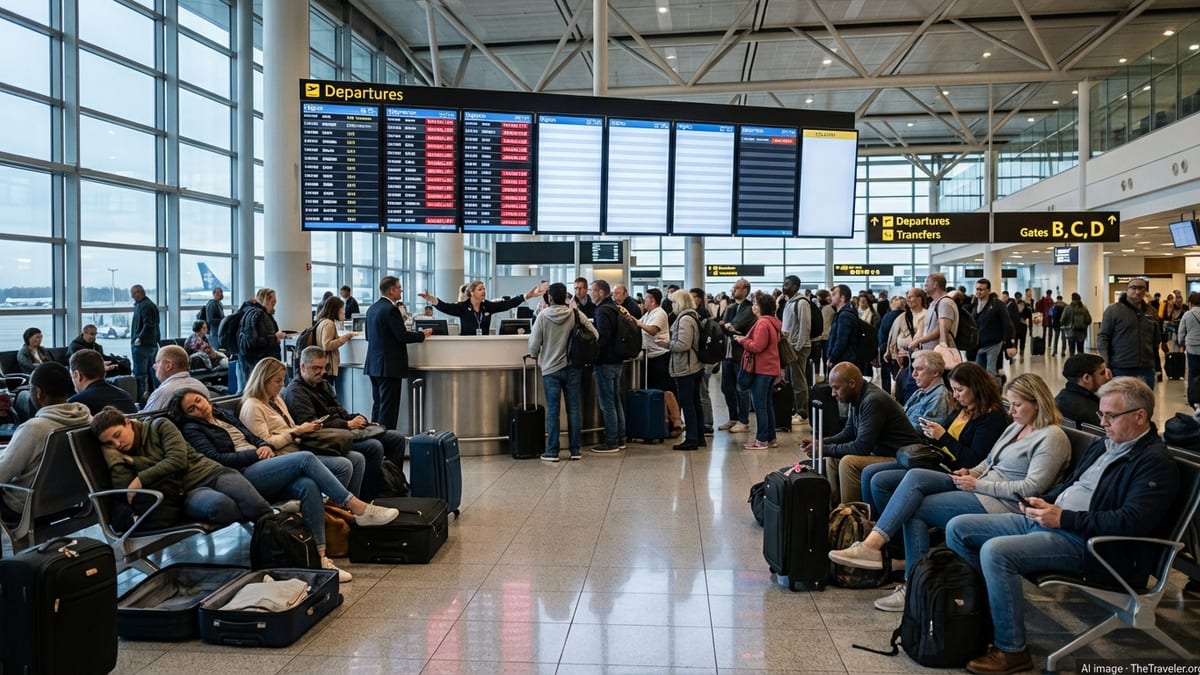
Regional security tensions ripple through Gulf aviation
Since early October 2026, a series of missile and drone attacks on Saudi airports and energy sites has triggered rolling flight cancellations across the Middle East, affecting hubs from Riyadh and Dammam to Dubai. Publicly available timelines of the attacks indicate that strikes on Riyadh’s King Khalid International Airport on October 6 and 7, followed by further incidents later in the month, forced hundreds of flights to be grounded or diverted as airlines reassessed the safety of Saudi airspace.
Open-source reporting on regional air defence activity suggests that Saudi intercept operations are continuing on an almost daily basis, targeting projectiles launched from Houthi-controlled areas of Yemen. Despite many of these threats being intercepted before impact, the risk of debris and the prospect of further strikes have led airlines and insurers to treat the entire corridor between the Red Sea and the Gulf as a higher-risk operating environment.
Dubai International Airport, the world’s busiest hub for international passengers, remains open with most local and regional services operating. However, carriers that rely on routing through or near Saudi airspace have made substantial adjustments to schedules, with knock-on effects for travellers using Dubai as a connection point between Europe, Asia and Africa.
Travel advisories issued since mid-October by Western governments and specialist security firms continue to flag an elevated risk of sudden airspace restrictions across parts of Saudi Arabia, the United Arab Emirates and neighbouring states. These notices recommend that travellers prepare for schedule changes at short notice and monitor airline communications closely in the days before departure.
Major international airlines push cancellations into November and beyond
European and Asian carriers have been among the first to formalise extended suspensions on routes into Saudi Arabia and Dubai. Factbox-style summaries compiled by global news agencies in mid and late October show that the Air France–KLM group has halted flights to Riyadh and Dammam at least until November 7, while its services to Dubai are suspended through October 31 as the group evaluates the security outlook on key overflight corridors.
Coverage of Asian network decisions indicates that Cathay Pacific has postponed the resumption of its Hong Kong to Dubai and Hong Kong to Riyadh routes until at least January 31, 2027. Singapore Airlines, which had already scaled back its Dubai operations earlier in the year, has extended its suspension of Dubai flights until December 1, 2026, with plans reported to resume the route in early December using Airbus A350 aircraft if conditions allow.
In the United States, filings and public statements reviewed in airline industry reports show that Delta Air Lines has delayed the launch of its planned Atlanta to Riyadh service until March 2027. The move reflects ongoing caution about committing long-haul capacity into Saudi Arabia while airspace conditions remain unpredictable, and leaves US travellers with fewer one-stop options into the kingdom via traditional transatlantic hubs.
Budget and regional airlines are also adjusting. Indian and Gulf-focused low-cost carriers have extended cancellations on certain Saudi routes into mid and late November, particularly to Jeddah, Riyadh and Dammam. Although some flights continue to operate, especially to Jeddah and Medina, the pattern of schedule updates indicates that airlines are keeping capacity tight and favouring routes perceived as lower risk.
Saudi routes remain volatile despite phased airport reopenings
After an initial shutdown following the early October attacks, Riyadh’s King Khalid International Airport began a phased reopening in late October, with terminals one and two resuming limited operations. However, regional travel media report that many international airlines have kept their Saudi suspensions in place despite the reopening, citing ongoing security concerns and the possibility of further attacks.
King Fahd International Airport in Dammam and King Abdulaziz International Airport in Jeddah have also seen fluctuating levels of disruption. A strike on Dammam’s airport on October 21, which public reports say killed two people and injured several others, prompted fresh waves of cancellations and diversions across multiple carriers serving the Eastern Province.
Timetables published by Gulf and European airlines show that some services between Dubai and Jeddah are scheduled to resume around October 30, while links to Riyadh and Dammam remain suspended into the second week of November. National carriers based in Saudi Arabia are continuing to operate a core network of domestic and regional flights, but their schedules remain subject to change at short notice as air defence activity and repair work affect runway and terminal availability.
Houthi military statements carried by regional media have explicitly warned foreign airlines against using Saudi airports and airspace except for flights to the holy cities of Makkah and Medina. Although some carriers continue to serve Jeddah and Medina to support religious travel, patterns in current schedules suggest that many are avoiding non-essential exposure to other Saudi gateways until the threat picture stabilises.
Dubai hub weathers disruption but faces reduced connectivity
Dubai’s role as a mega-hub means it is deeply affected by any shift in regional airspace risk, even when its own runways remain open. Earlier security incidents in 2026, including a drone strike on fuel infrastructure near the city, led to short-lived suspensions of some services and prompted airlines to route flights more cautiously around sensitive areas.
By late October, Dubai-based carriers such as Emirates and flydubai were continuing to operate the majority of their global networks, but with selected suspensions on routes to Saudi destinations. Flight status notices compiled by regional business outlets list repeated cancellations on Dubai to Riyadh and Dubai to Dammam rotations across several days, while Dubai to Jeddah schedules show a planned restart around the end of October with a reduced number of frequencies.
For connecting passengers, the most immediate impact is on itineraries that combine Dubai with onward segments into Saudi Arabia or other parts of the Arabian Peninsula. Traveller reports and airline advisories highlight cases where passengers have been rerouted via alternative Gulf hubs or rebooked onto later dates, sometimes with hotel accommodation offered in Dubai during extended layovers.
Long-haul links into Dubai from Europe and Asia are also seeing scattered disruption where airlines have opted to suspend their own Dubai services completely. In those markets, passengers are being encouraged through public notices to consider alternative routings via Abu Dhabi, Doha or Istanbul, or to use codeshare services operated by Gulf carriers that continue to serve Dubai directly.
What travellers can do if their flight is affected
Consumer-rights organisations and travel-compensation platforms tracking the situation state that most cancellations tied to the current security crisis fall under “extraordinary circumstances,” meaning that cash compensation guarantees under regimes such as EU air passenger rules often do not apply. However, airlines are generally required to offer a choice of refund or rebooking when flights are cancelled, and many are providing meals, hotel stays and ground transport during extended disruptions.
Public guidance from major carriers in the region indicates that flexible rebooking policies remain in place for tickets to and from affected Middle Eastern destinations. These policies typically allow one free change of travel date or destination within a defined period, sometimes extending to other airports in the Gulf or the Indian subcontinent, provided seats are available in the same fare class.
Security advisories recommend that travellers transiting Dubai or flying into Saudi Arabia build additional time into complex itineraries, avoid tight self-made connections with separate tickets, and keep contact details up to date within airline booking systems so that schedule changes and gate moves can be communicated quickly. Checking flight status through official airline channels on the day of travel is being emphasised as essential rather than optional.
Analysts following Gulf aviation say the outlook for November will depend heavily on whether attack frequency decreases and whether insurance and regulatory assessments of Saudi airspace risk are revised. Until that happens, airlines appear likely to maintain a cautious stance on flights serving Saudi gateways and some Dubai-linked routes, leaving travellers to navigate a patchwork of schedules and last-minute changes across one of the world’s busiest aviation corridors.