


More news on this day
Gulf hubs such as Dubai and Abu Dhabi are still grappling with a patchwork of route suspensions and diversions as airlines cautiously navigate the continuing US–Iran conflict and periodic airspace closures across the Middle East.
Get the latest news straight to your inbox!
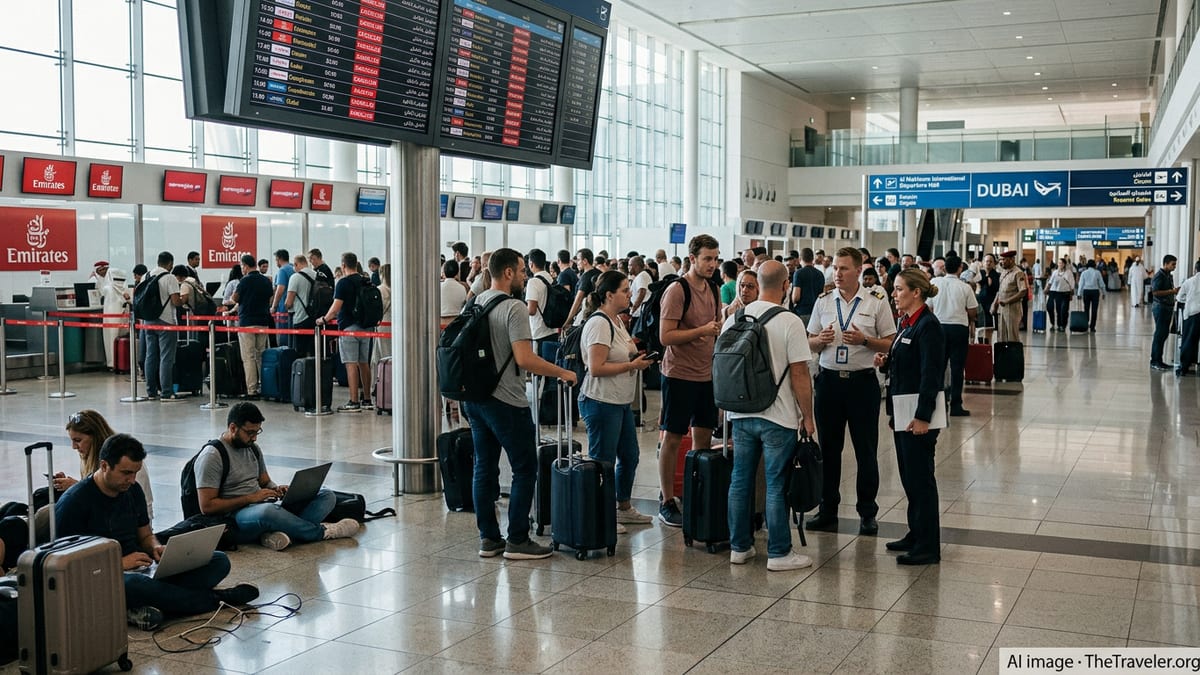
Key Gulf hubs operate with curtailed networks
Publicly available flight data and scheduling analyses indicate that Dubai International Airport, normally one of the world’s busiest transit hubs, is operating at significantly reduced capacity on corridors closest to Iranian and Iraqi airspace. While core links to major European and Asian cities have resumed on modified routings, services to destinations that require overflying Iran remain limited or paused, and frequencies on some trunk routes have been cut to accommodate longer flying times and constrained airspace.
Industry briefings on the 2026 Iran conflict describe extensive closures of Iranian airspace and restrictions in parts of Iraq and the Gulf, prompting widespread cancellations in late February and March before a gradual, partial restart through the spring and summer. Several Middle Eastern airports that collectively handle a substantial share of global connecting traffic have faced intermittent shutdowns or infrastructure damage, complicating efforts to restore full operations.
Reports from aviation forums and traveler accounts suggest that, although day‑to‑day operations in Dubai now appear more stable than during the initial shock, last‑minute cancellations and re‑timings still occur when military activity spikes or new airspace notices are issued. Passengers transferring via Gulf hubs continue to be advised to monitor their bookings closely and allow extra time for connections.
Regional and foreign carriers extend targeted suspensions
According to published coverage of the conflict, a wide range of airlines initially halted services to Iran and neighboring states, including both regional carriers based in the Gulf and foreign airlines from Europe and Asia. Many of those suspensions have been partially lifted, but several operators are keeping direct flights to Iranian cities off their schedules and are avoiding routings that would cross high‑risk sectors of airspace.
Analyses from airline and industry bodies highlight that carriers such as Emirates, Etihad and Qatar Airways sharply curtailed operations at the height of the crisis before progressively rebuilding networks with detours that route around Iran and parts of Iraq. At the same time, non‑Middle Eastern airlines, including major European and South Asian brands, removed some Middle East services from their summer 2026 timetables or postponed planned resumptions, citing safety considerations and higher operating costs.
Scheduling data compiled by aviation organizations show that capacity between certain Asia–Europe city pairs that typically rely on Gulf stopovers has not fully recovered, even as demand for long‑haul travel remains resilient. Some airlines outside the region have increased nonstop alternatives or shifted traffic to more northerly or southerly paths, effectively re‑routing global flows away from traditional Middle East corridors.
Longer flight times and higher costs for travelers
Economic assessments of the 2026 Iran war describe the flight restrictions as a supply‑side shock for global aviation, with airlines forced onto longer paths that avoid closed or contested skies. Detours via the Caucasus, Central Asia or southern routes over Egypt and Saudi Arabia add distance and fuel burn, compressing aircraft and crew availability and leaving less slack in schedules to absorb further disruption.
For passengers, the result is a mix of extended journey times and elevated fares on many long‑haul routes that would normally use the shortest great‑circle tracks across Iran and the Gulf. Travelers who once favored Dubai or Doha for one‑stop links between Europe, Asia and Australasia are encountering fewer daily frequencies, tighter seat availability and, in some cases, higher prices as airlines seek to offset increased operating costs.
Research and industry commentary also point to a wider rebalancing of traffic. Some demand has shifted toward carriers based outside the conflict zone, while certain regional routes have seen reduced frequencies or temporary substitution by other transport modes where feasible. Analysts suggest that even if a more durable ceasefire holds, airlines may take time to rebuild confidence in previously busy air corridors and could retain some of the longer routings as a risk‑management measure.
Persistent uncertainty despite signs of stabilization
Security assessments and government travel alerts issued in early August emphasize that the regional situation remains fluid, with the possibility of renewed airspace closures or localized attacks on aviation infrastructure. Notices shared with travelers highlight that some airlines in the Middle East have delayed a return to pre‑war schedules and that sporadic cancellations or suspensions may occur with limited warning.
Reports from passenger communities suggest that operations through Dubai, Abu Dhabi and Doha have become more predictable compared with the first weeks of the conflict, but pockets of disruption continue, particularly for flights linking to or over Iran, parts of Iraq and Kuwait. Periodic congestion in remaining open corridors can lead to holding patterns, diversions and missed connections, adding to travel time even when flights depart as planned.
Aviation experts quoted in recent analysis argue that the wartime experience is likely to shape route‑planning decisions across the industry for years, reinforcing a trend toward diversified routings and greater scrutiny of geopolitical risk. For travelers dependent on Gulf hubs, the coming months are expected to bring a gradual normalization of key links, but with the clear understanding that the network is still operating under the shadow of the US–Iran confrontation.