


More news on this day
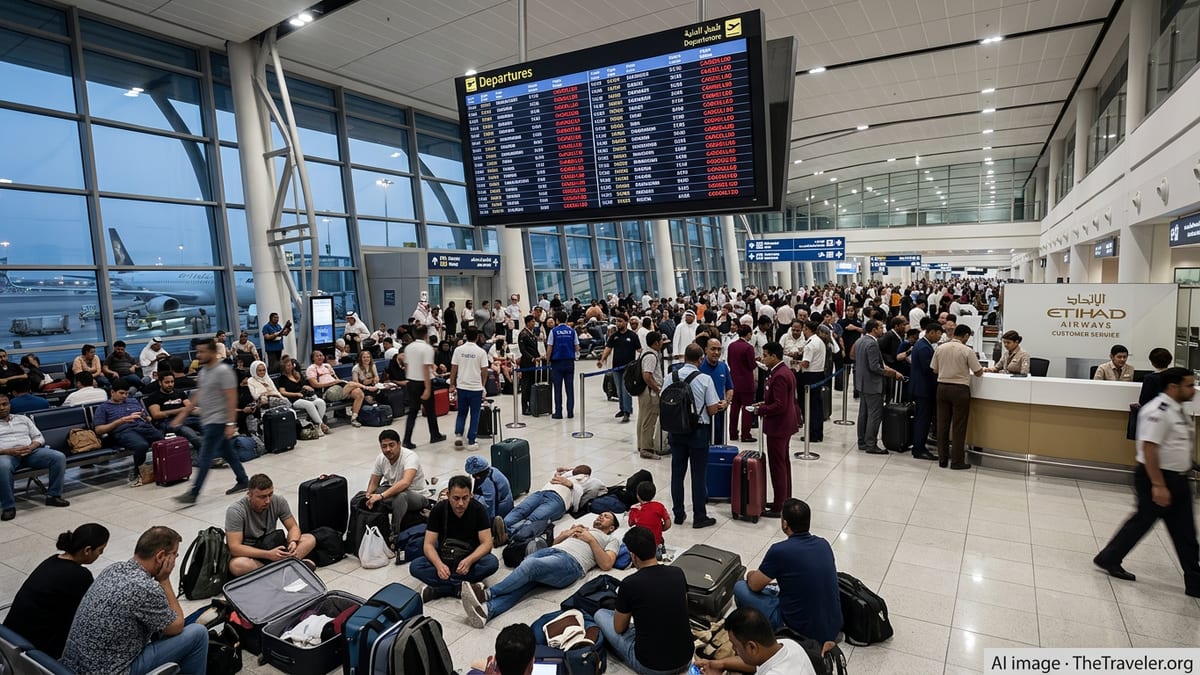
Air travel across the Gulf is facing renewed disruption as ongoing attacks on Kuwait, Bahrain and Jordan lead airlines to cancel and reroute flights through Dubai and other key Middle East hubs.
Get the latest news straight to your inbox!
Regional attacks spill into aviation networks
Publicly available information indicates that a fresh wave of Iranian missile and drone strikes targeting Kuwait, Bahrain and Jordan over recent days has once again pushed the region’s aviation system into crisis. Airports and airspace in the northern Gulf have been subject to temporary closures and heightened security measures, forcing carriers to trim schedules and alter routings at short notice.
Reports from regional media describe interceptions over Bahrain and Jordan and strikes on infrastructure in Kuwait, coming amid intensified exchanges between Iran and United States forces. The renewed hostilities follow several months in which key hubs such as Kuwait International Airport and Bahrain International Airport had been gradually restoring operations after earlier rounds of conflict-related disruption.
Analysts tracking the 2026 Iran conflict note that repeated attacks on states hosting foreign military assets, including Kuwait and Bahrain, have led to periodic airspace shutdowns and damage to aviation facilities. These interruptions, even when short in duration, have a rapid knock-on effect across the network of routes that connect through Dubai, Abu Dhabi and Doha.
With major Gulf carriers heavily reliant on smooth transit operations, each new security episode is translating directly into delays, diversions and cancellations for passengers moving between Europe, Asia, Africa and North America via Middle Eastern hubs.
Dubai routes to Kuwait and Bahrain see rolling cancellations
Dubai International Airport remains operational, but the latest tensions are clearly visible in schedules on routes linking the city with Kuwait and Bahrain. Coverage in Gulf-based outlets shows that Emirates has cancelled multiple daily flights between Dubai and both Kuwait City and Manama, while partner and low-cost carriers such as flydubai have also removed selected services from timetables.
One widely cited update states that several Emirates flights on the Dubai to Bahrain route are cancelled through at least the coming days, reflecting repeated problems with navigation systems and air traffic services in Bahraini airspace. Separate advisories indicate that a cluster of Dubai to Kuwait flights, including services operating under the EK800-series flight numbers, have been cut from schedules on July 21 and surrounding dates.
Operational bulletins from Abu Dhabi show a similar pattern. Etihad Airways reports that its Abu Dhabi to Kuwait route, including flights EY653 and EY654, will remain suspended until at least July 24 due to what the airline describes as operational reasons linked to the regional situation. Passengers on these services are being offered rebooking and refund options, according to airline statements.
Although core trunk routes in and out of Dubai to long-haul destinations remain mostly intact, the thinning of short-haul Gulf services is reducing connectivity and increasing the risk of missed onward connections for travellers using Dubai as a transfer hub.
Jordan and wider Middle East impacted as airspace tightens
Jordan is also experiencing continued turbulence in its aviation sector. Reports from Amman describe interceptions of incoming projectiles in recent days, which have led to temporary adjustments in flight paths and, in some cases, outright cancellations on services to and from Queen Alia International Airport.
Regional travel coverage indicates that some flights from Gulf hubs to Jordan remain suspended or subject to last-minute changes as airlines assess security notices and airspace availability. Earlier this year, a series of Iranian strikes across multiple Arab countries prompted the closure of wide swathes of regional airspace, leaving thousands of passengers stranded and forcing large-scale diversions. The current round of attacks has not yet produced disruptions on that scale, but industry observers warn that conditions remain volatile.
Reports tracking the broader economic impact of the 2026 Iran conflict highlight that aviation is among the most exposed sectors. When Bahrain, Kuwait and Jordan tighten restrictions simultaneously, airlines lose flexibility on contingency routings, and bottlenecks quickly appear at still-open hubs such as Dubai and Riyadh.
Industry briefings also point out that air defense actions themselves can constrain capacity, as military requirements take precedence and civil traffic is held or rerouted to avoid interception zones.
Airlines extend waivers as governments update travel advice
In response to the renewed instability, carriers across the region are extending flexible booking policies. Gulf-based news reports state that major airlines including Emirates, Etihad, Air Arabia and flydubai have issued or prolonged travel waivers for passengers booked to Kuwait, Bahrain and in some cases Jordan, allowing itinerary changes or refunds without additional fees when flights are cancelled or significantly delayed.
These measures echo policies first rolled out in March, when airspace closures following earlier strikes on Dubai, Abu Dhabi and Kuwait resulted in thousands of cancellations. While the current disruption is more targeted, airlines appear keen to keep options open for customers uneasy about travelling through affected corridors.
At the same time, several Western governments have updated travel advisories for parts of the Middle East. Recent notices from the United States, United Kingdom and Canada, described in regional media, urge travellers to exercise increased caution, to monitor security updates and to be prepared for sudden flight cancellations or temporary airport closures. The advisories specifically mention Kuwait, Bahrain and Jordan among the destinations where schedules may change at short notice.
Travel risk consultancies are reinforcing similar messages, advising corporate clients to maintain close contact with airlines, to avoid tight connections through Gulf hubs, and to ensure that staff itineraries can be rapidly adjusted if new restrictions are announced.
What passengers flying via Dubai should do now
For travellers with upcoming trips involving Dubai and nearby Gulf states, publicly available guidance from airlines and travel authorities points to a few consistent priorities. Passengers are being urged to check their flight status frequently, especially within 24 hours of departure, and to use official airline apps or customer service channels rather than relying on third-party booking sites for the latest information.
Those holding tickets to or from Kuwait, Bahrain or Jordan are advised to review waiver options as soon as alerts are issued, since rebooking inventories on alternative flights can tighten quickly. Travel experts note that routing via more southerly hubs within the region, or through Europe or Asia instead of the Gulf, may reduce exposure to sudden airspace closures in the northern Gulf.
Airports in the United Arab Emirates remain busy but functional, and reports from Dubai International suggest that ground operations are coping with the additional strain for now. However, aviation analysts caution that the situation is highly dynamic. Any further escalation in attacks on critical infrastructure in Kuwait, Bahrain or Jordan, or new threats toward Emirati airports, could trigger broader restrictions and more extensive cancellations on short notice.
As the conflict-driven cycle of attacks and reprisals continues, travellers connecting through Dubai and other Middle Eastern hubs face an environment where flexibility and up-to-date information are becoming as essential as passports and boarding passes.