


More news on this day
A 29-year-old pregnant woman was medically evacuated from a cruise ship off the coast of Miami after developing complications that required urgent treatment ashore, according to multiple news and maritime reports.
Get the latest news straight to your inbox!
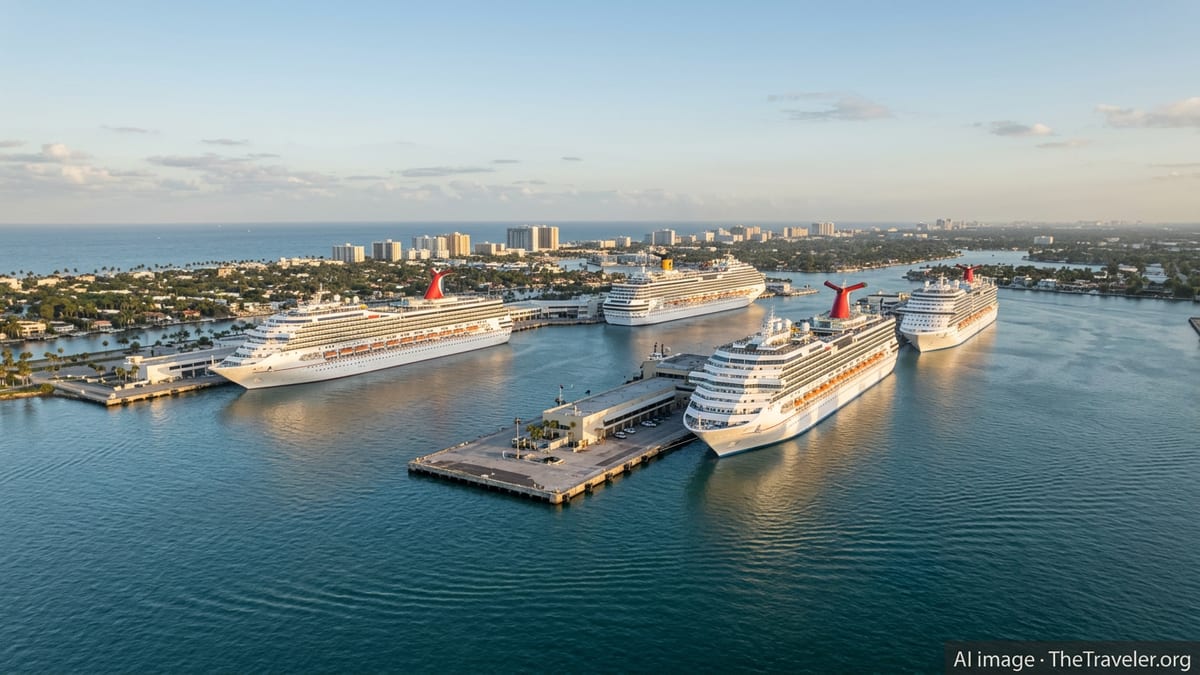
Emergency Off the South Florida Coast
Reports indicate the incident occurred as the vessel was sailing near the approaches to the Port of Miami, one of the busiest cruise hubs in the world. The ship, which had departed on a leisure itinerary in the Caribbean region, requested urgent assistance when the passenger’s condition worsened and onboard medical staff determined she needed higher-level care than could be provided at sea.
Publicly available information describes a rapid response in which the cruise line coordinated with local emergency services off the South Florida coast. The ship adjusted course to position closer to shore while arrangements were made for a medical evacuation, a standard procedure when a patient’s condition is considered time sensitive.
Initial coverage in international outlets notes that the woman, who is reported to be 29 and in an advanced stage of pregnancy, began experiencing complications that raised concerns for both her health and that of the unborn child. Details about the exact nature of the complications have not been disclosed, in line with common practice around patient privacy.
The ship’s diversion and the arrival of emergency craft were visible from nearby waters and tracked in real time by publicly accessible marine-traffic services, drawing attention from cruise watchers and local observers accustomed to seeing medical incidents occasionally alter ship itineraries near Miami.
How the Medical Evacuation Unfolded
Accounts of the operation describe a carefully choreographed transfer in which the cruise ship reduced speed and held position off the coast while a specialized rescue vessel approached. In similar situations around Miami, local fire-rescue boats or Coast Guard assets are commonly used, depending on the distance from shore and the condition of the patient.
The pregnant passenger was reportedly stabilized in the ship’s medical center before being moved for transfer. Cruise-ship infirmaries are typically equipped to handle many routine and some emergency situations, but complex obstetric care often requires full hospital facilities. Once alongside, responders completed the handover and transported the woman toward a shoreside medical facility in the Miami area.
Published coverage indicates that the transfer occurred relatively quickly after the alarm was raised, minimizing the time between the onset of complications and arrival under hospital-level care. While the cruise’s schedule was disrupted, operations on board continued for other passengers after the evacuation, reflecting standard protocols intended to balance individual medical emergencies with overall voyage safety.
As of the latest reports, no public update has been released about the patient’s condition or the outcome of the pregnancy, and her identity has not been disclosed. Such information is generally treated as private, with only broad details shared through media and official summaries of the incident.
Medical Risks and Cruise Travel During Pregnancy
The episode highlights broader questions around cruise travel during pregnancy, particularly on itineraries that may take passengers far from advanced medical facilities. Health guidance from national and international agencies generally advises pregnant travelers to consult healthcare providers before booking any sea voyage and to review gestational-age limits established by cruise companies.
Many major cruise lines restrict travel for passengers who will enter the later stages of pregnancy during a sailing, reflecting the increased risk of preterm labor and other complications. Medical guidelines for cruise operations similarly recommend that women beyond a specific week of gestation not sail, as emergency evacuation can be challenging if complications arise when a ship is many hours from shore.
Travel-health specialists often note that while modern cruise ships carry qualified medical personnel and essential equipment, they function more like urgent-care or small emergency facilities than full-service hospitals. Advanced imaging, neonatal intensive care and specialist obstetric services are typically unavailable at sea, which can make timely evacuation critical when complications develop suddenly.
The incident off Miami underscores the importance for pregnant travelers of confirming not only cruise-line policies but also personal medical coverage, including whether insurance extends to pregnancy-related emergencies and medical evacuation. Such planning is particularly relevant on longer itineraries or routes that spend extended periods far from large coastal cities.
Growing Focus on At-Sea Emergency Preparedness
Medical evacuations from cruise ships in U.S. waters are not rare, especially along heavily trafficked corridors off Florida where vessels are within range of advanced emergency services. Public records and open reporting show that passengers have been airlifted or transferred by boat for conditions ranging from cardiac events and strokes to serious injuries and obstetric complications.
In response to the growth of the cruise industry, professional associations and maritime regulators have placed increasing emphasis on clear procedures for handling onboard emergencies. Guidance documents outline standards for staffing, equipment, record-keeping and coordination with shore-based responders, including protocols for rapidly assessing when a patient must be evacuated.
Recent high-profile evacuations involving cruise ships in other regions have also contributed to public awareness of the logistical challenges involved in reaching a vessel at sea. Depending on weather, distance and the availability of specialized aircraft or vessels, a medical evacuation can range from a relatively routine transfer near port to a complex, hours-long operation in open ocean.
The situation off Miami appears to have benefited from the ship’s proximity to one of the world’s key cruise gateways, where emergency infrastructure and experience with maritime incidents are well developed. The pregnant passenger’s case nonetheless illustrates how quickly a leisure voyage can turn into a medical emergency requiring coordinated action across sea and shore.
What This Means for Future Cruise Passengers
For travelers, the evacuation serves as a reminder that cruise vacations, while generally safe, take place in environments where access to comprehensive medical care can be limited by distance and conditions at sea. Prospective passengers with existing health concerns, including pregnant individuals, are frequently encouraged by travel-medicine guidance to seek personalized advice before boarding.
Experts in travel health and maritime medicine often recommend that passengers share full medical histories with their own clinicians, verify any pregnancy-related restrictions with the cruise line and consider supplemental coverage that includes emergency evacuation and care at ports of call. Understanding how a ship handles serious health incidents can help travelers make informed decisions about when and how to sail.
For the cruise industry, each high-visibility medical evacuation reinforces the importance of transparent policies, well-trained medical personnel and reliable communication links with coastal rescue services. As ships grow larger and carry more passengers, the systems that enable rapid response to life-threatening complications are likely to remain a central focus of safety planning.
While many details of the case off Miami remain private, publicly available information portrays a swift and coordinated effort to bring a vulnerable passenger to advanced care. For pregnant travelers and their families, it is a vivid illustration of both the possibilities and the limits of medical support at sea, and a prompt to weigh those factors carefully when planning a voyage.