


More news on this day
Air travel across Dubai and the wider Middle East remains unsettled in mid-August 2026, as ongoing regional tensions, airspace closures and energy market volatility continue to reverberate through airline schedules and passenger plans.
Get the latest news straight to your inbox!
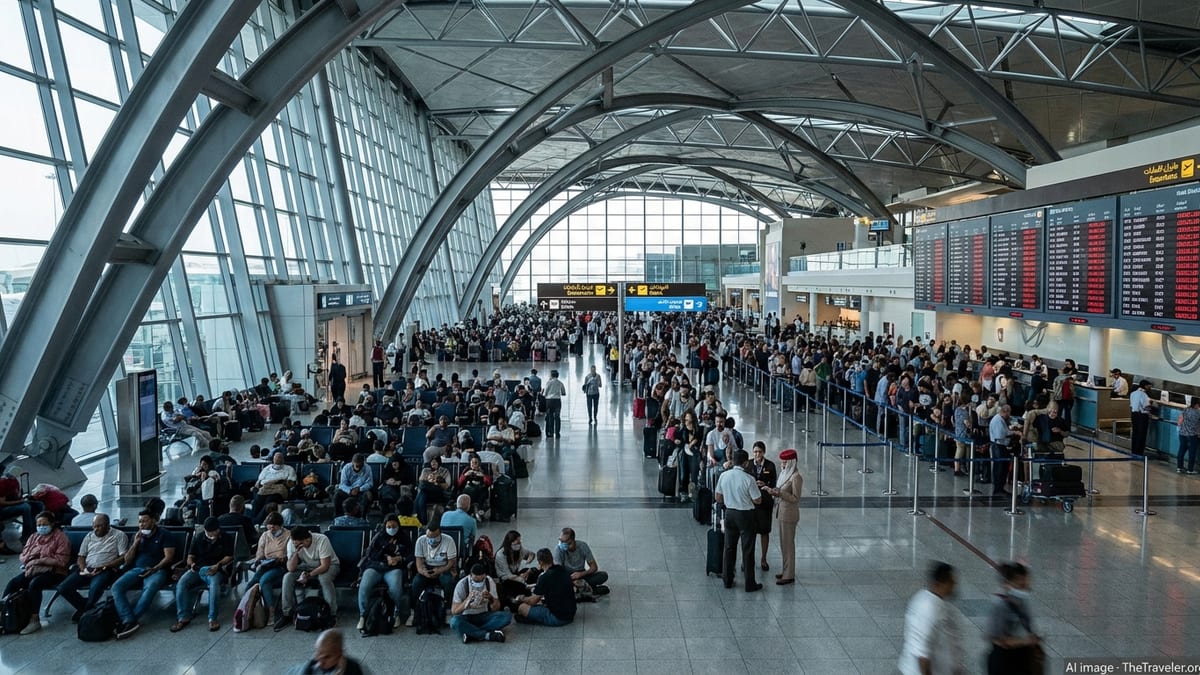
Regional conflict keeps pressure on Gulf aviation hubs
Publicly available data and industry analyses indicate that the conflict involving Iran, Israel, the United States and regional actors has reshaped key air corridors across the Gulf and Levant since early 2026. Closures and restrictions across segments of Iranian, Iraqi and Gulf airspace have forced airlines to cancel services outright or divert flights onto longer routings.
Economic assessments from aviation bodies show that capacity to and from the Middle East has been cut back for the current summer schedule compared with plans drawn up earlier in the year. A portion of flights originally scheduled for May 2026 were cancelled in advance, and a measurable share of planned capacity for the June to August peak has been removed as carriers reassess demand, costs and risk exposure.
While major Gulf hubs such as Dubai and Abu Dhabi remain operational, reports from airline operations updates and cargo logistics bulletins describe a more constrained network. Fewer routings are available through previously crowded corridors, increasing congestion on remaining tracks and limiting airlines’ flexibility when weather or military activity forces tactical reroutes.
Analysts note that the Middle East had become an essential bridge between Europe, Asia and Africa over the past decade. The present instability is testing that role, with some long-haul traffic shifting toward nonstop flights that bypass the region, even as leading Gulf carriers try to maintain their global connectivity model.
Dubai schedules reshaped by suspensions and detours
Dubai International Airport, one of the world’s busiest hubs, has remained open, but the pattern of services in and out of the city has changed noticeably since the spring. Based on published airline notices and widely shared schedule summaries, at least a dozen European and Asian carriers continue to suspend or limit services to Dubai into late summer and early autumn.
Carriers from Europe and North America have adopted varied approaches. Some have maintained daily services with altered routings that skirt restricted airspace, adding flight time and fuel burn. Others have paused Dubai operations through August or September, citing the regional security environment and the knock-on effect of higher fuel prices. Low-cost operators that relied heavily on high aircraft utilization have proven particularly sensitive to prolonged detours and turnaround delays.
At the same time, some airlines serving secondary markets have begun cautiously restoring flights to Dubai, public schedules show, often with new routings via Pakistan or other states outside the most affected air corridors. These resumptions remain partial, and frequencies are generally below pre-crisis levels, underscoring the uncertainty that still hangs over the winter 2026 to 2027 season.
Emirates and flydubai, the city’s home carriers, continue to operate large networks but have been forced to adapt as well. Flight-tracking data and passenger reports point to patchwork delays, longer flight times on routes that previously crossed Iranian or Iraqi airspace more directly, and occasional holding patterns on approach during busy periods when traffic surges along the remaining open corridors.
Knock-on effects for passengers: delays, diversions and longer journeys
Travelers transiting Dubai and other Gulf hubs this summer are encountering a more unpredictable operating environment than in recent years. Reports shared across traveler forums and airline customer channels describe stretches of relatively smooth operations punctuated by days of widespread delays, particularly when regional military activity intensifies or temporary airspace restrictions are imposed with short notice.
Passengers have noted extended taxi times, in-flight reroutes that add an hour or more to long-haul sectors, and, in some cases, last-minute diversions to alternative airports when routes into the Gulf have become temporarily constrained. A pattern of rolling schedule changes, including retimed departures and downgauged aircraft, has also emerged as airlines attempt to match supply to fluctuating demand and limited airspace capacity.
Consumer-rights guidance circulating in several markets emphasizes the importance of checking airline apps and booking platforms frequently in the days before travel. Where cancellations occur for commercial reasons rather than direct security closures, some passengers may be eligible for refunds or rebooking options under local and regional regulations. Where disruptions are attributed to extraordinary geopolitical circumstances, compensation frameworks can be more limited, leaving travelers reliant on flexible tickets or travel insurance.
Despite the turbulence, recent anecdotal accounts from travelers passing through Dubai indicate that airport operations inside the terminals remain largely orderly, with security postures visible but routine and retail and hospitality services functioning close to normal. For many passengers, the main impact is felt in the form of uncertainty before departure and longer times in the air rather than on-the-ground disruption at the hub itself.
Airlines balance safety, costs and competitive pressures
The prolonged disruption is sharpening difficult choices for airlines across and beyond the Middle East. Industry commentary notes that carriers are weighing the safety imperative of avoiding conflict zones against commercial pressures to keep key routes in service and protect market share. Longer routings increase fuel consumption, crew duty times and maintenance cycles, eroding margins on price-sensitive routes.
Some international airlines have responded by prioritizing nonstop point-to-point services that bypass the Gulf, particularly on trunk routes between Europe and major Asian or Australasian cities. While these ultra-long-haul flights carry their own cost and operational challenges, the current environment has made them more attractive for operators seeking to minimize exposure to volatile air corridors and potential overflight restrictions.
For Gulf-based carriers whose business models depend on high-volume transfer traffic through Dubai, Doha and Abu Dhabi, the situation is more complex. Public financial commentary highlights mounting revenue pressure as transfer flows through the region soften and high-yield corporate and premium leisure travelers explore alternatives. At the same time, these airlines retain advantages in fleet size, network depth and brand recognition that could enable them to rebound quickly if tensions ease and airspace gradually reopens.
Industry observers suggest that the current phase may accelerate strategic shifts that were already under way, including fleet renewal toward more fuel-efficient widebodies, diversification of hubs and deeper partnerships with carriers in Europe and Asia to spread risk.
Outlook: continued volatility as winter season approaches
Looking ahead to the northern winter schedule that begins in late October, publicly available scheduling data and expert commentary point to a period of continued volatility. While some airlines have tentatively loaded Dubai services back into their systems for late 2026, many have retained flexibility to reduce or reroute capacity if the security environment deteriorates again.
Aviation analysts caution that the interplay between geopolitical developments, energy markets and passenger sentiment will shape the pace of recovery. A sustained de-escalation and clearer, more predictable airspace arrangements could support a gradual restoration of services to Dubai and neighboring hubs over the coming months. Conversely, further strikes or maritime incidents affecting Gulf energy infrastructure could drive another round of schedule cuts and fuel surcharges.
For now, regional aviation remains in an adaptive holding pattern. Dubai continues to function as a major global gateway, but its role is being tested as airlines, regulators and travelers navigate a landscape where political risk, operational complexity and shifting demand patterns are tightly intertwined.