


Dublin Airport can feel confusing at first glance, especially if you are trying to work out whether you need Terminal 1 or Terminal 2 for your flight. The good news is that the airport is compact, the terminals are linked by a short covered walkway, and once you understand which airlines use which buildings, it becomes straightforward. This guide explains the practical differences between Terminal 1 and Terminal 2, from airlines and check-in to security, arrivals, U.S. preclearance, and getting between terminals, using real examples to help you plan your journey.
Get the latest updates straight to your inbox!
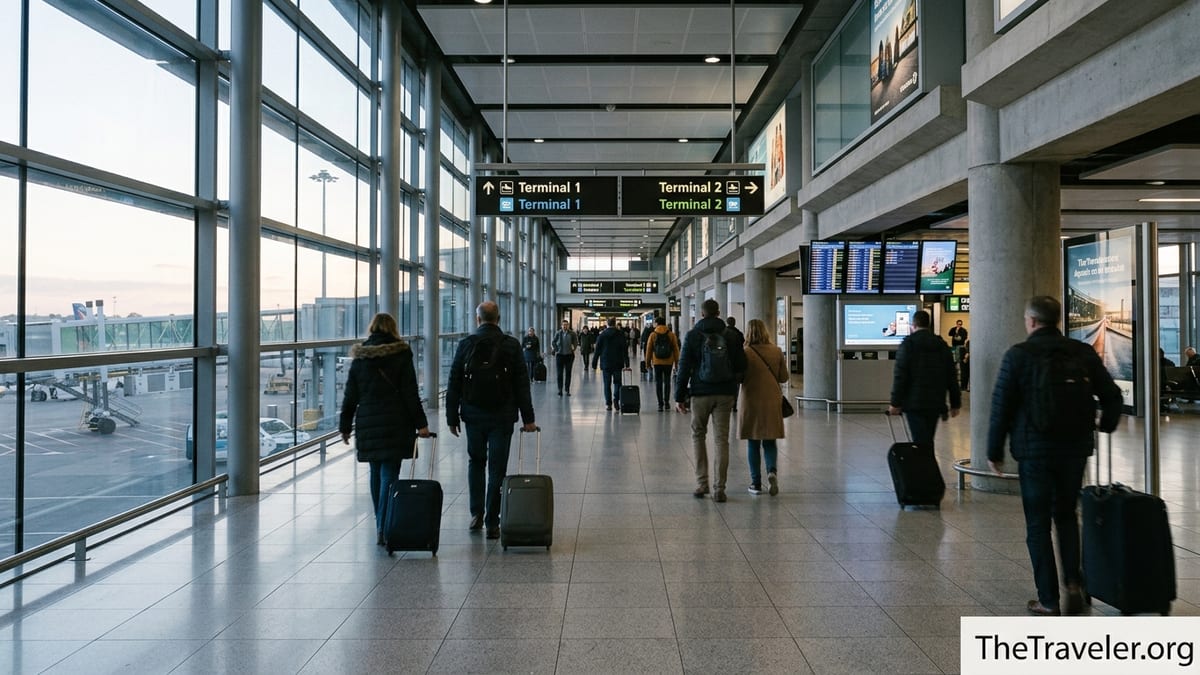
Terminal 1 vs Terminal 2: The Big Picture
Dublin Airport has two main passenger terminals sitting side by side on the same campus. Terminal 1 is the older, busier workhorse that handles most European and short-haul flights, including low-cost airlines. Terminal 2 is the newer building, opened in 2010, designed primarily around Aer Lingus operations and transatlantic traffic, including the dedicated U.S. preclearance facility for passengers flying directly to the United States.
In practical terms, many travelers flying within Europe on budget carriers like Ryanair or legacy airlines such as Lufthansa, British Airways or SAS typically use Terminal 1. By contrast, if you are departing with Aer Lingus to most destinations, or flying transatlantic with carriers such as American Airlines, Delta or United, you can usually expect to use Terminal 2, which was built with modern long-haul handling and transfer flows in mind.
The two terminals are fully connected both landside and airside. Landside, a covered pedestrian link makes it about a 5 to 10 minute walk between them at an average pace. Airside, the departure concourses link together behind security, so once you are through screening you can walk between T1 and T2 without exiting to the public area, which matters if you like to choose from a wider range of food or shopping before your flight.
Because airlines can occasionally adjust which terminal they use, it is always wise to confirm your terminal on your booking confirmation or the Dublin Airport live departures board on the day of travel. However, the basic pattern of short-haul and low-cost in Terminal 1 and Aer Lingus plus U.S.-bound carriers in Terminal 2 has remained consistent and is a reliable starting point for planning.
Which Airlines Use Terminal 1 and Terminal 2
Airlines are the single clearest way to decide which Dublin terminal you need. At the time of writing, the airport’s own passenger guide lists Aer Lingus, American Airlines, Delta Air Lines, Emirates, El Al and United Airlines among the main carriers operating out of Terminal 2. In everyday terms, this means that a morning Aer Lingus flight to London Heathrow, a midday Delta flight to New York JFK or an evening Emirates service to Dubai will all check in and depart from Terminal 2.
Terminal 1, meanwhile, is home base for Ryanair, which handles a large share of Dublin’s short-haul traffic to cities such as London Stansted, Madrid, Brussels Charleroi and many regional airports across Europe. It also hosts a variety of European network carriers and regional airlines. For example, passengers flying with Lufthansa to Frankfurt, Air France to Paris, KLM to Amsterdam or British Airways to London Heathrow typically use Terminal 1, as do many seasonal flights to sun destinations in Spain, Portugal or Greece operated by leisure airlines.
There are some nuances. Aer Lingus is focused in Terminal 2 but occasionally operates or has operated certain services out of Terminal 1 during works or busy peaks, and charter or additional seasonal flights can be assigned flexibly depending on capacity. If you are on a codeshare ticket, such as a United codeshare operated by Aer Lingus, always check which airline is “operating carrier” and look up the terminal accordingly. Your confirmation email and the airport’s flight information on the day are the best final checks.
For connecting passengers, the airline and terminal combination will shape your transit. A traveler flying Manchester to Dublin on Ryanair (Terminal 1) and then onward from Dublin to Boston on Aer Lingus (Terminal 2) will either transfer airside if on a through-ticket or, on separate tickets, may need to exit, walk to the other terminal landside, and re-clear security. The key is to look at which carriers operate in which buildings and build extra time if you must change terminals.
Check-in, Bag Drop and Security in Each Terminal
Both terminals at Dublin Airport offer a mix of traditional staffed check-in desks, self-service kiosks and automated bag drops, but the atmosphere is slightly different in each. Terminal 1’s check-in hall is older and busier, with a long, linear layout divided into numbered check-in areas. During a typical Friday morning, you might see multiple Ryanair lines snaking through the hall for flights leaving to several European cities within the same hour, along with queues for other European carriers.
Terminal 2’s check-in area feels more spacious and modern. Aer Lingus occupies the majority of counters, including self-service kiosks where passengers can print boarding passes and bag tags for popular routes such as Dublin to New York, Chicago or Malaga before dropping luggage at designated belt positions. Long-haul carriers like Emirates, American, Delta, El Al and United also have clearly signed banks of desks here, often opening three hours or more before departure to handle heavy baggage loads and documentation checks.
Security screening is available in both terminals, and you are generally encouraged to use the security lane in the terminal your airline operates from. Each terminal has a standard security checkpoint plus an optional Fast Track lane for a fee or for eligible premium passengers. The airport indicates that Fast Track pricing starts from under ten euros, and it can be particularly valuable in the early morning peak from roughly 5:00 to 9:00, when lines for city-break departures can be long in Terminal 1 and U.S.-bound early flights push demand in Terminal 2.
Realistically, passengers should allow at least two hours before short-haul flights and three hours or more before long-haul and U.S.-bound departures, as advised by both the airport and most airlines. On a busy summer Saturday, this might mean arriving at Terminal 1 at 4:30 for a 6:30 Ryanair flight to Spain, or at Terminal 2 at 7:30 for a 10:30 Aer Lingus departure to Boston, leaving enough time to check in, drop bags, clear security and, for U.S. flights, complete preclearance formalities.
Departures Experience: Food, Shopping and Boarding
Once past security, the departures experience in both terminals offers the usual mix of duty-free shops, cafes, fast food outlets and sit-down restaurants. Terminal 1 has a slightly more utilitarian feel, with a busy central retail area leading into several piers that serve Schengen and non-Schengen European flights. You can expect familiar international chains for coffee and snacks, Irish pubs serving full breakfasts, and last-minute essentials such as pharmacies and convenience shops. This is where many weekend trip passengers grab a quick breakfast before a low-cost flight to a European city.
Terminal 2’s airside level feels brighter and a little more relaxed, with a modern shopping street that includes brand-name fashion, electronics and Irish gifts. Because Terminal 2 handles many long-haul and Aer Lingus services, there is a stronger emphasis on sit-down dining and larger seating areas, which can be important if you are waiting for a delayed transatlantic flight. Families heading to Orlando on an Aer Lingus service, for example, often have time for a proper meal in one of the restaurants before heading to their gate.
Gate arrangements differ slightly. In Terminal 1, many flights for airlines like Ryanair use walk-out or bus gates, especially during peak periods, meaning you may need to walk down stairs and out to a stand parked on the apron. Boarding calls can be brisk, so having your boarding pass and passport ready when you reach the gate is important. In Terminal 2, most Aer Lingus and long-haul services use jet bridges, particularly for widebody aircraft heading to the United States or to destinations like Dubai. This makes boarding smoother for passengers with children, reduced mobility or heavy cabin baggage.
Because the two terminals are linked airside, some passengers intentionally clear security in one terminal and then walk to the other for a particular shop or restaurant they prefer, as long as their airline allows it and they leave plenty of time to reach their gate. For instance, someone departing from a Terminal 1 gate may pass through Terminal 1 security then walk along the airside walkway to Terminal 2 to meet a colleague before returning towards their own pier for boarding.
Arrivals, Baggage and onward Transport
On arrival into Dublin, passengers are channeled separately through Terminal 1 or Terminal 2 depending on where their aircraft is parked. For most European flights, you will disembark into your terminal’s arrivals corridor, pass through immigration if arriving from outside the European Union, and then collect baggage from carousels inside that terminal’s reclaim hall. For example, a Ryanair flight from Rome will usually deposit passengers into Terminal 1 arrivals hall, while an Aer Lingus flight from Amsterdam or a United flight from Newark will funnel arrivals into Terminal 2.
Once you exit the customs channel, both terminals open out onto the public arrivals area with cafes, currency exchange desks and meeting points. If someone is collecting you, they just need to check whether your flight is scheduled into Terminal 1 or Terminal 2 and wait in the appropriate arrivals hall. Realistically, if they make a mistake, the walk between arrivals in T1 and T2 is short, typically under 10 minutes along the signposted ground-level walkway outside.
From either arrivals hall, you can access the same set of onward transport options. The main bus stops for Dublin city services and intercity coaches sit just outside the terminal zone, usually a 3 to 5 minute walk from Terminal 1 and slightly more from Terminal 2. Taxis queue opposite the terminals in a dedicated rank. Long-stay car park shuttle buses serve both terminals, and signage on arrival makes clear which stand you need. For instance, a traveler landing in Terminal 2 and heading straight to Galway by coach can walk outside, follow the signs for buses and coaches, and reach the intercity coach stands that serve both terminals.
If you are connecting in Dublin on separate tickets, say arriving to Terminal 1 from a regional Irish airport and continuing from Terminal 2 on a long-haul Aer Lingus service, you will normally clear arrivals and customs in Terminal 1, then follow the signs outside and walk to the Terminal 2 departures level to check in again. Allowing at least three hours between such unprotected connections is sensible, as you will need to reclaim baggage, walk between buildings and pass through security once more.
U.S. Preclearance: Why Terminal 2 Matters
One of Dublin Airport’s biggest advantages is the U.S. Customs and Border Protection preclearance facility located in Terminal 2. This allows passengers flying directly to the United States to complete U.S. immigration, customs and agriculture checks before departure, so that on arrival in the United States they are treated like domestic arrivals and can often walk straight to baggage claim or their connecting flight without long federal inspection lines.
The preclearance area is situated beyond the main security and departures zone in Terminal 2, and is used by airlines such as Aer Lingus, American Airlines, Delta and United for their direct flights to U.S. cities including New York, Boston, Chicago, Washington and others. The airport recommends that passengers for the United States arrive at least three hours before departure, and even more during peak morning waves, typically between 5:00 and midday, when multiple U.S. flights can be processed in succession.
A typical journey might work like this: a traveler heading from Dublin to Atlanta with Delta checks in at the Terminal 2 Delta desks, clears standard Dublin Airport security, spends some time in the main departures area, then proceeds to the dedicated U.S. preclearance zone when boarding is called or according to the time indicated on screens. There they present passports, answer standard U.S. entry questions, and may have their luggage or carry-on items inspected. After preclearance, they wait in a segregated gate area until boarding time, then walk directly onto their flight.
Because preclearance can add an extra queue to your departure process, it is important to build in time. For example, if several flights to different U.S. cities are departing within a short window, preclearance lines may temporarily lengthen, even if standard security was quick. Many experienced travelers aim to be through security at least 90 minutes before departure so they can move into the preclearance zone without rushing. U.S.-bound passengers connecting from a Terminal 1 arrival on separate tickets should also factor in the time needed to walk to Terminal 2 and clear both security and preclearance before their onward flight.
Moving Between Terminal 1 and Terminal 2
Physically, Dublin Airport’s terminals are close together and well signposted. Landside, a covered walkway runs between the main doors of Terminal 1 and Terminal 2. The walk takes roughly 5 to 10 minutes at a normal pace, depending on your exact starting point, how much luggage you are carrying, and crowd levels. For instance, someone stepping out of Terminal 1 arrivals and heading to meet a friend checking in at Terminal 2 departures will typically be at the other building’s front door in well under 10 minutes.
Airside, once you have passed through security in either terminal, the departures areas link together. In practice, this means that a passenger whose flight departs from a Terminal 1 gate can go through Terminal 1 security, then walk along the airside corridor into Terminal 2 to visit a particular restaurant or shop and later walk back towards their own gate. Many frequent flyers mention doing this to take advantage of their preferred cafes or quieter seating areas.
The integrated design also benefits some connecting passengers traveling on through-tickets, especially within the same airline alliance or carrier group. For example, if you are flying with Aer Lingus on both legs of a connecting journey, your arrival and departure may both use Terminal 2, minimizing walking. However, someone on a ticket that combines a Terminal 1 airline such as a European carrier with a Terminal 2 transatlantic flight might disembark at a Terminal 1 gate and walk airside to a Terminal 2 gate without having to pass through immigration or exit the secure area, depending on their itinerary and how the connection is set up.
For travelers with reduced mobility or families with small children, assistance services can help you move between terminals. Pre-booking mobility assistance with your airline ensures that staff and wheelchairs or electric buggies are ready to guide you along the route, both landside and airside. If you are short on time or unsure of the best path, asking an airport staff member in either terminal for “the quickest way to Terminal 1” or “to Terminal 2” will usually result in clear directions and, if needed, direct support.
The Takeaway
Understanding Dublin Airport’s two terminals makes travel much smoother. Terminal 1 is the older, busier hub for most short-haul and low-cost flights, especially Ryanair and a range of European carriers. Terminal 2 is the newer home of Aer Lingus, long-haul services and all direct flights to the United States that use the dedicated U.S. preclearance facility. Both terminals offer modern check-in, bag drop and security areas, and both feed into a shared airside environment with a wide range of shops, restaurants and services.
For most travelers, the essentials are simple. Check which terminal your airline uses before you set out. Arrive at least two hours early for European flights and at least three hours for long-haul or U.S.-bound services, allowing extra time in peak morning periods. If you do find yourself at the wrong terminal, remember that the buildings are only a short walk apart and clearly linked both before and after security, so you can usually recover with little stress.
By knowing how Terminal 1 and Terminal 2 differ, where your airline fits, and how to navigate between them, you can treat Dublin Airport as an efficient gateway rather than a source of confusion. A few minutes of planning before you travel translate into a more relaxed airport experience, whether you are hopping to London for a day trip or starting a long-haul journey to North America or beyond.
FAQ
Q1. How do I know if I need Terminal 1 or Terminal 2 at Dublin Airport?
Your airline is the main clue. Most low-cost and many European carriers use Terminal 1, while Aer Lingus and major U.S.-bound airlines such as American, Delta, Emirates, El Al and United generally use Terminal 2. Always confirm on your booking and on the airport’s live flight information on your day of travel.
Q2. How long does it take to walk between Terminal 1 and Terminal 2?
The walk between the two terminals is usually about 5 to 10 minutes along a covered, signposted walkway. Even with luggage, most travelers find it manageable, but you should allow extra time during busy periods or if you have mobility needs.
Q3. Can I go through security in one terminal and depart from the other?
In many cases, once you are through security in either terminal you can walk airside between Terminal 1 and Terminal 2 and then proceed to your gate, as the departure areas are linked. However, your airline may recommend a specific security checkpoint, and you must always leave enough time to reach your assigned gate.
Q4. Which terminal handles flights to the United States from Dublin?
Direct flights to the United States that use U.S. preclearance depart from Terminal 2. Airlines such as Aer Lingus, American, Delta and United check in and board their U.S.-bound flights there so that passengers can complete immigration and customs before departure.
Q5. How early should I arrive at Dublin Airport for my flight?
For most European and short-haul flights, arriving around two hours before departure is usually recommended. For long-haul and U.S.-bound flights that include preclearance, plan for at least three hours, and consider even more during the busy early morning period from about 5:00 to midday.
Q6. Is there much difference in food and shopping between Terminal 1 and Terminal 2?
Both terminals offer duty-free shopping, cafes, fast food and sit-down restaurants. Terminal 1 feels more functional and crowded, serving many short-haul passengers, while Terminal 2 has a more modern, spacious feel with a stronger focus on long-haul travelers. Because the areas are linked airside, you can often choose where to eat or shop, then walk back to your own gate.
Q7. What happens if I arrive at the wrong terminal by mistake?
If you find yourself at the wrong terminal, you can simply walk along the covered walkway to the correct one, usually in under 10 minutes. As long as you have allowed enough time before your flight, this is an inconvenience rather than a serious problem. If you are unsure, ask any airport staff member to point you in the right direction.
Q8. Do both terminals have Fast Track security?
Yes, both Terminal 1 and Terminal 2 offer Fast Track security lanes. These can be purchased for a fee or may be included with certain premium tickets and memberships. Fast Track can be especially helpful at peak times, such as early morning, when standard security queues are longer.
Q9. How does U.S. preclearance in Terminal 2 work in practice?
For a direct U.S. flight from Terminal 2, you check in and clear regular Dublin security first, then proceed to the dedicated U.S. preclearance zone. There you complete immigration, customs and any additional screening with U.S. officers. After preclearance, you wait in a segregated gate area and board as normal. On arrival in the United States, you usually enter through a domestic arrivals area.
Q10. Can I transfer between Terminal 1 and Terminal 2 on a tight connection?
It is possible but depends on your itinerary. If you are on a single ticket with protected connection, your airline will have allowed for transfer times and may assist you. On separate tickets, you may need to clear arrivals, walk between terminals and recheck in, which can take significant time. In that case, booking several hours between flights is safer than relying on a very tight connection.