


Dublin Airport is the main international gateway to Ireland and, for many travelers, their very first experience of the country. If you are flying into or out of Dublin for the first time, the airport can feel busy and a little confusing, especially at peak times and during holiday seasons. This guide walks you through each step of the journey, from understanding the terminals to getting into the city, with concrete, real-world examples to help you feel prepared and confident.
Get the latest updates straight to your inbox!
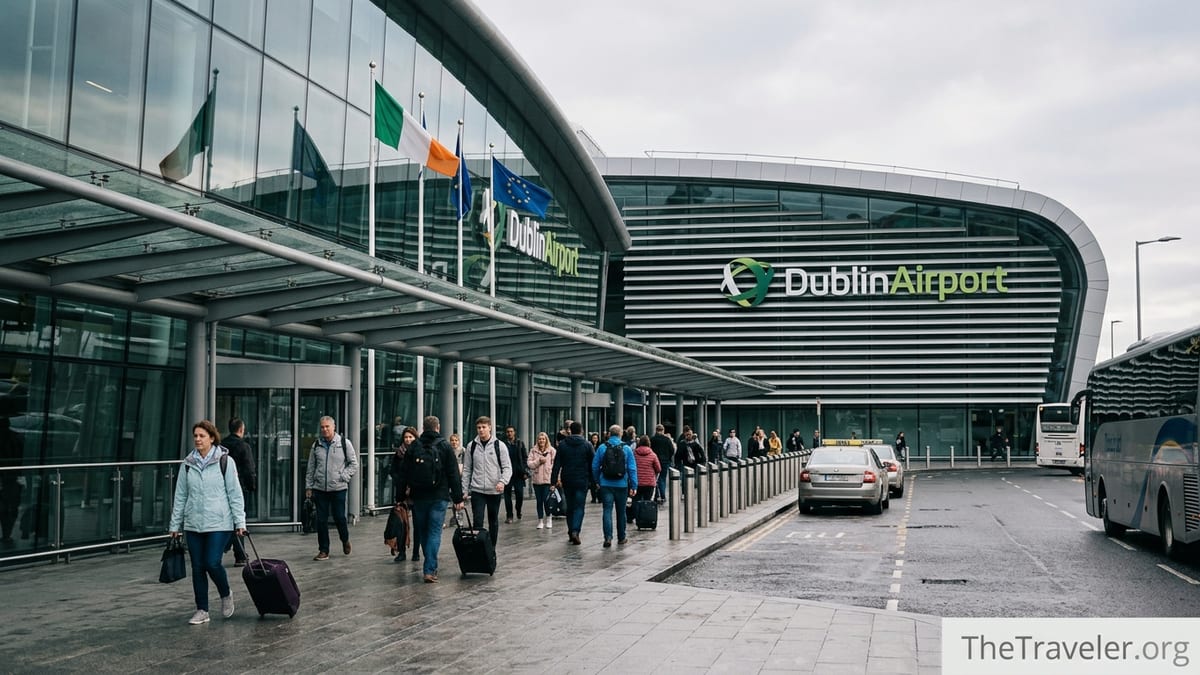
Understanding Dublin Airport and Its Terminals
Dublin Airport sits roughly 10 kilometers north of Dublin city center and is Ireland’s busiest airport, handling tens of millions of passengers a year. It has two passenger terminals, Terminal 1 and Terminal 2, which sit a short walk apart and share most ground transport and parking areas. You do not need a shuttle to move between them; walking at a normal pace, it typically takes 5 to 10 minutes to get from one to the other under a covered walkway.
Terminal 1 is the older of the two and serves a large mix of airlines, including many Ryanair flights on European routes and carriers such as Lufthansa, Emirates and some low-cost operators. Terminal 2 is newer and is the home base for Aer Lingus, especially its transatlantic services, as well as some long-haul partner airlines. If you are flying to or from the United States on Aer Lingus, you will almost certainly be using Terminal 2, which also houses US Preclearance facilities.
For first-time visitors, one of the most useful tools is Dublin Airport’s interactive map, which lets you zoom in on check in areas, security, gates, restaurants, shops and services in both terminals. In practice, this helps you answer questions like “How far is my gate from security?” or “Is there a pharmacy near my arrival gate?” before you even get there. It is especially handy if you are connecting between a Ryanair flight in Terminal 1 and an Aer Lingus flight in Terminal 2 and want to see the walking route.
Facilities are fairly consistent across both terminals. You will find free Wi-Fi, water refill stations, ATMs, currency exchange desks, multi-faith prayer rooms and a selection of cafes, pubs and fast-food outlets on both the landside and airside areas. For example, it is common for travelers arriving early for a morning departure in Terminal 1 to grab a coffee and breakfast roll at one of the concourse cafes before heading through security.
Arrivals: What To Expect When You Land
On arrival, the process is straightforward: you disembark, follow the “Arrivals” and “Baggage reclaim” signs, pass through passport control if you are coming from outside the Common Travel Area, collect your bag and emerge into the public arrivals hall. In Terminal 1, passport control sits just before baggage reclaim and typically funnels passengers into two main luggage halls, which open directly to an arrivals area lined with meeting points, cafes and the exits to taxis and buses. Terminal 2 has a more modern arrivals hall, but the basic steps are similar.
Queue times at immigration can vary. For example, a mid-morning arrival from a major European city in winter might see you through in 10 to 20 minutes, while a bank holiday evening arrival from London or a cluster of US flights landing together can mean 30 minutes or longer. Dublin Airport and the border authorities regularly publish guidance encouraging passengers to have passports ready, forms completed where necessary and to use eGates when eligible to speed things up.
Once you enter the public arrivals area, you will find essential services close by. Both terminals offer ATMs and currency exchange counters, where you can withdraw euros using a debit card or exchange a modest amount of cash. Prices and exchange rates vary, so many visitors choose to use ATMs inside the terminal for a small withdrawal and rely on cards elsewhere in the city, where contactless payments are widely accepted. You will also see clearly signed information desks where staff can explain bus routes into the city or help you identify where your pre-booked driver is waiting.
If you are meeting someone or being collected by car, know that there are designated meeting points in each terminal, often close to a prominent coffee bar or in a central open space. For example, families frequently agree to meet “by the big arrivals board” in Terminal 1 or just outside the sliding doors near the taxi rank. Short-term parking areas are signposted from the terminal exits, but they can be relatively expensive per hour, so many local drivers time their arrival based on flight tracking apps.
Departures: Check-In, Security and Boarding
For departures, Dublin Airport advises arriving at least 2 hours before short-haul European flights and 3 hours before long-haul or transatlantic flights, especially in busy summer or holiday periods. In practical terms, that means if you are flying to Paris at 09:00, planning to be at the check-in area by 07:00 gives a reasonable buffer to drop your bag, clear security and grab a coffee. For a 10:30 flight to New York with Aer Lingus from Terminal 2, a 07:30 arrival at the airport is considered sensible.
Both terminals have large, clearly numbered check-in zones. Many airlines encourage online check-in and bag tag printing at self-service kiosks. For instance, on Ryanair flights out of Terminal 1 it is common to check in on the app in advance, then use a bag drop desk for any checked luggage. At Aer Lingus desks in Terminal 2, you will often see a bank of self-check-in machines that print tags, followed by staffed bag-drop belts. Overhead displays show flight numbers and airline logos so you can quickly match your flight with the right row.
Security screening in Dublin can be busy at peak times, but there are dedicated Fast Track security lanes in both Terminal 1 and Terminal 2 that can be pre-booked for an extra fee. Many travelers on a tight connection, or those with small children, opt to purchase Fast Track access to shorten queuing time. In practical terms, this can sometimes cut a 30-minute standard queue down to 10 minutes or less, though the benefit varies by time of day. After security you are funneled into the duty-free and main departures shopping area.
At the gate, boarding procedures are familiar: budget airlines such as Ryanair tend to board strictly by ticket group or zone and may check cabin bag sizes at the gate, while full-service carriers generally board in groups, starting with priority passengers and families. Gates in Terminal 1 and Terminal 2 are spread across several piers, so it is wise to check the walking time shown on the departure screens. It is not unusual, for example, for gates in the 100s or 200s to require a 10 to 15 minute walk from the central security area.
Ground Transport: Getting To and From Dublin Airport
Dublin Airport is not directly connected to the city by rail, so almost all passengers use buses, coaches, taxis or private transfers. For most first-time visitors staying in central Dublin, express coach services or public buses are the best value. For example, private coach companies operate frequent services from the airport to key city stops such as O’Connell Street, the quays along the River Liffey and main train stations. Typical fares are in the range of 8 to 10 euro one way for an adult, with discounts for return tickets and online booking.
Public bus routes also link the airport with the city and surrounding suburbs. A common option is a city bus that runs from the airport through north Dublin neighborhoods toward the city center, accepting Leap Cards and contactless payments. Although cheaper than the express coaches, these services are slower and involve more stops. A ride from the airport to central Dublin on a standard city bus might cost around half of a private coach fare but take 45 minutes or more depending on traffic.
Taxis are readily available outside both terminals at signed ranks, and all are metered. The fare to the city center varies with traffic and time of day, but many travelers report paying in the region of 30 to 40 euro for a journey to central hotels around St Stephen’s Green or Temple Bar during standard hours. For example, an evening rush-hour ride to a hotel near Trinity College might edge toward the upper end of that range, while a late-night Sunday trip could be somewhat cheaper. Official airport signage directs you to the correct taxi queue and sets out passenger rights and approximate fare guidelines.
For those traveling onward around Ireland, several long-distance coach operators run routes from Dublin Airport to cities such as Cork, Galway, Belfast and Limerick, with services timed around popular flight banks. A traveler landing from London at 16:00 could, for instance, catch a direct coach from the airport to Galway and arrive that evening without going into Dublin city at all. Car rental desks are located in both terminals, generally in the arrivals areas, with pick-up and drop-off points in dedicated car hire zones signposted from the terminal exits.
Parking, Hotels and Overnight Stays
If you are driving to Dublin Airport, booking parking in advance is strongly recommended, particularly in summer and around Christmas, when on-site car parks can sell out. The airport operates both short-term multi-storey car parks within walking distance of the terminals and long-term car parks connected by shuttle bus. Short-term parking is best for drop-offs, pick-ups or trips of up to a couple of days, while long-stay parking, although farther away, usually offers lower daily rates for week-long or longer holidays.
Real-world examples can help illustrate the trade-offs. A family leaving their car for a 10-day summer holiday might choose a long-term car park where they park, note their zone and catch a free shuttle bus to Terminal 1 or Terminal 2, a ride that typically takes 10 to 15 minutes depending on the lot. By contrast, a business traveler on a one-night trip to London may pay a higher daily rate to use a short-term multi-storey car park directly opposite the terminal so they can walk to check-in in under five minutes.
Several hotels cluster within or just outside the airport campus, providing “park, stay and fly” packages. Two of the closest properties are the Maldron Hotel Dublin Airport and the Radisson Blu Hotel Dublin Airport, both located within walking distance of the terminals and offering 24-hour shuttle services. The Maldron, for instance, is roughly a five-minute stroll from the terminal buildings and sells packages that include secure on-site parking for the duration of your trip combined with an overnight stay before or after your flight. The Radisson Blu sits within the wider airport complex and has live departure screens in the lobby so guests can track flights while they check out.
Just beyond the airport, a range of mid-range hotels and budget chains such as Premier Inn or Clayton operate in nearby areas like Swords and along the main approach roads. These often offer better room rates than the on-airport hotels, with shuttle buses or short taxi rides to the terminals. A traveler with an early morning flight might, for example, choose a Premier Inn a short drive away, park their rental car there, and take an early shuttle to check-in. When comparing, travelers typically weigh the convenience of walking distance and 24-hour shuttles against the savings available slightly farther out.
Lounges, Facilities and Services for a Smoother Journey
Dublin Airport has a mix of airline-operated and independent lounges across both terminals. In Terminal 1 and Terminal 2, airport-owned lounges are open to passengers flying with any airline for a fee or through lounge membership programs, subject to capacity. This means that even if you are on a low-cost carrier like Ryanair, you may be able to pay on the door or book online to access a quiet space with comfortable seating, complimentary snacks, soft drinks, and often wine or beer, along with Wi-Fi and charging points.
Airline-specific lounges are mainly found in Terminal 2, where carriers such as Aer Lingus host eligible business class passengers, status members or those who have purchased lounge access as an add-on. For a first-time traveler heading to the United States on Aer Lingus, upgrading to a ticket class that includes lounge access can make sense if they plan to work or rest for several hours before a long flight. These lounges tend to provide more substantial food offerings, dedicated workspaces and shower facilities.
Beyond lounges, both terminals offer a full range of passenger services. Free Wi-Fi is available airport-wide; many travelers report being able to stream music or make video calls from departure areas without difficulty. Drinking water refill stations are placed throughout the terminals, so carrying an empty bottle through security and filling it airside can save several euros compared with buying bottled water. Pharmacies, medical assistance points and multi-faith prayer rooms are clearly signposted, making it easier to sort last-minute prescriptions or find a quiet place to reflect before boarding.
The airport also invests in accessibility and special assistance services. Passengers with reduced mobility can pre-book assistance, which typically covers support from the check-in area through security and to the gate, or from the aircraft to arrivals and ground transport. For travelers on the autism spectrum or with sensory sensitivities, Dublin Airport has introduced sensory rooms in both terminals, which can be reserved in advance. Families using these rooms describe features such as adjustable lighting, soothing visual effects and comfortable seating that provide a calm break from the busy terminal environment.
First-Time Traveler Tips and Real-World Scenarios
For many first-time visitors to Ireland, the biggest concern is timing: “How early should I actually get there?” A practical rule is to consider both the airport’s general advice and your own travel style. For a 09:00 European flight on a weekday in July, imagine a traveler staying in a city center hotel. They book a coach for 06:30, arriving at the airport around 07:00. By 07:10 they are at the airline’s bag-drop desks, done by 07:25, through security by 07:50, and have time for breakfast before heading to the gate at 08:20. That timeline feels comfortable without being excessively early.
Another common question is what to do if you have a long layover. Suppose you land from New York into Terminal 2 at 06:00 and have a connecting flight to a regional Irish airport at 11:00. After clearing immigration and rechecking bags if necessary, you might choose to freshen up in a pay-in lounge, have a proper sit-down breakfast in one of the airside cafes, then walk the terminals using the interactive map to explore shops and services. Having your phone charged and boarding passes saved offline or printed will help you navigate any gate changes.
For arrivals, think realistically about jet lag and energy levels. A traveler landing after an overnight transatlantic flight might feel tempted to drive immediately to another part of Ireland, but many choose instead to book an airport hotel for a few hours of rest. Checking into a hotel like the Maldron or Radisson Blu for a day room, showering and napping before collecting a rental car in the afternoon can be a safer and more pleasant option than tackling unfamiliar roads while exhausted.
Finally, keep some basics in your hand luggage in case of delays or lost baggage: a change of clothes, essential medications, phone charger, and a printed copy of reservations for accommodation or car hire. Dublin Airport has shops selling toiletries, power adapters and basic clothing, but having your own essentials reduces stress. If a bag does go missing, airline baggage desks in both terminals can assist with reports and tracking, while many travelers also make use of their airline’s app to monitor updates.
FAQ
Q1. Which terminal will I use at Dublin Airport?
Aer Lingus and many long-haul flights operate from Terminal 2, while Ryanair and a wide mix of other airlines generally use Terminal 1. Always double-check your booking and boarding pass, as airline allocations can change.
Q2. How early should I arrive before my flight?
As a guideline, plan around 2 hours before short-haul European flights and 3 hours before long-haul or transatlantic departures. In very busy periods such as summer weekends or major holidays, adding an extra 30 minutes is sensible.
Q3. What is the easiest way to get from Dublin Airport to the city center?
For most visitors, an express coach or airport bus into the city provides the best balance of price and convenience. These services run frequently to key locations like O’Connell Street and major train stations, with journey times typically around 30 to 45 minutes depending on traffic.
Q4. How much does a taxi from Dublin Airport to central Dublin cost?
Taxi fares vary with time of day and traffic, but many travelers pay in the region of 30 to 40 euro for a metered journey to hotels near Temple Bar, Trinity College or St Stephen’s Green. Official taxi ranks are located just outside both terminals.
Q5. Are there hotels within walking distance of Dublin Airport?
Yes. The Maldron Hotel Dublin Airport and the Radisson Blu Hotel Dublin Airport are both located within the airport complex. They are accessible on foot in a few minutes and also run 24-hour shuttle services to and from the terminals.
Q6. Is there free Wi-Fi at Dublin Airport?
Free Wi-Fi is available throughout both Terminal 1 and Terminal 2. Most travelers find it adequate for checking email, using messaging apps and even streaming music or short videos while they wait for their flights.
Q7. Can I access a lounge if I am not flying business class?
Yes. Dublin Airport has airport-owned lounges in both terminals that accept pay-in guests and certain lounge membership cards, regardless of airline or class of travel. Availability can vary at peak times, so pre-booking is advisable if lounge access is a priority.
Q8. What should I do if I need special assistance at Dublin Airport?
Passengers with reduced mobility or other assistance needs should pre-book support through their airline before travel. On arrival, you will find designated meeting points where staff can accompany you through check-in, security and boarding, or from the aircraft to arrivals and ground transport.
Q9. Is it necessary to book airport parking in advance?
Advance booking is strongly recommended, especially for long-stay parking and during busy seasons. Pre-booking usually secures a better rate and guarantees a space, while turning up on the day carries a risk that some car parks may be full.
Q10. Are there facilities for families and children?
Yes. Both terminals have baby-changing facilities, family-friendly dining options and plenty of seating areas. Dublin Airport also offers sensory rooms in each terminal, which can be reserved in advance for children or adults who benefit from a calm, low-stimulation environment before flying.