


If you are planning your first trip to Croatia, the choice between Dubrovnik and Split can shape your whole itinerary. Both cities sit on the same glittering Adriatic coast, both have UNESCO‑listed historic centers, and both are launchpads for island hopping. Yet the experience on the ground feels very different. This guide compares Dubrovnik and Split in practical, real‑world terms so you can decide which city to visit first, or how to combine them into an easy first‑time Croatia route.
Get the latest updates straight to your inbox!
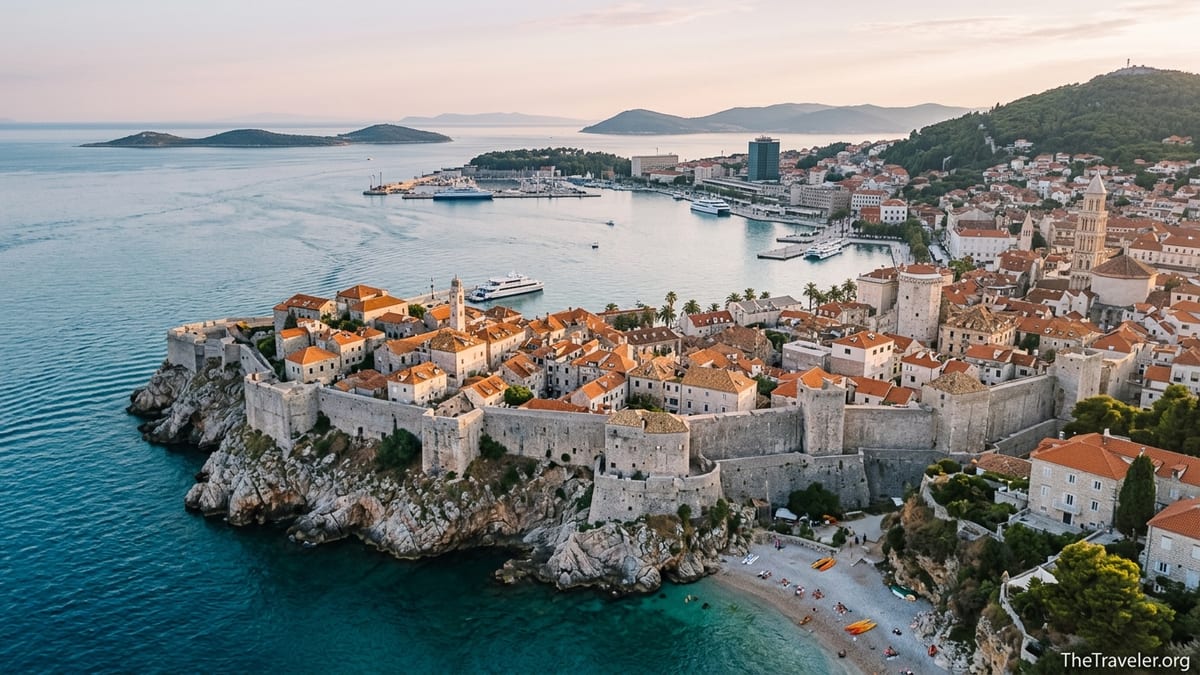
Old Town Atmosphere: Fortified Gem vs Lived‑In Palace
Dubrovnik’s walled Old Town is the showstopper many travelers dream about. Inside roughly 2 kilometers of stone walls, you walk polished limestone streets and the wide Stradun promenade, ducking into alleys filled with Baroque churches, tiny wine bars, and souvenir shops. It feels like stepping onto a grand historical film set, especially if you climb the city walls for views of red roofs cascading down to the sea. The flip side is that this small medieval core fills up quickly with cruise passengers and tour groups, especially from mid‑morning to late afternoon in June, July, and August.
Split’s historic center is larger and more lived‑in. Diocletian’s Palace, the 4th‑century Roman complex at its heart, is not a museum but a functioning neighborhood. Everyday life mingles with history: laundry hangs above 1,700‑year‑old stone arches, apartments and cafés are built into ancient walls, and locals cut across the palace courtyards on their way to work. Instead of a single grand view like Dubrovnik’s walls, Split offers dozens of smaller moments: live music in Peristyle Square after dark, espresso at a café on the Riva promenade, and narrow lanes where you can still slip away from the crowds.
For a “wow” factor in a compact package, Dubrovnik wins. For a more relaxed and authentic feeling of a city that locals still use every day, Split has the edge. Many travelers note that they feel they are visiting a monument in Dubrovnik but visiting a working city in Split.
If you enjoy museums and historical detail, both cities deliver, but in different ways. In Dubrovnik, focus on the city walls, the Rector’s Palace, and the cable car up Mount Srđ to understand how the town developed around its maritime power. In Split, a guided walk through Diocletian’s Palace helps you decode how Roman, medieval, and modern layers stack on top of each other, especially if you climb the bell tower of the Cathedral of Saint Domnius for views over the terracotta roofs and harbor.
Beaches and Swimming: Cliff Bars vs Urban Sands and Coves
Neither Dubrovnik nor Split is primarily a beach resort, but both offer easy ways to combine culture with a swim. Dubrovnik’s most accessible beach is Banje, just outside the city walls, where you can float with a postcard‑perfect view of the Old Town and Lokrum Island. Expect white pebbles rather than sand, lounge chairs for rent from about 15 to 25 euros in peak season, and a beach club atmosphere with music and cocktails. A short bus or Uber ride away, Lapad Bay offers a family‑friendly promenade with several smaller beaches, cafés, and ice‑cream stands, as well as shaded spots suitable for kids.
One of Dubrovnik’s classic experiences is swimming from rocky platforms beneath the city walls. Places like Šulić Beach or the rock terraces beside bars perched on the cliffs allow you to dive into deep, clear water with the fortresses towering above. You will not find long sandy stretches here, but you will find dramatic scenery and plenty of rental kayaks for paddling around the walls or out to Lokrum.
Split’s beach scene feels more varied and more local. Bačvice Beach, a 10 to 15 minute walk from Diocletian’s Palace, has a rare shallow sandy bottom where locals play the traditional ball game picigin in waist‑deep water. It is busy and can be noisy in summer, but it is the beach you choose if you want to combine a few hours of sunbathing with a late lunch back in the Old Town. For clearer water and more space, take a bus or taxi to Kašjuni or Bene Beach at the foot of Marjan Hill, where pine trees reach right down to the pebbles and beach bars serve coffee, cold beer, and simple grilled fish.
If your priority is clear water with dramatic city‑wall views and a few swims between sightseeing stops, Dubrovnik is hard to beat. If you want a choice of sandy shallows, pebbly coves, and a day that can easily run from morning beach time to sunset at a waterfront bar, Split’s more extensive coastline and nearby coves around Marjan Hill will likely suit you better.
Island Hopping and Day Trips: Where Each City Shines
Both Dubrovnik and Split are gateways to some of the Adriatic’s most famous islands, but the options and travel times differ. From Dubrovnik, the easiest island escape is Lokrum, a small green island just a 15 minute boat ride from the Old Town harbor, with departures about every half hour in high season and return tickets typically around 27 to 30 euros per adult. Lokrum has rocky swimming spots, botanical gardens, and shaded walking paths, making it perfect for a half‑day break from the crowds.
For a full day trip from Dubrovnik, many travelers head to the Elaphiti Islands such as Koločep, Lopud, and Šipan. Organized boat trips often combine all three, including lunch and swimming stops, and can cost somewhere in the region of 60 to 90 euros per person depending on the boat and inclusions. Independent travelers can also use regular ferries from the Gruž port to visit one island at a time. Other popular outings from Dubrovnik include wine tastings on the Pelješac Peninsula or a day in nearby Montenegro, though the latter involves border crossings and longer driving times.
Split, by contrast, is the main ferry hub of Dalmatia and the starting point for frequent catamarans to Hvar, Brač, Vis, Šolta, and Korčula. Fast catamarans to Hvar Town typically take about 1 hour and, in recent seasons, one‑way tickets have often been in the 20 to 30 euro range depending on the company and timing. Ferries to Brač bring you within reach of Zlatni Rat near Bol, one of Croatia’s best known beaches, with its changing horn of white pebbles pointing into turquoise water. Many travelers use Split as a base for several nights and then take different island day trips or move on to stay a few nights on one island.
Beyond the islands, Split also offers easy overland excursions. Krka National Park, with its boardwalks winding through waterfalls, can be visited on a bus or organized tour in roughly 1.5 hours each way. The Cetina River gorge near Omiš is a regional center for rafting, canyoning, and ziplining, reachable within about an hour’s drive. This combination of urban history plus quick access to both islands and inland nature makes Split one of the most flexible bases for a first‑time Croatia itinerary.
Nightlife, Dining, and Overall Vibe
In Dubrovnik, evenings begin with a stroll down the Stradun and drinks at a bar tucked into the city walls or overlooking the Old Town from above. Many visitors climb Mount Srđ by cable car for sunset and then descend for dinner at a konoba, where typical menus feature grilled fish, black risotto, and local white wines such as Pošip and Malvasija. After dinner, nightlife tends to cluster at a few clubs inside or just outside the walls and in the Lapad area. It can be lively in July and August but is more concentrated compared to Split, and the clientele skews toward short‑stay visitors rather than long‑term travelers or students.
Split maintains a more year‑round, local rhythm. On warm evenings the Riva seafront promenade fills with families, teenagers, and couples enjoying gelato or coffee. Bars spill out into the stone lanes of Diocletian’s Palace, and live music or DJs are common in summer at beach bars along Bačvice and Firule. In recent years, Split has also hosted large music events and festivals that reinforce its reputation as a party destination, especially among younger travelers, although you can still easily avoid that scene by staying in quieter residential neighborhoods.
When it comes to food, both cities offer similar Dalmatian staples, but price and atmosphere differ. In Dubrovnik’s Old Town, a simple main course like grilled calamari with a side of vegetables might easily cost 20 to 30 euros in 2026, and house wine by the glass often starts around 6 to 8 euros. In Split, equivalent meals in the palace area or just outside the center are often a bit cheaper, and you have more mid‑range options where locals also dine. Bakeries selling burek, fresh bread, and pastries, along with small neighborhood konobas offering daily lunch specials, make it easier to keep costs in check.
Overall, Dubrovnik feels more polished and curated, with many restaurants and bars geared explicitly toward visitors, especially cruise passengers and short‑stay guests. Split feels looser and more spontaneous, with a greater mix of visitors, local families, and students occupying the same spaces. If you enjoy people‑watching over a long coffee or a late night drink, Split’s dense cluster of bars inside and around the palace may feel more engaging.
Prices, Crowds, and Practicalities
Croatia uses the euro, and both Dubrovnik and Split have seen prices rise since 2023, particularly in peak summer. Dubrovnik, however, consistently ranks as the more expensive of the two. Staying inside the Old Town walls often means paying a premium for mid‑range or boutique rooms, while budget travelers typically base themselves in Lapad or near the Gruž harbor and use local buses. Popular attractions such as walking Dubrovnik’s city walls can reach ticket prices in the mid‑30 euro range per adult, which adds up quickly for families or longer stays.
Split generally offers better value in both accommodation and day‑to‑day expenses. You can still find apartments and guesthouses within a short walk of Diocletian’s Palace at prices that would be difficult to match in Dubrovnik, especially in shoulder months like May, June, September, and early October. Groceries and casual street food also tend to cost slightly less, and competition among island tour operators keeps day‑trip prices relatively reasonable, especially if you compare several agencies along the Riva or book directly at the harbor counters.
Crowding is another major difference. Dubrovnik’s Old Town is compact and heavily visited, with days in July and August when cruise ships and tours combine to create intense midday congestion. Practical strategies include walking the walls as soon as they open in the morning, booking restaurants in advance for dinner, and planning mid‑day escapes to Lokrum or the beaches. In Split, extremely busy days still happen in high season, especially near the ferry terminal when large numbers of travelers arrive and depart, but the city’s larger footprint and the ability to spread out along the Riva, Marjan Hill, and multiple beaches mean the pressure feels less concentrated.
Transport logistics can also influence your choice. Dubrovnik’s airport lies about 20 kilometers from the city, with shuttle buses and taxis taking 30 to 40 minutes. Split’s airport, also around 20 kilometers away, is linked by shuttle buses and taxis to the main bus and ferry terminal, which sits directly next to the Old Town. If you plan to rely on ferries for island‑hopping, flying into or out of Split often makes more sense, whereas Dubrovnik is ideal as either the dramatic beginning or end of a one‑way coastal itinerary.
Which City Works Better as a Base for First‑Time Routes
For many first‑time visitors planning 7 to 10 days in Croatia, the classic choice is whether to focus on one city and its surroundings or to link Dubrovnik and Split in a one‑way trip with islands in between. If you prefer to unpack once and settle in, Dubrovnik makes an excellent base for a week of exploring the southern Dalmatian coast. You could spend two or three full days enjoying the Old Town, city walls, and nearby beaches, add a Lokrum or Elaphiti Islands day, visit wineries on the Pelješac Peninsula, and perhaps take a long day trip into Montenegro for Kotor Bay if border rules and traffic conditions are favorable when you visit.
Split, on the other hand, excels as a hub for a more varied route. In a 7‑day itinerary, you could spend three nights in Split itself, exploring Diocletian’s Palace, climbing Marjan Hill for sunset, and swimming at Bačvice or Kašjuni. From there, you might add two or three nights on an island such as Hvar or Brač, reached by catamaran or car ferry, and then either return to Split to fly home or continue by catamaran down the coast toward Korčula and Dubrovnik if seasonal schedules allow. Travelers who like to mix city time, beaches, and a taste of island life without constant long transfers often find Split‑based itineraries more efficient.
A common first‑timer route runs south or north between the two cities, for example: Dubrovnik for 3 nights, ferry or catamaran via an island like Korčula or Hvar for 2 to 3 nights, then Split for 2 to 3 nights. This pattern allows you to experience Dubrovnik’s iconic views, one or two islands, and Split’s more relaxed urban buzz in a single trip. When comparing, remember that direct Dubrovnik–Split catamarans can sell out and may not run daily in shoulder seasons, so it is wise to check the latest schedules a few months before your trip and build some flexibility into your dates.
If you are traveling outside peak summer, say in May, late September, or early October, both cities quiet down noticeably. In those months, starting in Split can make sense because more ferry routes tend to operate there at the edges of the season, giving you options to adjust plans depending on weather, sea conditions, and what feels right once you arrive.
The Takeaway: Should You Visit Dubrovnik or Split First?
Choosing between Dubrovnik and Split comes down to your travel style and priorities rather than a simple better or worse verdict. If you want that instantly recognizable postcard view, do not mind paying a bit more, and like the idea of a compact historic center you can walk end to end in ten minutes, Dubrovnik is a powerful place to start your Croatia journey. Spend at least two full days inside the walls and nearby beaches, and then add a boat trip or two for balance.
If, however, you prefer a city that feels less like an open‑air museum and more like a lived‑in coastal hub, with ferries fanning out to islands every morning and locals strolling the seafront each evening, Split is an excellent first stop. It is especially good for travelers who want to assemble a flexible mix of history, beach time, island hopping, and inland adventures like Krka or the Cetina River without changing bases too often.
For many first‑time visitors with enough time, the smartest solution is not to choose at all. Start in one city and finish in the other, linking them with a night or two on an island such as Hvar, Brač, or Korčula. Fly into Split, explore the palace and nearby islands, ferry south along the coast, and end with two or three nights in Dubrovnik’s walled city before flying home. Or reverse the route, beginning with Dubrovnik’s drama and then unwinding in Split’s more laid‑back streets. Either way, you will have experienced two different faces of the same Adriatic coast, and you will be well placed to plan a return trip focused on islands or inland Croatia next time.
FAQ
Q1. Is Dubrovnik or Split better for a short 2 to 3 day city break?
For a short, focused stay, Dubrovnik usually makes more impact because everything is concentrated inside and around the walled Old Town. You can walk the walls, visit key sights, swim from nearby beaches, and take a short boat trip to Lokrum without spending time on longer transfers.
Q2. Which city is cheaper for accommodation and daily expenses?
Split is generally more budget‑friendly, with a wider range of apartments and guesthouses close to the center and slightly lower prices at mid‑range restaurants and bars. Dubrovnik’s Old Town and immediate surroundings tend to command higher rates, especially in July and August.
Q3. Where should I stay if I want easy island hopping?
Split is the stronger choice for island hopping because its ferry port serves frequent catamarans and car ferries to Hvar, Brač, Vis, Šolta, and Korčula. You can do multiple different island day trips or move on to overnight stays without long backtracking.
Q4. Which city has better beaches?
Neither city is a classic long‑sandy‑beach resort, but Split offers more variety and easier access to several different spots, from sandy Bačvice near the center to pebbly coves under Marjan Hill. Dubrovnik’s beaches win for dramatic views of the Old Town and cliffs rather than for size.
Q5. Is one city better for nightlife?
Split has a livelier, more varied nightlife scene, with bars and clubs spread around Diocletian’s Palace, the Riva, and the beaches. Dubrovnik offers memorable evenings but with fewer venues and a scene that can feel more seasonal and focused in specific areas.
Q6. Which is better for families with children?
Both can work well, but Split’s wider choice of apartments, playgrounds, and gentle beaches like Bačvice or Bene often make it easier with children. Dubrovnik suits families who want a shorter stay focused on castle‑like walls, short boat rides, and supervised swims near the Old Town or in Lapad.
Q7. How many days do I need in each city?
Most first‑time visitors are happy with 2 to 3 full days in Dubrovnik and 2 to 4 full days in Split, not counting travel days. Add extra nights if you plan several day trips, especially from Split to islands or national parks.
Q8. Can I visit both Dubrovnik and Split in one week?
Yes. A common 7‑day plan is to spend 3 nights in one city, 2 nights on an island such as Hvar or Brač, and 2 nights in the other city. This gives you time for both historic centers and at least one island experience without rushing every day.
Q9. Which city is less crowded?
Split usually feels less intense because its center and waterfront are larger and spread visitors out more. Dubrovnik’s small walled core can become very crowded when cruise ships and tours arrive, especially midday in peak summer, although mornings and evenings are noticeably quieter.
Q10. If I have to pick just one, which should I choose?
Choose Dubrovnik if you want the most iconic views and do not mind paying more for a compact, highly polished historic setting. Choose Split if you value a more lived‑in feel, easier island access, slightly lower costs, and a broader mix of activities from beaches to inland excursions.