


Riding Dubrovnik’s cable car to the top of Mount Srđ is one of the city’s iconic experiences, combining an easy four minute ascent with views over the Old Town’s terracotta roofs and the Adriatic. Yet with high prices, peak season queues and a tempting hiking trail and taxi alternatives, it pays to plan your visit. This guide brings together current information on tickets, timings and on-the-ground experiences so you can decide the best way to reach Dubrovnik’s famous viewpoint.
Get the latest updates straight to your inbox!
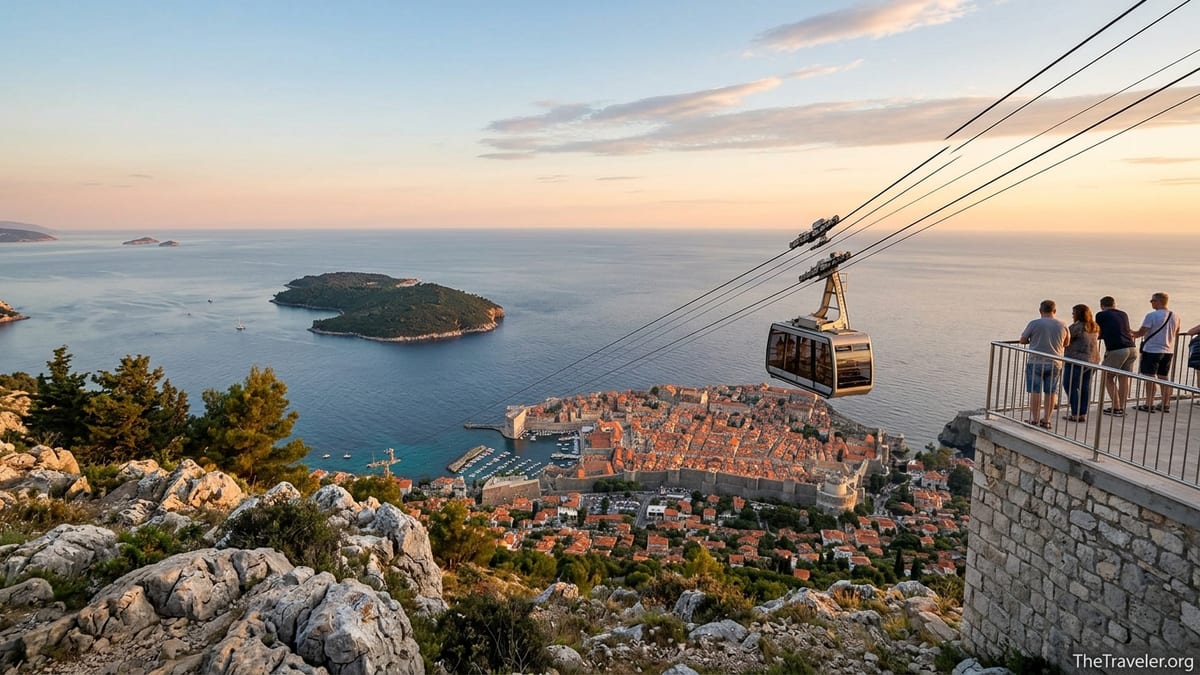
Why Mount Srđ Is Dubrovnik’s Classic Viewpoint
Mount Srđ rises just behind Dubrovnik’s UNESCO listed Old Town, reaching a modest 412 meters above sea level but delivering some of the most dramatic coastal views in Croatia. From the top, you look straight down on the medieval walls, the harbour and Lokrum Island, with the Elafiti Islands and open Adriatic stretching away to the horizon. On clear evenings, the sun sinks directly into the sea, bathing the stone ramparts and islands in orange and pink light.
The upper cable car station sits right on the ridge, making the viewpoint accessible to almost everyone, including families with small children and less mobile travellers who would struggle with Dubrovnik’s famously steep steps. Beside it stands Fort Imperial, a 19th century stone fortress that played a key role during the siege of Dubrovnik in the 1990s and now houses the Homeland War Museum. Many visitors combine the cable car or hike with a short museum visit to understand the recent history behind the postcard views.
Even if you only have one full day in Dubrovnik, Mount Srđ is often the standout memory. Travellers routinely rank it alongside walking the city walls or kayaking around Lokrum as a must do. Whether you go up for a mid morning panorama or time your visit for sunset, planning how and when to reach the top will shape your experience.
Tickets, Prices and How to Buy
The Dubrovnik Cable Car operates as a separate attraction, not included in the Dubrovnik Pass, so you will need a dedicated ticket. As of 2026, a standard adult return ticket typically costs around 30 euros, with a child return ticket (roughly ages 4 to 12) around 8 euros. One way tickets are a little cheaper and can make sense if you plan to hike one direction and ride the cable car the other.
Tickets can be purchased at the lower station ticket office just outside the Old Town’s northern Ploče Gate area, at some hotel concierges, and through local tour agencies that bundle cable car rides with walking tours or Game of Thrones themed excursions. Purchasing directly at the station is straightforward, but in July and August you should expect to wait in a ticket queue before you even join the boarding line. Travellers who visit in shoulder seasons such as late April, May or October often report walking straight up to the counter with little or no delay.
Payment is usually possible by both card and cash. However, it is wise to carry a backup method in case one payment system is temporarily down. Some visitors arriving from cruise ships have reported that tour groups can briefly overwhelm the small ticket office in mid morning. If you are staying in the city for a few days, buying your ticket earlier in the day and returning at your chosen time can help you avoid standing in the sun right before sunset.
Opening hours vary seasonally and can be adjusted for weather and maintenance, so always check the most recent timetable shortly before you visit. In high season, the first cabins often run from morning until late evening to cover sunset, with cabins departing every few minutes whenever there is demand. Outside the main season, hours can shorten significantly, and in winter the cable car may not operate daily, especially during strong wind.
Queues, Timing and How to Dodge the Crowds
Dubrovnik’s visitor numbers surge in summer, especially when multiple cruise ships dock on the same day. The cable car is a compact system with relatively small cabins, so queues build quickly at peak times. Expect the longest lines between roughly 10:00 and 13:00 when cruise excursions head up, and again in the hour before sunset as independent travellers flock to the viewpoints and the Panorama restaurant terrace.
To avoid spending 30 to 45 minutes in a hot queue in July or August, aim either for early morning or for a slightly off peak sunset slot. For example, if sunset is at 20:20, arriving at the lower station around 18:30 often allows you to ride up before the last minute rush while still having plenty of time to explore the viewpoints, visit the museum and settle in for golden hour. Alternatively, in shoulder season when the sun sets earlier, mid afternoon rides (around 15:00 to 16:00) tend to be quieter and still deliver beautiful lighting without the sharp midday glare.
If you are determined to catch the exact moment the sun drops below the horizon, remember that the queue to come back down can also build right after sunset. Travellers have reported waiting 20 to 30 minutes in August for a cabin down while everyone leaves at once. One way to sidestep this is to linger at the top for an extra drink, wait for the sky to fade through blue hour into night, and ride down later in the evening when the line has thinned. Another is to buy a one way ticket in advance, hike up in the cooler late afternoon, watch the sunset, then take the cable car down with a pre purchased ticket when many day trippers have already left.
Weather is another factor. Strong bura or jugo winds sometimes force temporary closures for safety. On such days, queues can spike the moment the line reopens. If the wind begins picking up in late afternoon, be cautious about riding up very close to sunset in case operations are suspended and you need to hike or take a taxi back to town in the dark.
Best Sunset Strategy and Viewpoints at the Top
Sunset is easily the most atmospheric time on Mount Srđ. On a clear summer day, the sun will set behind the Elafiti Islands, casting long shadows over the Old Town and gradually bringing the city lights to life below. For photographers, arriving at least one hour before sunset usually works best, as the most flattering light on the city often happens in the 30 to 45 minutes before the sun actually dips below the horizon.
When you step out of the cable car at the upper station, you will find several different vantage points. Immediately outside is a wide, paved terrace with railings, popular with visitors who want an easy, barrier free view over the Old Town. A short walk along the ridge brings you to rougher rocky outcrops where people sit on stones or low walls with almost unobstructed views, ideal if you prefer a more natural setting. There is also a viewpoint looking inland over the mountains and villages behind Dubrovnik, which can be striking when evening mist settles in the valleys.
For long exposure or tripod photography, arrive early and claim a spot along the front of the terrace or on one of the larger rocks. The cable car cabins themselves can make excellent foreground subjects, especially when captured at a mid telephoto focal length as they pass above the glowing city. Many visitors shoot handheld at apertures around f/5.6 to f/8, but if your camera struggles in low light, staying through blue hour when city lights brighten can give you vivid images even at higher ISOs.
If the forecast shows haze or thin cloud on the horizon, consider visiting slightly earlier in your trip instead of waiting for a single last evening that might be dull or overcast. The Adriatic coast can see sudden fronts that obscure the horizon. Travellers who stay three or four nights in Dubrovnik often build in flexibility to choose the clearest day, checking the sky each afternoon from Banje Beach or the city walls before committing to their cable car visit.
Restaurant, Cafes and Experiencing the View Over Dinner
Next to the upper station sits a restaurant and bar that trade heavily on the panorama. Prices for drinks and meals here are typically higher than similar options down in the Old Town, reflecting the location. Expect cocktails and glasses of wine to be closer to what you would pay in a prime Old Town square, and main courses more expensive than in backstreet konobas. For many visitors, the premium feels worth it for an unhurried seat and a front row sunset.
Outdoor terrace tables are the most coveted, especially those right at the glass railing overlooking the city. These can book out for peak summer sunsets, particularly if cruise ships are in port or on weekends when locals also come up for a special occasion. Reservations, where accepted, are strongly recommended if you want a full dinner with a guaranteed view. Walk ins may still find space at the bar or at indoor tables where you can step outside between courses to photograph the changing light.
Anecdotal traveler reports suggest that the food quality is generally good but not Dubrovnik’s very best for the price. If you are a dedicated foodie, one strategy is to have a light early meal in the Old Town, then ride the cable car up later for dessert, coffee or a drink while enjoying the view. This way you save your main dining budget for one of the city’s highly regarded seafood restaurants around the harbour or tucked into side streets, while still experiencing the terrace at the top of Mount Srđ.
For those visiting with children or on a tighter budget, remember that you are not obliged to eat at the restaurant. You can simply wander the ridge, bring a bottle of water and a snack, and find a quiet rock to sit on while the sun goes down. The informal seating areas around the fort are popular with hikers who have carried up a small picnic or takeaway sandwich from bakeries like those near Pile Gate.
Hiking Alternative: Trail, Difficulty and Safety
Hiking to Mount Srđ is a rewarding alternative to the cable car, especially for active travellers or those looking to soften the sting of ticket prices. The main zigzag trail typically starts just above the city, near a roadside shrine and switchbacks its way up the barren limestone slope with constant views over the Old Town. Most reasonably fit walkers take about 40 to 60 minutes to reach the top, with the descent usually a little faster.
The path is well defined but rocky, made up of loose stones and gravel that can roll underfoot, so sturdy footwear is important. Light hiking shoes or trainers with good grip are usually sufficient in dry weather; flimsy sandals are not recommended. Several travellers have noted that the trail becomes challenging in the height of summer heat, where temperatures above 30 degrees Celsius and full sun exposure make the climb feel much tougher. Carrying at least one to one and a half litres of water per person, wearing a hat and starting early or later in the day can make the hike far more pleasant.
One popular approach is to hike up in the late afternoon, leaving the Old Town around two hours before sunset. This allows you to ascend as the heat begins to ease, enjoy the changing colours of the city below as you climb, and then arrive at the summit in time for golden hour. After watching the sunset and perhaps visiting the Homeland War Museum, you can then ride the cable car down with a one way ticket, which saves your knees from a steep descent on loose rocks in the gathering dark.
Safety wise, the route is considered easy to moderate in dry conditions for those with average fitness, but it is not an urban stroll. The lack of shade means there is little relief from sun exposure, and strong wind can make some sections feel more exposed than they are. In wet weather, the stones can become slippery. Solo travellers often hike without issue, but it is sensible to tell your accommodation where you are going, carry a charged phone and avoid starting the ascent too close to dusk unless you have a good headtorch and are comfortable hiking in the dark.
Cable Car vs Taxi vs Hiking: What Is Best for You
Choosing between the cable car, a taxi and the hiking trail depends largely on your budget, time, fitness and appetite for queues. The cable car is undeniably the most scenic transport option. In clear weather, the four minute ride gives you a constantly shifting aerial view as you rise above the red roofs, and it is the least physically demanding. For families with young children, people with mobility issues, or anyone wanting a simple, memorable snapshot experience, the cable car is hard to beat despite the cost.
Taxis and app based rides such as Uber often provide a cheaper and more flexible alternative, especially if you are in a group. A one way taxi ride from just outside the Old Town up the access road to the summit area is usually significantly less than two return cable car tickets. Couples sometimes choose to take a taxi up for sunset, then ride the cable car down one way to experience the view, or vice versa. The main drawback is that you miss the sensation of floating above the city, and in peak season traffic can occasionally be slow on the narrow hill road.
For budget conscious travellers or those visiting Dubrovnik for several days, hiking at least one direction is often the most satisfying choice. It costs nothing beyond your time and gives a deeper sense of the landscape, with wild herbs underfoot and the city shrinking behind you as you zigzag up. Many repeat visitors say their favourite memory is hiking up in relative solitude, watching a cable car glide silently overhead, then clinking glasses with other walkers at the top as day trippers mill around the station.
If you are still undecided, think about your constraints. If you have a single busy cruise day and want to minimise logistics, pre booking a cable car inclusive tour might make sense despite the premium. If you have three days in town and enjoy walking, plan one evening where you hike and perhaps take a one way cable car, keeping taxi numbers in your phone as a backup in case of weather changes or fatigue. Mixing and matching is entirely possible and often the best compromise.
Practical Tips: What to Bring and When to Go
Regardless of how you reach Mount Srđ, a few practical considerations will improve your experience. Sun protection is top of the list. The upper slopes and summit are exposed, with little natural shade. Pack a hat, sunglasses and sunscreen, even if you are only planning a short visit around sunset. The reflection off the pale limestone amplifies the brightness, and travellers who underestimate the sun often end up with unexpected burns after just an hour on the ridge.
Comfortable footwear is important even if you are not hiking. The area around the upper station includes uneven rock and dusty paths in addition to paved terraces. Many visitors change from flip flops into trainers at their accommodation before heading up and report feeling much more secure when moving around to find view spots. A light layer such as a windproof jacket or thin sweater is also useful. After the sun sets, temperatures on the ridge can drop quickly, and a breeze can make it feel surprisingly cool compared with the sheltered alleys of the Old Town.
For photographers and those who enjoy lingering, bringing a small backpack with water, a snack and perhaps a compact tripod is helpful. There are toilets at the top but facilities are limited compared with the city below. Mobile data and phone coverage are usually good, allowing you to check transport apps, sunset times and weather forecasts in real time, but do not rely entirely on your phone for navigation if you plan to hike. Downloading an offline map that shows the Mount Srđ trail and the upper access road can give you peace of mind if visibility drops or you decide to walk down via a different route.
In terms of season, April, May, late September and October often provide the best balance of comfortable temperatures, fewer crowds and long enough daylight hours for relaxed visits. July and August can still be magical, especially if you time your ascent outside the most intense midday heat and crowds, but you will need to be more strategic about queues and hydration. Winter visits are more weather dependent, with some days offering crystal clear skies and crisp views, and others affected by rain or closure due to wind.
FAQ
Q1. Is the Dubrovnik cable car worth it, or should I just hike Mount Srđ?
The cable car is worth it if you value an easy, scenic four minute ride and have limited time or mobility. If you enjoy moderate hiking and want to save money, walking at least one way can be more rewarding, especially in cooler months.
Q2. How long does the Dubrovnik cable car ride take?
The ride itself usually takes about four minutes each way. The main variable is queuing time at the lower and upper stations, which can range from a few minutes in shoulder season to 30 minutes or more at peak sunset in July and August.
Q3. What is the best time of day to go up Mount Srđ?
Sunset is the most popular, as the light over the Old Town and islands is beautiful and the city lights come on below. For fewer crowds and softer light, early morning or mid to late afternoon in shoulder season can also be excellent.
Q4. Can I buy a one way ticket for the cable car?
Yes, one way tickets are typically available and cost less than returns. They are ideal if you want to hike one direction and ride the cable car the other, for example hiking up in late afternoon and taking the cable car down after sunset.
Q5. How difficult is the hike up Mount Srđ?
The hike is generally considered easy to moderate for people with average fitness. The trail is short but consistently uphill on rocky, uneven ground with no shade. Most walkers take 40 to 60 minutes to reach the top, longer in hot weather.
Q6. Are there places to eat or drink at the top of Mount Srđ?
Yes, there is a restaurant and bar with a large terrace next to the upper cable car station. Prices are higher than in the Old Town, reflecting the location, but many people enjoy a drink or dessert there while watching the sunset.
Q7. Do I need to book the cable car in advance?
For most independent travellers, advance booking is not essential. However, during the busiest summer weeks or if you want a specific time combined with a guided tour or a reserved restaurant table at the top, booking a package or dinner reservation in advance can help.
Q8. What happens if the wind is too strong for the cable car?
If winds exceed safety limits, operations may be temporarily suspended or closed for the day. In that case, you can still reach Mount Srđ by taxi or on foot via the hiking trail, provided conditions are safe, but you should be prepared to return by road or on foot as well.
Q9. Is it safe to be on Mount Srđ after dark?
The summit area around the cable car station and restaurant is usually busy around sunset and into the evening, and many visitors stay for night views. If you plan to hike after dark, bring a headtorch and avoid going alone unless you are experienced and comfortable with rocky trails in low light.
Q10. Can I combine a visit to Mount Srđ with other Dubrovnik sights in one day?
Yes, many visitors spend the morning walking the city walls, enjoy a relaxed lunch in the Old Town, then head up Mount Srđ for late afternoon and sunset. Others fit in sea kayaking or a Lokrum Island trip on the same day, but it is wise not to overschedule so you can adapt to weather and queues.