


More news on this day
Most Thanksgiving flight delays across the United States so far this week are being caused by weather rather than lingering technology failures, U.S. Transportation Secretary Sean Duffy said on Wednesday, as airlines and air traffic controllers work through one of the busiest and most disruption-prone holiday travel periods in years.
Get the latest news straight to your inbox!
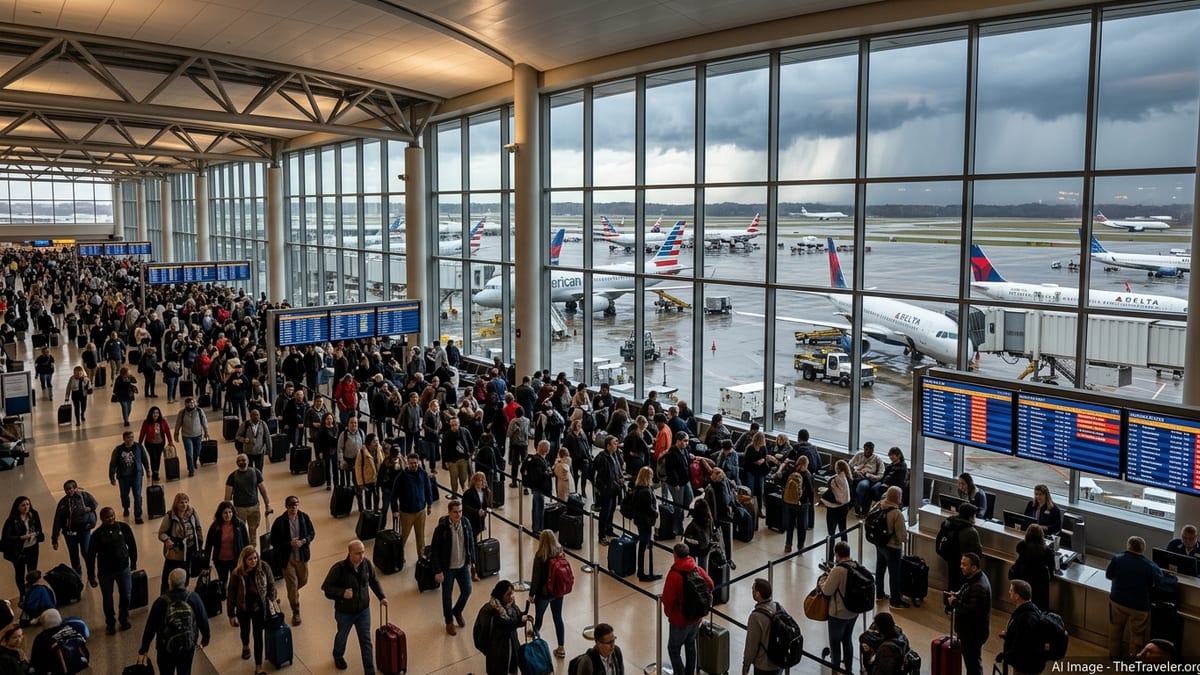
Record Thanksgiving air traffic meets a week of disruptions
Duffy’s comments came on Wednesday, November 25, 2026, as federal officials reported near record-breaking traffic in U.S. airspace. The Federal Aviation Administration said this week’s Thanksgiving period is on track to be the busiest in 16 years, with approximately 52,000 flights handled on Tuesday alone, a level Duffy highlighted as evidence of strong demand despite recent disruptions.
AAA has projected that about 81.5 million people in the United States will travel at least 50 miles from home between Tuesday, November 24, and Monday, November 30, including nearly 6 million airline passengers. That would keep airports under sustained pressure throughout the week, even before weather and operational issues are factored in. Major hubs such as Atlanta, Chicago O’Hare, Dallas–Fort Worth, Denver and Los Angeles have all reported heavy passenger throughput and longer-than-usual security lines since the weekend.
Duffy has faced questions about whether the system is robust enough to handle both record traffic and operational shocks, after a series of airline technology glitches and a rare nationwide FAA ground stop earlier in November caused large-scale cancellations and delays. He has continued to insist that the system is safe and that aviation agencies and airlines are better prepared for the Thanksgiving peak than they were following previous high-profile meltdowns in the industry.
Weather emerging as primary cause of current delays
In remarks carried by several U.S. outlets on Wednesday, Duffy said that “the majority” of flight delays reported so far this week could be traced to adverse weather along key corridors, rather than staffing problems or lingering effects from earlier computer outages. The flight-tracking service FlightAware reported more than 3,700 flight delays and around 60 cancellations within, into or out of the United States on Wednesday, a volume consistent with a challenging but not historically extreme holiday travel day.
Forecasters at the National Weather Service and private services such as AccuWeather and The Weather Channel have been warning for several days that multiple storm systems would affect both coasts around Thanksgiving. A strong storm has been moving up the East Coast, bringing heavy rain and gusty winds to major population centers from Washington to Boston, while another system affects parts of the Pacific Northwest and California. Meteorologists have said these conditions are likely to trigger periods of low visibility, crosswinds and ground stops at busy hubs, particularly on Thanksgiving Day itself and into the early hours of Friday.
Those forecasts are already reflected in operational data. Airlines have issued weather waivers on specific routes, allowing passengers to rebook without change fees when traveling through affected airports, including New York’s major airports, Boston, Washington-area airports and some Midwest and Great Lakes hubs. Officials have stressed that these waivers are directly tied to forecast weather disruptions, reinforcing Duffy’s point that meteorological conditions, rather than technology failures, are behind most of the current delays.
Recent tech failures still casting a shadow
The emphasis on weather comes after a difficult November for aviation technology. Earlier in the month, a malfunction in an FAA network triggered the longest nationwide ground stop in roughly 25 years, temporarily halting departures across the country. In the days that followed, some airlines, including Delta, reported their own system issues that compounded delays and left passengers stranded or rebooked ahead of the holiday period.
Although operations largely recovered before Thanksgiving week began, those glitches have remained in the background of traveler concerns. Major carriers have posted travel alerts explaining residual impacts from earlier disruptions and offering flexible rebooking policies on some routes. American Airlines, for example, has detailed how the earlier ground stop affected its schedule and outlined options for customers whose plans remain flexible, including the ability to move flights within a defined date range or seek refunds in some cases.
Duffy has been pressed about whether federal oversight of airline operations and FAA technology investments is sufficient, particularly after reports that the Transportation Department has been slow to issue fines for extended tarmac delays. For the moment, however, officials and airlines alike have framed the operational challenges of this Thanksgiving week as largely distinct from the earlier failures, stressing that air traffic control systems are currently functioning normally and that ground delays now being issued are predominantly for safety in adverse weather.
Airports and airlines adjust to evolving storm impacts
As storms have moved into key travel regions, local airport authorities and airlines have been adjusting schedules and warning passengers about potential knock-on effects. On Wednesday night, a FedEx aircraft overran a runway at Miami International Airport, temporarily closing all but one runway just hours before Thanksgiving. By early Thursday, the FAA was reporting multi-hour delays at Miami, adding another weather-complicated bottleneck to the national network as airlines worked around the reduced runway capacity.
Earlier in the week, the FAA imposed a ground stop at Chicago O’Hare after a radar equipment outage, briefly halting departures and arrivals at one of the nation’s busiest hubs. While that specific problem has been resolved, storms moving through the Midwest and Great Lakes region are expected to keep pressure on schedules, particularly for passengers connecting through Chicago and Detroit. Weather services have indicated that delays could ripple from these hubs outward, especially on Thanksgiving Day and into Friday morning as airlines reposition aircraft and crews.
Local forecasts illustrate the patchwork nature of the disruptions. Some regions in the central United States are seeing relatively calm and dry conditions, enabling normal operations, while coastal areas contend with heavy rain, low clouds and strong winds. At regional levels, transportation officials have encouraged passengers to keep close watch on their departure and arrival airports rather than assuming uniform disruption. Airports such as Cincinnati/Northern Kentucky International, Denver and Dallas–Fort Worth have issued their own Thanksgiving travel advisories, combining local congestion expectations with national weather risks that could affect inbound or outbound connections.
What travelers should expect through the holiday weekend
Looking ahead to the remainder of the Thanksgiving period, forecasters expect the most significant weather-related aviation impacts to occur on Thanksgiving Day itself and, in some regions, to extend into Friday morning. Storms along the East Coast are forecast to bring continued rain and gusty winds that could require spacing out arrivals and departures at major Northeast airports, potentially driving further delays even if cancellations remain limited. On the West Coast, unsettled weather in parts of California and the Pacific Northwest could likewise generate slower operations at peak times.
Travel demand is expected to remain elevated through Sunday, often one of the busiest return days of the Thanksgiving window. Airlines and airports are advising passengers to build additional time into their journeys, to monitor flight status through airline apps and airport departure boards, and to be prepared for gate or timing changes, particularly for itineraries involving connections through weather-affected hubs. Officials have repeatedly stressed that safety-driven decisions, such as holding planes on the ground or rerouting flights to avoid storms, may add time to trips but are intended to keep operations safe in challenging conditions.
For now, Duffy and federal aviation officials are not predicting a system-wide breakdown similar to the earlier nationwide ground stop, and there is no evidence that staffing or technology constraints are the leading cause of current disruptions. However, the combination of record or near-record flight volumes and unsettled weather means delays are likely to continue appearing in pockets across the country through the weekend. Travelers planning late departures on Thanksgiving Day or early-morning flights on Friday may see the greatest risk of knock-on delays from Thursday’s storms, and should check with their airlines frequently for the latest schedule information and any expanded rebooking options.