


On paper, driving across the United States is simple: pick a route, fuel up, keep the wheels pointed west or east. In reality, a cross-country road trip is less about distance and more about having your assumptions quietly dismantled a few miles at a time. Over several weeks on the road, following a loose line from North Carolina to California and back along a different route, I found an America very different from the one I thought I knew from data points, news alerts and social media arguments.
Get the latest updates straight to your inbox!
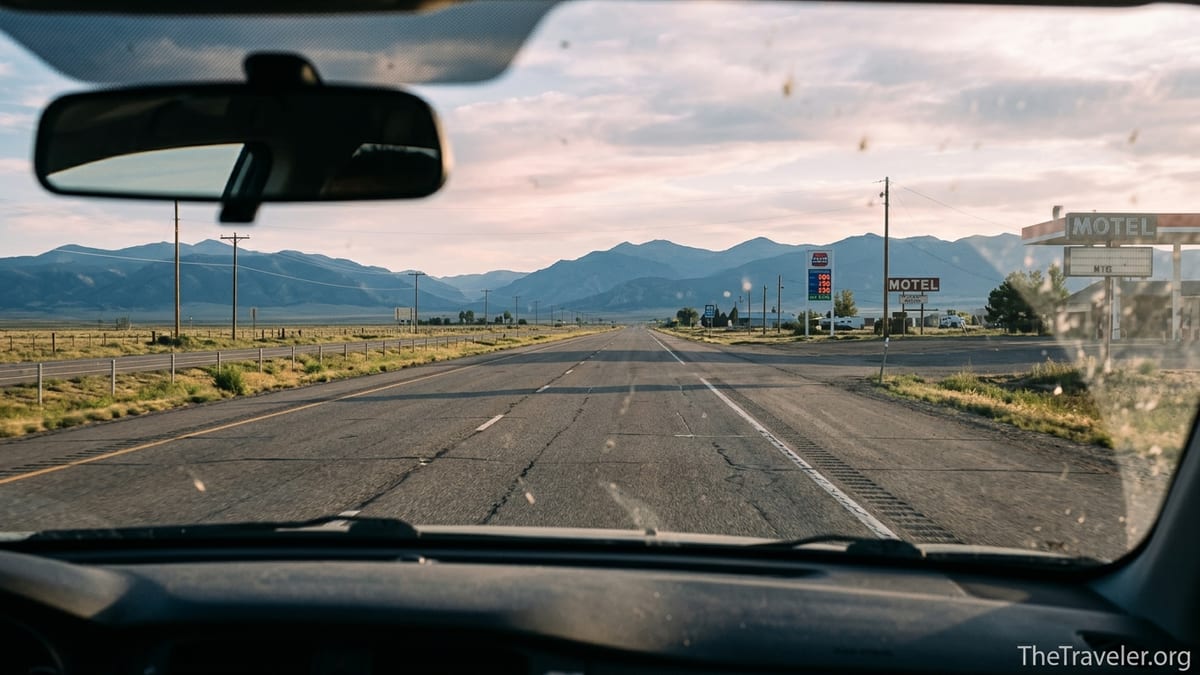
The Myth of the "Flyover" States Vanishes at 65 Miles an Hour
I started the drive in coastal North Carolina, where interstate signs still carry the damp glint of the Atlantic, and merged onto Interstate 40, a highway that cuts more than 2,500 miles across the country from Wilmington, North Carolina, to Barstow, California. For years I had heard people refer to everything between the coasts as "flyover country," as if the country’s interior were a vague beige smear you glance at from 35,000 feet. Watching the land change slowly through the windshield, that phrase began to feel not just inaccurate, but disrespectful.
Western North Carolina’s lush folds rise into Tennessee’s smoky ridges, where billboards for Dollywood and pancake houses share space with hand-painted signs for local farm stands. By the time you reach Oklahoma, you are in another America altogether: flat, wind-combed, the sky so big that every cloud looks like a weather system. Yet even along a massive artery like I-40, you are never far from a small town main street. Exit signs promise places like Cookeville, Tennessee; Shawnee, Oklahoma; and Groom, Texas, each a short detour that replaces chain restaurants with brick storefronts and courthouse squares.
What struck me most was how different these places feel when you arrive on four wheels instead of in an airport concourse. No security lines, no ride-share queues, no terminal Starbucks. You roll into town at 25 miles an hour and see ordinary life in motion: kids in school jerseys carrying Gatorade bottles, a tractor supply store with a handwritten note about shortened hours, a diner where the daily special is catfish and okra. It is an America that rarely trends on any platform, yet it is where millions of people live out their entire lives.
It became clear that "flyover" is less a geographical term than a confession about how little attention we pay to vast parts of the country. Driving forces you to pay attention. You notice that the accents shift more gradually than the headlines suggest, and that the politics of a county are nowhere near as legible from its gas station parking lot as pundits would like you to believe.
Money, Miles and the Real Cost of a Big American Dream
If you want to understand the economy at street level, drive across the country in 2026 and keep a close eye on gas station marquees. In early June, federal data put the average price of regular gasoline in the United States a little above four dollars a gallon, after hovering at elevated levels for weeks. In some Western states, especially along stretches of California, I routinely saw prices well above five dollars. In parts of the Gulf Coast and the South, those same digits started with a three.
On a cross-country itinerary of roughly 3,000 miles each way, in a car that manages around 30 miles per gallon on the highway, you are looking at about 200 gallons of fuel for the round trip. At four dollars a gallon, that is roughly 800 dollars just to move your vehicle from coast to coast and back. Add in the higher prices around major cities and in remote desert stretches, and a realistic fuel budget for a month-long loop can creep closer to four figures. It is a sobering calculation that you feel every time you watch the pump tick up while a freight train rumbles past in the background.
Yet the road also reveals cost-of-living contrasts that no spreadsheet can convey. In California, a modest motel room near the interstate can easily run over 150 dollars on a summer weekend, especially close to national park gateways or coastal cities. Two states and a time zone away, in Oklahoma or Arkansas, I found clean independent motels for under 80 dollars a night, often with parking right outside the door and a front-desk clerk who recommended a local barbecue place instead of a delivery app.
The same pattern shows up at the table. In Santa Fe, New Mexico, a plate of blue-corn enchiladas and a craft margarita in a busy downtown restaurant might nudge 40 dollars before tax and tip. An hour east, in the smaller town of Tucumcari along historic Route 66, you can sit at a counter and eat a green chile cheeseburger with iced tea for under 15 dollars. Neither experience is "more American." Together, they sketch the outlines of a country that is economically uneven yet still remarkably accessible, if you are willing to adjust your expectations and where you stop.
Small Towns, Big Stories: Getting Off the Interstate
The interstate system is astonishing in its efficiency. I-40 alone crosses eight states, including Tennessee, Arkansas, Oklahoma, Texas and Arizona, shaving hours off the journey compared with earlier two-lane highways. But if you let speed be your only guide, you will miss the quieter stories unfolding a few miles away on the old roads that the interstates replaced.
One afternoon in Texas, a faded billboard for a leaning water tower lured me off I-40 to the town of Groom. Just beyond the freeway, I found a 19-story white cross that dominates the horizon, built as a religious landmark. A few blocks away, the main street was hushed, with a cafe advertising homemade pie and a hardware store that looked unchanged for decades. Fifteen minutes of wandering revealed something I would have never seen at 75 miles an hour: a town balancing religious tourism, agricultural work and a slow leak of young people in search of bigger cities.
Farther west, near Amarillo, Cadillac Ranch comes into view. Ten vintage Cadillacs are half-buried nose first in the dirt of a Panhandle field, spray-painted and re-painted by visitors for nearly half a century. On the surface, it is a quirky roadside attraction. Stand there for a while, though, and you begin to see something else: an impromptu gallery of highway graffiti, teenagers posing for graduation photos, retirees stretching their legs, a German backpacker asking a local family to take their picture. The scene could easily be dismissed as kitsch, yet it is one of the few places on the trip where I watched strangers from several countries interact with ease.
These stops are echoes of an older route: US 66, the famed "Mother Road" that once carried migrants, soldiers and vacationing families from the Midwest to the Pacific. The National Park Service today calls Route 66 a "cross section of the United States," a phrase that still feels accurate when you stand under the neon of an old motel sign in New Mexico. Many of the diners and motor courts that flourished in the 1950s are now shuttered, but others have been lovingly restored. In towns like Seligman, Arizona or Tucumcari, New Mexico, you see how heritage tourism and nostalgia for classic road trips are keeping some small businesses alive.
National Parks, Crowds and the Search for Quiet
Any modern cross-country drive is likely to intersect with America’s national parks. In recent years, the National Park Service has reported hundreds of millions of visits annually, with several parks setting visitation records. On the ground, those numbers translate into full parking lots, reservation systems and trailheads that look more like busy city parks than backcountry gateways at peak times.
Driving west, I stopped at Grand Canyon National Park. Even early in the day, the South Rim village was packed with rental RVs, tour buses and day-trippers who had arrived from Las Vegas at dawn. Along the most famous overlooks, finding a quiet moment alone with the canyon felt almost impossible. Yet a short drive east to a less publicized viewpoint and a half-mile walk along an unpaved rim trail changed the experience entirely. The canyon was the same, but the mood was different: just a handful of hikers, a Navajo jewelry stand at a scenic turnout, the sound of wind and ravens instead of air brakes and camera shutters.
The road taught me that the same park can contain many versions of itself. In Utah, near Zion and Bryce Canyon, I met a family from Ohio who had zigzagged across several states with a detailed spreadsheet of reservations, timed-entry passes and backup plans based on park service alerts. They spoke of shuttle schedules and crowd patterns with the fluency of air traffic controllers. Thirty miles away, a couple in a camper van was camped on Bureau of Land Management land, watching the same red rock glow at sunset, content to skip the signature trails entirely.
National parks are often portrayed as pristine escapes from modern life, but on a cross-country drive they also appear as pressure points where the country’s love of the outdoors meets its infrastructure limits. Parking lots fill, small gateway towns struggle with housing and water, and park staff juggle both conservation mandates and TikTok-era expectations. Appreciating America’s protected landscapes means recognizing not just their beauty, but the logistical and social challenges that come with their popularity.
Conversations at Gas Pumps and Counters: A Different Kind of Polling
Before the trip, my sense of American opinion came mostly from polls and social media flashpoints. On the road, the most revealing insights came from gas pumps, diner counters and laundry rooms. A construction worker in Arkansas talked about chasing pipeline jobs across states and how the current gas prices cut into his pay. A motel owner in New Mexico said her bookings had shifted from mostly European tourists to a mix of domestic travelers chasing lower-cost alternatives to international flights. A college student from California, driving east in a compact hybrid, told me she mapped her stopping points based on fast-charging stations and coffee shops with reliable Wi-Fi.
Politics surfaced often, but rarely in the way national debates suggest. In one Oklahoma town, a cafe television played a partisan news channel that framed every story as an existential battle. At the next table, two farmers were discussing rainfall totals and whether this year’s soybean prices would cover the new combine. Out in the parking lot, a pickup with a campaign sticker was parked next to a compact car bearing a rival slogan. The owners swapped tips on the best time of day to avoid traffic in the nearby city and never mentioned the signs on their bumpers.
Driving makes it harder to flatten people into caricatures. The retired couple in Tennessee who voiced frustration about national politics also spent half an hour recommending state parks and small-town festivals to visit. The young server in Arizona who had strong opinions about housing and wages also wanted to talk about her favorite roadside taco stands along I-10. What emerged was an impression of a country far too absorbed in daily challenges and pleasures to fit into the neat alignments presented in campaign ads.
Remote Work, Vanlife and the New Nomads of the Highway
One of the biggest surprises of the trip was how many people I met who now treat the open road as something close to a permanent address. What was once a niche "vanlife" subculture has expanded into a visible strand of American life, fueled by remote work, social media and housing costs that make wheels seem more attainable than walls for some.
At a public lands campground in Arizona, I met a software developer in his thirties living out of a converted cargo van. On weekdays he logged into meetings from a portable hotspot, careful to park within range of a good cell signal. Weekends were for hikes in nearby canyons and trips into town for groceries and laundry. His van, a used model outfitted with a simple bed platform, solar panels and a compact fridge, had cost less than a down payment on a small house in his hometown. He spoke of the lifestyle not as an endless vacation, but as a trade-off: unpredictable repair bills and limited personal space in exchange for freedom from rent and a chance to wake up near trailheads instead of traffic lights.
Elsewhere, in a Walmart parking lot in the Midwest, I noticed a different kind of road life. An older couple in an aging RV with local plates was clearly not on holiday. The rig was packed with plastic storage tubs and thrift-store furniture, and the couple moved through an efficient evening routine of cooking on a camp stove and taping cardboard over the windows. Their story, which they shared cautiously, was about medical bills, a fixed income and a housing market that had pushed them out of a rental. The road was not a lifestyle brand for them; it was a last margin of independence in a country where stability can feel increasingly fragile.
These encounters changed how I understood the glossy images of vans parked beneath perfect sunsets that populate social platforms. For some travelers, the road is a gentle rebellion against a conventional 9-to-5 life. For others, it is an economic necessity. Driving across the United States, you see both realities parked a few spaces apart, united only by the fact that they share the same patch of asphalt for the night.
The Road as a Mirror of Inequality and Resilience
Miles on the odometer eventually add up to a quiet education in American inequality. In wealthy suburbs outside major metros, highway exits are ringed with gleaming service plazas, fast-casual chains and hotel clusters, all wired for fast charging and mobile ordering. Hundreds of miles away, an older gas station in a rural county may have one working pump, a flickering fluorescent light and a handwritten "cash only" sign taped near the register because the card reader has been unreliable for months.
In the Midwest, I drove past shuttered factories and empty main streets where the largest building left in good repair was often a warehouse-style church or a distribution center. Yet even there, resilience surfaced in unexpected ways: a co-op that had turned part of a vacant strip mall into a farm supply hub, a food truck using the parking lot of a closed department store, a mural project covering bricked-up windows with portraits of local veterans and community elders. The American decline narrative is real in some of these towns, but it is only half the picture.
On tribal lands in the Southwest, roadside stands selling jewelry and fry bread exist alongside billboards about water rights and missing persons. The landscape itself is spectacular, but the informality of the commerce hints at deeper gaps in infrastructure and opportunity. At the same time, many of these communities are at the forefront of cultural preservation and land stewardship efforts that benefit visitors and residents alike. Spending money there thoughtfully, whether on handmade crafts or locally guided tours, felt less like tourism and more like participation in a shared project.
What the road makes clear is that America’s contradictions are not distributed evenly. You can fill your tank at a modern quick-stop with ten kinds of kombucha in one state, then cross a border and see a cardboard sign warning that the nearest hospital emergency room is more than an hour away. Yet in both places, strangers held doors, lent jumper cables and offered directions. The contrasts were jarring, but the baseline of everyday generosity remained.
The Takeaway
By the time I looped back toward the Atlantic, the trip had upended my assumptions more thoroughly than any book or documentary could have. I had expected wide views and long playlists; I had not expected the deep sense that America is both more fractured and more functional than the national conversation admits. The country’s problems are visible from the highway shoulder: high energy costs, uneven infrastructure, housing strain, communities left in the wake of economic shifts. Yet so are its strengths: inventive small businesses, local pride, a stubborn willingness to help strangers for no better reason than that they pulled into the same rest area.
Driving across the United States will not solve any of the tensions that define this moment in the country’s story. But it will complicate them in ways that are hard to shake. You return home with a map in your head marked not just by state lines but by the people who invited you to sit for a while at their tables, parks and porches. You begin to see headlines about "Americans" as describing real faces from real places, not just abstract blocs of opinion.
In the end, the most important thing a cross-country drive changed was my certainty. I came back less convinced that I understood America and more aware that understanding it is an ongoing, humbling journey. The highway is not the whole country, but it is one of the few places where you can watch its many versions rush past and, if you are paying attention, catch glimpses of who we really are.
FAQ
Q1. How long does it take to drive across the United States?
Driving coast to coast typically takes about 5 to 7 long days of driving if you stick mostly to interstates, or 2 to 4 weeks if you travel at a more relaxed pace with sightseeing stops.
Q2. How much should I budget for fuel on a cross-country road trip?
With recent average gas prices a little over four dollars per gallon and a route of about 6,000 round-trip miles in a reasonably efficient car, many travelers spend in the range of 700 to 1,200 dollars on fuel alone, depending on vehicle mileage and regional price differences.
Q3. What is the best time of year to drive across America?
Late spring and early fall are often ideal for a cross-country drive, with fewer storms than winter and less extreme heat and crowding than midsummer along popular routes and in national parks.
Q4. Do I need to plan every stop in advance?
You do not need to schedule every stop, but it is wise to book ahead near major national parks, during holiday weekends and in popular gateway towns, while leaving open days elsewhere for flexibility and unexpected discoveries.
Q5. Is it safe to sleep in my car or van while driving across the country?
Many travelers sleep in vehicles at campgrounds, some truck stops and certain retail parking lots where it is allowed, but you should always follow local regulations, choose well-lit locations and trust your instincts about moving on if a place feels uncomfortable.
Q6. How can I keep costs down on a long road trip?
Cooking simple meals from grocery stores, camping or choosing budget motels, driving a fuel-efficient vehicle and focusing on low-cost attractions like public lands and free town events can significantly reduce your daily expenses.
Q7. What kind of vehicle is best for a cross-country drive?
Almost any well-maintained vehicle can make the trip, but cars and small SUVs with good fuel economy are cheaper to operate, while camper vans and RVs offer more living space at the expense of higher fuel and campground costs.
Q8. How do I find less crowded places to visit along the way?
Exploring state parks, national monuments, wildlife refuges and smaller towns a short drive off the interstate often leads to quieter experiences than the most famous national parks and big-city attractions.
Q9. What should I know about connectivity and working remotely from the road?
Cell coverage is strong along most interstates and near towns, but remote stretches and some public lands still have weak or no signal, so remote workers often rely on a mix of major carrier plans, mobile hotspots and occasional stops in cafes or libraries with dependable Wi-Fi.
Q10. How can I be a respectful traveler in small communities along my route?
Spending money at local businesses, following local rules, being patient with limited services, asking for recommendations and treating residents and workers with the same courtesy you would expect at home go a long way toward leaving a positive impression.