


The central Dalmatian coast around Zadar gives travelers two very different island experiences: slow, sun‑drenched days on Dugi Otok, and wild, wave‑sculpted Kornati islets mostly seen by boat. Both are stunning, but they suit very different trips. This guide compares Dugi Otok and Kornati in practical detail so you can decide where to base yourself, how to visit, and which option fits your time, budget and travel style.
Get the latest updates straight to your inbox!
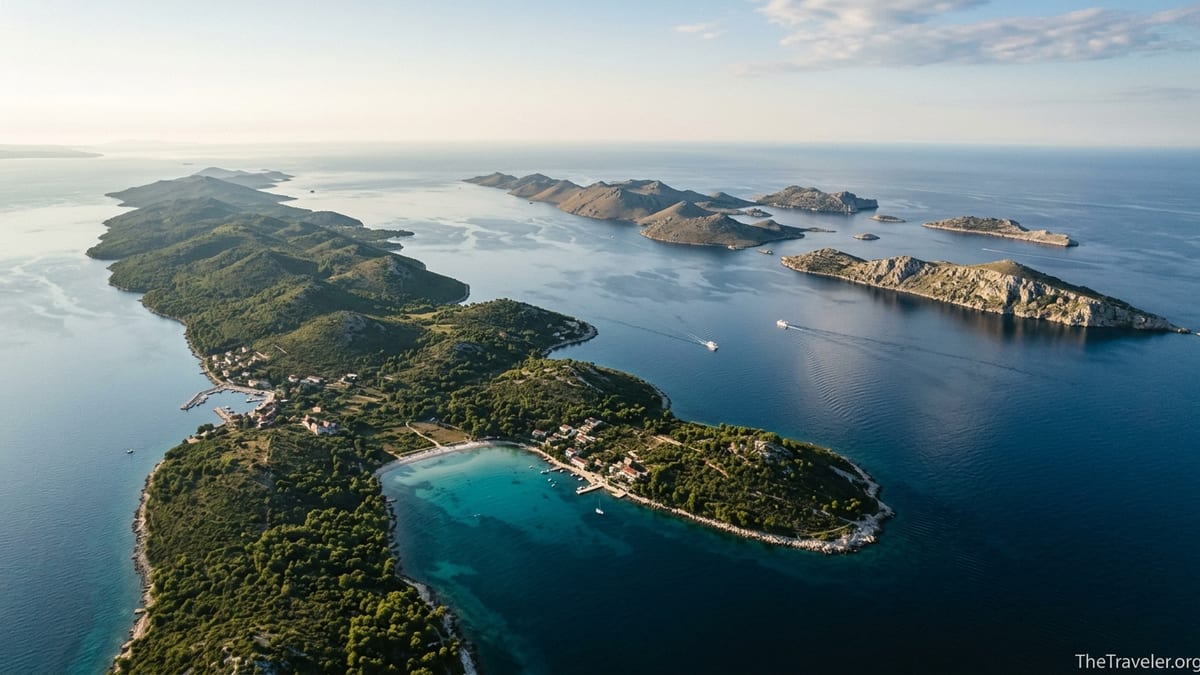
Big Picture: What You Actually Experience in Each Place
Despite sitting in the same island-dotted stretch of the Adriatic, Dugi Otok and Kornati deliver contrasting experiences. Dugi Otok is a lived-in island with small villages, beaches, shops and apartments where you can unpack for several nights. You reach it on a public car ferry from Zadar’s Gaženica port to Brbinj, then move around the island on its main D109 road that links northern bays like Sakarun with southern sights such as Telašćica Nature Park. It feels like classic Croatian island life: stone houses, konobas serving grilled fish, evening strolls along small harbors.
Kornati, by comparison, is almost entirely uninhabited wilderness. The Kornati National Park covers a dense archipelago of bare, rocky islands and dramatic cliffs south of Dugi Otok. There are a handful of seasonal houses and a few small taverns in protected coves, but there are virtually no shops, paved roads or permanent settlements. Most visitors see Kornati on a day cruise from Zadar, Biograd or Murter, spending their time on the boat with one or two swim stops and a simple lunch.
In practice, choosing between them often means choosing between a land-based stay and a sea-based experience. On Dugi Otok, you wake up in a rented apartment in Sali or Božava, grab coffee at the local café and drive or cycle to nearby beaches and viewpoints. In Kornati, you board an excursion boat in Zadar around 8:00 or 9:00, cruise past dozens of uninhabited islets, perhaps walk a short path up to a viewpoint, then return to the mainland in late afternoon without ever spending a night in the park.
Many travelers combine the two by using Dugi Otok as a base and taking a private or small-group boat into southern Kornati and neighboring Telašćica for a day. However, if your time is tight and you need to choose, the key differences around beaches, costs, crowds and accessibility will steer you clearly one way or the other.
Beaches and Swimming: Sand vs Stone, Bays vs Open Sea
If classic beach days are central to your trip, Dugi Otok is the stronger choice. Its star attraction is Sakarun Beach on the northwest coast, an 800-meter arc of pale sand and pebbles with very shallow, turquoise water that stays waist-deep far from shore. There are a couple of seasonal beach bars, sunbeds and simple snacks, and a small tourist train linking Sakarun with nearby Božava in summer. Families appreciate the soft entry and kids can play safely for hours. In high season, you will share the bay with excursion boats that anchor offshore and day trippers from Zadar, but if you arrive early or outside July and August, it can still feel relaxed.
Beyond Sakarun, Dugi Otok hides many quieter swimming spots that feel more local. Veli Žal on the island’s western side offers long stretches of smooth white pebbles and typically clear water, while smaller coves like Brbišćica and Lučina attract travelers who do not mind a short walk or dirt-track drive to reach more secluded spots. Even around Sali in the south, you can find rocky swimming platforms just a few minutes from the harbor, ideal for a quick dip before dinner.
Kornati is not about beach towels and umbrellas. The islands are mostly rock and low scrub with very little sand. On a typical Kornati day cruise from Zadar, Biograd or Murter, you might have one or two swimming stops in sheltered coves such as ones near the island of Mana or around quieter inlets like Lojena lagoon on the island of Levrnaka. Here, you usually jump off the boat or climb down a metal ladder directly into deep, unbelievably clear water. A few places have small shingle beaches, but there are rarely facilities beyond perhaps a rustic pier and a simple konoba.
For travelers who want to wade in slowly, let kids play in shallows or spend an entire day on one beach, Dugi Otok is far superior. For strong swimmers who dream of leaping from a boat into deep blue and snorkeling over rocky seabeds with schools of fish, the wild inlets of Kornati offer something more intense and memorable, but shorter in duration.
Nature and Landscapes: Cliffs, Lakes and Island Wilderness
Dugi Otok’s southern end is dominated by Telašćica Nature Park, which many visitors combine with Kornati on the same boat trip, but it can also be explored from the island by car and on foot. The park features dramatic sea cliffs on the outer side of the island, plunging up to around 160 meters into the sea, and the inland saltwater lake Mir on the protected side, where the water is usually warmer than the open Adriatic. A typical visit might involve driving from Sali to the park entrance, paying the day fee by car, then walking marked paths to several viewpoints and down to the lake for a swim.
Outside Telašćica, Dugi Otok’s landscape alternates between low karst hills, olive groves and pine woods. Hiking trails lead to viewpoints like Veli Rat lighthouse in the north, where the tall yellow tower overlooks reefs and small coves, and to sea caves near Brbišćica. Even a simple drive along the spine of the island delivers wide views over the Adriatic and neighboring islands, with occasional roadside pull-offs where you can stop to photograph the scenery and stone-walled fields.
Kornati National Park, on the other hand, is concentrated drama. From a boat, you see rows of bare, rocky islands, some little more than stone ridges rising from the sea. One particular highlight is the vertical cliffs along the western edges of several islands, where pale limestone drops directly into deep blue water. On some excursions, the boat pauses close to these cliffs so passengers can take photos or appreciate the height from below. On others, you disembark on an island such as Mana or Levrnaka and follow a stony footpath uphill to a summit viewpoint with sweeping views over dozens of islets.
If you are an independent hiker, Dugi Otok offers more accessible walking from your accommodation, with marked paths and the ability to adjust your route and timing. Kornati’s best viewpoints usually require a boat drop-off and are often limited in time by the excursion schedule. Nature lovers who want a whole day moving at their own pace and returning to the same base each evening will usually find Dugi Otok more satisfying, while those who want a single, dramatic day surrounded almost entirely by sea and stone will be wowed by Kornati.
Getting There and Getting Around: Ferries, Boats and Logistics
Reaching Dugi Otok is straightforward. The main connection is the car ferry between Zadar’s Gaženica port and Brbinj on Dugi Otok, operated by the national company Jadrolinija. In summer, there are typically several departures a day, and the crossing takes about 90 minutes. Foot passengers and vehicles are both carried, and tickets can be bought online or at the port. Prices vary by season and vehicle size, but as a rough guide, a one-way ticket for a foot passenger is usually in the lower tens of euros, while a small car adds an extra few tens of euros. There are also passenger-only catamarans from Zadar to towns such as Sali or Zaglav, which can be useful if you are traveling without a vehicle.
Once on Dugi Otok, you can drive along the D109 road, which effectively acts as the island’s spine, connecting Brbinj with Sali in the south and branching to ferry ports and villages like Zaglav, Božava and Veli Rat. Travelers without a car rely on the island bus that generally meets incoming ferries, or on rental scooters and bicycles available in Sali and occasionally in other villages. In high summer, transfers by pre-booked taxi or private driver are also possible, particularly if you are staying at more remote apartments.
Visiting Kornati is rarely a matter of public transport. Most travelers join an organized day trip by boat from Zadar, Biograd or smaller ports on nearby Murter. In Zadar, for example, all-inclusive full-day tours typically depart around 8:00 or 9:00 in the morning and return around 17:00 to 18:00, covering southern Dugi Otok, Telašćica and parts of Kornati in one loop. Boats range from large excursion ships with 50 or more people to smaller motorboats taking 8 to 12 guests. These tours usually include the national park entrance fee in the advertised price, plus breakfast snacks and a simple fish or meat lunch served onboard or at a rustic tavern in a bay.
Independent travelers with boating experience sometimes rent a small motorboat from islands like Murter or from Dugi Otok itself to explore the fringes of Kornati, but entering the national park with a private vessel requires a ticket priced by boat length. Because winds and sea conditions in this open area can be changeable, less experienced visitors often prefer the security of a skippered excursion. That makes Kornati logistically easier as a one-day add-on to a stay in Zadar, Biograd or Dugi Otok, but harder as a place to truly settle into unless you charter a yacht or arrange multi-day sailing.
Costs, Value and Typical Daily Budgets
Comparing costs between staying on Dugi Otok and taking a Kornati boat trip depends on what kind of accommodation and activities you choose, but some patterns are clear. Dugi Otok itself can be relatively good value if you stay in self-catering apartments in villages like Sali or Božava. In shoulder season months such as May, June or September, it is common to find simple but comfortable one-bedroom apartments for roughly the same or slightly more than equivalent stays in Zadar, often with sea views and parking included. Eating out in local konobas, you might pay mid-range mainland prices for grilled fish, pasta or peka dishes, especially in the more visited south.
Your main recurring costs on Dugi Otok are likely to be transport and park entry fees. If you bring a car on the ferry, factor in the return ferry fare and fuel for island driving. Visiting Telašćica Nature Park by car involves an entrance charge per person and per vehicle, which varies between low and high season. A couple might expect to pay the equivalent of several restaurant mains once all fees are added, but the ticket is typically valid for the day, giving access to multiple viewpoints and the salt lake. Renting kayaks, bikes or taking local boat trips to nearby bays adds optional extra costs, but you can also spend entire days at beaches like Sakarun essentially for free, aside from parking and occasional sunbed hire.
Kornati day trips, by contrast, concentrate much of your budget into a single day. In 2024 and 2025, full-day all-inclusive excursions from Zadar to Kornati and Telašćica commonly run in the region of 60 to 100 euros per adult, depending on boat size, inclusions and time of year. This usually covers the national park ticket, a basic breakfast snack, lunch with drinks, and several hours on the water. Smaller, semi-private tours with fewer passengers often cost more per person but offer a more intimate experience and can be better value if you prioritize comfort and flexibility.
For travelers already paying for accommodation in Zadar or another mainland base, adding one such Kornati trip may make sense as a highlight day. However, if you are a family of four or more and planning multiple boat days, costs add up quickly. In that scenario, basing yourself on Dugi Otok and choosing cheaper local excursions or self-guided days at the beach can stretch your budget further while still giving you a strong sense of the Adriatic’s beauty.
Crowds, Atmosphere and Seasonality
Both Dugi Otok and Kornati feel very different in July and August compared with May, June, September or October. On Dugi Otok, the peak summer months bring more day trippers to Sakarun and more traffic on the main road, especially near the northern and southern hubs. Still, compared with busier islands like Hvar or Brač, Dugi Otok remains relatively low-key. There is no major clubbing scene, and evenings are more about family dinners, relaxed drinks in harbor bars and sunset walks past small fishing boats than about staying out until dawn.
In the shoulder seasons, Dugi Otok is notably quieter. Many apartments remain open, but beach bars might reduce hours, and some smaller restaurants close between October and April. This can be an advantage for hikers, cyclists and travelers who value emptier trails, as long as they are prepared for a more limited choice of dining and services. Water temperatures from late May to early October are generally comfortable for swimming, with the very warmest seas in August and early September.
Kornati’s crowding is less about people on land and more about boats on the water. In high season, the most popular routes through the national park can feel busy, with convoys of excursion ships following similar paths between islands and anchoring in the same coves. Small inlets may temporarily fill with yachts and charter boats, especially around peak holiday periods. However, because there is so little infrastructure on land, you rarely encounter large groups away from landing piers and main viewpoints, and it is often possible to find quieter corners even within busy bays by timing your swim stops slightly earlier or later than the main groups.
Weather also plays a role in how each destination feels. On Dugi Otok, breezy days can still be pleasant for walking or exploring villages, and you always have your accommodation as a fallback. In Kornati, a windy or choppy day can mean more boat movement, spray on deck and occasional route changes for safety. Travelers prone to seasickness often prefer to schedule Kornati trips on days with calmer forecasts, or at least bring medication and choose larger, more stable vessels.
Which Is Better for Your Trip Style?
For independent explorers who like to unpack, rent a car or scooter and discover a place slowly, Dugi Otok is usually the better fit. A typical four-night stay might involve two beach days, one day dedicated to Telašćica Nature Park and its cliffs and salt lake, and another day of short hikes and village visits, perhaps with a sunset stop at Veli Rat lighthouse. Couples can find quiet coves and scenic viewpoints, while families benefit from gentle beaches like Sakarun and accessible swimming spots near villages.
Outdoor enthusiasts who prioritize hiking, biking and sea kayaking will also get more continuous activity on Dugi Otok. There are established sea-kayaking tours that run multi-day trips along the island’s indented coast in spring and autumn, as well as rentals for shorter paddles in high season. On land, the island’s road and track network supports road cycling and mountain biking, though traffic and heat need to be considered in peak summer.
Kornati, by contrast, suits travelers who want a dramatic, one-off experience dominated by seascapes rather than island life. It works particularly well for visitors based in Zadar for only two or three days who want one full day on the water and one or two days for the city and nearby mainland attractions. If your dream is to stand on the deck of a boat as layers of rocky islands slide by, stop for lunch in a cove reachable only by sea, and swim in deep, clear water far from any town, a Kornati day trip is likely to be a highlight.
Sailors and those considering yacht charter will also view Kornati differently. A multi-day sailing itinerary threading through the Kornati archipelago and neighboring islands allows you to anchor overnight in protected bays, visit different konobas that can only be reached by boat, and experience the park outside the busiest midday hours. In that case, Dugi Otok becomes one of several stepping stones in a wider route, while Kornati itself is the core of your journey.
The Takeaway
If you picture long, lazy beach days, evenings in small harbors and the freedom to explore by car, scooter or bicycle, staying on Dugi Otok is the better choice. You will have access to Croatia’s rare sandy-style bay at Sakarun, quieter pebbly beaches, and the dramatic cliffs and salt lake of Telašćica, all from a single base with shops and restaurants. It is especially suitable for families, couples seeking a calmer island than the big-name party spots, and active travelers who like to mix hiking and swimming without being tied to a tour schedule.
If, instead, your priority is one unforgettable day among uninhabited islands, with towering cliffs, isolated coves and open seascapes, then a Kornati boat trip is hard to beat. It compresses the essence of island wilderness into a single, well-organized outing that slots neatly into a short stay in Zadar or Biograd. You will spend most of your time on the water rather than on beaches or in villages, but the sense of remoteness and the views of dozens of barren, sculpted islets are unique even by Croatian standards.
For many travelers, the ideal solution is not strictly Dugi Otok versus Kornati, but Dugi Otok plus Kornati. A three- to five-night stay on Dugi Otok with one carefully chosen small-group Kornati and Telašćica excursion gives you the best of both worlds: relaxed island life on land, and one big day among wild outer islands. If you must choose only one, though, focus on where you want to spend more of your time. If the answer is on beaches and village promenades, choose Dugi Otok. If it is on a boat looking out at endless sea and stone, pick Kornati.
FAQ
Q1. Is it better to stay on Dugi Otok or in Zadar and do a Kornati day trip?
It depends on how many days you have and what you enjoy most. If you have three nights or more and like beaches, quiet evenings and independent exploring, staying on Dugi Otok gives you more variety. If you only have one or two full days in the region and want a single, spectacular boat day plus time in Zadar’s old town, it can make more sense to base yourself in Zadar and book a Kornati excursion from there.
Q2. Can I visit Kornati from Dugi Otok, or do I have to go from Zadar?
It is possible to visit parts of Kornati from Dugi Otok with a private boat or small-group tour, especially from Sali and other southern harbors, but the choice of organized trips is usually wider from mainland ports such as Zadar, Biograd or Murter. If you are already staying on Dugi Otok, ask local agencies or your accommodation host about current options, as schedules and availability can change by season.
Q3. Do I need a car on Dugi Otok?
A car is very helpful on Dugi Otok, especially if you want to visit Sakarun, Veli Žal, Telašćica and various villages over a short stay. Without a car, you can still get around using the island bus that connects with ferries, taxis, and rentals of scooters or bicycles, but you will need to plan more carefully around timetables and distances. For short visits focused on just one area, such as Sali and Telašćica, it is possible to manage with local transfers arranged through your accommodation.
Q4. How much does a Kornati day trip typically cost?
Prices vary by operator, boat size and season, but full-day all-inclusive trips that combine Kornati and Telašćica from Zadar or similar ports often fall in roughly the 60 to 100 euro range per adult. This usually includes breakfast snacks, lunch, some drinks and the national park entrance fee. Smaller, more exclusive tours or private charters cost more but may offer extra flexibility, more space on board and quieter routes.
Q5. Which is better for children: Dugi Otok or a Kornati boat trip?
For most families, Dugi Otok is more child-friendly overall. Beaches like Sakarun have shallow water and space to play, and you can adjust your days around naps and energy levels. A Kornati boat trip can still be wonderful for older children who enjoy being on the water and are comfortable swimming from a boat, but younger kids may find a full day at sea long, especially if it is hot or choppy.
Q6. Can I swim in both Dugi Otok and Kornati in one day?
Yes, on some organized tours that combine Telašćica and parts of Kornati you can start by cruising past Dugi Otok’s cliffs and salt lake, then continue into the Kornati islands with one or two swim stops. However, if you are staying on Dugi Otok and driving yourself, you are more likely to swim at its beaches and coves and keep Kornati as a separate dedicated boat day.
Q7. Are there restaurants and shops in Kornati?
There are a few seasonal konobas and simple taverns in certain bays within the Kornati archipelago, but there are no conventional villages with supermarkets or everyday shops. Most excursion boats bring all food and drink with them or have prearranged meals at one of these konobas. If you want the convenience of walking to a bakery or mini-market each morning, Dugi Otok’s villages are a much better fit.
Q8. When is the best time of year to visit Dugi Otok and Kornati?
Late May, June, September and early October are often ideal. Sea temperatures are usually pleasant for swimming, many services and tours are running, and crowds are thinner than in late July and August. Peak summer offers the warmest water and the widest choice of tours but also brings more boats in Kornati and more visitors to Dugi Otok’s most famous beaches.
Q9. Is Kornati worth it if I get seasick?
It can still be worth it, but choose your day and boat carefully. Opt for a larger, more stable vessel, pick a day with calmer forecasts if you can, and consider medication or wristbands to reduce motion sickness. If you are very sensitive to boat movement, you may enjoy Dugi Otok more, where your time on the water can be limited to short ferry crossings and optional local trips.
Q10. If I can only choose one, which should I pick: Dugi Otok or Kornati?
If you want an island stay with beaches, small harbors and the freedom to explore on your own schedule, pick Dugi Otok. If you are drawn to the idea of one intense, visually striking day among remote islands, with most of your time spent on a boat, choose a Kornati excursion instead. Let your preferred balance between beach time, boat time and independent movement guide your choice.