


More news on this day
A freight train derailed in southern New Mexico during a powerful dust storm, according to early regional coverage and transportation data, focusing new attention on how extreme weather and reduced visibility can disrupt critical rail corridors through the desert Southwest.
Get the latest news straight to your inbox!
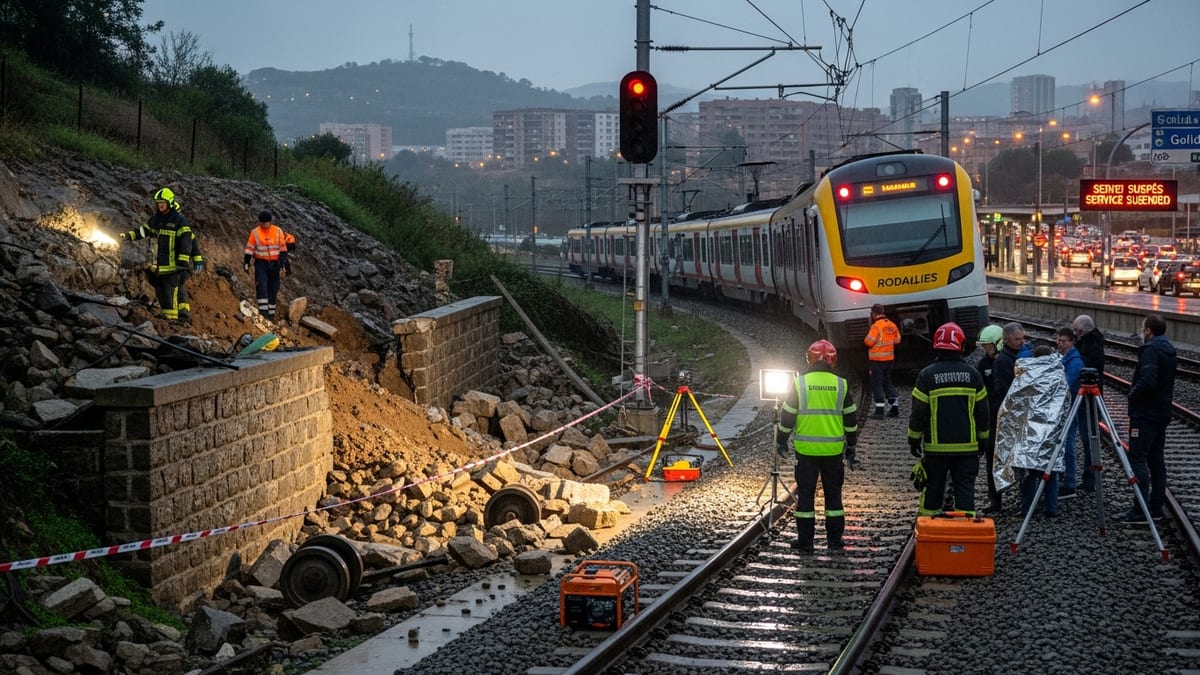
Derailment Reported Amid Blowing Dust Conditions
Initial reports from regional news outlets and publicly available transportation information describe a freight train leaving the tracks in southern New Mexico as strong winds lifted desert dust across the line. The incident occurred along a busy east west rail route that connects the borderlands and the interior United States, an area known for fast changing weather and low visibility events.
Coverage indicates that multiple cars left the tracks during the episode, scattering equipment near the right of way and prompting an immediate response from local emergency services and railroad crews. Early information suggests that the derailed train was hauling mixed freight, a common configuration on lines serving communities and industrial facilities in the region.
There were no early indications of a large scale fire, explosion or community wide evacuation linked to the derailment, according to the initial accounts reviewed. Rail operators and local agencies focused on checking for injuries, securing the site and determining whether any cargo posed a risk to nearby residents or to the environment.
Rail traffic through the affected stretch was temporarily halted while crews assessed track damage and began the process of clearing derailed cars. The interruption added strain to a network that already faces seasonal challenges from heat, storms and congestion across the broader Southwest.
Dust Storms as a Persistent Transportation Hazard
The desert landscapes of southern New Mexico and neighboring states are highly vulnerable to dust storms, particularly during the warm season when strong outflow winds from thunderstorms or passing weather systems lift loose soil into the air. Meteorological summaries for the region in recent months describe frequent episodes of blowing dust and sand, sometimes reducing visibility to near zero across highways and open terrain.
Publicly available weather analyses highlight how these storms can form rapidly, often preceded by a sharp gust front that kicks up towering walls of dust. When such conditions intersect with major transportation corridors, motorists and rail operators can face sudden, severe drops in visibility along with shifting crosswinds that buffet vehicles and equipment.
In southern New Mexico, long stretches of track run across exposed desert flats and through low valleys where dust can easily accumulate and then become airborne. Rail infrastructure in these settings must contend not only with dust, but also with extreme temperature swings that can stress steel rails, ties and fastenings over time.
Transportation safety reviews have repeatedly underscored that weather is one of several key external factors that can complicate rail operations. Blowing dust can obscure signals, grade crossings and track conditions, making it harder for crews to spot obstacles or changes ahead, especially at night or during fast moving storm fronts.
Investigators Look at Weather Among Possible Factors
Formal investigations into rail accidents in the United States are typically led through a combination of federal safety databases, railroad incident teams and, in more serious cases, detailed reviews by national investigators. Those inquiries commonly examine track condition, train handling, mechanical performance and environmental influences such as wind, visibility and precipitation.
In the southern New Mexico derailment, dust storm conditions have emerged in media accounts as a potential factor, based on the timing of the incident and concurrent weather reports describing strong winds and widespread blowing dust across the area. It can take months for full investigative findings to be completed and released, particularly if specialized testing or simulations are required.
Historically, records show that low visibility and high wind events have played a role in some rail incidents across the western United States, though weather rarely acts alone. Investigations often point to a combination of human decisions, infrastructure conditions and environmental stressors that together increase risk along a given stretch of track.
Once preliminary information is compiled, investigators typically provide an outline of the most likely contributing factors and note any uncertainties that remain. In complex weather related events, such as severe dust storms, it can be challenging to quantify exactly how reduced visibility or wind gusts interacted with train speed, weight and braking at the moment of derailment.
Local Communities and Rail Network Feel the Impact
Even when injuries and damage are limited, derailments can temporarily reshape daily life in communities that sit along the tracks. Road closures near grade crossings, noise from heavy equipment and the presence of emergency vehicles can all disrupt normal routines in towns and rural areas that rely on a small number of main roads.
Businesses that depend on timely freight deliveries may also experience delays as railroads reroute trains or hold shipments while the line is inspected and repaired. In parts of southern New Mexico, rail plays a vital role in moving agricultural products, manufactured goods and fuel, meaning that any extended outage can ripple into higher transportation costs or scheduling challenges.
Residents in the broader region have grown accustomed to a range of weather related disruptions, from flash flooding to high winds. Dust storms, in particular, are a familiar hazard that can shut down stretches of interstate, trigger chain reaction crashes on highways and temporarily ground flights or close runways at smaller airports.
For travelers planning to drive or take the train through the borderlands and southern New Mexico, transportation agencies routinely advise checking real time updates for both weather and service conditions. During active dust events, public messaging often emphasizes pulling off the road when visibility collapses and waiting in a safe location until skies clear, an approach that aligns with longstanding safety guidance for the region.
Renewed Focus on Weather Resilience in Desert Rail Corridors
The latest derailment is adding to broader discussions about how rail systems across the Southwest can better adapt to increasingly volatile weather, including stronger wind events and more frequent dust storms described in recent climate and atmospheric research. As temperatures rise and drought alters soil and vegetation, some scientists warn that dust sources may expand or shift, potentially increasing exposure for key transportation routes.
Railroads operating in the region have gradually introduced more sophisticated monitoring tools, including real time weather feeds and sensors that track trackside conditions. Industry publications describe efforts to integrate this information into dispatch and operations centers, so that trains can be slowed, rerouted or temporarily held when conditions deteriorate along exposed sections of line.
Safety advocates and researchers have called for additional attention to human factors, including training crews to respond quickly to sudden visibility drops and to recognize early signs of dust storm formation along the horizon. Community planners, meanwhile, continue to weigh how land use decisions, vegetation management and soil conservation practices might reduce the severity of dust events over time.
As the investigation in southern New Mexico progresses, the incident is likely to remain part of a growing conversation about resilience across the desert transport network. The combination of aging infrastructure, heavy freight traffic and rapidly changing weather is prompting calls for continued investment in both physical upgrades and improved forecasting tools, with the goal of reducing the risk that a single dust storm can push a train off the tracks.