


More news on this day
Seattle’s Link light rail system experienced a late-night derailment near the downtown transit tunnel, leading to a broad suspension of 1 Line service and hurried deployment of shuttle buses for stranded riders.
Get the latest news straight to your inbox!
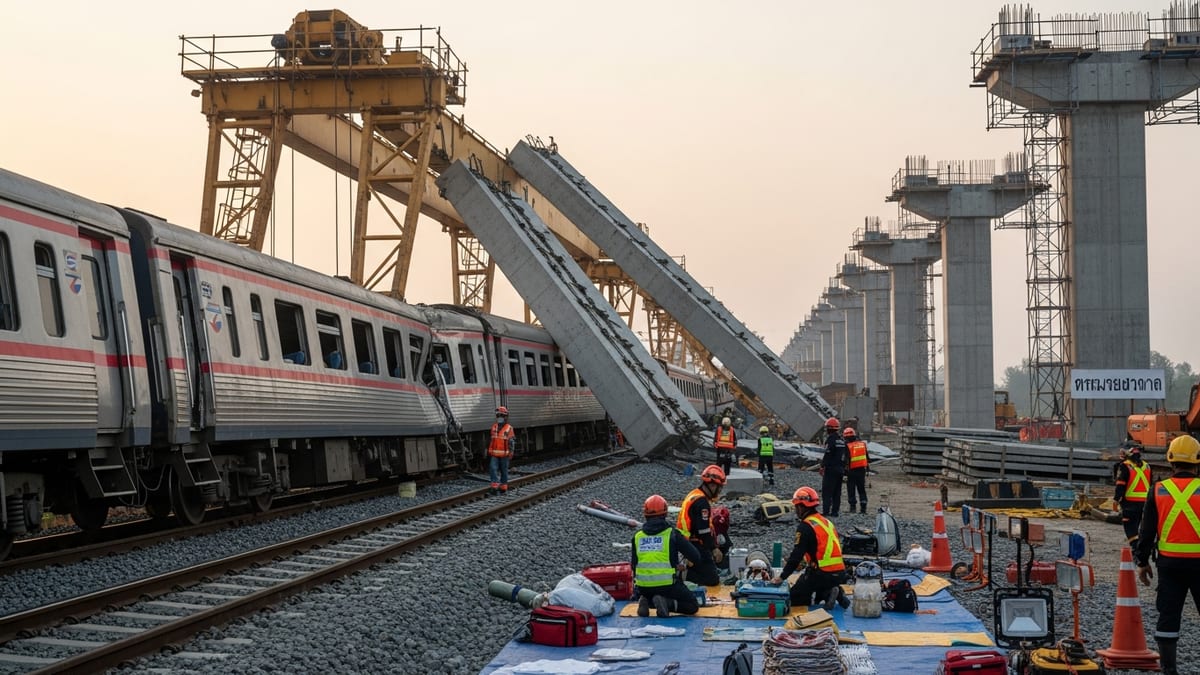
Derailment Near Downtown Disrupts Overnight Service
Reports from riders and transit-watch forums indicate that a Link light rail train derailed at the yard entrance adjacent to the Downtown Seattle Transit Tunnel overnight, prompting an immediate halt to rail operations through the core of the system. The incident occurred after most evening events had concluded but while trains were still carrying late-night passengers between Northgate, downtown, and Seattle–Tacoma International Airport.
According to publicly available accounts, the derailed train was largely empty, with the operator reported as uninjured. Power to the affected tunnel segment was shut off while crews assessed track and overhead wire conditions and arranged for the operator’s safe evacuation. Images and descriptions shared online suggest that the train came off the tracks near a complex series of switches that feed trains in and out of the storage and maintenance yard.
Though the incident unfolded after midnight, the disruption quickly rippled across the 1 Line, affecting passengers attempting to reach late-night flights, service workers heading home from downtown, and riders making early morning connections. Many reported stalled trips and unexpected transfers as trains were turned back short of downtown stations.
Transit agency documents and prior incident reviews show that derailments at low speed, particularly at yard entrances and switch zones, are among the more complex events to recover from, often requiring extensive inspections before regular rail movements can resume.
Service Suspended, Trains Turn Back at Multiple Stations
Publicly available information from rider alerts and social media indicates that rail service was suspended through the Downtown Seattle Transit Tunnel shortly after the derailment, with trains ordered to turn back at several key stations. Northbound trains reportedly ended service at Stadium Station or Judkins Park Station, while southbound trains turned back at Capitol Hill Station and other locations north of downtown.
Passengers onboard late-night trains described unexpected announcements about “extended delays” and instructions to exit at the next station as operators curtailed trips. With no through service into the International District/Chinatown and downtown tunnel stations, riders found themselves re-routing via surface buses or waiting on emerging shuttle arrangements.
This pattern mirrors previous major disruptions on the Link system, documented in Sound Transit internal audits and state safety reports, where train movements were halted systemwide or across large segments to preserve tunnel safety after serious incidents. In those cases, trains turned back at outer stations while the tunnel remained closed for inspections and recovery work.
While some riders eventually completed their trips using regular King County Metro routes, many reported uncertain wait times and crowded platforms as the suspension persisted into the early morning hours.
Shuttle Buses Activated as Emergency “Bus Bridge”
In response to the derailment and tunnel closure, publicly available rider alerts describe efforts to activate “bus bridge” shuttle service to replace trains across the affected corridor. Such shuttle operations, commonly deployed during tunnel maintenance or prior disruptions, typically connect stations on either side of a closure using articulated buses running every 10 to 20 minutes.
Early reports from riders suggested that arranging buses in the middle of the night proved challenging. With many operators already off duty and vehicles assigned to other overnight work, it took time to assemble a usable fleet. During that interval, passengers at stations including Capitol Hill, Stadium, and International District/Chinatown described waiting with little clarity on when shuttle buses would arrive.
Sound Transit and Metro have experience with similar contingencies from earlier service interruptions, including planned tunnel maintenance and ventilation faults that have previously shut down segments of the 1 Line. Historical reports from the agency highlight the logistical complexity of quickly sourcing enough buses, drivers, and curb space to replicate frequent rail service, particularly in dense downtown corridors.
Once established, shuttle buses generally stop near station entrances and are labeled to match the rail line they are standing in for. However, the suddenness and late hour of this derailment meant that many riders were left to piece together options using trip-planning apps, online forums, and station announcements.
Frustration for Riders Amid Pattern of Recent Disruptions
The derailment and subsequent suspension add to a growing list of high-impact disruptions on Seattle’s light rail network in recent months. Riders have repeatedly reported unplanned shutdowns between Northgate and Capitol Hill, or between Angle Lake and Star Lake, with bus shuttles substituting for trains during mechanical issues, power faults, or maintenance work.
Public discussions on regional transit forums reflect increasing frustration over the frequency and scale of incidents requiring shuttle buses. Passengers describe missed flights, crowded platforms, and confusion about which stations still have rail service. Some accounts link repeated disruptions to broader concerns about system reliability ahead of major events that are expected to drive heavy visitor demand in the coming years.
Research on urban transit systems generally notes that while bus bridges are essential for resilience, repeated large-scale disruptions can erode public confidence and shift some riders back to cars or rideshare services. In Seattle, where many bus routes were restructured around the light rail spine, outages can be particularly disruptive when no direct bus alternative mirrors the rail corridor.
The latest derailment appears to have renewed local calls for clearer incident communication, more robust contingency bus planning, and additional investment in maintenance at critical junctions such as yard entrances and tunnel portals.
Next Steps: Inspections, Recovery Work and Gradual Resumption
Based on how similar light rail incidents have been managed locally and in other cities, transit observers expect an intensive period of inspection and recovery work before full service resumes through the affected section. That process typically includes checking track alignment, switch integrity, overhead power systems, and signaling equipment, as well as assessing the derailed train for damage.
Agency safety and operations teams generally coordinate with state oversight bodies during such reviews, drawing on established protocols outlined in public safety and audit reports. If infrastructure damage is found, crews may need to replace rail components, realign track, or adjust switch hardware before regulators and internal safety staff are satisfied that regular service can safely restart.
In some past events, partial service has returned first, with trains operating at reduced speeds through the affected zone while temporary repairs remain in place. Bus shuttles may continue to supplement rail trips until both tracks and train frequencies are fully restored to normal schedules.
For riders, the latest derailment underscores the importance of checking real-time alerts before traveling, particularly late at night or early in the morning. As recovery work proceeds, the city’s primary high-capacity transit spine is likely to face ongoing schedule adjustments, making flexibility and extra travel time crucial for anyone relying on Seattle’s Link light rail network.