


More news on this day
Air travel to and from the United Arab Emirates remains unsettled this week as major carriers warn of continuing delays, selective cancellations and last-minute schedule changes linked to renewed regional tensions between the United States and Iran.
Get the latest news straight to your inbox!
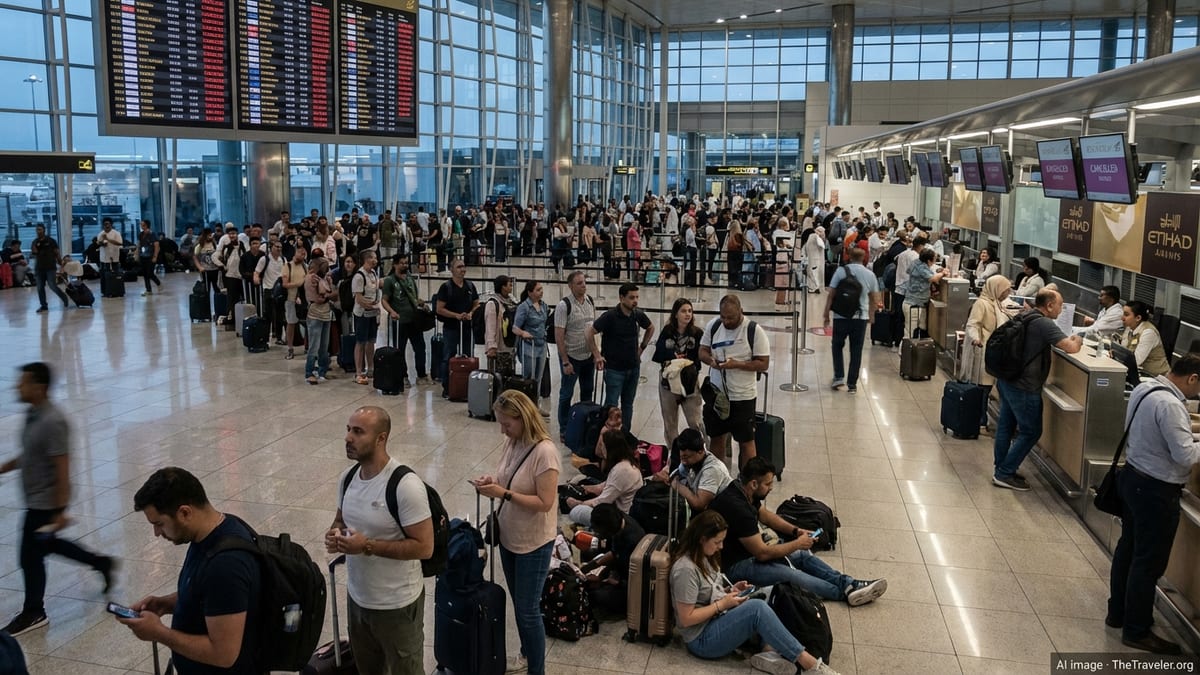
Ongoing disruptions at Dubai and Abu Dhabi hubs
Dubai International Airport and Abu Dhabi’s Zayed International Airport remain fully operational, but published flight boards show a growing list of delayed arrivals and departures alongside a smaller number of outright cancellations. Reports indicate that September’s first week has brought fresh disruption, with services affected on both long-haul and regional routes.
Coverage from UAE-based outlets notes that multiple Emirates, Etihad Airways, flydubai and Air Arabia flights have been running behind schedule in recent days, particularly on services linking the UAE with North America, South Asia and nearby Gulf states. Several flights between Dubai and Bahrain, as well as Abu Dhabi and Kuwait, have been cancelled or placed on reduced frequencies as airlines adjust to changing risk assessments and airspace constraints.
Airports and airlines are emphasizing that flights shown as operating can still be subject to late changes. Publicly available advisories continue to urge passengers to check their individual flight status shortly before leaving for the airport and to allow extra time for check-in and security, given the potential for knock-on delays across tightly timed hub-and-spoke networks.
Despite the disruption, data from travel industry trackers and local media reports indicate that the vast majority of flights are still operating, albeit in some cases on altered routings that lengthen journey times and complicate connections for transit passengers.
Regional tensions unsettle Gulf airspace
The latest wave of disruption follows a renewed escalation between the United States and Iran, including US strikes on Iranian targets and subsequent missile and drone launches towards US-linked sites in Bahrain, Jordan, Iraq and Kuwait. According to widely reported updates from regional governments and international media, these exchanges have triggered heightened security measures and close monitoring of key air corridors across the Gulf.
Aviation safety bulletins from European regulators have extended earlier warnings on parts of Gulf and surrounding airspace, advising carriers to exercise caution and, in some cases, to avoid specific flight levels or routes. These advisories do not close UAE airspace, but they contribute to more circuitous routings and tighter operational margins for airlines seeking to maintain schedules while minimizing exposure to potential risks.
Industry analysis cited by travel advisories suggests that air traffic patterns remain fluid, with carriers dynamically recalculating routings to steer clear of temporary danger zones. This adds complexity for network planners and crew schedulers, increases fuel costs and can push aircraft and crews out of position, all of which in turn contribute to rolling delays and irregular operations.
Travel-focused publications tracking the situation emphasize that all four major UAE passenger airports remain open, with no blanket closures reported as of early September. Instead, disruption is emerging from a combination of regional security developments, shifting airspace guidance and airport-level congestion as airlines bunch departures into narrower operating windows.
Airline responses: selective suspensions and rerouting
Major UAE-based carriers are continuing to operate most of their networks but have implemented targeted adjustments. Reports from business and aviation outlets show Emirates, Etihad Airways and flydubai operating core intercontinental and regional routes while cancelling selected services to certain Gulf destinations and trimming frequencies on others.
Budget carrier Air Arabia has maintained operations from its UAE bases, though regional reporting points to cancelled or reduced flights on some routes to Bahrain and Kuwait. Additional operational challenges, such as industrial action at foreign airports, have compounded the impact for some airlines, including disruptions on links between Abu Dhabi and Tel Aviv.
International carriers have also adjusted their exposure to the region. According to recent coverage, some European airlines, including Air France and KLM, have temporarily suspended services to Dubai and other Gulf cities on specific dates while they review the security environment and regulatory guidance. Others have reduced frequencies or introduced longer routings that skirt sensitive areas, resulting in extended flight times.
Airlines’ public advisories consistently highlight that schedules remain subject to further review. Passengers are being encouraged to keep contact details updated in booking records so carriers can push real-time notifications about gate changes, significant delays or cancellations, and to consider flexible tickets or rebooking options where available.
Impact on travellers and forward bookings
For travellers, the practical impact ranges from slightly longer journeys to unexpected overnight stays. Passenger accounts on social platforms describe missed connections in Dubai and Abu Dhabi when inbound flights arrive late from Europe, North America or South Asia, creating a knock-on effect for tightly timed onward departures to Africa and Asia.
Travel advisory platforms note that while standard airline disruption policies generally apply, some tickets and insurance products treat conflict-related disruptions differently from routine operational delays. Travellers are being advised to review fare conditions, especially for nonrefundable or heavily restricted tickets, and to check how trip insurance handles cancellations linked to regional instability.
Tourism analysts quoted in recent commentary suggest that demand for UAE as a destination remains resilient in the near term, given the country’s role as a global transit hub and established winter tourism market. However, there are early signs that some long-haul passengers are exploring alternative routings via other hubs in Europe or Asia when booking travel for late September and October, reflecting a desire to reduce perceived risk even as UAE airports continue to function normally.
Corporate travel managers, particularly in energy, logistics and consulting sectors with strong Gulf ties, are reportedly revisiting contingency plans. These include diversifying routings across multiple hubs, allowing wider buffers between meetings and flight times, and preparing for short-notice itinerary changes if airspace guidance tightens further.
What passengers should do now
Given the evolving situation, travel experts and official advisories converge on a few practical steps for those flying to or through the UAE in the coming days. First, passengers are urged to monitor their flight status frequently using airline apps or airport websites, rather than relying solely on early booking confirmations or third-party travel portals.
Second, allowing additional time at the airport is widely recommended. With some carriers rerouting and consolidating services, check-in counters and security lanes can become congested during peak waves of delayed departures. Arriving earlier helps mitigate the impact of longer queues and enables travellers to respond quickly if boarding times change.
Third, travellers with tight connections may wish to consider building in longer layovers or, where possible, selecting itineraries that offer rebooking flexibility. This is particularly relevant for journeys that involve multiple regional stops, such as itineraries linking North America or Europe with secondary cities in South Asia or Africa via Dubai or Abu Dhabi.
Finally, observers underscore that conditions can improve or deteriorate quickly in response to diplomatic and security developments. Those planning trips later in September are being advised to keep a close eye on airline and government travel updates in the weeks before departure, while avoiding hasty cancellations that could incur unnecessary costs if the situation stabilizes.
Gulf Business: UAE flights disrupted as delays and cancellations continue amid regional tensions
The National: Flights delayed and cancelled at Dubai and Abu Dhabi airports
Gulf News: Flying from UAE today – flight cancellations and delays