


Easter in Rome is one of the most moving and complex travel experiences in Europe. In 2027, Easter Sunday falls on 28 March, with Palm Sunday on 21 March, Holy Thursday on 25 March, Good Friday on 26 March, Holy Saturday on 27 March and Easter Monday on 29 March. This guide combines the latest practical information with typical Holy Week patterns in Rome and Vatican City so you can attend key celebrations while avoiding common pitfalls around tickets, closures, transport and crowds.
Get the latest updates straight to your inbox!
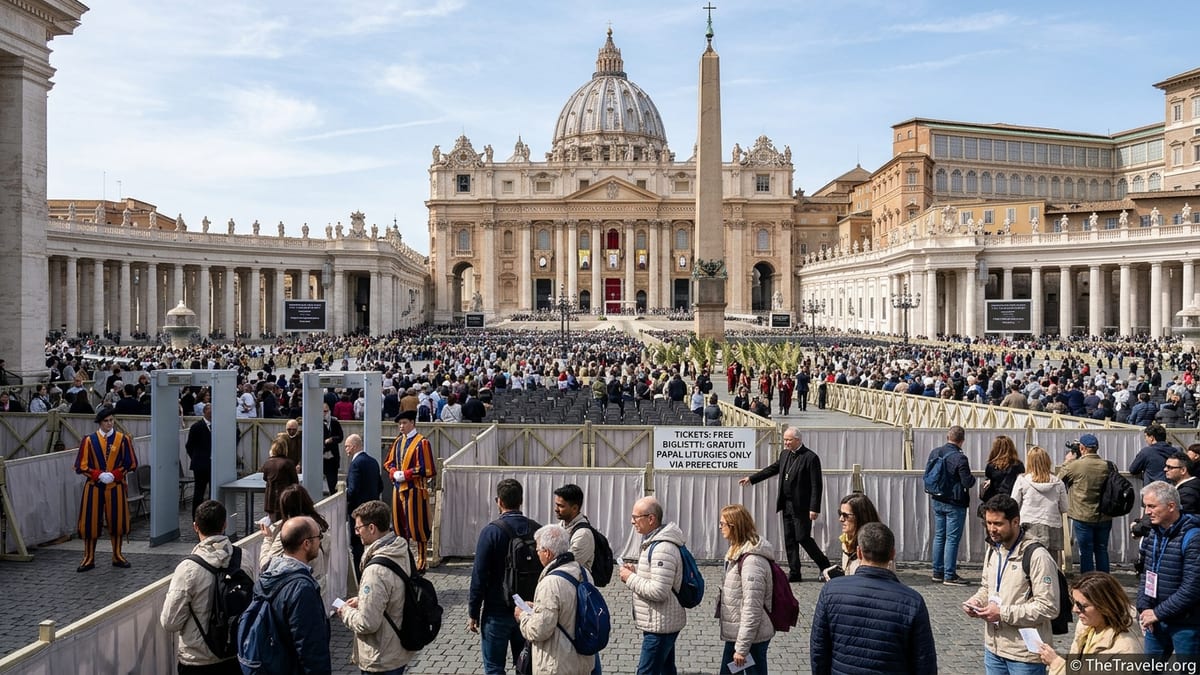
Holy Week 2027 in Rome: What Is Already Known and What Is Not
The universal Catholic liturgical calendar confirms that in 2027 Holy Week runs from Palm Sunday on 21 March to Easter Sunday on 28 March, with the Paschal Triduum beginning on the evening of Holy Thursday 25 March and ending on Easter Sunday 28 March. Several national and diocesan calendars already align on these dates, so visitors can safely plan travel around this framework even though the Vatican’s detailed papal schedule will only be published a few weeks before Holy Week.
The Vatican’s Office for the Liturgical Celebrations of the Supreme Pontiff usually releases a “Holy Week and Easter” programme each year only in late February or early March. For 2027 this means the exact times of papal liturgies, locations and language notes are not yet officially listed. However, recent Holy Week programmes follow an extremely stable pattern, so current-year timings give a reliable indication of what to expect, while always allowing for small adjustments.
Travelers should distinguish between what is fixed and what is provisional. The dates of Palm Sunday, Holy Thursday, Good Friday, Holy Saturday, Easter Sunday and Easter Monday are fixed for 2027. The presence of the Pope at the main liturgies, the Easter Vigil in Saint Peter’s Basilica and the Urbi et Orbi blessing from Saint Peter’s Square are virtually certain. Exact times, entry arrangements and any special Jubilee or anniversary events remain subject to official confirmation, so you should recheck the Vatican’s liturgical calendar and the Prefecture of the Papal Household in early 2027 before finalizing detailed hour by hour plans.
Papal Holy Week Celebrations: What Typically Happens
On Palm Sunday the Pope usually presides at a morning Mass in Saint Peter’s Square that combines the blessing of palms and the Passion Sunday liturgy. Recent years have seen start times around 10:00 to 10:30, with pilgrims advised to arrive several hours earlier for security screening and to secure a place. Tickets are generally required for seated sections but not for standing areas at the back of the square. Because 21 March is also the start of peak spring tourism, expect a mix of pilgrims and casual visitors and leave time to navigate controlled access points around the colonnades.
Holy Thursday normally features the Chrism Mass in Saint Peter’s Basilica in the morning and the Mass of the Lord’s Supper in the evening. In recent years the evening liturgy has often been celebrated by the Pope away from the basilica, for example in a prison, hospital or reception center, with limited access for the general public. By contrast, the morning Chrism Mass is usually open to ticketed pilgrims and clergy. Travelers focused on papal events should therefore monitor which Holy Thursday liturgy is public in 2027 and be prepared that the evening Mass may not be accessible to visitors.
Good Friday in Rome has two principal papal events. In the afternoon the Celebration of the Passion of the Lord takes place in Saint Peter’s Basilica, usually around 17:00. Late in the evening, the Way of the Cross is held at the Colosseum, with the Pope presiding and meditations read in multiple languages. This Via Crucis has become one of Rome’s most atmospheric public devotions, drawing very large crowds around the Colosseum and Palatine Hill. Traditionally no tickets are required, but security perimeters and road closures mean you should reach the area well ahead of the start time and be ready to stand for the entire service.
The Easter Vigil on Holy Saturday is celebrated inside Saint Peter’s Basilica and is one of the most sought after papal liturgies. It usually begins at 19:30 or 20:30 and lasts several hours, including the blessing of the new fire, readings, baptisms and the first Mass of Easter. Seating is limited and tickets are required. On Easter Sunday, the Pope presides over Mass in Saint Peter’s Square in the morning, followed at midday by the Urbi et Orbi blessing from the central balcony of the basilica. Tickets are needed for the main seated area at Mass but not to stand further back in the square during Mass or to hear the blessing.
Tickets, Reservations and How to Avoid Scams
For papal liturgies, tickets are free. This is a central point that the Vatican repeats and that every traveler should remember. Any website or intermediary selling “guaranteed seats” or “VIP papal Mass tickets” for a fee is acting without Vatican authorization. Tour operators can legitimately sell guided packages that combine commentary, assistance and sometimes reserved areas managed by municipal authorities, especially for events like the Way of the Cross at the Colosseum, but they cannot sell the Vatican’s own tickets to liturgies.
Tickets for papal Masses and liturgies are handled by the Prefecture of the Papal Household and, for some clergy and group arrangements, by the Office for the Liturgical Celebrations. In recent seasons, lay pilgrims have been able to request tickets via an official online portal or by post or fax. Some national services, such as the North American College’s office for United States visitors, coordinate requests for pilgrims from their regions, but they still rely on allocations from the Prefecture. Confirmation is never instantaneous and often arrives only a few days or weeks before the event, so visitors should avoid booking non refundable services that depend on guaranteed tickets.
Travelers should be skeptical of third party vendors advertising “Easter Mass at the Vatican with seat” for high prices on major booking platforms. These offers usually include a guide who accompanies clients to Saint Peter’s Square and helps them navigate security and standing zones while using free papal tickets. The added value can be real for some visitors, but it is crucial to understand that the payment is for guiding, not for the Mass itself, and there is no such thing as a legitimately purchased papal liturgy ticket. If a seller claims to have a direct line to Vatican ticket offices or to sell “exclusive” balcony access, you should walk away.
Because demand around Holy Week is intense, you should send ticket requests several months in advance, ideally in late autumn 2026 or early January 2027. Include flexible options in case you cannot obtain tickets for every desired liturgy, and consider prioritizing the Easter Vigil or Easter Sunday Mass while planning to attend non papal celebrations in Roman parish churches for other days.
Security, Dress Code and Entering Saint Peter’s
Security around the Vatican tightens notably during Holy Week. Access to Saint Peter’s Square is funnelled through airport style metal detectors, with additional barriers placed along Via della Conciliazione and surrounding streets. Rome authorities typically extend these security perimeters for major liturgies and for the Easter Sunday blessing, which can lead to very long queues. Experience from recent years suggests arriving at least two to three hours before a papal event if you hope to secure a good position, and even earlier for Palm Sunday and Easter Sunday.
Prohibited items largely mirror those of major airports and museums. Knives of any kind, glass bottles, large umbrellas with pointed tips, tripods, drones, and bulky luggage are not allowed through security. Small backpacks are normally acceptable but may slow down screening. There are no official cloakrooms for papal events in the square, so you must plan to carry everything with you and keep your load minimal. For families, compact folding strollers are often permitted but wide or heavy buggies can be refused at crowded liturgies.
Dress codes apply both to liturgies and to sightseeing inside Saint Peter’s Basilica. Shoulders and knees should be covered for all genders, and extremely low cut or transparent clothing can lead to refusal at the entrance. In March weather is variable, often cool in the mornings and evenings, so visitors usually bring light jackets or cardigans that also help meet the dress code. It is wise to pack a small scarf or shawl that can turn a sleeveless top into acceptable attire at short notice.
There is a practical difference between attending a religious service and sightseeing in the basilica. During papal Masses and many Holy Week liturgies the basilica is closed to regular tourism and entry is limited to those attending the service. At other times public access resumes, but queues can be long and some chapels may remain reserved for prayer. Travelers should avoid planning a standard sightseeing visit to Saint Peter’s Basilica immediately before or after a papal event, as security flows and liturgy preparations often disrupt normal visiting patterns.
Vatican Museums, Sistine Chapel and Holy Week Closures
The Vatican Museums and Sistine Chapel follow a well established holiday schedule. As of the latest calendar, they are open Monday to Saturday, with extended evening hours on certain days, and closed on most Sundays, including Easter Sunday. The official list of closure days indicates that both Easter Sunday and Easter Monday are full closure days for the Museums. For 2027 this means the Museums will be open throughout Holy Week from Monday 22 March to Saturday 27 March, then closed on Sunday 28 and Monday 29 March.
Because Easter Sunday in 2027 falls on the last Sunday of March, the usual “last Sunday of the month” free opening of the Museums will not apply. The free Sunday opening is suspended whenever it coincides with Easter or other major solemnities. Travelers hoping to economize with a free visit must choose a different month or accept that Holy Week will involve paid entry only. Published hours in recent years place general opening from around 8:00 to 19:00 or 20:00 with last entry in the late afternoon, but you should confirm specific 2027 hours closer to travel.
Holy Week is among the busiest periods of the year for the Museums. Recent visitor numbers suggest daily attendance often reaches into the tens of thousands, with especially high pressure on Good Friday and Holy Saturday as pilgrims combine religious observance with art viewing. Timed entry tickets purchased in advance are practically essential if you want to avoid prolonged queues along the Vatican walls. Morning slots usually sell first, so late afternoon entry can be a strategic choice for visitors attending morning liturgies.
On days with major papal events in the square, access routes to the Museums can be affected, especially near the colonnades. However, the Museums entrance on Viale Vaticano is technically separate from Saint Peter’s Basilica and Square, so crowds at liturgies do not directly close the galleries. You should allow extra time for moving between the two areas, particularly if you have a timed museum entry immediately after a Mass.
Where to Stay: Comparing Rome’s Key Easter Neighborhoods
Hotel availability and pricing for Easter 2027 are only beginning to appear on major booking platforms, but early samples, combined with past Easter data, show clear patterns. Around the Prati district, which includes many streets north and east of the Vatican, mid range hotels and guesthouses for Easter week 2027 often appear in the approximate range of 180 to 260 euros per night for a double room when booked several months ahead, with simple pensions sometimes cheaper and upscale boutiques above this range. The advantage of Prati is walking access to Saint Peter’s in 15 to 20 minutes and relatively easy metro Line A connections at Ottaviano and Lepanto.
Borgo, the maze of old streets between the Tiber and Saint Peter’s Square, offers unparalleled proximity. Here, a small three star hotel or religious guesthouse during Easter week can command noticeably higher per night prices than similar quality in Prati or Monti, reflecting the ability to walk to early liturgies in under 10 minutes. Inventory is limited, and many places host pilgrimage groups, so independent travelers should book very early if they want this location.
Centro Storico, the historic center around Piazza Navona, Campo de’ Fiori, the Pantheon and Trevi Fountain, balances atmosphere with centrality. Easter 2027 sample rates for well located mid range hotels often fall in the approximate 220 to 300 euros per night bracket for standard doubles, with apartments sometimes competitive for families. From here, you can walk to many sights and reach the Vatican by bus across the river in about 20 to 30 minutes, which is convenient but not as immediate as Prati or Borgo for pre dawn queues.
Monti lies between the Colosseum, the Roman Forum and Termini station, and is especially appealing for visitors focused on ancient Rome. Prices here during recent Easter seasons have been similar to or slightly below those in Centro Storico for comparable properties. You can walk to the Colosseum in under 15 minutes from many streets in Monti, and reach the Vatican in about 25 to 35 minutes via Metro Line B from Cavour to Termini, then Line A to Ottaviano. Termini itself offers the widest range of budget hotels and hostels, frequently with double rooms under 150 euros during Easter for early bookers, but the environment feels more functional and less charming. It does provide unmatched rail and airport bus connectivity, which can be valuable for very early or late flights.
Transport, Road Closures and Moving Around During Holy Week
Rome’s metro, buses and trams operate on a standard schedule during most of Holy Week, with public holiday timetables generally applied on Easter Sunday and Easter Monday. Recent Easter periods show that metro lines A, B/B1 and C usually run from around 5:30 to 23:30, with night buses replacing them later. On Good Friday and Holy Saturday, services are sometimes strengthened on key lines to handle crowds, particularly around the Colosseum for the Way of the Cross and around Saint Peter’s for papal liturgies, though final 2027 details will come from the city transport operator closer to the date.
Temporary road closures are a constant feature of Easter. For the Via Crucis, the area around the Colosseum, Via dei Fori Imperiali and parts of the Celio hill usually close to traffic from late afternoon until late evening, with several bus lines diverted. On Palm Sunday and Easter Sunday, streets radiating from Saint Peter’s Square and along Via della Conciliazione are often closed or heavily restricted, affecting taxi drop off points and bus routes. Travelers should factor in extra walking time and check for any special shuttle services organized for pilgrims in 2027.
Airport connections from Fiumicino and Ciampino continue through Holy Week, although early morning and late night frequencies may be reduced on public holidays. Examples from recent years include the Leonardo Express train between Fiumicino and Termini running every 15 to 30 minutes during the day even on holidays, while regional trains and buses follow special schedules. Taxis from the airports to central Rome operate at fixed official fares. Visitors arriving on Easter Sunday morning should avoid cutting arrival times too close to papal liturgies, as the combination of airport queues, holiday traffic and security perimeters can add unexpected delays.
Within the city, walking remains the most reliable way to move during major events. Comfortable shoes, layered clothing and a compact rain jacket or umbrella are invaluable. During Holy Week, ride hailing and taxis near Saint Peter’s and the Colosseum can be difficult to obtain immediately after events, so having a pre planned walking route back toward less congested streets, such as across the river toward Prati or along Via Nazionale from the Colosseum, can save time.
Three Day Easter Itineraries: Devotional and Sightseeing Options
For visitors prioritizing religious participation, a realistic three day plan might center on Good Friday to Easter Sunday. On Good Friday morning, you could visit a quieter basilica such as San Clemente or Santa Prassede near the Colosseum, then rest in the afternoon before attending the liturgy of the Passion in Saint Peter’s Basilica if you have tickets. After a break for a simple dinner, head to the Colosseum area by around 19:30 to secure a good standing place for the Way of the Cross, which usually begins around 21:00. This schedule balances contemplation with necessary crowd management.
On Holy Saturday, consider a morning visit to the Vatican Museums and Sistine Chapel using a timed ticket, leaving by mid afternoon to rest before the Easter Vigil. Allow at least an hour to return to your accommodation, change and pass through security for the Vigil at Saint Peter’s. Given the late finish, it is wise to stay within easy transport distance of the Vatican or budget for a taxi back to your hotel if services are reduced late at night. The following morning, Easter Sunday, aim to arrive in Saint Peter’s Square several hours before the papal Mass, whether or not you have a seated ticket, and remain afterward for the Urbi et Orbi blessing.
For travelers more interested in sightseeing than liturgies, a different three day plan works better. You might spend Good Friday prioritizing the Colosseum, Roman Forum and Palatine Hill with pre booked entry in the morning, then visit the Capitoline Museums in the afternoon if the weather turns rainy. Be mindful to finish sightseeing near the Colosseum before late afternoon, when security preparations for the Way of the Cross begin. On Holy Saturday you could explore the Centro Storico, including the Pantheon interior, Piazza Navona and Trevi Fountain, with an optional evening stroll to the Spanish Steps.
Easter Sunday itself is ideal for quieter exploration. Many smaller churches hold beautiful but less crowded Masses that can be moving even for non Catholics, and numerous trattorias in neighborhoods like Trastevere, Monti and Testaccio offer Easter lunch menus. Major archaeological sites may have reduced hours or special holiday patterns, so it is sensible to focus on open air walking rather than tightly timed museum visits. Easter Monday, which you may or may not include in a three day stay, has a picnic tradition among Romans and can be a good day to visit the Appian Way or the parks of Villa Borghese if you extend your trip.
Budgets, Accessibility and Booking Priorities
Given current price indications for Easter periods in Rome, a mid range budget for a couple over three nights in March 2027 might include approximately 600 to 750 euros for accommodation in a central neighborhood such as Prati or Monti, 90 to 130 euros for local transport and airport transfers using a mix of trains, metro and occasional taxis, and around 300 to 420 euros for meals if you alternate sit down restaurants with simpler panini or pizza by the slice. Adding paid attractions such as the Colosseum archaeological park, Vatican Museums and a few smaller sites might contribute another 80 to 150 euros for two adults, depending on discounts and combination tickets. Families would need to budget more for larger rooms or apartments, but children often benefit from reduced or free entry at certain sites.
Accessibility is improving in Rome but remains uneven. Saint Peter’s Square is largely step free, and ramps exist at several access points. Inside the basilica, wheelchairs can be used and there are accessible entrances, though moving through crowds during Holy Week can be challenging. The Vatican Museums have designated accessible routes, lifts and a limited number of wheelchairs available on site, but advance planning is crucial, especially during peak days. In the city, Metro Line C is almost fully accessible, while older Line A and B stations vary considerably, so travelers with mobility concerns may prefer accessible taxis or carefully planned bus routes.
Holy Week can bring unstable weather, with cool mornings and the possibility of rain. Rainy day alternatives include the Capitoline Museums, Palazzo Massimo, underground areas of San Clemente, or simply spending more time inside churches where art and architecture can be appreciated regardless of the weather. It is helpful to build flexibility into each day so that rain does not derail a once in a lifetime papal event or a key museum visit.
For Easter 2027, the most important booking priorities are flights and accommodation, ideally secured many months in advance, followed by timed entry tickets for the Vatican Museums and the Colosseum archaeological area. Requests for free papal liturgy tickets should be submitted well ahead of time using official Vatican channels, understanding that confirmation may arrive relatively close to Holy Week. Once these pillars are in place, you can fill in the rest of your schedule with neighborhood walks, parish visits and meals that capture Rome’s blend of spiritual depth and everyday life during its most significant religious season.