


More news on this day
An EasyJet flight from Hurghada to London Luton diverted to Rome Fiumicino on May 19 2026 after reports that a mobile phone was still charging on a power bank packed inside luggage in the aircraft hold, triggering a precautionary response and overnight disruption for nearly 180 passengers.
Get the latest news straight to your inbox!
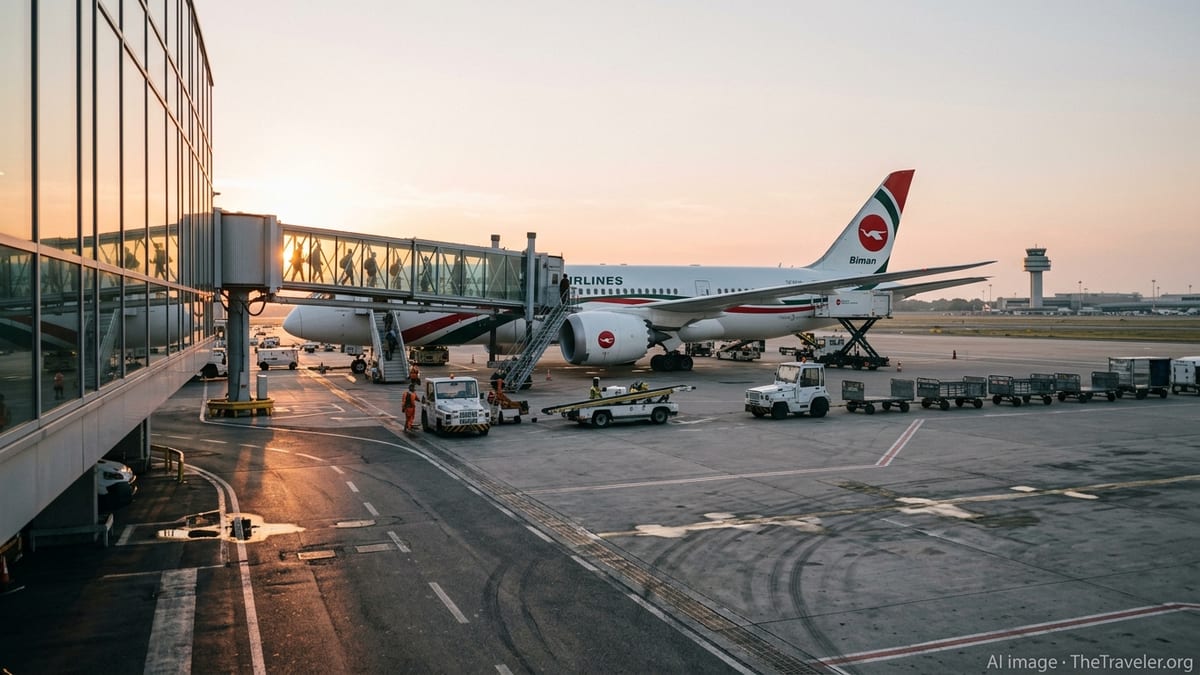
Late-night diversion for Hurghada to Luton service
Publicly available flight data and media reports indicate that EasyJet service EZY2618, operated by an Airbus A320neo, was en route from the Red Sea resort of Hurghada in Egypt to London Luton when the crew were informed about a power bank and connected phone inside a checked suitcase. The aircraft subsequently diverted to Rome Fiumicino, arriving at around 23:30 local time.
Initial coverage from European and UK outlets describes how a passenger reportedly alerted cabin crew that a device in their checked baggage might still be charging from a portable power bank. With the aircraft already in cruise, the information reached the flight deck and a diversion decision followed, in line with established safety procedures for potential lithium battery hazards in inaccessible compartments.
Reports indicate that the landing in Rome was routine, with no smoke, fire or visible damage. The aircraft taxied to the stand, passengers disembarked normally and local ground teams began handling the baggage and onward travel arrangements.
Why a charging power bank in the hold is treated as a serious risk
The decision to divert has been widely linked in published coverage to the specific risks posed by lithium ion batteries in aircraft holds. International aviation guidance treats power banks as hazardous goods when not carried and handled correctly, particularly if they are damaged, defective or unintentionally activated.
Industry information and EasyJet’s own public guidelines state that power banks and spare lithium batteries must be carried in cabin baggage rather than in checked luggage. The reasoning is straightforward: if a battery overheats or goes into thermal runaway in the cabin, crew and passengers can see the incident and use on-board fire extinguishers and containment procedures. In a cargo hold, by contrast, access is limited and an overheating device can become significantly more dangerous before it is detected.
Safety specialists frequently cite previous cargo and passenger aircraft events involving lithium batteries as the backdrop to current rules. While the EasyJet flight to Luton landed safely in Rome with no reported injuries or damage, the episode underlines how even a single charging device stored out of sight can prompt a full diversion when it is located in the hold instead of the cabin.
Passenger disruption and overnight delays in Rome
Accounts published in European and UK media describe a night of disruption for those on board EZY2618. After landing at Rome Fiumicino, passengers were taken off the aircraft and faced an unplanned overnight stay in the Italian capital while arrangements were made for onward travel to London.
According to these reports, EasyJet arranged hotel accommodation and meals for many travellers, while others remained at the airport to await updated flight information. The next available service from Rome to London Luton was scheduled for the following day, extending journeys that had originally been expected to arrive in the UK in the early hours of Wednesday.
Social media posts and interviews cited in news coverage suggest that, although there was initial concern during the descent and diversion, many passengers later expressed relief that the cause was identified as a power bank and that the situation did not escalate into an in-flight fire or structural issue.
Regulatory backdrop and airline battery policies
The EasyJet diversion near Rome comes amid tightening global scrutiny of personal electronic devices carried on board commercial flights. International standards advise airlines to require that spare lithium ion batteries and power banks are transported only in cabin baggage, with terminals protected against short circuits and maximum capacity limits applied.
EasyJet’s publicly available dangerous goods information explains that smart luggage and bags containing power banks may only travel in the hold if the battery component has been disconnected and removed to the cabin, with exposed terminals covered. Similar stipulations appear across many European and international carriers, reflecting a shared approach to managing battery-related risks.
Recent attention to power bank regulations has also grown in other markets, where carriers have introduced stricter rules on in-flight charging or the number of power banks a passenger may carry. The Rome diversion is likely to feed into this wider discussion by highlighting how a single overlooked device, once placed in checked luggage and left charging, can disrupt an entire flight.
What the incident means for air travellers
For travellers, the EasyJet A320neo diversion serves as a sharp reminder to review airline guidance on batteries before packing. Passengers on the May 19 flight appear to have complied once the oversight was recognised, with the individual reportedly informing crew about the charging device mid-flight, but by that stage the power bank was already in the hold.
Travel advisories generally recommend that power banks, spare batteries, laptops and e-cigarettes travel in carry-on bags, switched off when not in use, and never left charging unattended. Placing such items in checked luggage, particularly while connected to other devices, can breach airline policies and trigger exactly the kind of precautionary response seen over Italy.
In the aftermath of the Rome diversion, aviation observers note that the outcome was ultimately uneventful: a safe landing, no fire, and passengers rebooked to London after an overnight delay. Yet the scale of the operational response illustrates how seriously the industry now treats lithium battery risks, and why even routine leisure flights can be significantly disrupted when charging power banks end up in the cargo hold instead of under the seat in front of a passenger.