


More news on this day
Thousands of U.S. travelers are running into mounting air traffic disruption ahead of the Memorial Day holiday weekend, with more than 5,700 flights delayed at major hubs and schedules tightening just as the summer travel season begins.
Get the latest news straight to your inbox!
Delays Mount at Key Gateway Airports
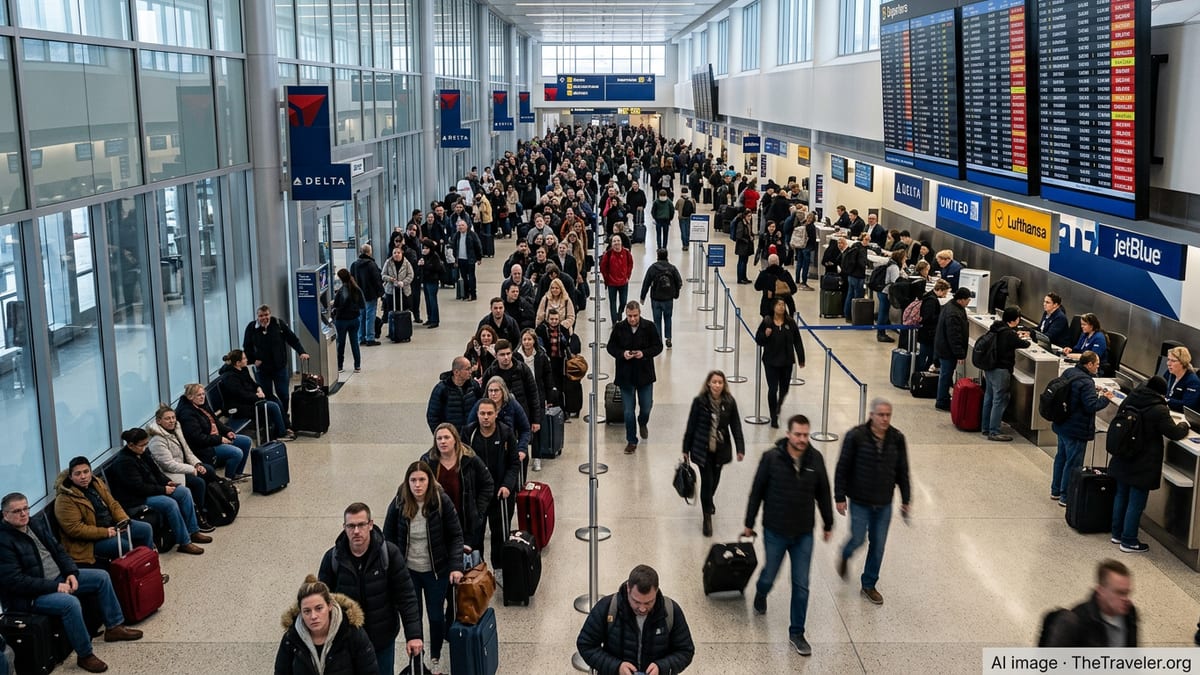
Publicly available data from flight-tracking services indicates that more than 5,700 flights within, into or out of the United States have been delayed in the latest 24 hour period, snarling traffic at some of the country’s busiest hubs. The brunt of the disruption is concentrated at large connecting airports such as Atlanta, Chicago O’Hare, Dallas Fort Worth, Denver, New York area airports and major Florida gateways, where rolling congestion is rippling through domestic and international networks.
Reports show that while the number of outright cancellations remains comparatively limited, extensive departure and arrival delays are forcing crews and aircraft out of position, leading to long queues at security and customer service desks. Passengers on evening departures are encountering waits that stretch well beyond scheduled departure times, while early morning operations are already absorbing knock-on effects from late-arriving aircraft.
According to published coverage of recent travel patterns, days with several thousand delays and relatively fewer cancellations have become a recurring feature of U.S. aviation, particularly during peak periods. The current wave of disruption is emerging just as passenger volumes are climbing toward or above pre-pandemic levels for the late May and early June window, leaving airports and airlines with little margin for error.
At several hubs, terminal crowds have built through the day as delayed flights converge into what would normally be quieter periods. That compression of schedules is putting additional pressure on baggage handling, catering and turnaround services, amplifying the impact of each new delay on the wider system.
Weather, Congestion and Staffing Converge
Published aviation status dashboards point to a combination of thunderstorms, low clouds and traffic management initiatives as primary triggers for the latest disruptions. Storm systems tracking across parts of Texas, the Midwest and the Northeast have periodically reduced the number of arrivals that airports can safely accept per hour, prompting the use of ground delay programs that hold flights at their origin until space opens downline.
Industry analyses note that even short-lived weather events at one or two major hubs can quickly cascade nationwide. When departures are slowed in Atlanta or Dallas Fort Worth, aircraft that were scheduled to operate later flights through Chicago, Denver or West Coast gateways may arrive out of sequence, leading to rolling delays that persist long after local conditions have improved.
Tight staffing in some operational roles is also compounding the challenge. While airlines and airports have rebuilt much of their workforces since the depths of the pandemic, unions and analysts have repeatedly highlighted that there is little spare capacity when demand spikes or when storms force complex rerouting. Crew duty-time rules, which cap the hours pilots and flight attendants can legally work, mean that fairly modest holdups can require last-minute re-crewing or, in some cases, result in additional cancellations.
Aviation data from recent holiday and weather events shows similar patterns, with large numbers of delays outpacing cancellations when carriers attempt to preserve as many flights as possible. This strategy may keep more routes technically operating, but it also increases the likelihood of missed connections and extended onboard waits as aircraft queue for departure slots.
Holiday Getaway Plans Under Strain
The latest disruption arrives at a critical moment for Memorial Day travelers, who traditionally use the long weekend as the unofficial start of the U.S. summer vacation season. Forecasts from travel industry groups had already pointed to near-record passenger volumes at airports across the country, driven by steady consumer demand and strong bookings to beach, national park and city destinations.
According to recent travel-news coverage, the broader Memorial Day period has already seen tens of thousands of combined delays and cancellations across multiple days, with the worst of the congestion repeatedly surfacing on peak departure afternoons. The new total of roughly 5,700 delays in a single day adds another layer of strain for travelers trying to reach family gatherings, cruises, tours and international connections.
Families with tight itineraries are among the most exposed. Missed connections on the outbound leg can mean the loss of prepaid nights at hotels or resorts, while disruptions on the return leg risk interfering with work and school schedules next week. Travel insurance providers and consumer advocates have reported an uptick in questions about compensation, rebooking rules and out-of-pocket costs during recent waves of disruption, suggesting that confusion around passenger rights remains common.
Regional differences are also emerging as popular leisure markets weather the turbulence unevenly. Some mid-sized airports and secondary hubs are operating with relatively minor delays, while high-traffic coastal and Sun Belt gateways experience heavier congestion. That patchwork is creating a situation in which travelers on similar routes may encounter dramatically different experiences depending on the timing and routing of their flights.
What the Disruptions Reveal About System Resilience
Analysts observing the latest disruptions argue that the pattern of thousands of delays with more modest cancellation figures highlights both strengths and vulnerabilities in the current U.S. air travel system. On one hand, airlines are more often trying to keep flights on the schedule rather than preemptively cutting large portions of their networks, a practice that drew sharp criticism during severe meltdowns in previous peak seasons.
On the other hand, the reliance on long sequences of tightly timed flights at major hubs means that any disturbance can propagate quickly throughout the day. A single delayed aircraft may be scheduled to operate three or four additional legs, spreading its initial setback to multiple airports and hundreds of passengers. Published performance data from earlier storms and holiday periods shows that once a delay wave builds beyond a certain threshold, it can take days rather than hours for operations to fully stabilize.
Experts who study air traffic performance point to a mix of infrastructure limitations and scheduling choices as root factors. Runway and taxiway capacity at some of the oldest and busiest airports is finite, and modernizing navigation technology only partially offsets physical constraints. At the same time, competitive pressures encourage airlines to schedule many flights in popular time banks, especially early mornings and late afternoons, which can exacerbate congestion when unexpected weather or staffing issues arise.
The current episode ahead of the holiday weekend is likely to add fresh data to ongoing debates in Washington and within the industry over investment in air traffic control modernization, airport expansion and minimum service standards. Lawmakers and regulators have already been scrutinizing how carriers handle passenger rebooking, refunds and customer care when significant disruptions occur.
How Travelers Can Navigate the Turbulence
Public travel advisories and consumer guidance materials emphasize a few practical steps for passengers facing potential disruption during busy periods. Monitoring flight status frequently, including on the day before travel, can provide early warning of creeping delays or schedule changes. Many airlines have been issuing flexible rebooking options or travel waivers around recent storm systems, allowing passengers to shift to earlier or later flights when capacity permits.
Data from previous Memorial Day and summer travel seasons suggests that early morning departures tend to be more reliable, as they are less affected by knock-on delays from earlier flights. Travelers who must change planes at a hub airport may also benefit from building in longer connection times, even if it means a slightly longer journey on paper, to reduce the risk of missed onward flights when weather or congestion flares.
Passenger advocates also recommend keeping essential items such as medication, travel documents and a change of clothes in carry-on bags, in case checked luggage is delayed or misrouted when schedules unravel. For those whose flights are significantly disrupted, publicly accessible resources from federal transportation agencies outline circumstances in which travelers may be entitled to refunds or assistance, particularly when cancellations or long delays are not directly attributable to severe weather.
With more storms in the seasonal forecast and demand projected to remain strong through the summer, the experience of more than 5,700 delays at major U.S. hubs ahead of the holiday weekend serves as a reminder that even routine weather patterns can have outsized effects on a tightly wound air travel system. For many travelers, flexibility, preparation and a willingness to adjust plans may prove just as important as finding the right fare.