


More news on this day
Passengers flying with EasyJet and British Airways from London Gatwick have faced significant disruption after a British Airways jet became stranded on the main runway, triggering cancellations, diversions and delays across one of the UK’s busiest airports.
Get the latest news straight to your inbox!
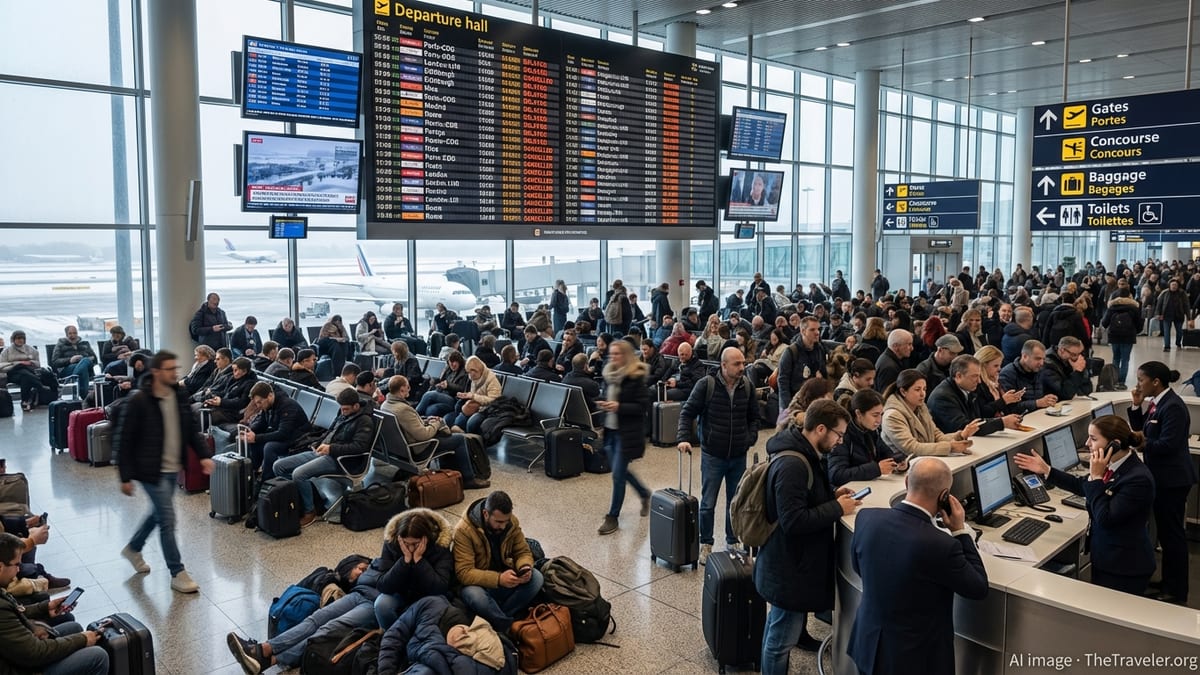
Runway blockage at major UK airport sparks wave of cancellations
Operations at London Gatwick were heavily disrupted after a British Airways Airbus A320 suffered a nose-wheel problem and came to a halt on the runway, forcing airport teams to close the strip for an extended period while the aircraft was secured and removed. Publicly available flight-tracking data and aviation incident reports indicate that the event occurred in the evening peak, when Gatwick typically handles dense short-haul schedules for carriers including EasyJet and British Airways.
With the single main runway unavailable, arrivals were placed into holding patterns or diverted to other airports, while departures were temporarily suspended. Schedules seen on live tracking platforms showed a series of EasyJet and British Airways services marked as cancelled or significantly delayed as the knock-on effects of the closure spread through the evening programme.
Aviation forums and specialist coverage describe a rapid build-up of aircraft waiting to land, with several inbound flights eventually diverted to airports such as Stansted and Luton once it became clear the disruption would last longer than first anticipated. The scale of the disturbance meant that even after the runway was cleared, airlines were left with aircraft and crews out of position, making a full immediate recovery impossible.
EasyJet and British Airways among hardest hit carriers
As Gatwick’s largest operator, EasyJet saw a string of services affected, including late-evening departures to European leisure destinations and domestic routes. Live departure boards and airline updates showed multiple EasyJet flights cancelled outright, while others left hours behind schedule as the carrier attempted to rotate aircraft and crews back into place.
British Airways, which runs a substantial programme of Gatwick short-haul services alongside its London Heathrow hub, also cancelled several flights and experienced heavy delays on others. Reports from passengers and aviation observers highlight both BA-operated services and flights run by partner airlines being disrupted as the airline reorganised its schedule in response to the runway closure.
The combination of two major UK carriers being affected at the same airport amplified the impact on travellers. Many passengers reported that rebooking options were limited on the same day because alternative flights were already full or likewise delayed, particularly on popular summer routes to Mediterranean holiday destinations.
Knock-on disruption and overnight delays for passengers
The immediate runway closure was followed by a prolonged period of secondary disruption as airlines worked through the backlog of flights. Publicly available flight data for the hours after the incident shows a pattern of rolling delays, with some aircraft departing late into the night and others being removed from the schedule entirely to allow operations to stabilise.
Travellers posting on social media and aviation discussion boards described long queues at customer service desks, with some EasyJet and British Airways customers issued hotel vouchers or advised to return the following day. Others reported being rebooked via different UK airports or alternative routings in order to complete their journeys.
The single-runway configuration at Gatwick meant there was limited flexibility to recover quickly once the blockage occurred. Industry commentary notes that when a runway is taken out of service at a high-traffic airport with little spare capacity, even a short interruption can cascade into missed connections, crew duty-time limits and aircraft being left in the wrong locations for the next day’s flying programme.
What affected passengers can expect under existing rules
Public guidance from consumer bodies and civil aviation regulators indicates that passenger entitlements depend on the precise cause of a cancellation or long delay. Where disruption stems from an operational issue within an airline’s control, travellers on flights departing from UK airports are generally entitled to care such as refreshments, accommodation if an overnight stay is required, and re-routing at the earliest opportunity under UK air passenger rights rules.
Compensation payments are typically only due when the disruption is not caused by extraordinary circumstances, such as severe weather or airspace closures. In the case of an aircraft technical problem that forces a runway closure, assessments can be complex and often vary by case. Consumer advice services recommend that passengers keep boarding passes, booking confirmations and receipts for any reasonable out-of-pocket expenses incurred while waiting for replacement flights.
Both EasyJet and British Airways provide information on their websites explaining how to request refunds, claim expenses and submit compensation requests after major disruption. Travel experts also advise checking travel insurance policies, which can in some cases cover additional costs, particularly when passengers choose to make their own arrangements rather than wait for airline rebooking.
Further delays possible as schedules normalise
Operational analysts note that when an incident of this type occurs during a busy travel period, the effects can be felt for at least a day as airlines reposition aircraft and crews. Timetables for the morning after the Gatwick runway incident already showed some services retimed or removed from sale, suggesting that both EasyJet and British Airways had made adjustments to allow for crew rest requirements and aircraft availability.
Passengers due to travel through Gatwick in the aftermath have been advised, in widely shared travel guidance, to monitor their flight status closely via airline apps or departure boards and to allow extra time at the airport in case of longer queues at check in and security. Those with tight onward connections, particularly on separate tickets, may face additional risk of disruption until normal operations are fully restored.
While large-scale runway closures of this nature remain relatively rare, the incident underlines the vulnerability of busy single-runway airports to even short-lived operational shocks. For EasyJet and British Airways customers, the episode serves as a reminder of the value of flexible booking options, up-to-date contact details in airline accounts, and awareness of the support that can be requested when flights are cancelled at short notice.