


More news on this day
Europe’s new Entry/Exit System is now fully active across the Schengen Area, and the first full summer of operations is bringing uneven airport queues, missed connections and a new ecosystem of live wait-time trackers that aim to help travelers stay ahead of the delays.
Get the latest news straight to your inbox!
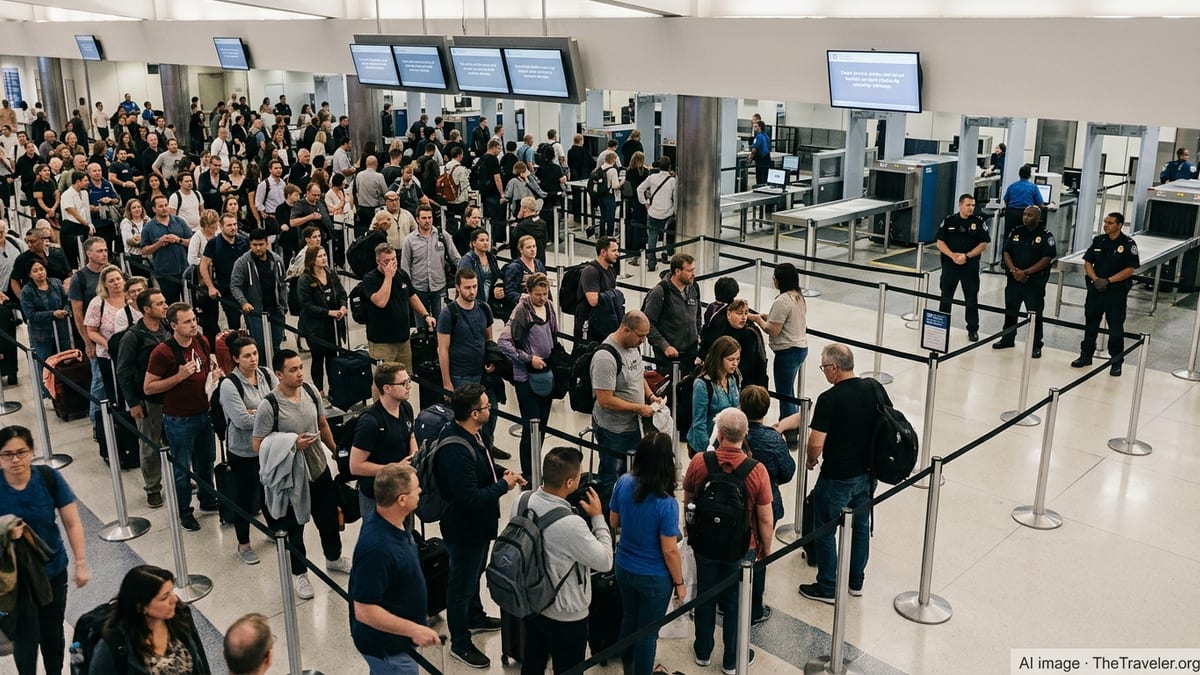
What the 2026 EES Rollout Changed at the Border
The European Union’s Entry/Exit System, fully deployed at external Schengen borders in April 2026, replaced manual passport stamping for most non EU travelers with biometric registration and automated entry and exit records. Publicly available information from the European Commission and eu LISA describes a system that captures fingerprints, facial images and passport details on a traveler’s first EES encounter, then reuses that record on future trips.
For air passengers, this has reshaped the choreography of arrival and departure. Instead of moving directly to a staffed booth or an e gate, many first time users are directed to kiosks or dedicated EES lanes where their data is collected before a final check by a border officer. While this promises faster processing in the long term, the additional steps have lengthened the first visit for many travelers, especially at busy hubs handling large numbers of long haul flights.
European Parliament analysis and recent network operations reports indicate that the EES rollout coincided with already heavy summer schedules at major airports. Border control has become a more visible bottleneck, with some terminals introducing temporary one way flows, taped queue mazes and manual fallbacks when kiosks or e gates are taken out of service.
In this environment, travelers are increasingly relying on real time tools and crowd sourced reports to understand how long they might spend in line at immigration or exit checks on any given day.
Where Queues Are Worst in Mid 2026
Conditions remain highly variable across the Schengen Area. Media coverage and network data point to a handful of pressure points where EES queues have regularly stretched beyond one hour at peaks, particularly for non EU nationals on their first registration. Reports from airlines, airport associations and travel outlets highlight hubs such as Paris Charles de Gaulle, Amsterdam Schiphol, Milan Malpensa, Rome Fiumicino and some Spanish coastal airports as frequent trouble spots during busy banked arrival waves.
According to published coverage, some airports have seen three hour waits at immigration during the busiest periods, with anecdotal accounts of travelers missing onward flights after becoming stuck at outbound passport control. In a few cases, governments or airport operators have described the early weeks of EES as a severe stress test and have accelerated orders for additional e gates, temporary staff and more queueing space.
At the same time, other gateways have reported relatively smooth operations. Smaller regional airports and some Nordic and Central European hubs appear to have absorbed the new procedures with shorter queues, helped by lower volumes and earlier testing. Social media and forum posts from spring and early summer 2026 describe experiences ranging from ten minute waits at off peak times to more than two hours during weekend surges, underlining how time of day and flight banks can matter as much as the airport itself.
Public data from Eurocontrol and other aviation bodies suggests that while the share of total delay directly attributed to border control is still modest compared with weather or air traffic flow restrictions, the impact on individual passengers can be severe, particularly where EES queues spill into the wider terminal and disrupt boarding or security lanes.
How Live Queue Trackers and Crowd Reports Work
In response to the uncertainties around EES processing times, a new generation of independent wait time trackers has emerged alongside existing airport and airline apps. Sites such as EESQueue, FlightQueue’s EES Live page and EES Watch compile self reported wait times from passengers passing through passport control, often supplemented by flight volume statistics and simple forecasting models that estimate how busy immigration is likely to be in the next few hours.
These platforms typically allow travelers to select an airport, indicate whether they are entering or exiting the Schengen Area, and submit how long they waited between joining the border queue and being cleared. The information is then aggregated into live status indicators, with labels such as “light,” “moderate” or “severe,” along with recent high and low wait times and, in some cases, an hourly forecast based on past patterns.
Publicly available information on these services makes clear that they are not official sources and cannot guarantee individual outcomes. They rely on voluntary reports, which may cluster around disruption events and be sparse during quiet spells. Nevertheless, they offer one of the few ways travelers can see near real time crowding signals for EES queues, in contrast to many airport websites that still provide only general guidance like “arrive two hours before departure.”
Some tools go further by combining user reports with scheduled flight data to show when wide body arrivals or large clusters of non EU flights hit the same bank of passport booths. For long haul travelers landing early in the morning or late at night, this can help distinguish between an airport that is routinely overloaded and one that only experiences severe congestion during specific weekday peaks.
Strategies Travelers Are Using to Beat EES Delays
As the first full summer of EES operations unfolds, recurring themes are emerging in practical advice shared by airlines, consumer groups and frequent travelers. One of the most consistent recommendations is to build in significantly more time at the airport than before, particularly for outbound flights from Schengen to non EU destinations. Some guidance suggests treating passport control like an additional security checkpoint and aiming to clear it at least 60 to 90 minutes before scheduled departure where early experiences indicate long queues.
Another evolving strategy is to choose routings and airports with more predictable EES performance. Travel forums and crowd sourced trackers indicate that some passengers are favoring hubs that appear to have shorter average queues or more e gates in operation, even if that means an additional connection or a slightly higher fare. Others are opting for non Schengen entry points, such as flying into the United Kingdom or Ireland first, then continuing by air or sea to the continent, though this can add complexity to visa and connection planning.
Within Europe, passengers are also rethinking minimum connection times. Reports suggest that traditional one hour connections between non Schengen and Schengen flights can now be risky at certain hubs without fast track or through border facilities. Travel insurers and consumer advocates caution that missed flights caused by border control queues may not always be covered, prompting some travelers to book longer layovers or insist on through tickets that place the burden of disruption on the airline rather than on separate bookings.
For first time EES users, there is increasing emphasis on preparation at the border itself. Keeping passports ready, removing hats and glasses for biometric capture, traveling with easily removable face coverings where required, and following signage to the correct EES lane can help avoid unnecessary delays. While these steps may only save a few minutes per person, they can add up when multiplied across hundreds of passengers in a single queue.
What to Watch for as Summer 2026 Peaks
Looking ahead to late summer 2026, the key question for many travelers is whether EES queues will stabilise as more returning visitors move to faster processing. Official reports and early statistical releases indicate that the share of passengers using repeat entries is rising, which should in theory reduce the time spent at kiosks and booths. However, ongoing staff shortages, technical outages and the concentration of demand in peak holiday weeks mean that some airports may continue to see long lines well into August.
Regulatory documents and recent state of Schengen reports emphasise that member states are expected to continue optimising their border facilities, including additional equipment, staffing and queue management. Industry bodies such as IATA and airport associations are publicly calling for close coordination between governments, airlines and airport operators to refine processes and avoid a repeat of the spring’s most visible disruptions.
For now, live wait time tools, social media reports and official advisories together form a patchwork picture of how EES is functioning on any given day. Experienced travelers are learning to cross reference these signals rather than rely on a single source, and to adjust their plans dynamically when signs of severe congestion emerge.
As the peak season progresses, the performance of a few high volume hubs is likely to shape broader perceptions of the system. Sustained improvement at these airports could quickly normalise EES as just another background technology at the border, while repeated episodes of long queues and missed flights would keep the spotlight on an infrastructure project that, for many passengers in 2026, is still most visible in the time they spend waiting in line.