


More news on this day
Travel advice for the Middle East has tightened again as the United Kingdom and United States update their guidance for citizens, reflecting renewed regional tensions, sporadic airspace closures and a patchwork of restrictions stretching from Israel and Lebanon to Yemen and the Red Sea shipping lanes.
Get the latest news straight to your inbox!
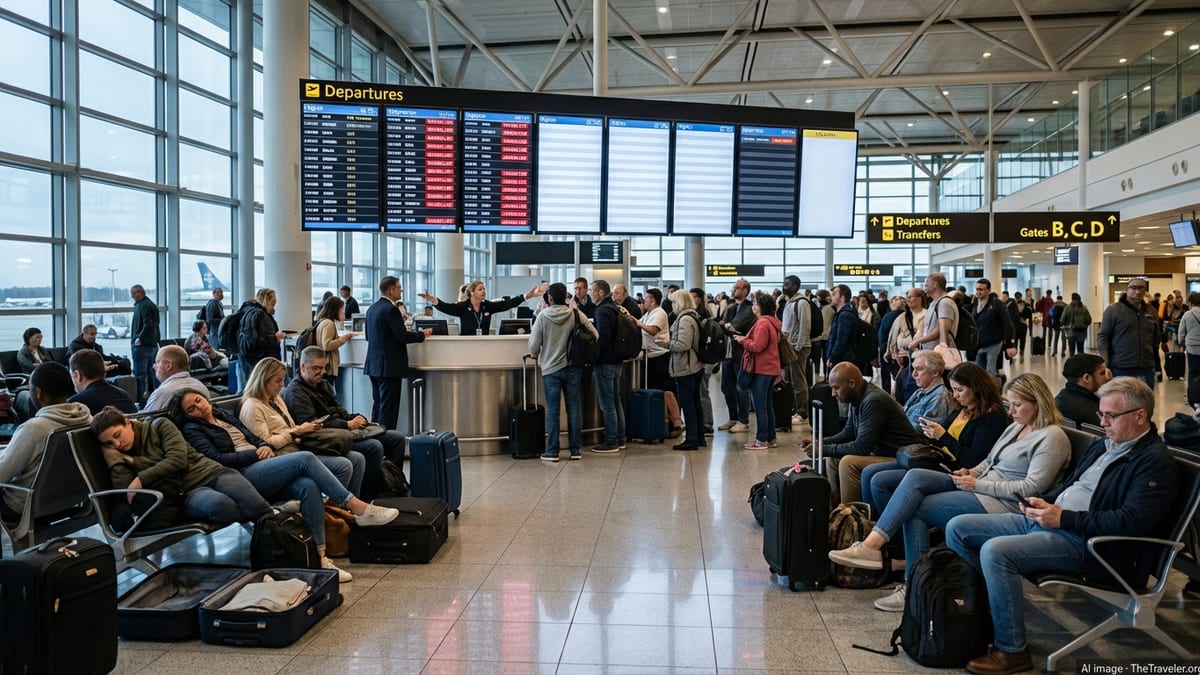
UK refreshes warnings across Israel, the West Bank and Gaza
The United Kingdom has updated its official travel advice for Israel, the West Bank and Gaza, underscoring what it describes in public guidance as a volatile security picture and an elevated risk of further conflict. The latest revision, dated 20 July 2026, highlights regional tensions involving Iran and the wider Middle East and reiterates long-standing warnings around rocket fire, civil unrest and terrorism.
Current Foreign, Commonwealth and Development Office advice continues to flag specific parts of Israel and the Palestinian territories where travel is either strongly discouraged or advised against. The FCDO maintains a warning against all travel to Gaza and certain border areas, alongside advice against all but essential travel to other zones affected by periodic clashes and military activity. Travellers are urged in the guidance to be prepared for rapid changes in local security conditions and restrictions on movement.
Across the West Bank and East Jerusalem, publicly available information notes the potential for protests, roadblocks and security operations, with the possibility of violence at short notice. The FCDO’s Palestine pages emphasise the risk of confrontation around flashpoint sites and reiterate that routes in and out of the territory can close suddenly. Travellers are encouraged to follow local media and be ready for last-minute changes to flights or land crossings.
The UK advice also references the impact of the ceasefire arrangements agreed in spring 2026 between Israel and Iran, noting that while large-scale exchanges have paused, the risk of renewed attacks has not disappeared. This is reflected in a continued focus on missile and drone threats, particularly near border regions and in areas previously targeted during earlier rounds of hostilities.
US maintains high alert levels and regional security messages
The United States continues to classify several Middle Eastern destinations at its highest advisory tier, reflecting both conflict dynamics and the risk of terrorism and wrongful detention. The State Department’s global advisory list currently places Iran, Iraq, Lebanon, Syria, Yemen and Gaza at Level 4, its strictest “do not travel” category, while Israel, the West Bank and several Gulf states sit at Level 3, indicating that travellers are advised to reconsider plans.
Alongside country-specific advisories, Washington has reissued its Worldwide Caution bulletin, most recently updated on 20 July 2026. That notice highlights the potential for terrorist attacks, demonstrations and violence against US citizens and interests, with particular reference to the Middle East. It advises Americans already in the region to exercise heightened vigilance, anticipate flight disruption and ensure they have contingency plans for sheltering in place or relocating if conditions deteriorate.
Separate public travel advisories for Israel, the West Bank and Gaza note that non-emergency US government personnel and dependants were previously authorised to depart the country in February 2026 because of security concerns. Similar measures were ordered for staff in Lebanon earlier in the year, underlining how diplomatic missions continue to operate under tightened security protocols.
For travellers, the practical effect of the US position is a sustained emphasis on flexibility and risk awareness. Guidance urges visitors to enrol in consular notification programs, register contact details and monitor local news for developments that could affect transport, border openings and access to major tourist areas.
Flashpoints: Lebanon, Yemen and the Red Sea corridor
Lebanon and Yemen remain among the most restricted destinations in the region, with both UK and US advice singling them out for severe travel limitations. The US designates Lebanon as a Level 4 destination, citing security risks linked to cross-border exchanges, political instability and the presence of armed groups. The State Department has previously instructed non-essential personnel to leave, and it continues to warn that the ability to provide consular assistance may be limited during periods of intense conflict.
Yemen is similarly listed as Level 4 in US advisories and as a “do not travel” destination in guidance from other governments, including Australia’s Smartraveller service. Public information points to ongoing armed clashes, a high threat of terrorism and kidnapping, and fragmented control on the ground. International coverage also stresses that airspace restrictions and conflict-related damage to airports and ports can make exit from the country extremely challenging, even for those with valid documentation.
Beyond land borders, the maritime corridor running through the Red Sea, Bab el Mandeb and the Gulf of Aden remains a focal point for security warnings. Recent bulletins from maritime authorities in the United States highlight that Houthi forces, based in Yemen, have previously targeted commercial shipping in these waters and retain the capability to do so. Although the tempo of attacks has fluctuated, the risk to merchant vessels, and by extension to cruise and ferry routes transiting the area, is considered ongoing.
Travel insurers and aviation specialists continue to track partial airspace closures and routing changes affecting flights across the northern Gulf and eastern Mediterranean. Industry briefing notes from earlier in 2026 recorded temporary restrictions or diversions over parts of Iran, Israel, Iraq and neighbouring states, contributing to longer flight times and increased cancellations during peak travel periods.
How the new advice affects practical travel planning
For leisure and business travellers weighing trips to the Middle East in mid-2026, the shifting picture of government guidance translates into a need for more detailed pre-departure research and layered contingency planning. The latest UK and US updates point to an environment where conditions can change quickly in response to events far beyond any single city or border crossing.
Travel risk consultants note that airlines and tour operators are closely aligned with official advisories when deciding whether to maintain, reroute or suspend services. As a result, a shift from “normal precautions” to “reconsider travel” or “do not travel” can lead to rapid schedule changes, rebooking challenges and, in some cases, the cancellation of organised tours. Prospective visitors are being encouraged to review cancellation terms, check whether their insurance excludes destinations covered by Level 3 or Level 4 warnings, and ensure they have resources to manage delays.
Publicly available guidance from multiple governments now routinely advises travellers to keep digital and paper copies of key documents, maintain extra supplies of essential medication and identify alternative routes out of a country in case primary airports are affected. In high-risk areas, travellers are also urged to minimise non-essential movement, avoid large gatherings and maintain a low profile, particularly during periods of heightened political tension or anniversaries linked to previous attacks.
For those still choosing to travel to relatively stable parts of the Gulf and wider region, such as certain cities in the United Arab Emirates, Qatar or Oman, advice centres on monitoring regional developments rather than any immediate local threat. However, the overarching message from both London and Washington is that the current phase of Middle East volatility has broad geographic reach, and that even traditionally secure hubs can experience knock-on disruption to flights and logistics.
Outlook for summer and autumn 2026 travel
Looking ahead to the second half of 2026, published coverage from government agencies and industry bodies suggests that regional risk levels are unlikely to normalise quickly. The aftermath of missile exchanges between Iran and Israel, ongoing tensions along the Israel–Lebanon frontier and sporadic attacks linked to Yemen’s conflict all contribute to what officials describe in public documents as a complex and dynamic threat environment.
While ceasefire arrangements have reduced the immediate scale of some confrontations, both UK FCDO and US State Department materials continue to reference the possibility of further strikes with limited warning. This is reflected in the persistence of Level 4 and “do not travel” designations for several states and territories, alongside wide areas where only essential travel is recommended.
For travellers and the wider tourism industry, the result is a season defined less by blanket closures and more by careful calibration. Some popular destinations, particularly in the Gulf, remain open and are actively courting visitors, while others, notably parts of Israel, Lebanon, Syria, Iraq and Yemen, remain largely off limits for non-essential trips. As peak northern-hemisphere travel months progress, the key variables for prospective visitors will be airline schedules, insurance conditions and the continued evolution of government advice.
Against this backdrop, specialists recommend that travellers treat FCDO and State Department advisories as starting points rather than afterthoughts, checking them repeatedly right up to the day of departure. By aligning itineraries with the latest official guidance and building in flexibility, visitors can better navigate a Middle East travel landscape that remains highly sensitive to political and security shocks.