


More news on this day
Egypt and South Africa have emerged as rare bright spots in Africa’s aviation landscape in 2026, with new industry data indicating that major airports in both countries are among the continent’s only gateways registering clear growth in international tourism traffic.
Get the latest news straight to your inbox!
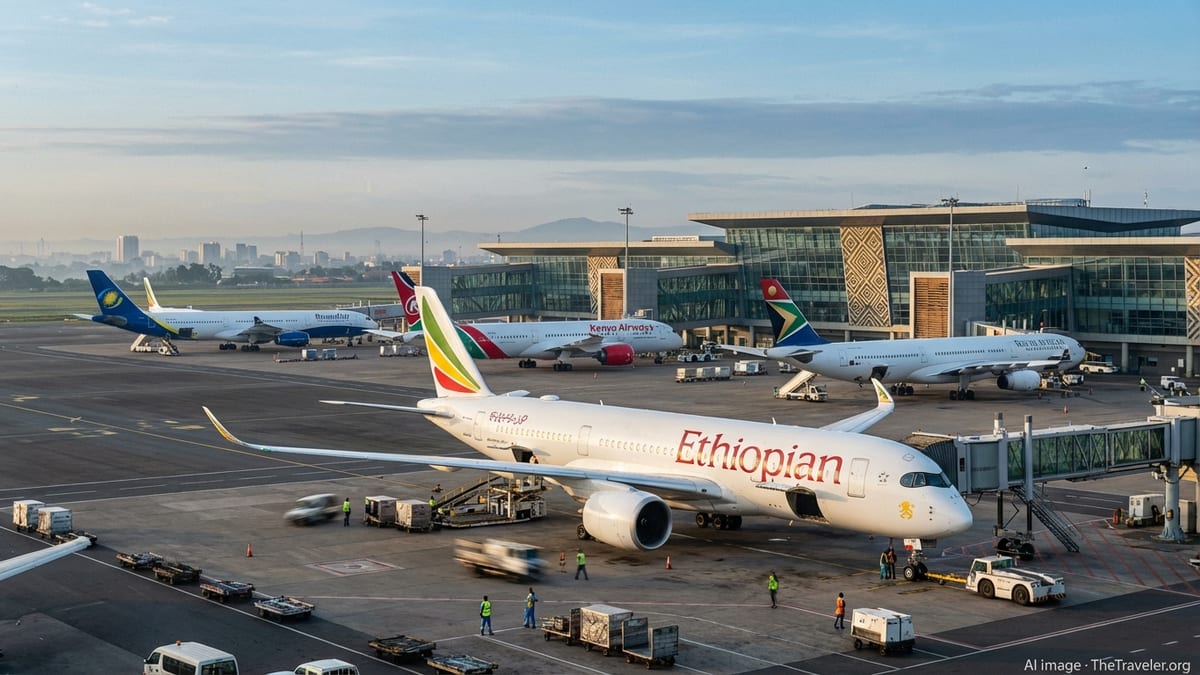
Fresh 2026 data highlights uneven African air recovery
Latest seat-capacity and traffic figures for 2026 point to an uneven recovery in African aviation, with much of the continent still trailing pre-pandemic international tourism levels while a handful of hubs consolidate their dominance. Industry statistics compiled from airline schedules show that African airports collectively increased total departure seats in the first ten months of 2026, yet international tourism demand has concentrated in just a few markets.
Within this fragmented picture, Egypt and South Africa stand out as the only two African countries where leading international airports are consistently expanding capacity on overseas routes and attracting more foreign leisure travellers. Publicly available OAG-based analysis indicates that both markets have posted double-digit year-on-year gains in international seats, even as several regional peers face flat or contracting long-haul demand.
Analysts note that this divergence has been amplified by wider geopolitical and economic factors in 2026, including rerouted long-haul traffic away from parts of the Middle East and persistent currency and security challenges in several African tourism economies. The result is a sharper concentration of foreign visitor flows through Cairo, Johannesburg and Cape Town, at the expense of secondary hubs elsewhere on the continent.
While Africa as a whole is benefiting from a modest rebound in outbound and inbound travel, the latest aviation and tourism datasets suggest that structural issues such as limited intra-African connectivity, high operating costs and visa barriers are holding back broader regional gains. Egypt and South Africa, by contrast, are capitalising on established brands, capacity upgrades and diversified source markets to pull ahead.
Egypt’s airports leverage rerouted long-haul traffic and European demand
Egypt’s position at the crossroads of Europe, Africa and the Middle East has given its airports a central role in the continent’s 2026 aviation story. Cairo International Airport remains Africa’s busiest hub by passenger volumes, helped by a strong recovery in holiday traffic to the Red Sea and Nile Valley resorts and a steady rebound in corporate and transit travel. Recent industry chartbooks highlight particularly robust gains on Egypt’s European corridors, with routes to Italy and Germany reporting some of the fastest year-on-year passenger growth.
Travel patterns in 2026 have also been shaped by conflict-related disruption to traditional Middle Eastern hubs, encouraging airlines and passengers to favour alternative routings through North Africa. Egypt’s combination of large-scale resort capacity, well-established charter operations and competitive fares has enabled its airports to absorb a portion of this redirected demand. Tourism boards and airlines have supported the trend by maintaining aggressive scheduling on key sun-and-sea routes, even as some competitors elsewhere in the region have scaled back.
Beyond pure volume, Egypt’s airports are benefiting from a diversified market mix. Western European leisure travellers, Gulf visitors, African business passengers and transit flows connecting Europe with East Africa and parts of Asia all contribute to the current upswing. This diversification has helped shield Egyptian gateways from slowdowns in any single source region and has supported steady international tourism growth through 2026.
The growth is particularly visible at coastal airports serving Red Sea destinations, where additional seasonal capacity from European carriers and charter operators has been added for the current northern winter and upcoming summer seasons. Industry observers expect these routes to remain among Africa’s strongest-performing leisure corridors if current booking trends hold.
South African hubs ride capacity upgrades and long-haul tourism revival
South Africa’s main international gateways are also recording gains, supported by a recovery in long-haul tourism and a renewed push to expand airport infrastructure. Johannesburg’s OR Tambo International Airport remains the country’s busiest international entry point, but Cape Town International has attracted growing attention following the announcement in early 2026 of a multibillion-rand upgrade programme designed to boost capacity and improve resilience.
The planned works at Cape Town International, set out by the national airports operator, include terminal expansion and airfield improvements aimed at accommodating more widebody traffic and easing congestion during peak tourism seasons. Aviation analysts view these upgrades as a signal of confidence in sustained international demand for the city, which has become one of Africa’s most prominent long-haul leisure and meetings destinations.
Seat-capacity data for 2026 indicates that South Africa has recorded one of the strongest increases in outbound international seats among the continent’s major markets, reflecting both the return of foreign carriers and the rebuilding of local airline networks. Long-haul routes linking South Africa with Europe remain the backbone of this recovery, while services to the Middle East and selected Asian destinations are gradually being restored amid ongoing airspace constraints further north.
Despite recent concerns about domestic economic pressures and reports of softer regional demand from neighbouring African countries, South Africa continues to attract high-spending long-haul visitors drawn by its wine regions, coastal landscapes and wildlife experiences. This profile has helped shield its major airports from some of the volatility affecting shorter-haul regional tourism flows and supported growth in international passenger numbers through 2026.
Wider continent faces capacity gaps, connectivity challenges and missed opportunities
The contrasting fortunes of Egypt and South Africa compared with much of the rest of Africa highlight persistent structural hurdles in the continent’s aviation and tourism sectors. Several countries with strong natural or cultural attractions continue to struggle with limited international seat capacity, fragmented airline networks and high ticket prices that deter both foreign visitors and intra-African travel.
Research using Africa-wide connectivity data underscores how a small group of hubs absorb a disproportionate share of traffic, leaving many secondary cities with infrequent or indirect links to key tourism source markets. In practice, this means that travellers often need to route through Cairo, Johannesburg, Cape Town or a handful of other large gateways even when visiting destinations elsewhere on the continent, adding cost and complexity to trip planning.
Visa regimes and regulatory frameworks further complicate efforts to spread international tourism growth beyond the leading hubs. While some states have taken steps toward e-visa systems or visa-on-arrival for selected nationalities, requirements remain restrictive or unpredictable in many markets, limiting spontaneous travel and multi-country itineraries. Carriers also face elevated operating and infrastructure costs at many airports, constraining competition on long-haul routes.
These factors help explain why, despite robust global growth in air travel, only a narrow set of African airports are currently converting that demand into sustained international tourism gains. Without coordinated reforms to boost connectivity, simplify entry requirements and support competitive airline operations, analysts caution that the continent may continue to see growth concentrated in just a few established gateways.
What Egypt and South Africa reveal about the next phase of African tourism
The performance of Egypt and South Africa in 2026 offers clues about how African destinations might position themselves for the next phase of global tourism expansion. Both markets combine sizable local demand, strong aviation brands and infrastructure investment with relatively predictable entry procedures for key visitor segments. They also benefit from clear destination narratives and established touristic circuits that are widely marketed abroad.
Industry observers argue that other African countries looking to grow international arrivals may seek to emulate aspects of this model, from targeted capacity-building at primary airports to focused route-development partnerships with airlines. Efforts to build new hubs or expand smaller gateways are already visible in parts of East and West Africa, though these projects remain at earlier stages than the large-scale upgrades underway in Egypt and South Africa.
At the same time, the 2026 data underline the risks of overconcentration. Heavy reliance on a few hubs and tourism hotspots exposes the wider African market to shocks, whether from geopolitical events, health crises or localised instability. Diversifying both the geography of arrivals and the range of source markets is seen by many analysts as essential for long-term resilience.
For now, however, Egypt and South Africa continue to stand apart as the continent’s primary gateways translating broader interest in African travel into measurable increases in international airport traffic. Their performance in 2026 will be closely watched by tourism planners and aviation stakeholders across the region as they look to chart a more inclusive path for Africa’s air and visitor economies.