


More news on this day
Egypt is introducing a fresh round of airline incentives aimed at carriers operating from the United Kingdom, Germany, Spain and Russia, as the country moves to cement record tourism growth and secure flight capacity ahead of peak winter and summer seasons.
Get the latest news straight to your inbox!
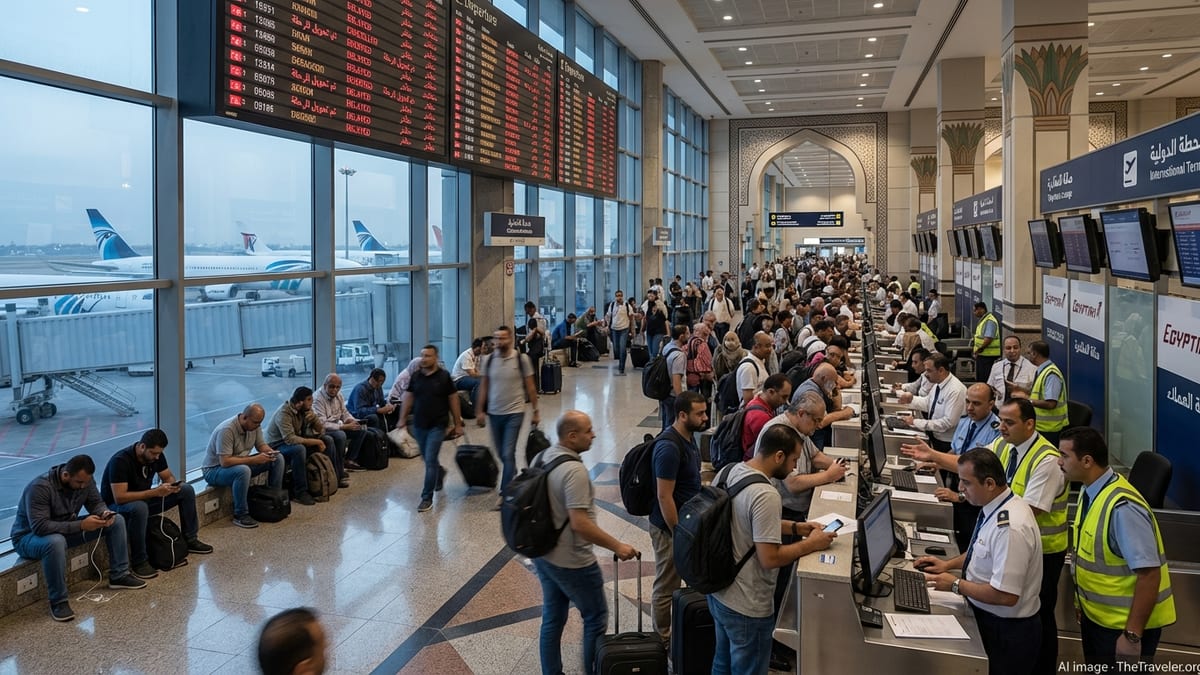
Targeted Discounts to Lock In More Seats to Egypt
Publicly available information on Egypt’s aviation support schemes indicates that the latest incentives focus on discounts to airport and navigation fees for airlines that increase their seat capacity or flight frequencies to Egyptian destinations in 2026. Reports on recent government decisions describe a three month package running from June to August 2026 for key Red Sea gateways such as Hurghada and Sharm El Sheikh, designed to keep aircraft operating during the hot season when some carriers typically trim schedules.
Under these measures, airlines can qualify for reduced charges if they demonstrate growth in the total number of flights they operate to Egypt across the year. The structure is intended to reward operators that commit to sustained capacity rather than short term charter peaks. Coverage of the policy notes that authorities view air connectivity as a primary bottleneck for further tourism expansion, especially outside major European school holidays.
The new framework builds on earlier charter support programmes that helped bring back traffic after the pandemic, but it comes at a time when demand is already strong. Data highlighted in regional economic updates shows Egypt among the fastest growing outbound destinations for European and Russian travellers, giving officials confidence that subsidies used now could be recouped through higher visitor spending and tax receipts.
By explicitly prioritising links from the United Kingdom, Germany, Spain and Russia, the incentives target source markets that combine high volumes with relatively short flight times. Industry analysis suggests that these four markets alone can determine whether Egypt hits or exceeds its tourism targets for the coming two years.
UK and German Markets Lead Europe’s Demand Curve
Recent developments in the UK market point to a renewed appetite for Egyptian holidays. State media coverage has highlighted agreements with leisure airline Jet2 to expand services from several British cities to Hurghada and Sharm El Sheikh, adding thousands of weekly seats. Travel industry commentary notes that this coincides with British travellers searching for better value winter sun alternatives to the eurozone, with Egypt’s currency weakness translating into competitive package prices.
Germany is emerging as an equally important pillar of the strategy. A winter travel barometer compiled by German tour operator Dertour and reported by Egypt Independent showed Egypt overtaking Spain as the most attractive winter destination for German holidaymakers for the 2025 to 2026 season. The report cited a clear preference for short and medium haul flights, a segment in which Egypt’s Red Sea resorts compete strongly with the Canary Islands and other Mediterranean spots.
Industry observers view the incentive scheme as a way to lock in more German capacity while the destination is trending upward. With German consumers increasingly price sensitive but still willing to travel, subsidised airport fees can help tour operators keep packages affordable despite higher fuel and insurance costs linked to regional instability.
Spain itself remains a powerhouse of European aviation, with record seat volumes scheduled for winter 2025 to 2026 according to data from Spain’s airport operator. For Egypt, this underscores the importance of maintaining and growing direct flights from Spanish cities, since the same airlines and tour operators that expand capacity within Spain are also in a position to deploy additional aircraft to the eastern Mediterranean and North Africa when incentives are attractive.
Russia and Regional Dynamics Reshape Red Sea Traffic
Russian travellers continue to play an outsized role in Egypt’s seaside resorts. Analysis published by the Moscow Times on outbound Russian tourism in 2025 indicated that Egypt recorded some of the strongest growth among foreign destinations, with package tour sales estimated to have risen by around a third or more compared with the previous year. This came despite broader geopolitical and currency volatility.
As Russian outbound travel rebounds on the back of a stronger ruble and pent up demand, Egypt’s updated incentive package is expected by analysts to help sustain charter capacity from Russian regional airports. Reduced operating costs could be particularly important for secondary carriers and smaller tour operators that might otherwise redeploy aircraft to closer or less regulated markets.
Regional developments add both opportunity and risk. Tourism analysts tracking the impact of the wider Middle East security situation on flight patterns point to a shift in some European demand away from destinations perceived as closer to conflict zones. However, Egypt’s established resort infrastructure and extensive charter experience give it a relative advantage in convincing airlines to maintain operations, provided that financial incentives offset increased insurance and routeing costs.
By combining targeted discounts with promotional campaigns in Russia and Eastern Europe, Egypt is attempting to hold onto its position as one of the top two or three long standing winter sun destinations for Russian travellers. Maintaining direct air links is central to this objective, since alternative routings through third countries can add cost and complexity that undermine Egypt’s competitive edge.
Tourism Metrics Point to Record Year Ahead
The incentive push comes against a backdrop of robust performance indicators for Egypt’s tourism sector. Forecasts compiled by Fitch Solutions and cited by Egypt’s Cabinet Information and Decision Support Center have projected that international arrivals could reach around 18.5 million visitors in 2026, up from roughly 17.8 million in 2025. Tourism revenues for the fiscal year 2023 to 2024 were reported to have risen by more than a third compared with the previous year.
More recent reporting by Egyptian business media indicates that tourism revenues in the first quarter of 2026 alone climbed above 5 billion dollars, with visitor numbers rising more than 40 percent year on year. Separate coverage by Egyptian Streets pointed to international arrivals in the first four months of 2026 remaining comfortably ahead of the same period in 2025, even after a softer April.
Officials have framed the revised aviation incentives as a tool to preserve this momentum through the shoulder months and reduce volatility from geopolitical events. Sector analysts note that maintaining scheduled and charter services at or above current levels is essential if Egypt is to hit its visitor targets, as hotel capacity in Red Sea and cultural hubs has already expanded significantly over the past two years.
Egypt’s broader tourism promotion efforts, including an integrated marketing strategy across more than 20 priority markets, align with the aviation measures by ensuring that additional flight seats can be matched with demand. Recognition at international tourism fairs and awards highlighted in state media reporting suggest that Egypt’s branding as a value oriented yet high quality destination is gaining traction with tour operators and travel agents.
Airline Expansion Signals Confidence in Egyptian Routes
The response from carriers operating in and out of Egypt indicates growing confidence in the market’s medium term prospects. Reports from Egypt Independent have outlined plans by EgyptAir to expand its network to around 85 destinations in 2026, including new regional routes and increased frequencies to key European cities. The flag carrier’s strategy emphasises shorter connection times and better integration between Cairo, coastal resorts and regional hubs.
Meanwhile, leisure focused airlines such as Air Cairo have been expanding charter operations across Europe, adding services tailored to both holiday and religious travel segments. Coverage of the airline’s latest network moves highlights new routes from Germany and Italy for the 2026 Hajj season, underscoring the versatility of Egyptian carriers in pivoting between tourism niches.
European aviation data compiled by Eurocontrol and other agencies shows that Egypt is among the non EU countries recording some of the fastest traffic growth compared with pre pandemic levels. Analysts argue that this combination of strong demand trends and supportive policy measures makes the Egyptian market particularly attractive at a time when slot constraints and environmental regulations limit expansion at many European airports.
Industry watchers expect the new incentives for flights from the United Kingdom, Germany, Spain and Russia to accelerate these patterns by lowering the financial threshold for airlines considering additional rotations. If carriers respond with higher capacity into Red Sea and cultural gateways over the next 12 months, Egypt’s tourism sector appears on track to set fresh records for both arrivals and revenue.