


More news on this day
The European Investment Bank is examining a potential €500 million loan to support the modernisation of Renfe’s train depots across Spain, in a move that could significantly upgrade rail maintenance capacity and improve passenger services on some of the country’s busiest routes.
Get the latest news straight to your inbox!
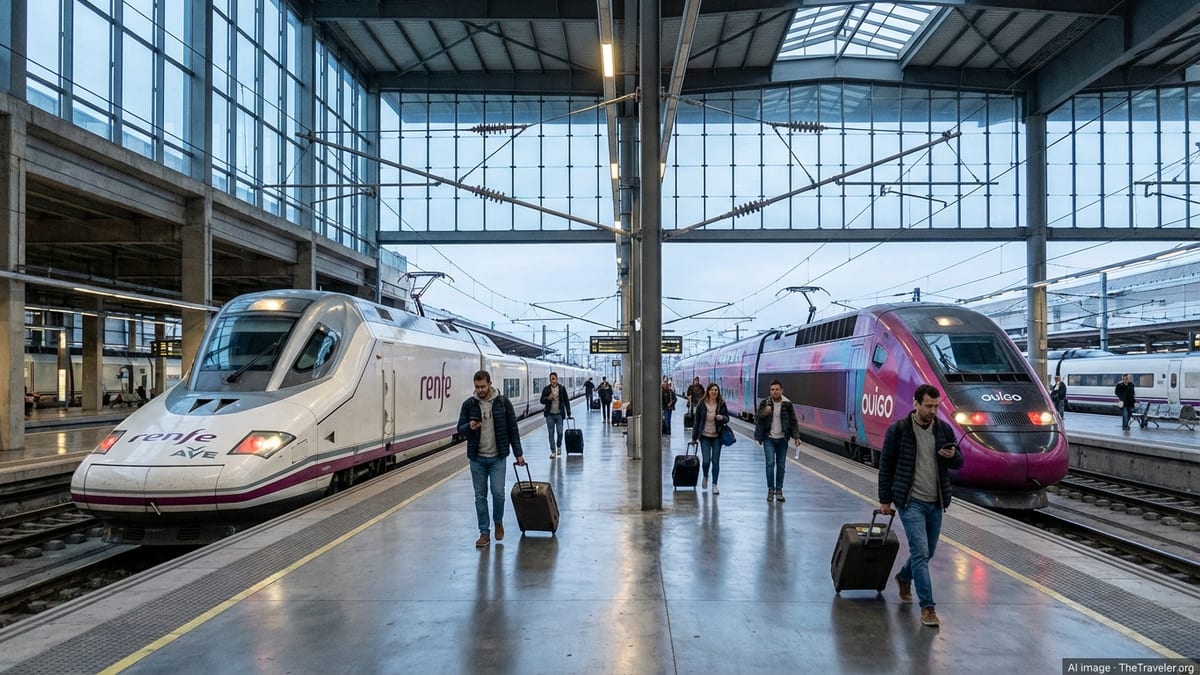
Strategic financing under review for Spain’s rail backbone
Publicly available documentation from European lending activity indicates that the project under consideration would channel up to €500 million into a multi year programme to renew and modernise Renfe’s maintenance depots, a critical but often overlooked part of Spain’s rail system. While the proposal remains at the appraisal stage, it fits into a broader pattern of recent support for Spanish rail infrastructure and rolling stock.
The prospective loan would come in the form of direct financing from the European Investment Bank, typically structured to cover a substantial share of eligible investment costs. In Renfe’s case, the programme is expected to include upgrades to existing depots, construction or expansion of facilities in key hubs and the introduction of more efficient maintenance technologies and processes.
According to recent activity summaries, EIB support for rail in Spain has focused on both infrastructure and rolling stock, with earlier operations helping fund high speed train upgrades and regional fleet renewal. A dedicated facility for depot modernisation would mark a further step toward improving the life cycle management of trains that serve high speed, long distance and commuter networks.
Although the formal decision process is still in progress, the project appears aligned with the bank’s transport and climate objectives, which prioritise rail as a lower carbon alternative to road and air travel. The modernisation of depots is seen as a way to increase reliability, reduce lifecycle emissions and create capacity for future growth in passenger numbers.
What depot modernisation means for passengers and operations
For everyday travellers, maintenance depots may seem distant from the experience on board, yet they play a decisive role in punctuality and comfort. Modern facilities allow operators like Renfe to shorten turnaround times for inspections and repairs, helping to keep more trains in service during peak demand on high traffic corridors such as Madrid Barcelona and key commuter networks.
Industry practice shows that upgraded depots typically incorporate improved diagnostic systems, streamlined workflows and better integration between maintenance planning and train scheduling. For Renfe, this can translate into fewer cancellations, more resilient operations during disruptions and faster recovery after incidents or technical failures.
The project under assessment is also expected to place strong emphasis on energy efficiency and environmental performance at workshop level. Recent European rail investments have increasingly included measures such as more efficient lighting, advanced heating and cooling systems, water recycling and safer handling of lubricants and cleaning agents. Applied to Renfe’s depots, similar measures would support national and European decarbonisation goals while reducing operating costs.
Beyond the technical aspects, depot upgrades can also improve working conditions for maintenance staff, with more ergonomic layouts and updated safety systems. While specific design details have not yet been publicly confirmed, European transport projects of this type generally include provisions for modern equipment and training to support new maintenance standards.
Positioning within Spain’s wider rail investment wave
The potential depot loan arrives amid a sustained period of rail investment in Spain, where the national network has been undergoing both high speed expansion and conventional line upgrades. In recent years, Renfe has launched major procurement and refurbishment programmes for high speed and commuter trains, often backed by EIB loans and national funds.
Modern depots are a necessary counterpart to these fleet investments. New and refurbished trains require updated maintenance infrastructure to handle advanced traction systems, on board digital equipment and evolving safety technologies. By targeting depots across several regions, the proposed programme would help ensure that Renfe’s workshop capacity keeps pace with rolling stock improvements.
There is also a competitive dimension. With liberalisation progressing on Spanish rail, Renfe faces growing competition from other operators on high speed routes. Strong maintenance capability is an important factor in preserving reliability and brand reputation. Enhanced depot infrastructure would support tighter service timetables and more frequent connections, reinforcing the attractiveness of rail for both domestic and international travellers.
At the same time, the initiative complements broader public investment in stations, signalling and accessibility, which collectively shape the travel experience. For visitors arriving in Spain, more reliable city to city and regional links can influence itinerary choices and support tourism dispersal beyond traditional hotspots.
Climate, sustainability and regional development implications
The EIB’s assessment criteria place strong weight on climate action and environmental sustainability, and the Renfe depots project is expected to contribute primarily by enabling more efficient and dependable rail services. By extending the lifespan of trains and promoting preventive maintenance, modern depots help reduce the need for early replacement and lower resource use over time.
Energy efficient designs and potential on site renewable energy measures at depots can further cut operational emissions. When combined with Spain’s decarbonising electricity mix, a more efficient maintenance ecosystem positions rail as one of the lowest impact modes for medium distance travel, particularly on routes where it competes with domestic flights.
Regional development is another expected benefit. Many depots are located in or near secondary cities that act as rail nodes. Investment in these facilities can support local employment, generate demand for specialised engineering and construction services and anchor long term industrial activity in surrounding areas. In tourism intensive regions, improved reliability on commuter and regional lines can ease pressure on roads and airports during peak seasons.
For travellers, these changes may eventually be felt in more consistent timetables, fewer disruptions and a wider choice of comfortable, modern trains on the Spanish network. While the financing decision has not yet been finalised, the consideration of a dedicated €500 million loan for Renfe’s depots signals a continued European commitment to rail as a backbone of sustainable mobility.