


More news on this day
A major rail corridor was brought to a standstill this morning after an emergency incident left one line blocked, triggering significant delays, cancellations and crowding for thousands of commuters.
Get the latest news straight to your inbox!
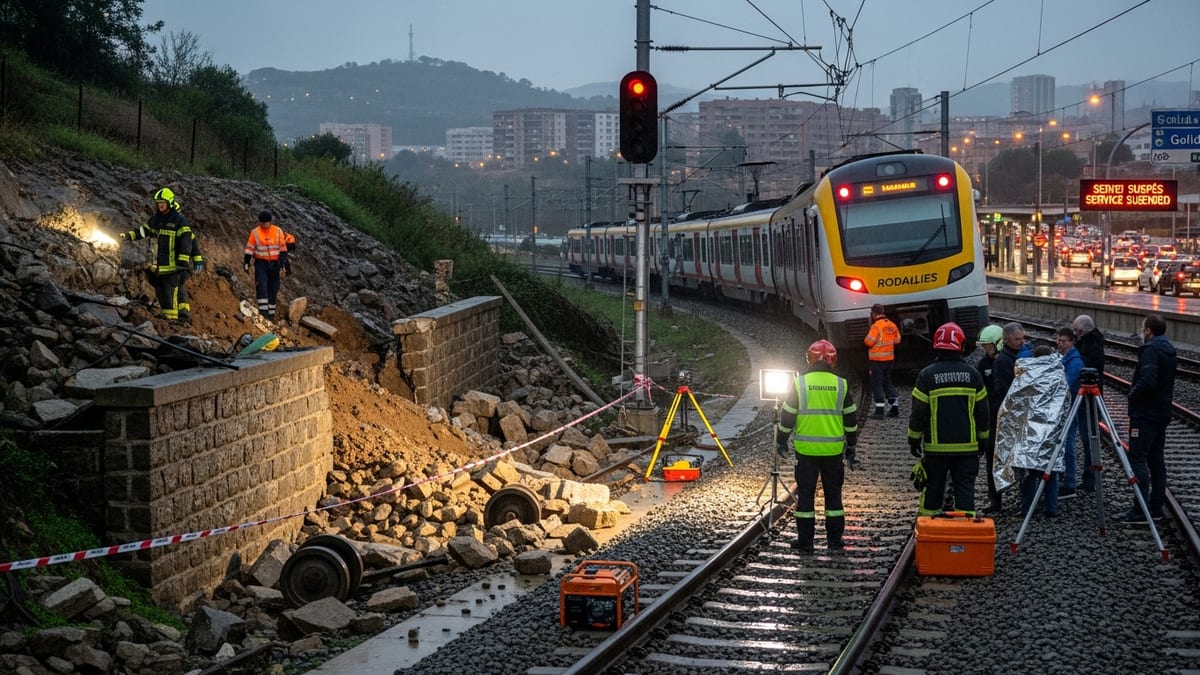
Services suspended after early-morning incident
According to public transport alerts and local media coverage, services were halted in both directions shortly after the incident was reported during the morning peak. Initial notices referred only to an “emergency incident” on the line, with trains held outside stations and some services terminated short of their destination.
Passenger updates showed that the affected track was formally described as blocked, preventing trains from passing through the area. Operators advised riders to expect extended journey times and, in some cases, no service at all between key stations while response teams gained access to the site and made the area safe.
Rail staff began implementing contingency timetables, turning trains back at available crossovers and routing others onto any parallel lines that remained open. Even where some traffic could still move, the reduction in capacity created knock-on delays across a far wider section of the network.
Publicly available information indicated that the disruption was likely to last for several hours, as standard rail safety procedures require the incident location to be fully checked before traffic can resume on a blocked line.
Knock-on disruption for commuters and local roads
The sudden suspension of rail services during the morning commute led to heavy crowding at nearby stations, with passengers reporting long queues at ticket barriers and platforms as they waited for limited replacement options. Some travellers chose to abandon rail altogether, turning to ride-hailing services or private cars.
As often happens during major rail incidents, the pressure quickly shifted onto surrounding roads. Congestion built up near park-and-ride sites and key junctions as buses and diverted traffic competed for space, while some local bus routes were also adjusted to serve stations where trains were no longer stopping.
Peak-period commuters faced the toughest conditions, with many arriving late to work or appointments after packed trains and extended waiting times. In some cases, trains that did run were reported as extremely busy, reflecting the combination of cancellations and passengers re‑routing from other disrupted services.
Service planners warned that even after the blocked line reopened, residual delays could continue for some time as displaced trains and crews were re‑positioned and backlogged services moved through constrained sections of track.
Railway response and safety procedures
Railway incident-handling procedures require that, once a line is declared blocked due to an emergency, no trains are permitted to run through the affected section until it has been inspected and formally handed back for traffic. This process typically involves coordination between rail operations control, maintenance teams and emergency responders.
In practice, that can mean extended closures even when the visible scene appears clear, as engineers must carry out checks on rails, signalling equipment and overhead or third-rail power systems. Any damage identified must be repaired before full speed running can resume, and temporary speed restrictions are often imposed as a precaution.
In addition to technical checks, operators also review train movements across the wider network, adjusting diagrams so that stranded rolling stock can be returned to depots and maintenance facilities. These behind-the-scenes changes can prolong timetable instability, especially on busy corridors with limited spare capacity.
Rail industry planning documents highlight that incidents which block a line during the peak can have knock-on effects lasting several hours, particularly where there are few alternative routes or crossovers to turn trains around.
Passenger communication and alternative routes
During this morning’s disruption, information was shared through station announcement systems, operators’ websites, mobile apps and social media feeds. Early messages focused on confirming the presence of an emergency incident, before later updates provided more precise estimates of when services might resume.
Passengers were advised to check live departure boards before travelling and, where possible, to consider alternative lines or modes of transport. In some areas, mutual-ticketing arrangements allowed rail tickets to be used on local buses or metro services, helping to keep passengers moving while the line remained blocked.
Despite these measures, many travellers reported difficulty obtaining clear, timely updates about the evolving situation. Transport watchdogs and passenger groups regularly note that communication quality during major incidents can significantly influence how disruptive delays feel to commuters, even when the underlying operational challenges are complex.
Industry guidance in several rail networks encourages operators to issue regular summaries, even when little new information is available, so that passengers can make informed decisions about whether to wait, re-route or delay their journey.
Gradual recovery and lingering delays
Once the scene of this morning’s emergency incident was made safe, rail controllers began the process of reopening the blocked line and restoring the normal timetable. Initial services typically run at reduced speeds and with additional caution while staff confirm that signalling and train detection systems are functioning correctly.
As more trains pass through the affected section, operators can progressively increase frequency and speed, gradually clearing backlogs that accumulated during the closure. However, displaced trains and crews may still be out of position, which can lead to gaps in the service pattern and further short-notice alterations.
Travel updates later in the morning indicated that, while trains were again moving through the area, journeys could still take significantly longer than usual. Commuters were advised to allow extra time and to continue checking for changes, especially on connecting routes that relied on punctual arrivals from the disrupted corridor.
Analysis of previous rail incidents suggests that full recovery from a major blocked-line event often extends into the off-peak period, underscoring the broader impact that a single emergency can have on a tightly scheduled rail network.