


Landing at Bogotá’s El Dorado International Airport with plans to stay near Zona T or dive straight into its nightlife is exciting, but the first hour on the ground can set the tone for your whole trip. This guide walks you through the most reliable ways to travel from the airport to Zona T, with practical insight on safety, late-night arrivals, luggage, traffic and which option really works best for different types of travelers.
Get the latest updates straight to your inbox!
Understanding the Route: El Dorado to Zona T
El Dorado International Airport sits on the western edge of Bogotá, while Zona T (often grouped with Zona Rosa and Parque de la 93 as key nightlife and hotel areas) is in the upscale Chapinero district to the northeast. In good traffic, the ride is typically around 30 to 45 minutes. At rush hour or in heavy rain, that same journey can stretch past an hour. The route usually follows Avenida El Dorado (Calle 26) into the city and then heads north on major avenues like Avenida NQS or Carrera 30 before cutting across toward Zona T near the Andino and El Retiro malls.
Zona T itself is compact, centered on the pedestrian cross-shaped street between Carrera 11 and Carrera 13, and surrounded by popular hotels such as Sofitel Bogotá Victoria Regia, BOG Hotel, Hotel Estelar Parque de la 93 a short ride away, and many boutique properties and hostels. Whether your plan is a cocktail at a rooftop bar, a night at a club like The Gaira or a late dinner on Calle 82, being based here means you will rely heavily on short app rides and taxis, so your first transfer from the airport is a good moment to get used to local transport habits.
Most international travelers arrive with either an evening check-in or a late-night landing, especially on flights from North America and Europe. Arrivals between 20:00 and 01:00 are common, which coincides with the start of the nightlife peak in Zona T. At these hours you want a method that is safe, predictable and does not require navigating unfamiliar streets with luggage. For most visitors, that narrows the choice to three realistic options: authorized airport taxis, app-based rides, and pre-booked private transfers.
Public transport technically connects the airport with the city through the Integrated Public Transport System, including TransMilenio services from the airport area and routes that link to the Andino shopping center near Zona T. However, the need to handle luggage, deal with crowds and change buses or lines after a long flight makes this less attractive for first-time travelers, particularly at night. For high-intent nightlife and hotel stays, door-to-door transport is the standard recommendation.
Official Airport Taxis: The Solid Default Choice
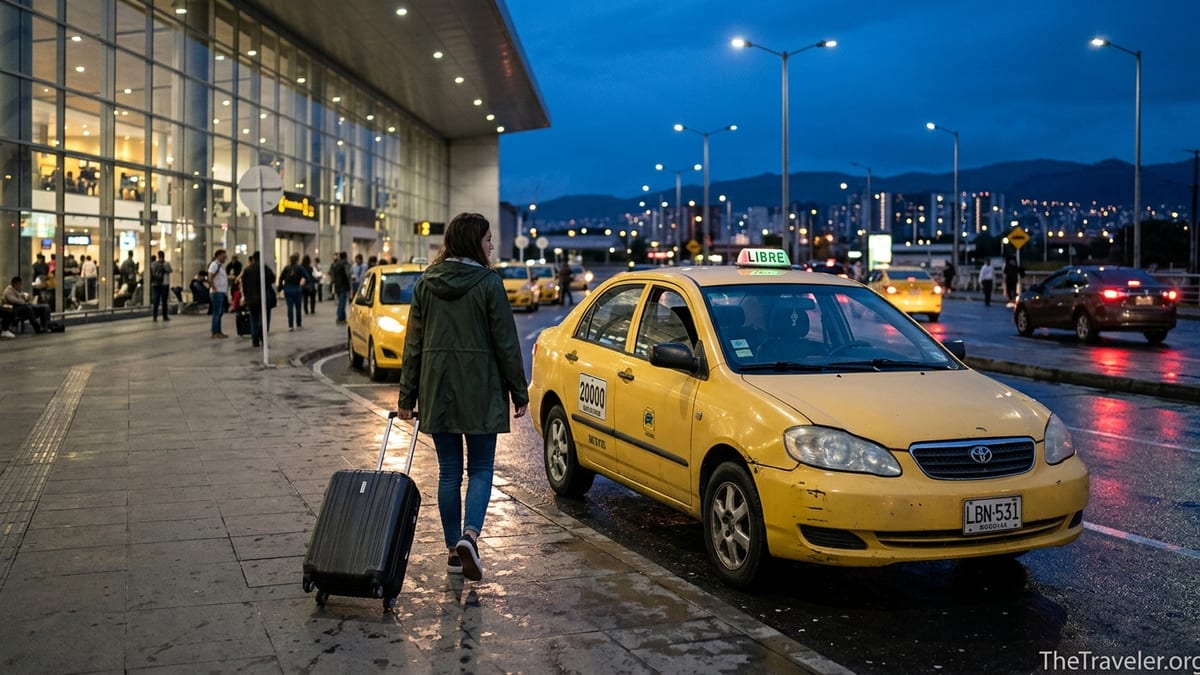
For many travelers, the simplest and safest first step out of El Dorado is an authorized airport taxi. Inside the arrivals area you will find clearly marked booths for the official taxi company associated with the airport, where staff can help you calculate the approximate fare and direct you to the correct queue. Outside, a dedicated lane is reserved for these yellow taxis, which are regulated by the city and subject to standard tariffs updated by Bogotá’s mobility authorities.
City regulations frequently adjust taxi tariffs, and by early 2026 a series of decrees had updated the per-unit charges for distance, time and supplements. In practice, travelers report that an authorized taxi from El Dorado to the Zona T / Chapinero area usually runs in the region of 50,000 to 70,000 Colombian pesos, depending on traffic and exact hotel location. Many visitors budget something like 15 to 20 US dollars for this ride and are pleased to find the meter usually comes in below the maximum they expected, even with airport supplements and nighttime charges included.
Using the official line inside the airport gives you a clear advantage: there is practically no negotiation. You place your luggage in the trunk, confirm with the driver that you are going to Zona T or your specific hotel (for example “Hotel Sofitel Victoria Regia, cerca de la Zona T”), and keep an eye on the taximeter. Drivers are used to tourists and, although not all speak English, most will understand hotel names and major landmarks around Calle 82. You can show your booking confirmation on your phone if pronunciation is an issue.
Late at night or in the early morning hours, official taxis have another benefit: availability. While ride-hailing apps sometimes experience short gaps in driver supply in the pre-dawn window, the airport taxi line usually has at least a few vehicles waiting, especially on nights with multiple international arrivals. For a solo traveler arriving around 23:00, choosing the taxi line avoids walking away from the terminal to meet an app driver and keeps the entire experience within the controlled airport environment.
Ride-Hailing Apps: Uber, DiDi, Cabify and Local Platforms
Ride-hailing apps are widely used in Bogotá and are a favorite among younger locals for nightlife, including to and from Zona T. International travelers commonly rely on Uber, DiDi and Cabify, along with local-leaning platforms like inDrive and taxi-based apps. Regulations around app-based transport have evolved over the years, and debates over legality still surface in the news, but in day-to-day practice these apps operate openly and are used by residents for routine trips across the city.
From El Dorado, however, there are a few practical details. App drivers generally do not pick up passengers from the same front curb used by official taxis. Instead, you will often be asked to meet your driver at a pickup point a short walk from the main exits, such as in the general parking area or on a nearby curb away from the taxi queue. The exact instructions appear in the app chat or ride notes. This can feel slightly confusing after a long flight, so it is worth reading the meeting details carefully before requesting the ride, particularly if you are carrying multiple suitcases.
Pricing on apps is dynamic but can be competitive with official taxis. Travelers in 2025 and 2026 frequently report quotes in the ballpark of 35,000 to 60,000 Colombian pesos from El Dorado to hotels near Zona T in normal conditions, with higher peaks during downpours or rush hour. For instance, a Friday evening arrival around 19:30 might display an Uber Comfort fare near 55,000 pesos, while a DiDi or inDrive quote for a similar vehicle class could come in slightly lower. Many visitors appreciate seeing the approximate cost up front and paying by card in the app rather than managing cash immediately after landing.
For nightlife specifically, apps become more valuable after you have checked into your hotel. Zona T’s bars and clubs rely heavily on Uber-style services for late-night returns to accommodations in Chapinero Alto, Parque de la 93, Usaquén and downtown. If you plan to be out until 02:00 or 03:00, installing at least two apps, such as Uber plus Cabify or DiDi, increases your chances of finding a driver quickly. The same logic applies from the airport: if one app shows long wait times, check another before heading to the curb.
Pre-booked Private Transfers and Hotel Cars
For travelers prioritizing comfort, predictability and a smooth start to a high-end stay in Zona T, pre-booked private transfers are an attractive option. Several Bogotá-based transport companies specialize in airport–hotel routes, often highlighting the Zona Rosa and Chapinero districts. Their marketing frequently targets guests of business-class and luxury hotels such as JW Marriott Bogotá, Hilton Bogotá, BOG Hotel and others popular with international visitors.
These services typically offer an English-speaking driver, meet-and-greet in the arrivals hall with a sign, assistance with luggage and direct, non-stop transport to your hotel. Vehicles are usually recent-model sedans or SUVs, and some companies offer executive vans for groups heading into town for events, bachelor or bachelorette parties, or corporate retreats. Prices vary by provider, but it is common to see one-way airport-to-Zona-T transfers for a couple or small group advertised in a band that roughly converts to 30 to 60 US dollars, depending on the vehicle category and time of day.
Many hotels in and around Zona T also work with trusted driver partners. When you book, especially at higher-end properties, you can often ask the front desk or concierge team to arrange an airport pickup. Guests on travel forums regularly mention having their hotel schedule a car that waits just outside arrivals, communicates via WhatsApp and charges a fixed fare that is confirmed in advance. For example, a boutique hotel near Calle 85 might quote a set rate, collected in cash or added to your room bill, which lets you bypass both taxi lines and app coordination.
This option is particularly attractive for arrivals after midnight, for solo travelers uneasy about navigating a new city, and for small groups with multiple checked bags or sports equipment. While the cost is higher than a standard taxi or typical Uber fare, the extra spent often buys peace of mind. For visitors flying in specifically for a weekend of nightlife and hotel stays in Zona T, arriving rested and unhurried can be worth the premium.
Traffic, Timing and When Each Option Makes Sense
Bogotá’s traffic is famous among locals and visitors alike, and it has a direct impact on how you should plan your airport transfer to Zona T. Morning rush hour typically runs from about 07:00 to 09:30, while the evening peak stretches from around 16:30 to 19:30 on weekdays. During these windows, congestion on Avenida El Dorado and major north–south arteries can extend your transfer time by 20 to 30 minutes or more. Afternoons with heavy rain, which are common in certain months, can have a similar effect.
If you land in the late morning or early afternoon on a weekday and want a straightforward experience, authorized taxis or ride-hailing apps are both good choices. The taxi queue moves consistently, and apps should show reasonable wait times and fares. A typical scenario might be a midweek arrival at 13:00, clearing immigration and collecting luggage by 14:00, then reaching your hotel near Zona T by around 14:45 with a metered taxi or app ride costing the peso equivalent of roughly 15 to 18 US dollars.
For arrivals close to or during the peak of nightlife, say between 21:00 and midnight, comfort and safety become the main considerations. A pre-booked private transfer or hotel car can be the most relaxed option at these hours, especially if you are connecting to friends or a reservation shortly after check-in. However, many travelers still choose the authorized taxis or apps at night without issue, provided they follow basic precautions like using only official taxis at the terminal and verifying driver details in their app.
Very early morning arrivals, between 03:00 and 06:00, are the moment when your choice matters most. While Bogotá begins to wake up early, there may be fewer taxis in the queue and fewer app drivers online, depending on the day. If your flight lands in this band and you know you will be tired, booking a private transfer or arranging a pickup through your hotel is often the safest, least stressful solution. The driver will track your flight, wait if there are delays, and you can head directly to Zona T with minimal decision-making.
Luggage, Safety and Street-Smart Practices
Whichever transfer you choose, handling your luggage and staying alert to your surroundings are simple but effective ways to keep your trip smooth. At El Dorado, keep your bags within sight at all times, especially in the arrivals hall and outside at the taxi and rideshare pickup points. Bogotá, like many large cities, experiences opportunistic theft, and distracted travelers managing suitcases, backpacks, phones and currency at once are easier targets.
In authorized taxis, keep smaller bags and valuables with you in the back seat rather than in the trunk. It is normal to put large suitcases in the trunk, but daypacks with electronics and travel documents are better at your feet or on your lap. Before the car moves, ensure the taximeter is turned on. If you do not see it running, politely ask the driver to start it. Most are professional and will do so immediately. It also helps to have your hotel address written down or saved on your phone, and to show it clearly to the driver.
With ride-hailing apps, double-check the license plate, car model and driver name before getting into any vehicle. Stand in a well-lit, busy area near the terminal while you wait, and avoid displaying phones and wallets more than necessary. Once in the car, keep the in-app route visible so you have a sense of where you are headed. Zona T and its surroundings are well-known landmarks, so routes from El Dorado are usually direct, but if you notice a major deviation that is not due to traffic, you can ask the driver for clarification.
At night, especially after visiting clubs and bars, use the same caution leaving Zona T as you did at the airport. Ask bar staff or your hotel to call a taxi for you, or order an app ride from inside the venue and wait until the driver has arrived before stepping outside. Avoid walking long distances with visible valuables, even though many streets around Zona T are busy and well-patrolled. The priority is to move directly from venue door to vehicle door whenever possible.
Public Transport: When It Works and When It Does Not
The public transport system that serves Bogotá, including TransMilenio trunk lines and integrated buses, technically offers a low-cost way to travel between El Dorado and the area around Zona T. There are services linking the airport with major transfer stations, and some routes reach the Andino shopping center area that borders Zona T. For residents and experienced visitors traveling light during the day, this is a functional and budget-friendly option.
However, from a practical, traveler-focused perspective, public transport is not ideal for most people arriving with luggage and plans for immediate hotel check-in or nightlife. Reaching Zona T by bus usually involves at least one transfer, crowded platforms during peak hours, and walking several blocks with bags at the end of the journey. For example, a daytime public transport route might take roughly 60 to 75 minutes, compared with 30 to 45 minutes by car under similar traffic conditions.
Security is another consideration. While many people use public transport in Bogotá daily without incident, tourists carrying backpacks, rolling suitcases and visible valuables stand out more in packed buses than inside a taxi or private car. Petty theft in crowded environments is an ongoing concern in most large cities, and Bogotá is no exception. For this reason, local tourism and business event organizers often recommend that international visitors prioritize taxis, apps or private transfers, particularly outside full daylight hours.
If you are an adventurous traveler familiar with the city and you land in the middle of the day with minimal luggage, you might experiment with public transport once you are settled and comfortable. For everyone else, especially those arriving for a short nightlife-focused stay in Zona T, door-to-door options offer a better balance of cost, time and peace of mind.
The Takeaway
Traveling from El Dorado International Airport to Zona T is a straightforward trip that feels very different depending on the transfer you choose. Authorized airport taxis provide a reliable, regulated and widely used option, with predictable metered fares and a presence inside the terminal that makes them ideal for first-time visitors. Ride-hailing apps like Uber, DiDi and Cabify add flexibility, clear price estimates and app-based payment, and are especially useful once you are moving between hotels, bars and restaurants in the Zona T area itself.
For guests staying at upscale or boutique hotels, or for anyone landing late at night or very early in the morning, pre-booked private transfers and hotel-arranged cars deliver extra comfort and assurance. The driver meets you inside the terminal, helps with luggage and takes you directly to your door in Zona T without any need to navigate queues or pickup points. Although the price is higher, this can be a worthwhile tradeoff for a smooth start to a short, nightlife-focused visit.
In all cases, basic street smarts go a long way: watch your luggage closely, confirm vehicle and driver details, keep valuables out of sight, and go door-to-door at night rather than walking long distances with bags. Combined with a realistic understanding of Bogotá’s traffic patterns and your own tolerance for complexity after a flight, these habits will help you choose the transfer that fits your budget and comfort level.
If your goal is to maximize time in Zona T’s hotels, restaurants and clubs rather than navigating logistics, the best all-around strategy for most visitors is to take an authorized airport taxi or pre-arranged car on arrival, then rely on a mix of apps and hotel-arranged taxis for nighttime movements. This approach blends safety, convenience and cost control, letting you focus on enjoying Bogotá’s energy from the moment you land.
FAQ
Q1. How long does it usually take to travel from El Dorado Airport to Zona T?
In normal traffic, the drive takes about 30 to 45 minutes. During weekday rush hours or heavy rain, it can stretch to around an hour or slightly more.
Q2. How much should I expect to pay for an official airport taxi to Zona T?
While fares vary with traffic and updated tariffs, many recent travelers report paying roughly the equivalent of 15 to 20 US dollars in pesos for this route.
Q3. Are ride-hailing apps allowed to pick up passengers at El Dorado Airport?
Yes, apps such as Uber, DiDi and Cabify operate in Bogotá. Drivers often ask you to meet them at designated pickup points slightly away from the main taxi curb.
Q4. Is it safe to arrive in Bogotá late at night and take a taxi to Zona T?
Many visitors arrive late and use authorized airport taxis without trouble. Choose official taxis from inside the terminal, keep belongings close and go directly to your hotel.
Q5. When is a private transfer or hotel car worth the extra cost?
Private transfers are most valuable for arrivals after midnight, travelers with lots of luggage, small groups, or anyone who prefers a pre-arranged, meet-and-greet service.
Q6. Should I tip my taxi or private driver in Bogotá?
Tipping is not strictly mandatory, but rounding up the fare or adding about 10 percent for good service is appreciated and common among international travelers.
Q7. Is public transport a good option from the airport to Zona T?
Public transport is cheap but usually requires transfers and walking with luggage. For most visitors, especially at night, taxis, apps or private cars are more practical.
Q8. Can my Zona T hotel arrange an airport pickup for me?
Many hotels near Zona T work with trusted drivers or transport companies. It is often possible to request a fixed-price airport pickup when you make your reservation.
Q9. What is the safest way to manage luggage during the transfer?
Keep smaller bags and valuables with you in the back seat, place large suitcases in the trunk, and avoid setting items down unattended while arranging your ride.
Q10. Which option is best if my priority is nightlife in Zona T?
For a nightlife-focused stay, use an official taxi or pre-booked car from the airport, then rely mainly on ride-hailing apps and hotel-called taxis for late-night movements.