


The Elafiti Islands off Dubrovnik are one of Croatia’s most popular day trips, yet many visitors assume an organized boat tour is the only way to see them. In reality, the three main islands of Koločep, Lopud and Šipan are linked to Dubrovnik by regular public ferries, making a self-guided visit easy, inexpensive and far more flexible than most group excursions. This guide explains exactly how to do it on your own, what is realistic in a single day, and how to avoid spending your precious holiday sprinting between piers.
Get the latest updates straight to your inbox!
Understanding the Elafiti Islands and How Ferries Work
The Elafiti Islands (often written Elaphiti or Elafiti) are a small archipelago scattered just northwest of Dubrovnik. For independent visitors, the three that matter are Koločep, Lopud and Šipan, because these are the ones served by the year round public passenger ferry from Dubrovnik’s Gruž port. Koločep is the closest and smallest, Lopud sits in the middle, and Šipan is the largest and farthest away, but all three feel a world removed from Dubrovnik’s cruise crowds.
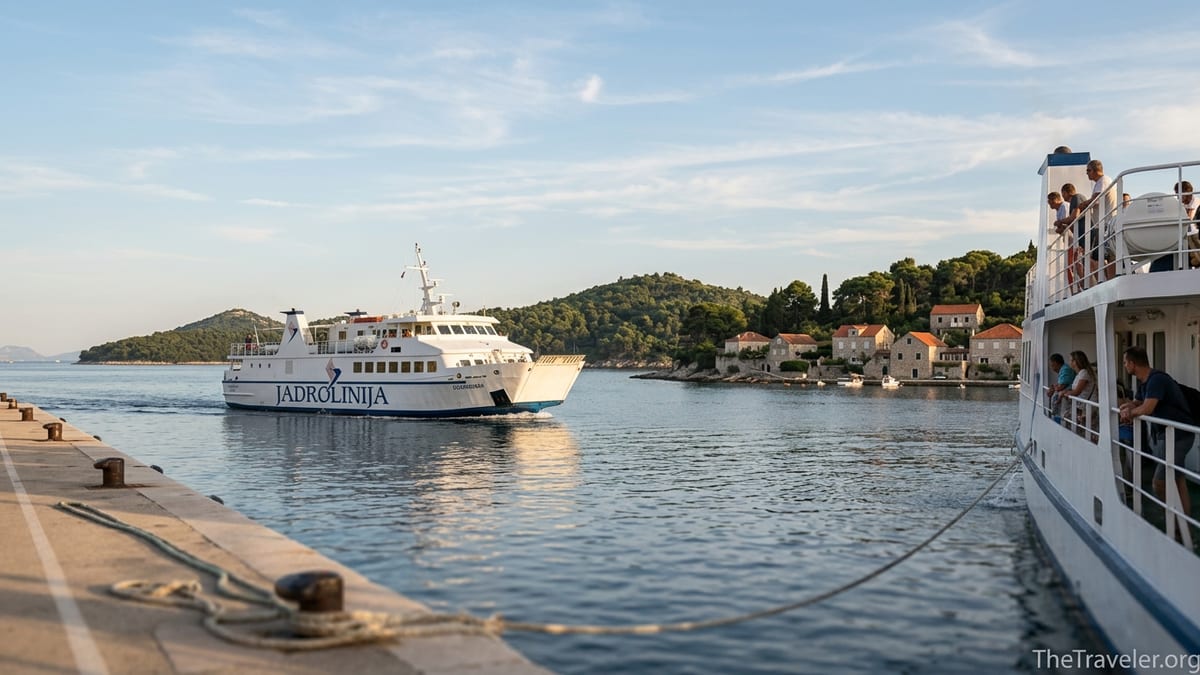
The backbone of independent travel here is Jadrolinija’s local passenger line 807, which runs Dubrovnik – Koločep – Lopud – Suđurađ (Šipan) and back. On a typical summer weekday the boat leaves Dubrovnik Gruž early in the morning, then shuttles back and forth with several daytime and evening crossings in each direction. In high season that usually means four or more daily departures from Dubrovnik to the islands and the same number returning, with a slightly reduced timetable on Sundays and in winter.
Boats depart from Dubrovnik’s main port at Gruž, a 10–15 minute bus ride from the Old Town. The ferries are passenger only on line 807 and feel more like large coastal boats than big car ferries. Boarding is straightforward: you arrive 20–30 minutes before departure, buy a ticket at the Jadrolinija kiosk or app, and walk directly onto the boat when boarding is announced. There is open deck seating, indoor seating, and usually a small kiosk selling drinks and simple snacks.
Travel times are short. Allow around 30–40 minutes from Dubrovnik to Koločep, about 55–65 minutes to Lopud, and roughly 75–85 minutes to Suđurađ on Šipan, depending on the specific sailing. Because the boat stops at multiple islands, legs between islands are even shorter, often 15–30 minutes. This makes it entirely feasible to visit one island in a very relaxed day, or two islands if you choose your sailings carefully and accept a busier schedule.
Tickets, Prices and Where to Buy Them
Using the public ferry is significantly cheaper than booking a full day Elafiti boat tour. As of the latest published Jadrolinija tariff, a one way adult ticket from Dubrovnik to Koločep on the island line costs a little over 4 euros, with Lopud slightly more and Suđurađ on Šipan typically around 6–7 euros, depending on the current tariff period and any seasonal adjustments. Children roughly between 3 and 12 pay about half price, while younger children generally travel for free if they do not occupy a separate seat.
Tickets can be bought in several ways. The most traditional is to purchase them over the counter at the Jadrolinija office or kiosk at Gruž port on the day of travel, paying by card or cash in euros. Many travelers now prefer to use the Jadrolinija mobile app or website, which allows you to check the timetable, see current prices and buy e-tickets ahead of time. In summer, when morning sailings to Lopud and Šipan are popular, pre-buying via the app the day before is a sensible way to avoid queuing at the port, especially if you need to catch the first boat.
When planning your budget, it helps to think in terms of typical return costs. A simple Dubrovnik–Koločep–Dubrovnik day with no island hopping will usually come in under 10–12 euros per adult for ferry tickets. Dubrovnik–Lopud–Dubrovnik tends to be in the 10–15 euro ballpark, and Dubrovnik–Šipan–Dubrovnik roughly 12–18 euros, depending on whether you combine multiple legs or sail at different tariff zones. Even if you string together Dubrovnik–Koločep–Lopud–Dubrovnik in one day, you are still paying a fraction of what many organized three island tours charge.
It is important to know that local ferries can and do sell out on individual sailings in peak summer, particularly the first morning departure and the last return of the day. This is more common on weekends, public holidays and during local events when islanders are traveling. If you are set on a specific departure and visiting in July or August, secure your ticket at least the day before and arrive at the port early. If you are flexible and traveling in shoulder season, you often can buy on the same morning without stress.
What Is Realistic in One Day Without Feeling Rushed
On paper, the timetable makes it look easy to visit all three main Elafiti islands in a single day: you could ride the morning ferry from Dubrovnik to Koločep, hop to Lopud by midday, continue to Šipan in the afternoon, and return on the evening boat. Technically that is possible. In practice it leaves you with barely an hour or two on each island, much of which you will spend walking to and from piers, checking the time and queuing. For most travelers this “three in one day” plan feels rushed and unsatisfying.
A more realistic approach is to focus on one island properly, or two at most. For a slow, beach oriented day, Lopud alone is ideal. You can take a mid morning ferry, walk across the island to Šunj Beach for swimming and lunch, then return to the village for coffee before catching a late afternoon sailing back to Dubrovnik. You will still have time to get lost in its car free lanes and sit on the waterfront without constantly watching the clock.
If you want a mix of walking and swimming with minimal logistics, Koločep is excellent. A common pattern is to catch an early boat from Gruž, arrive in Donje Čelo on Koločep by mid morning, walk the well marked inland path through pine forest and olive groves to Gornje Čelo, stop to swim in one of the coves, and enjoy a late lunch at a simple konoba before ambling back to the harbor for a mid or late afternoon ferry. For more energetic visitors, adding a coastal loop or detour to a cliffside viewpoint still works comfortably within a single day.
For food lovers and those interested in traditional village life, Šipan deserves a day to itself. The ferry arrives at Suđurađ on the eastern end, and from there you can either walk or take a local taxi across the interior valley to Šipanska Luka on the western side, passing citrus groves and old stone villas. With only one island on your agenda, you can linger over a long seafood lunch, stroll the bay and perhaps rent bikes without worrying about missing tight connections.
Choosing Which Elafiti Islands to Prioritize or Skip
Each of the three main islands has its own character, so your priorities should guide which ones to visit, especially if you only have one day. Koločep is the closest island to Dubrovnik, covered in dense pine forest, and completely car free. It appeals to walkers, swimmers and anyone looking for a very quiet, local feel. The two tiny settlements, Donje Čelo and Gornje Čelo, are linked by paths rather than roads, and the pace of life is gentle even in high season.
Lopud sits between Koločep and Šipan and is the best known of the trio for day trippers. Its small harbor is lined with cafes, restaurants and a few boutique hotels, and behind the waterfront lies a warren of stone alleys and ruins. The biggest draw is Šunj, a shallow, sandy bay on the opposite side of the island that is rare on this otherwise pebbly stretch of coast. For visitors who want “classic Croatian island plus easy beach time” in one package, Lopud is hard to beat, which also makes it the busiest in summer.
Šipan is the largest island, with two villages and an agricultural interior filled with olive groves, vineyards and citrus trees. It has fewer day trippers than Lopud and tends to attract travelers who enjoy quiet villages, long lunches and gentle exploration more than ticking off sights. Šipanska Luka at the western end has a long, photogenic harbor hemmed in by green hills, while Suđurađ, where the ferry docks, feels more workaday and local, with a small castle, a few cafes and stone houses grouped around the quay.
If you only have one day and want to avoid a rushed schedule, it is reasonable to “skip” at least one island. With children or anyone who values easy beach access and cafe choice, making Lopud your sole focus is usually the right call. If you prefer hiking, viewpoints and a quieter time, choose Koločep. If your trip already includes beaches elsewhere and you are more excited by local food and rural scenery, devote your day to Šipan. Trying to squeeze all three into a single day should be reserved for repeat visitors who already know what to expect or those who genuinely enjoy a fast paced itinerary.
Sample Self-Guided Day Itineraries Using the Public Ferry
One popular self guided plan is a Koločep and Lopud combination. For example, you might take an early morning Jadrolinija ferry from Dubrovnik to Koločep, arriving in Donje Čelo around 8:30 or 9:00, depending on the current timetable. After a coffee at the harbor cafe you walk the inland path to Gornje Čelo, detouring to a rocky bay for a swim. Around midday you return to Donje Čelo and board the next inter island ferry leg to Lopud, which is typically less than 30 minutes. On Lopud you can have a simple lunch at a waterfront konoba, then decide whether to walk the 30–40 minute path over the hill to Šunj Beach or stay by the harbor until the late afternoon ferry back to Dubrovnik.
Another realistic itinerary is a full Šipan day. You catch a mid morning ferry from Gruž to Suđurađ, arriving in late morning. From the quay you can either hire a taxi to Šipanska Luka, which takes around 10 minutes and costs roughly what you would expect for a short island cab ride in Croatia, or walk the 5 km route across the interior valley, which takes about an hour at a relaxed pace. Once in Šipanska Luka you settle into the rhythm of the island: swim from the small beach at the head of the bay, take a stroll along the waterfront road, and enjoy lunch based on whatever local fish is fresh that day. In the late afternoon you either taxi or walk back to Suđurađ in time for the evening ferry to Dubrovnik.
For travelers who dislike early starts, a single island Lopud day can be planned around a mid morning ferry and a sunset return. You leave Dubrovnik Gruž late morning, arrive on Lopud in time for lunch in the harbor, then walk over to Šunj Beach for the warmest hours of the afternoon. The walk each way is around 30–40 minutes on a well trodden path with some uphill. Many visitors rent a sun lounger and umbrella at Šunj for a reasonable day rate, then return to the village in the early evening for a drink on the seafront as the day trippers depart. Choosing a later ferry back allows you to enjoy the island’s calmer evening atmosphere before returning to Dubrovnik for dinner.
If you are visiting in the shoulder season, when daylight is a bit shorter and sea temperatures cooler, consider focusing even more tightly on one island and aligning your ferries with daylight hours rather than trying to maximize stops. In April or October, a simple plan like “morning ferry to Koločep, loop hike and lunch, mid afternoon return” can be more enjoyable than chasing cross island swims that depend on strong sunshine.
Walking Routes and Orientation on Each Island
Koločep is a walker’s island. The standard route for first time visitors is the inland path from Donje Čelo, where the ferry arrives, to Gornje Čelo on the opposite side. This walk is roughly 3 km one way, mostly on wide tracks through cool pine forest and olive groves, with only gentle ups and downs. At an easy pace it takes 45–60 minutes. Along the way you pass small chapels, stone walls and occasional views back toward the mainland. From Gornje Čelo, short paths lead down to rocky coves and swimming spots facing the open sea. Many visitors turn the crossing into a loop by returning on a slightly different path or following a section of the coastal trail.
On Lopud, orientation is even simpler. The village hugs a horseshoe bay, with the ferry quay near the center. From here, one main path cuts across the island to Šunj Beach on the south side. The walk to Šunj takes around 30–40 minutes from the harbor, climbing gradually through the village and then along a forested track before descending to the sandy bay. The surface is mostly paved or well trodden earth and is suitable for anyone with moderate fitness, though you should still bring proper shoes rather than flip flops. Along the way there are viewpoints looking back toward Šipan and out over the Adriatic.
Šipan’s main walking route for day trippers links Suđurađ, where the ferry docks, with Šipanska Luka on the other side of the island. The most direct inland route is about 5 km one way and takes around an hour at a normal walking pace. It follows a quiet road through the olive and citrus filled valley, passing old churches and summer houses built by Dubrovnik’s Renaissance nobility. The route is mostly open and can be hot in high summer, so an early start and plenty of water are important. More experienced walkers sometimes add extra loops up into the hills above the valley for broader views, but those routes require more time and a flexible ferry plan.
Regardless of island, it is wise to download an offline map of the area before you travel. While the main routes are obvious and signposted in places, small side paths and coves can be confusing, especially on Koločep where the forest is dense. Local tourist maps handed out at port kiosks and on the ferry can help with basic orientation, but they rarely show every footpath. Also remember that these are real communities, not theme parks, so stick to marked routes where possible and avoid wandering through private gardens or fields.
How to Avoid Rushed Schedules and Common Pitfalls
The single biggest mistake independent visitors make is underestimating how quickly time passes on the islands. A ferry schedule that looks generous on paper can evaporate once you factor in buying coffee, changing into swimwear, finding a place for lunch and walking to beaches or viewpoints. To avoid feeling rushed, start by building in a buffer of at least one full ferry departure on either side of your ideal plan. For example, if the afternoon boat you want back to Dubrovnik leaves at 17:30, plan your walking and swimming as if you must catch the 16:00 sailing instead. That way, if you are delayed or decide to linger over lunch, you still have a fallback option.
Another common pitfall is chaining together multiple tight inter island connections. If you intend to do Koločep and Lopud in the same day, avoid any plan that requires you to arrive on one island only 10–15 minutes before your onward ferry, especially in summer. Boats can be a few minutes late, and disembarking can take longer than expected. A more comfortable pattern is to give yourself at least one full sailing gap between arrival and departure on each island. That might mean two or three hours on Koločep before continuing to Lopud, and at least three or four hours on Lopud before heading back to Dubrovnik.
Check the latest schedule again the evening before your trip, and once more on the morning of departure. While the Jadrolinija local lines are relatively stable, there can be timetable adjustments at the start and end of the main season or around public holidays. Port staff in Gruž and the island ticket offices usually display printed timetables, and the Jadrolinija app is updated when changes occur. If the weather forecast shows strong winds or storms, have a backup plan such as shifting your island day to another date, as smaller coastal ferries may sail on adjusted times in rough conditions.
Finally, be realistic about your group’s walking speed and interests. A fit couple used to hiking can comfortably combine a Koločep cross island walk, a swim and an onward hop to Lopud for a late afternoon beach, then ride the evening ferry home. A family with young children, or anyone recovering from an injury, will likely enjoy their day more if they focus on one island and choose the easiest routes. Slowing down slightly often transforms a stressful “race the ferry” experience into a truly relaxing island day.
The Takeaway
Visiting the Elafiti Islands without an organized tour is not only possible but, for many travelers, more rewarding. The public passenger ferry from Dubrovnik’s Gruž port connects Koločep, Lopud and Šipan several times a day at modest prices, giving you the freedom to shape your own schedule, linger in places you love and skip those that do not appeal.
The key to a successful self guided day is knowing what is realistic. For most visitors, that means focusing on one island or combining two at most, allowing enough time for walking, swimming and unrushed meals. Koločep suits walkers and those seeking quiet pine shaded coves, Lopud excels for easy beach time and cafes, and Šipan rewards anyone who enjoys village life and long lunches beside a calm bay.
By studying the current Jadrolinija timetable, buying tickets in advance for key sailings, and building generous buffers between ferries, you can avoid the common pitfalls of rushed connections and overcrowded boats. Add a downloaded offline map, comfortable walking shoes and a flexible mindset, and you will find that doing the Elafiti Islands by public ferry feels less like a logistics puzzle and more like what it should be: a simple, memorable island escape from Dubrovnik.
FAQ
Q1. Do I need to book the Elafiti public ferry in advance?
In high season it is wise to buy tickets at least the day before, especially for the first morning departure and last return, using the Jadrolinija app or Gruž port office.
Q2. Can I visit all three main Elafiti islands in one day by public ferry?
It is technically possible but usually feels rushed. Most travelers enjoy their day more if they focus on one island or two at most.
Q3. Which Elafiti island is best for a relaxed beach day?
Lopud is usually the best choice, thanks to its car free harbor village and the shallow sandy bay of Šunj, which is ideal for swimming and sunbathing.
Q4. Which island should I choose if I like walking and quiet coves?
Koločep is ideal for walkers. The cross island path between Donje Čelo and Gornje Čelo and the forested trails to rocky coves make for an easy, peaceful day.
Q5. How much does the public ferry to the Elafiti Islands cost?
As a rough guide, expect a one way adult fare of around 4–5 euros to Koločep, 5–7 euros to Lopud and 6–8 euros to Suđurađ on Šipan, depending on the current tariff.
Q6. Where do the Elafiti ferries leave from in Dubrovnik?
All regular public ferries to Koločep, Lopud and Šipan depart from Dubrovnik’s main port at Gruž, which you can reach by city bus or taxi from the Old Town.
Q7. Are the Elafiti islands suitable for children and less mobile travelers?
Yes, particularly Lopud, which has a flat waterfront promenade and easy access to cafes and small beaches. Some inland paths on Koločep and Šipan are better suited to confident walkers.
Q8. Is food available on the islands or should I bring my own?
Each island has several cafes and konobas that serve simple meals, especially in summer. It is still sensible to bring water and snacks, particularly if you plan longer walks.
Q9. What should I wear and bring for a self guided Elafiti day?
Comfortable walking shoes, swimwear, a light cover up, sun protection, water and a downloaded offline map are the essentials. In shoulder season, add a light jacket.
Q10. Do I need a tour to reach the famous Šunj Beach on Lopud?
No. You can arrive on Lopud by public ferry, then walk 30–40 minutes across the island to Šunj Beach on a clearly used path, returning the same way for your ferry back.