


More news on this day
A sudden road washout in Portland’s Old Port has forced an emergency closure of a key waterfront link, disrupting vehicle access, rerouting buses and complicating plans for visitors and businesses at the height of the city’s summer season.
Get the latest news straight to your inbox!
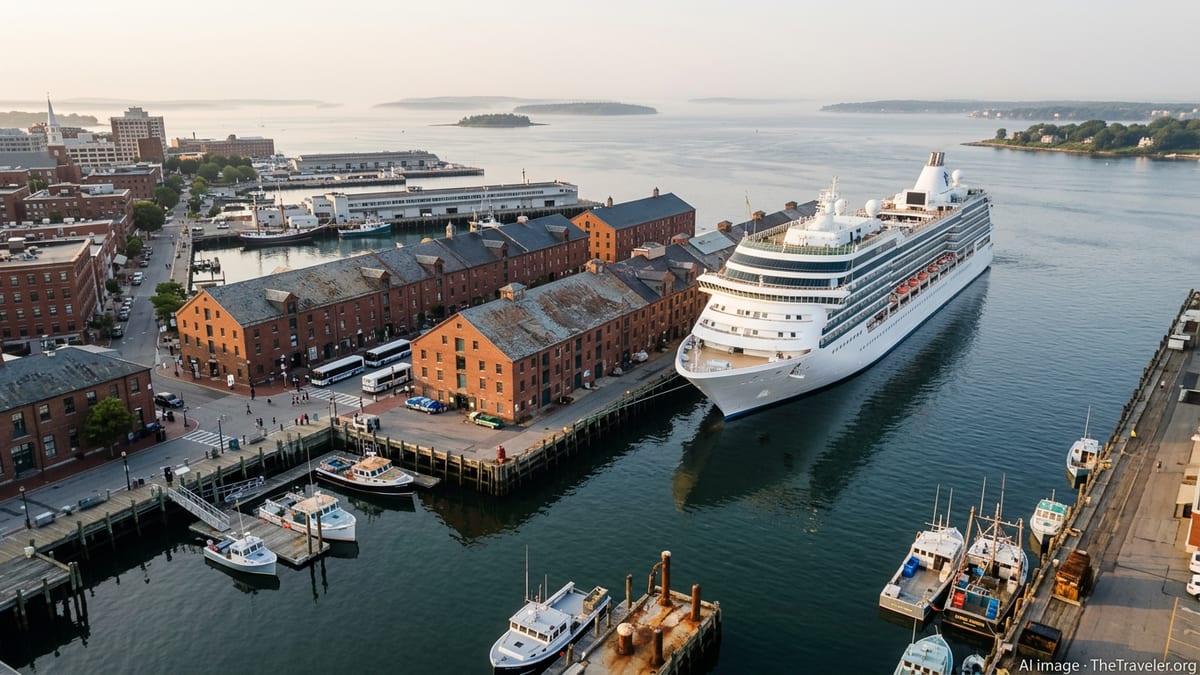
Washout severs connection in historic waterfront district
The affected stretch lies at the lower end of Portland’s peninsula in the Old Port, the waterfront district known for its narrow streets, active piers and dense mix of restaurants, shops and bars. Publicly available information describes the closure as an emergency safety measure after part of the roadway base gave way, leaving an uneven surface and exposed subsurface materials.
Reports indicate that the failure followed a period of heavy rain, which overwhelmed drainage in a low-lying section close to the harbor. Photographs shared on regional news sites and social media show a visible drop in the pavement level and a jagged gap where the asphalt has broken away near the curb line, consistent with localized washout rather than a wider landslide.
Initial assessments suggest that underlying utilities were not significantly damaged, but the loss of structural support under the travel lane prompted an immediate shutdown to cars and trucks. Barricades and temporary fencing now block through traffic, while transportation advisories warn drivers to avoid the area unless they have local business and are prepared for delays.
The Old Port’s dense layout and one-way street pattern magnify the impact of any blockage, and the washout has created a new choke point just as Portland moves into its busiest weeks for cruise calls, festivals and waterfront events.
Traffic detours and transit changes ripple through downtown
The closure is forcing a rapid reworking of downtown traffic patterns. Nearby approaches are carrying diverted vehicles, creating longer queues at key intersections that link the Old Port to the rest of the peninsula. Drivers heading for the working waterfront, ferry terminals and popular garages are being redirected along parallel streets that were already operating near capacity during peak periods.
Transit alerts from Portland’s bus system show trips that normally pass through or near the affected block being shifted to alternate streets uphill from the waterfront. Riders are being instructed to board at temporary stops a few blocks away, adding walking time and increasing crowding at remaining downtown boarding points.
Pedestrian access is more flexible, but not untouched. While sidewalks that are structurally sound remain open on at least one side of nearby streets, fencing and construction vehicles are narrowing crossings and forcing people to weave between detour signs and shifted loading zones. Visitors emerging from cruise berths or parking garages are encountering unexpected barriers as they try to reach Old Port landmarks, from cobblestone lanes to the city’s ferry terminals.
Delivery trucks serving waterfront businesses are among the most affected, with loading patterns adjusted hour by hour as crews move equipment and aggregate into the work zone. Some operators report in local coverage that they are scheduling earlier or later runs to avoid the most congested times of day.
Businesses balance safety concerns with peak-season stakes
Old Port merchants and hospitality operators are now weighing the tradeoff between short-term disruption and the longer-term benefits of a thorough repair. The district’s economy is heavily seasonal, and June through August generate a large share of annual revenue for restaurants, bars, tour operators and retailers clustered around the affected route.
According to published coverage, some businesses closest to the washout are seeing reduced drive-up traffic, including customers who normally swing by for quick takeout or curbside pickups. Others, particularly those on pedestrian-focused side streets, are adapting with more visible signage to reassure visitors that they are open and accessible on foot.
Tour and cruise-related activity may see uneven effects. Travelers already parked or arriving on foot are likely to keep their reservations, but last-minute visitors who rely on driving into the Old Port and finding nearby parking could be deterred by warnings about congestion and detours. Travel advisers and regional tourism outlets are beginning to emphasize the availability of garages slightly farther from the waterfront and encourage visitors to allow extra time.
Business groups highlighted in local reporting are urging clear, frequent communication on repair timelines so operators can adjust staffing levels and advance bookings. Many are also calling for visible wayfinding signs and pedestrian-friendly detours to keep foot traffic flowing even while the road itself remains closed to vehicles.
Engineers eye drainage, tides and aging infrastructure
Technical details released so far point to a combination of intense rainfall, tidal influence and aging infrastructure beneath a historic street grid. The Old Port was largely built in the nineteenth century, and later expansions of streets and wharves created a patchwork of filled land, retaining walls and buried utilities that require careful monitoring.
Engineering summaries referenced in regional coverage describe how heavy downpours can quickly fill catch basins in low-lying sections close to the harbor. If runoff cannot drain fast enough, water may infiltrate through cracks in the pavement or around older utility trenches, washing away supporting soil and leaving voids that eventually cause the surface to sink or collapse.
In a district where some streets sit just above high-tide levels, the interaction between stormwater and the harbor adds another layer of complexity. High tides or storm-driven surges can slow the outflow of drainage systems, increasing the likelihood that water will back up into the street network. When repeated over many seasons, these episodes gradually weaken older road bases.
Local planners have for years pointed to the Old Port’s waterfront as an area that will need more resilient design to cope with heavier rainfall and rising seas. The current washout is already being discussed in that context, with analysts suggesting that permanent repairs may also include upgrades to drainage, subgrade materials and retaining structures to reduce the chance of a repeat failure.
What travelers should expect in the days ahead
Travelers with plans in and around Portland’s Old Port over the coming days are being advised by public notices and news outlets to build extra time into their schedules and stay flexible about exact routes. Detours for private vehicles are changing as crews shift their focus between stabilizing the damaged area, exposing underground structures for inspection and preparing for reconstruction.
Parking remains available in lots and garages around downtown Portland, but the most convenient entrances near the waterfront may be intermittently congested or temporarily restricted. Visitors arriving for dining reservations, events or ferry departures are being encouraged by travel guides and local coverage to consider parking slightly farther inland and finishing the trip on foot.
Those arriving by bus or train will find that the city center is still walkable, though they may encounter fencing, noise and heavy equipment near the washout site. Some tours and waterfront excursions are adjusting meeting points by a few blocks, a detail often shared through booking confirmations and social media updates.
Publicly available information indicates that there is no firm reopening date yet, as crews must complete geotechnical assessments and design a repair that balances speed with long-term resilience. For now, the Old Port remains open for business and tourism, but with a new reminder that one damaged block can quickly become a regional transportation story.