


More news on this day
Passengers on American Airlines flight AA3712, operated by regional carrier Envoy Air between Chicago O’Hare and Michigan’s Marquette Sawyer Regional Airport, faced an unexpected detour when the aircraft diverted to Appleton, Wisconsin, sparking alarm on board and adding fresh disruption to an already strained web of regional connections across the Upper Midwest.
Get the latest news straight to your inbox!
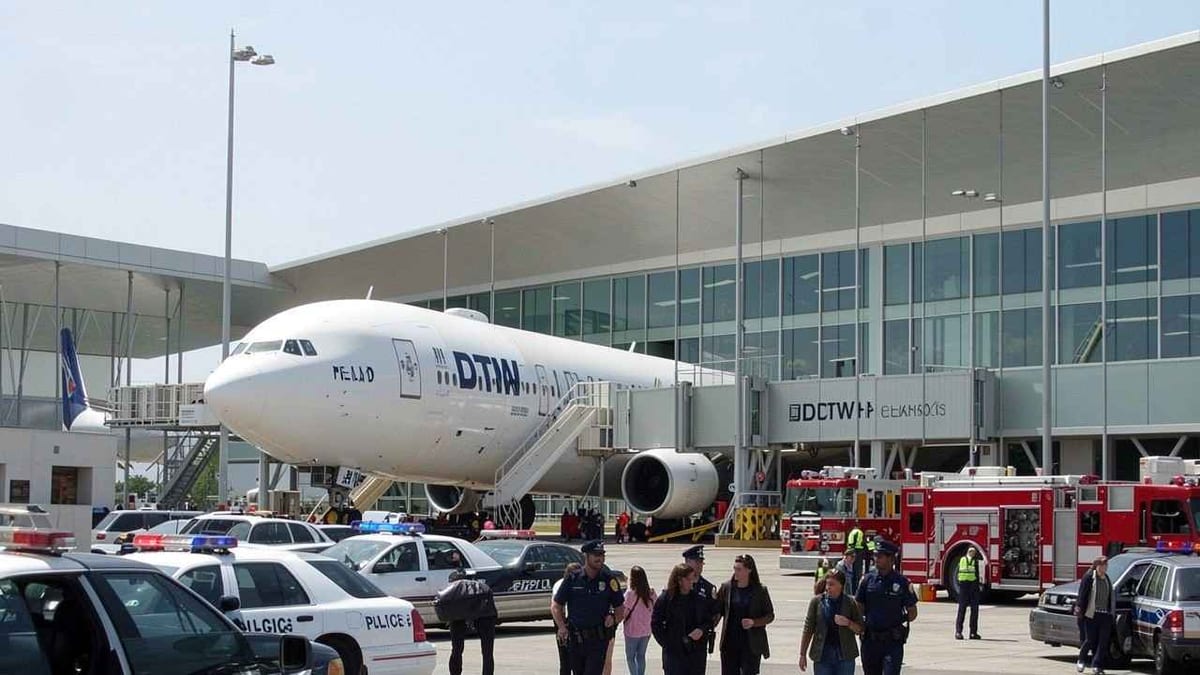
Sudden Course Change From Chicago to Appleton
According to publicly available flight-tracking data and industry coverage, AA3712 departed Chicago O’Hare on June 29 bound for Marquette in Michigan’s Upper Peninsula but broke off its planned route and landed instead at Appleton International Airport in Wisconsin. The regional jet completed the diversion without reported injuries, yet the abrupt shift in destination left travelers confused and concerned.
Reports indicate that the aircraft had been expected to operate a routine short-haul sector connecting two relatively small regional markets through American Airlines’ Chicago hub. Instead, passengers found themselves on the ground in a different state, faced with uncertainty about when or how they would reach Marquette. The lack of an immediate, detailed explanation amplified anxiety in the cabin and across social media updates from those on board.
Travel industry reporting notes that the airline has not publicly specified the precise trigger for the diversion, describing it only as an unplanned operational change. In the absence of definitive information, online discussion has ranged from speculation about potential mechanical checks to weather or airspace routing constraints in northern Michigan, underscoring how little most passengers see of the complex decision making behind a midflight diversion.
Passenger Panic Highlights Growing Sensitivity to In-Flight Disruptions
Accounts shared by travelers and summarized in regional coverage suggest that the sudden announcement of a landing in Appleton created a palpable sense of panic on board. Many passengers reportedly feared an equipment malfunction or safety threat, reflecting a wider environment in which any unscheduled change to a flight plan can quickly be perceived as an emergency.
The reaction on AA3712 mirrors a broader trend across U.S. aviation in 2025 and 2026, where a series of high-profile diversions involving technical checks, smoke or fumes reports, and disruptive passengers have kept traveler nerves on edge. Recent diversions on other American-branded regional routes and on competing carriers have drawn extensive media attention, even in cases where aircraft ultimately landed without incident.
Advocacy groups and aviation commentators have argued that detailed, real-time communication to passengers is increasingly important in managing such situations. When explanations are limited to brief public statements and generic references to safety, rumors can spread quickly, particularly when travelers post live updates from the cabin. The AA3712 diversion appears to have followed this pattern, with uncertainty fueling anxiety even as the operational outcome remained controlled.
Knock-On Effects Across a Fragile Regional Network
The diversion to Appleton did not only affect those on board AA3712. Regional schedules across the Upper Midwest remain tightly wound, with many smaller communities relying on a handful of daily flights operated by regional affiliates like Envoy Air. When one aircraft and crew suddenly terminate service at an unplanned airport, the ripple effects can cascade down the line.
Operational data for Appleton and nearby hubs show that carriers in the region are already juggling weather-related reroutes, crew duty limits, and constrained aircraft availability as the summer peak builds. A single diverted regional jet can lead to missed connections in Chicago, delayed departures from outstations, and overnight misalignment of aircraft and crews, complicating the next day’s schedule.
Travel planners note that Marquette, like many smaller markets on the shores of Lake Superior, has limited alternative options when a single evening flight disappears from the schedule. Passengers potentially face long overland journeys, overnight stays, or next-day rebooking through different hubs. For travelers who carefully time connections to reach seasonal destinations, such as lakefront resorts and outdoor attractions, one diversion can disrupt the start or end of a vacation, deepening perceptions of “chaos” in regional air travel.
Appleton’s Emergent Role as a Diversion and Relief Hub
Appleton International Airport has quietly become an important pressure valve for the regional network radiating from Chicago and Minneapolis. Industry documents and airport announcements show a growing roster of nonstop services and a steady presence of regional jets operated for major U.S. airlines, making Appleton a practical alternate field when weather, runway conditions, or congestion complicate operations elsewhere in the Upper Midwest.
Situated within range of multiple regional routes, Appleton can receive diverted flights while still allowing airlines to reposition aircraft and crews efficiently back into the schedule. The arrival of AA3712 fits with a pattern in which the airport absorbs off-schedule traffic during irregular operations, whether those are caused by convective storms over Lake Michigan, low visibility at smaller airfields, or congestion at primary hubs.
For local passengers, this dual role brings mixed effects. On one hand, Appleton benefits from increased connectivity and new service announcements as airlines lean into its strategic geography. On the other, surges of diverted flights can strain terminal resources, ground handling capacity, and nearby hotel availability, particularly on busy summer weekends. The AA3712 diversion again highlighted how a mid-sized regional airport can suddenly find itself at the center of a much larger operational puzzle.
What AA3712 Reveals About Reliability and Transparency
While AA3712 landed safely and no injuries have been reported, the incident has reopened debate about reliability on regional routes and transparency from carriers when plans change midair. Publicly available information about the flight so far stops short of a detailed narrative, leaving many questions about what, precisely, led the crew and operations teams to select Appleton instead of continuing to Marquette or returning to Chicago.
Aviation analysts point out that diversions are generally rooted in conservative decision making, with airlines opting for the nearest suitable airport if there is any doubt about weather, runway conditions, or technical readings. Yet from a passenger perspective, the absence of clear, timely explanations can make even routine precautionary decisions feel like acute crises, particularly when travelers must scramble to rearrange plans in small markets with limited backup options.
For now, AA3712 stands as another example of how a single regional flight can become a flashpoint in the broader conversation about U.S. air travel resilience. As airlines continue to rebuild schedules and add capacity across secondary cities, the way they manage and communicate diversions like the Appleton incident will remain central to traveler confidence, especially in regions where every flight counts.