


More news on this day
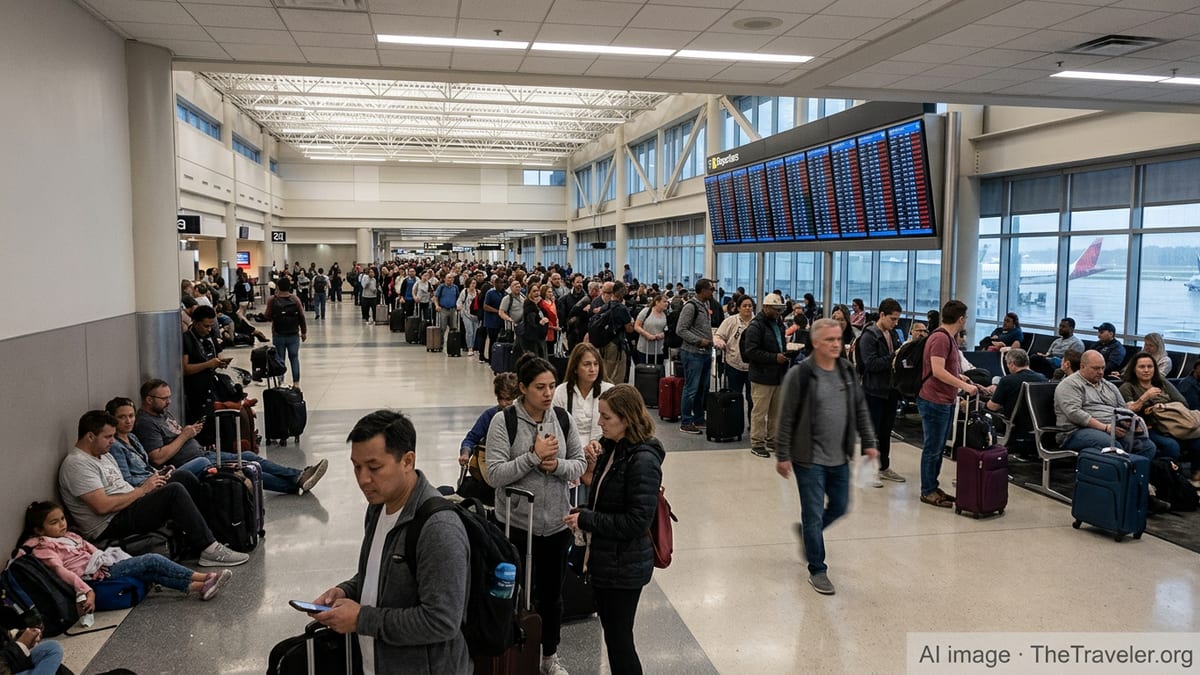
Hundreds of travelers moving through Hartsfield-Jackson Atlanta International Airport on June 30 faced major disruption as Delta Air Lines and Southwest Airlines contended with a combined 154 flight cancellations and delays, triggering missed connections, long queues and mounting frustration at the world’s busiest passenger hub.
Get the latest news straight to your inbox!
Disruptions Concentrated at the World’s Busiest Hub
Publicly available tracking data and aviation industry dashboards on June 30 indicated that operations at Hartsfield-Jackson Atlanta International Airport were under significant strain, with Delta and Southwest experiencing 154 disrupted flights by mid to late afternoon. Those disruptions included a mix of outright cancellations and substantial delays, affecting both departing and arriving services.
The impact was intensified by Atlanta’s role as a primary connecting hub. Delta relies on the airport as its largest base of operations, funnelling domestic and long haul international traffic through the facility. Southwest, while smaller at Atlanta, feeds a wide network of point to point routes around the United States. Disruptions in Atlanta therefore cascaded into late evening schedules at other major airports, including Denver, Dallas, Orlando and Chicago.
Passengers reported extensive queues at check in and rebooking counters, as well as crowded gate areas where rolling delay notifications made it difficult to predict departure times. Social media posts from travelers described scenes of families sleeping on the floor near concourses and long lines for food concessions as the evening wore on.
Airport operations appeared to remain open throughout the day, but congestion on the airfield and in terminal areas slowed the processing of aircraft and passengers. Data from third party flight trackers showed a wave of delayed departures building through the early afternoon and extending into the evening bank of flights.
Operational Strains Follow a Difficult Summer Pattern
The latest disruptions in Atlanta come amid a broader pattern of strain on U.S. carriers this summer. Recent analyses by passenger rights platforms and travel industry outlets have highlighted an elevated level of delays and cancellations across several major airlines during June, with Delta and Southwest frequently among the hardest hit when storms or staffing bottlenecks occur.
Earlier in the month, national disruption tallies showed several thousand flights affected in a single day across the country, with networks anchored by hubs such as Atlanta, Chicago O’Hare and Denver bearing a disproportionate share of problems. These events have drawn attention to how tightly scheduled operations can struggle when adverse weather, congestion or technical issues emerge during peak travel periods.
Aviation analysts note that while airlines have rebuilt capacity to meet strong demand, resiliency has not always kept pace. Aircraft and crew are often scheduled close to regulatory and logistical limits, meaning that a short-lived thunderstorm cell or ground stop at a key airport can leave aircraft and crews out of position for subsequent rotations. Once a hub like Atlanta begins the day with delays, it can be difficult to recover before late night departures.
Consumer advocates say that the current environment underscores the structural vulnerability of hub and spoke systems in peak season, especially when multiple carriers at the same airport draw on overlapping pools of ground staff, air traffic flows and limited gate capacity.
Weather, Congestion and Network Complexity Among Likely Factors
While detailed causation for each of the 154 disrupted flights in Atlanta on June 30 varies by carrier and route, recent coverage suggests a familiar combination of weather, air traffic control constraints and network complexity contributed to the difficulties. Early summer convection in the Southeast can produce rapidly developing thunderstorms, which in turn lead to spacing restrictions, temporary ground stops or reroutes that slow down operations.
When that occurs over a primary hub, airlines must frequently juggle departure slots, swap aircraft and adjust crew assignments to maintain safety margins and regulatory compliance. Even relatively short local weather events can therefore have outsized effects if they occur during a peak bank of departures when dozens of flights are scheduled to leave in a narrow window.
Operational data and prior incident reports also show that once flight banks begin to slip, airlines may need to cancel select services outright to prevent continuous rolling delays into the next operating day. That can help stabilize the schedule but often leaves passengers scrambling for limited alternative seats, especially on heavily booked summer days.
Industry observers point out that air traffic complexity around Atlanta adds another layer of difficulty. The airport is a central node in the Southeastern United States, handling an extremely dense mix of short haul, transcontinental and international traffic that must be sequenced through a constrained airspace corridor.
Passengers Face Missed Connections and Overnight Stays
For travelers, the operational nuances translated into concrete challenges. According to accounts shared on travel forums and social platforms on June 30, many passengers passing through Atlanta on Delta and Southwest faced missed connections to smaller regional destinations and popular leisure markets alike.
Some travelers described being automatically rebooked on flights departing the following morning or even later in the week, particularly on routes with limited daily frequencies. Others sought to reroute through alternative hubs when space allowed, but options were often constrained by high load factors typical of late June.
Reports from previous Atlanta disruption events, including large scale delay days earlier in the season, indicate that passengers frequently struggle to secure hotel rooms near the airport when cancellations spike. Ride share availability and ground transportation can also become stretched as large numbers of travelers simultaneously attempt to leave the terminal area.
Consumer groups reiterate that passengers affected by lengthy delays or cancellations should retain boarding passes, receipts and written notices from airlines to assist with any later compensation claims under company policies or applicable regulations.
What Travelers Can Do If They Are Caught in Atlanta
Travel experts suggest several practical steps for passengers who find themselves in the middle of disruption at Atlanta, particularly when flying on heavily trafficked carriers such as Delta and Southwest. To start, they emphasize monitoring flight status through official airline apps and airport displays as early as possible, since early warnings of schedule changes can provide more options for rebooking.
When misconnection appears likely, travelers are often advised to explore alternative routings or earlier departures, even if it means taking a slightly longer path to the final destination. Same day changes can sometimes be made through self service tools without waiting in long lines at customer service desks, which tend to become overwhelmed during major irregular operations.
Analysts also recommend that travelers build additional connection time into itineraries involving Atlanta during peak summer travel, especially for late afternoon and evening flights when accumulated delays are most likely to surface. While that approach may add time to a journey, it can reduce the risk of overnight stranding if earlier inbound segments are delayed.
The June 30 disruption, with 154 Delta and Southwest flights impacted in a single day at Atlanta, underscores how quickly operations at a large hub can shift from routine to chaotic. As airlines continue to fine tune schedules and staffing for the busy season, travelers passing through Atlanta may increasingly factor operational resilience, connection buffers and flexible planning into their decision making.