


Stockholm Arlanda Airport is the main international gateway to Sweden and a growing hub for Scandinavia. With four terminals, evolving security technology and several competing options for getting into the city, it rewards travelers who prepare. Whether you are connecting onward to Lapland, heading into central Stockholm or catching a low cost flight to the rest of Europe, a few concrete tips can save you time, money and stress.
Get the latest updates straight to your inbox!
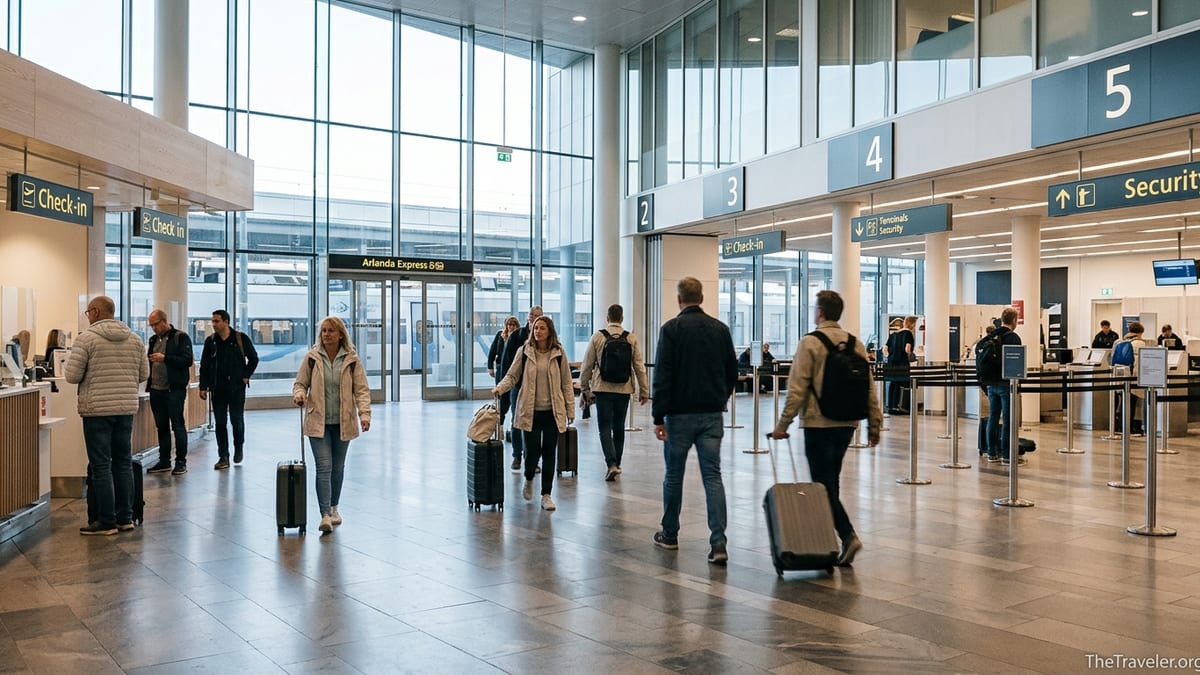
Know the Layout: Terminals 2, 3, 4 and 5
Arlanda has four active terminals, numbered 2, 3, 4 and 5. There is no Terminal 1, which can confuse first time visitors who see the gap on signs. Terminals 2 and 5 handle most international traffic, including airlines such as SAS, Norwegian, Finnair, Lufthansa and many long haul carriers. Terminals 3 and 4 are primarily used for domestic and regional services on carriers like SAS and Braathens, though the exact allocation can shift, so it is important to double check your ticket or boarding pass before leaving for the airport.
Terminals 2, 3 and 4 are grouped at the southern side of the airport, often labeled Arlanda South, while Terminal 5 forms the northern complex, or Arlanda North. The distance between south and north is walkable for most travelers, but it is longer than many expect. Walking indoors between Terminal 4 and Terminal 5 can easily take 10 to 15 minutes at a normal pace. If you have a connection that involves switching between these zones, build in extra time, especially if you also need to clear passport control.
Many airlines now move their check in desks and gates seasonally as Swedavia, the airport operator, continues a long term project to modernize and consolidate facilities. For example, some airlines that previously used Terminal 2 have at times moved operations into the expanded areas of Terminal 5 during construction phases. For that reason, it is wise to verify the terminal in your airline app again the day before departure instead of relying on an old confirmation email.
Arriving passengers should also note that while Arlanda distinguishes between Schengen and non Schengen areas behind passport control, the landside arrivals halls share similar services. If friends or family are picking you up, tell them both your terminal number and whether your flight is within or outside Schengen, because that affects which exit you appear from and where they should wait.
Security, Liquids and How Early to Arrive
Security at Arlanda has changed in recent years as new scanners have been introduced. In Terminal 5, the main international terminal, the newest checkpoint uses computed tomography scanners that allow passengers to leave both liquids and electronics inside their cabin bags. Travelers report that this significantly speeds up the process compared with older European style lanes where laptops and small liquids must be placed separately in trays. Terminal 2 generally still follows the standard European rules that limit liquids to containers of 100 milliliters or less packed into a one liter transparent bag, which must be removed from your bag at screening.
Queue patterns are fairly predictable. Early morning and late afternoon have the heaviest security traffic, especially between roughly 5:00 and 8:00 in the morning and 16:00 to 19:00 in the evening, when business travelers, leisure departures and low cost carriers all overlap. During Swedish school holidays in July and early August, or in the two weeks leading into Christmas, these peaks can be longer than usual. Travelers departing on a Tuesday or Wednesday late morning typically encounter shorter waits, often around 10 to 15 minutes once at the checkpoint.
Swedavia currently recommends that domestic travelers arrive at the airport around 1.5 hours before departure and international travelers around 2 to 3 hours ahead. In practice, a passenger with only hand luggage on an intra Schengen flight at a quiet time might be comfortable with a shorter buffer, but visitors who are unfamiliar with the airport, have checked baggage or must reclaim tax free paperwork are better off following the official timings. Even with modern screening technology, queues can lengthen quickly when several wide body flights depart close together.
Fast track security is available to many business class, premium economy and elite status passengers, especially in Terminal 5. In busy periods this can reduce waiting from 30 minutes to under 10 minutes. It is generally not sold as a separate product by the airport, but some airlines allow passengers in lower cabins to purchase priority services as part of a higher fare bundle. If you are connecting through Arlanda in winter with a tight layover, paying for one of these bundled fares that includes fast track can provide cheap peace of mind.
Getting To and From Arlanda: Train, Bus, Taxi and Rideshare
For many visitors, the first big decision is how to travel between Arlanda and central Stockholm. The fastest option is the Arlanda Express train, a dedicated airport service that runs direct to Stockholm Central Station in about 18 minutes. As of mid 2026, a standard one way adult fare purchased at the station is typically priced in the several hundred Swedish kronor range, with discounts available for advance online purchase, return tickets and youth or family combinations. Trains stop at Arlanda South station for Terminals 2, 3 and 4 and at Arlanda North for Terminal 5, so it is important to board or alight at the correct station.
Travelers on a tighter budget often choose regular regional trains or airport coaches. Commuter trains on the main line between Uppsala and Stockholm call at Arlanda and reach Stockholm Central in about 30 minutes, though an additional station access fee applies to tickets that include the airport stop. Dedicated airport buses, such as the long running Flygbussarna coaches, link the terminals with the Cityterminalen bus station next to Stockholm Central in roughly 40 to 45 minutes depending on traffic. These buses are generally cheaper than the Arlanda Express, and they have luggage holds large enough for multiple suitcases and ski bags.
Taxis are widely available outside each arrivals hall. Fares are not regulated in the same way as in some European capitals, which surprises some visitors, but most major companies advertise fixed price packages between Arlanda and central Stockholm. As an example, a reputable operator may display a typical fixed price in the low hundreds of kronor per car to central city districts, usually covering up to four passengers and standard luggage. Travelers should always confirm the fixed price with the driver before departure and avoid unmarked or aggressive solicitors in the arrivals hall.
Several app based rideshare and taxi services also serve Arlanda, although pick up points can vary by terminal and company. It is common for drivers to meet passengers in a designated short term parking area a brief walk from the doors rather than directly outside arrivals. If you are arriving late at night in winter, factor in that brief outdoor walk. For early flights leaving Stockholm, many hotels in the city center can prebook a taxi at a fixed rate, which is often only marginally more expensive than booking the same car yourself and removes any language barrier at pickup time.
Money, Food, Shopping and Practical Services
Sweden is one of the most cashless countries in the world, and Arlanda reflects that. Most shops, cafes and restaurants within the airport operate on a card or mobile payment only basis. Contactless cards from Visa, Mastercard and many American credit unions work smoothly, and digital wallets such as Apple Pay and Google Pay are widely accepted. Travelers who arrive with only cash may find fewer opportunities to spend Swedish banknotes than expected, so using a fee free travel card or mobile wallet generally makes life easier.
Food options vary by terminal and time of day. Terminal 5, particularly its newer marketplace area, offers the widest range, from well known Swedish bakery brands selling cardamom buns and cinnamon rolls to international fast food chains and sit down restaurants that serve modern Nordic dishes and craft beer. Terminal 2 has a smaller but adequate selection, including grab and go sandwiches, salads and coffee bars convenient for early departures. Prices are in line with broader Swedish cost levels; a simple sandwich and coffee may cost the equivalent of around ten to fifteen US dollars, while a full restaurant meal with a drink can easily double that.
Duty free and travel retail are concentrated airside in Terminals 2 and 5. Scandinavian travelers often stock up on cosmetics, perfume and spirits before flying within Europe, and the selection at Arlanda is comparable to other Nordic hubs. Keep in mind that duty free allowances differ between flights inside and outside the European Union customs area. Staff in the shops are used to explaining the rules to visitors, and it is worth asking if you are connecting onwards to Norway, the United Kingdom or another non EU destination.
Practical services are reasonably well covered. There are multiple ATMs provided by major Swedish banks, though they may charge foreign card fees. Several currency exchange desks operate in the arrivals halls, but their rates are generally less favorable than withdrawing directly from an ATM with a travel friendly debit card. Luggage storage lockers are available in some terminal areas and near the train stations, useful for travelers who want to take the Arlanda Express into town during a long layover without dragging a suitcase through Stockholm’s cobbled streets.
Connections, Layovers and Overnight Stays
Arlanda is a manageable connecting hub by European standards, but connections still require planning. If you arrive from outside the Schengen Area and continue to a domestic Swedish destination, you will clear passport control at Arlanda before proceeding to your next flight. In many cases you also need to collect checked baggage and recheck it, depending on your airline and whether your flights are on a single ticket. For example, a traveler arriving from North America on a United States based carrier and connecting to a domestic SAS flight on a separate booking will almost certainly need to claim and recheck their luggage.
For self made connections, a minimum of 2.5 to 3 hours between scheduled arrival and departure is prudent, especially in winter when snow and de icing can cause delays. This allows for passport control, baggage claim, a possible terminal change and a fresh pass through security. Travelers who book through tickets on one carrier or alliance benefit from protected connections, but even then, longer layovers provide a buffer when arriving from regions with frequent weather disruptions such as North America’s east coast in winter.
Arlanda is widely considered safe and functional for overnight stays. The terminals remain open overnight, and some passengers choose to sleep airside on long layovers or landside after late arrivals. Seating with fewer armrests and quieter corners can often be found near the farther gates in Terminal 5 and along connecting corridors. That said, lights remain on and cleaning operations continue, so earplugs and an eye mask can improve rest. For more comfort, there are several hotels directly connected to or very close to the terminals, ranging from a large international chain hotel linked by a short covered walkway to more budget friendly properties one or two bus stops away.
For layovers of five hours or more during the day, many travelers choose to visit central Stockholm. A typical example: a passenger lands at 09:00, clears passport control and is on the Arlanda Express toward Stockholm Central by 09:45, arriving downtown around 10:05. This comfortably allows two to three hours to explore Gamla Stan’s old town streets or have lunch on the waterfront before catching a train back to the airport around 13:00 to 13:30 for a late afternoon departure. Shorter layovers can feel rushed once security, boarding and any winter weather delays are taken into account.
Weather, Seasonal Crowds and Local Etiquette
Weather plays an outsized role in how Arlanda operates, particularly from November to March. The airport is well practiced at snow removal, and it seldom closes entirely, but de icing queues and reduced runway capacity can create delays even on days that look manageable from the terminal windows. If you are connecting onward to a tight train or domestic flight, avoid booking the very last feasible departure of the evening in winter. Instead, choose a slightly earlier option that gives room to rebook if snow or ice slows operations.
Seasonal peaks are predictable. The busiest months are typically July, August and December, when Swedes take extended vacations and international visitors arrive in large numbers. Friday evenings, Saturday mornings and Sunday afternoons are the traditional heavy travel windows, mirroring patterns at many European airports. Travelers who can choose a midday Tuesday or Wednesday departure will often find quieter terminals, lower average airfares and better availability on trains and buses between the city and airport.
Understanding local etiquette helps interactions run smoothly. Queuing is taken seriously in Sweden. At security, passport control and boarding gates, join the end of the line and avoid attempting to bypass others unless a member of staff calls you forward for an earlier departure. When paying at shops or cafes, greet staff with a simple “hej” and wait for them to indicate when to tap your card. Many Swedes speak excellent English, but they appreciate polite, straightforward communication and clear explanations if you are confused or need more time.
Noise levels at Arlanda are generally moderate compared with some larger hubs, and announcements are usually concise and repeated in Swedish and English. Families with small children will find designated play areas in several terminal zones, which can be a relief during longer waits. Travelers with reduced mobility should request assistance from their airline in advance, as meeting points for wheelchair and escort services are clearly signposted but can take time to reach from distant gates.
The Takeaway
Flying through Stockholm Arlanda Airport can be efficient and relatively low stress when you understand how the airport is organized and make a few key decisions in advance. Knowing which terminal your airline uses, how long security might take at your departure time and whether the Arlanda Express, a bus or a fixed price taxi best fits your budget will smooth both arrivals and departures. For connections, generous layovers and awareness of Schengen passport procedures prevent unnecessary anxiety at the gate.
With a clear plan for money, food, transport and potential weather disruptions, Arlanda becomes more than just a transfer point. It is a practical introduction to how Sweden works: cashless, orderly and generally predictable, with good coffee never far away. A bit of preparation before you fly turns those qualities into an asset, letting you focus on the journey ahead, whether that is a city break in Stockholm, a ski trip in the north or a long haul adventure beyond Europe.
FAQ
Q1. How early should I arrive at Stockholm Arlanda before my flight?
For most international flights, arriving 2 to 3 hours before departure is sensible, while 1.5 hours is usually sufficient for domestic flights, especially outside peak holiday periods.
Q2. Which terminal will my airline use at Arlanda?
Most international carriers use Terminals 2 or 5, while many domestic and regional flights depart from Terminals 3 and 4, but this can change, so always confirm in your airline app or on your e ticket before you travel.
Q3. Do I need to take liquids and laptops out of my bag at security?
In Terminal 5, the newest scanners typically allow liquids and electronics to remain inside your bag, while Terminal 2 generally follows the standard European rule that small liquids and laptops must be removed for screening.
Q4. What is the fastest way to get from Arlanda to central Stockholm?
The Arlanda Express train is the fastest option, taking about 18 minutes to reach Stockholm Central Station, with trains serving both the south side terminals and Terminal 5.
Q5. Are there cheaper alternatives to the Arlanda Express?
Yes, regional commuter trains and airport buses such as the main coach services to Cityterminalen are usually cheaper, though they take longer and may be more affected by traffic.
Q6. Is Stockholm Arlanda a cashless airport?
Most businesses at Arlanda prefer or require card or mobile payments, so travelers should expect to pay with contactless bank cards or digital wallets rather than cash.
Q7. Can I sleep at Arlanda Airport during an overnight layover?
Yes, the terminals remain open overnight, and many passengers sleep on seats or in quieter corners, though nearby airport and on site hotels offer more comfort for longer stays.
Q8. How much connection time do I need at Arlanda?
For self made connections, a minimum of 2.5 to 3 hours is prudent, especially if you are arriving from outside Schengen or changing terminals and must pass through passport control and security again.
Q9. Is Arlanda safe and easy to navigate for solo travelers?
Arlanda is generally considered very safe, with clear signage in Swedish and English, orderly queues and helpful staff, making it straightforward for solo travelers with basic airport experience.
Q10. Can I visit central Stockholm during a long layover at Arlanda?
With a layover of five hours or more, many travelers comfortably take the Arlanda Express or an airport bus into the city for a few hours, returning in time to clear security and board their onward flight.