


Akershus Fortress is one of those places in Oslo that looks straightforward on a map but can feel confusing once you start planning the details. Is the fortress really free? Do you need tickets for the castle? Which museums are actually inside the walls, and how much time should you set aside? Recent visitors often say they wish they had understood the layout, ticket options, and walking routes before they went. This guide pulls together those on-the-ground lessons so you can make the most of your time on the hill above Oslo’s harbor.
Get the latest updates straight to your inbox!
Understand the Difference Between the Fortress, the Castle, and the Museums
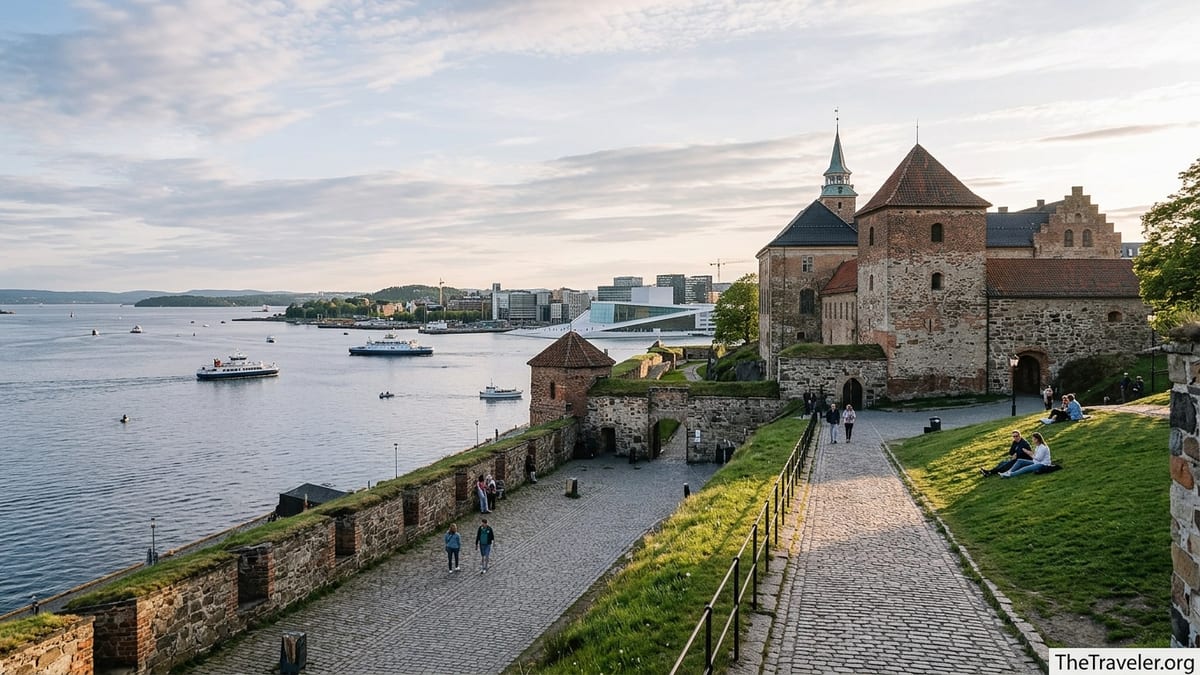
One of the biggest points of confusion for first-time visitors is that “Akershus Fortress” is really several experiences in one. The outer fortress grounds are a large, walled area on a hill above the Oslofjord, open to the public and managed by Norway’s defense estates agency. Walking through the gates, up the cobblestones, and along the ramparts is free at all hours, and many Oslo locals use the lawns for picnics or a quiet shortcut between the Opera House area and Aker Brygge.
Inside those walls sits Akershus Castle itself, the historic royal residence dating back to the late 13th century, later rebuilt as a Renaissance castle. Entry to the castle interior is paid, and tickets are sold at a staffed entrance just below the main keep. Nearby are two separate museums operated by the Norwegian Armed Forces: the Armed Forces Museum and Norway’s Resistance Museum. Each has its own entrance, but there is also a combined ticket that includes all three, which can be good value if you plan to explore the interiors in depth.
Travelers often arrive thinking everything is free and open, then feel disappointed when they realize the castle halls and museums close earlier than the grounds and require tickets. To avoid this, decide in advance whether you want a quick, free stroll on the walls with harbor views or a deeper historical visit that includes the castle chapel, the royal mausoleum, and exhibitions on World War II. Your choice will determine how much time and budget you should plan.
As a rule of thumb, budget around 30 to 45 minutes if you only want to wander the ramparts and courtyards, and at least two to three hours if you intend to visit the castle and both museums. That way you will not be the person hurrying through the royal halls in fifteen minutes because the museum guards are announcing closing time.
Know Current Opening Hours, Closures, and Security Rules
The fortress grounds are generally open to the public every day, but the castle interior and museums keep limited daytime hours that vary seasonally. In recent years, travelers have reported arriving in the late afternoon in spring or autumn only to find the castle doors locked and guided tours for the day already finished. Before you go, check a current Oslo tourism or fortress information site for today’s hours, especially if you are visiting outside the peak summer months of June to August.
Because Akershus is still an active military area, parts of the complex may occasionally be closed for official events, ceremonies, or heightened security. When state visits or national commemorations take place, you may see soldiers redirecting visitors away from certain courtyards or buildings. This usually does not mean the entire fortress is closed, but it can limit access to specific bastions or interiors on short notice. It is wise to build some flexibility into your schedule so you can simply explore a different part of the grounds if one gate is blocked off.
Security rules are present but usually low-key. You may notice discrete cameras, signs reminding visitors not to climb on cannons, and occasional patrols by uniformed guards. Large tripods, drones, or commercial photo shoots can attract attention and are often restricted, especially near offices used by the Ministry of Defence. If you are carrying a big camera setup, it is safest to keep to obvious viewpoints and ask a guard if you are unsure rather than assuming every corner is fine for filming.
There is no airport-style bag screening for casual visitors, but you should expect bag checks at the entrance to the castle interiors or museums, particularly when there are special exhibitions. Bringing small daypacks is normal, yet large suitcases can be awkward on the steep, narrow staircases and may be refused inside the castle. If you are arriving from Oslo Central Station with luggage, use station lockers or drop bags at your hotel before heading up to the fortress.
How to Get There and Avoid the Steepest Climb
Akershus Fortress looks close to everything on the map, and it is. From Oslo Central Station, most visitors simply walk. If you exit toward the waterfront and follow the harbor promenade away from the Opera House, you can reach the lower fortress gates in roughly 10 to 15 minutes at a relaxed pace. Cruise passengers docking nearby often just stroll along the quay and are at the main gate within minutes.
The climb itself is where many travelers are caught off guard. Access to the upper courtyards and castle involves sloping cobblestone paths and a couple of short but steep ramps. They are beautiful, but they can be slippery when wet or icy. If you have mobility issues or are pushing a stroller, allow more time and take the gentler routes that zigzag rather than the direct, steeper shortcuts people often take for photos.
Public transport can help you avoid some of the uphill walking. The closest city center tram and bus stops, such as those around Rådhusplassen and Aker Brygge, leave you only a few minutes on foot from one of the back gates. Metro users often get off at Stortinget station and then walk about ten minutes down toward the harbor. The same ticket system covers buses, trams, metro, and city ferries, which makes combining a fortress visit with a short harbor ferry ride simple if you buy a timed ticket or day pass.
For a particularly pleasant approach, many locals recommend starting at the modern Bjørvika district by the Opera House, walking across the white sloping roof, then following the waterfront past the Deichman library and MUNCH museum until the ramparts of Akershus rise in front of you. You then loop through the fortress and continue along the quay toward Aker Brygge’s restaurants. This creates a natural half-day walking route that connects old and new Oslo, avoiding backtracking and giving you varied views of the fjord.
Tickets, Oslo Pass, and What Is Actually Worth Paying For
Walking the fortress grounds is free, and that alone is enough for many travelers on a tight schedule or budget. You can sit on the grass overlooking the harbor, watch ferries glide past the islands, and photograph the brick walls and towers without ever buying a ticket. This makes Akershus one of Oslo’s best-value sights, especially if you are traveling with a family and want a break from expensive indoor attractions.
If you are interested in history, though, the paid interiors are where the stories really come alive. The castle ticket typically includes access to ceremonial halls, the small chapel used for royal occasions, and the royal mausoleum where several Norwegian monarchs are buried. The Norway’s Resistance Museum offers dense but powerful exhibits on the German occupation during World War II, while the Armed Forces Museum covers military history from the Viking Age onward. Recent visitor reviews often describe the Resistance Museum as the most emotionally engaging of the three.
Travelers holding an Oslo Pass should double-check current benefits, as the pass has historically included free entry to some fortress museums and the castle for cardholders. If you plan to visit multiple Oslo museums in a single day, such as the National Museum or Fram Museum in addition to Akershus, the pass can quickly pay for itself. On the other hand, if Akershus is the only paid attraction on your list, buying individual tickets at the castle gate is usually cheaper.
Families sometimes underestimate how long the interiors will hold children’s attention. The castle rooms, with their portraits and tapestries, appeal to older kids who enjoy royal stories, but younger children may tire quickly unless you turn the visit into a “find the lion” or “spot the crown” game. The Resistance Museum’s subject matter, including wartime executions and sabotage operations, can be intense for small children. If your time is limited or your group is mixed ages, you might choose one museum plus the free outdoor areas rather than trying to see everything.
What to Wear and Pack for Oslo’s Changeable Weather
Because the highlight of Akershus is the outdoor ramparts and views over the fjord, what you wear can shape your experience even more than the ticket type. Oslo’s weather is famously changeable, and the hilltop location amplifies wind and chill. Even on a bright June afternoon, a breeze over the water can make the walls feel significantly cooler than the streets below. In April and October, visitors often end up cutting their visit short because they came in light city shoes and no extra layer.
Good footwear matters more than anything else. The cobbled paths inside the fortress are uneven, with loose stones and shallow ruts carved by centuries of cart wheels. Pack flat, supportive shoes with decent grip, not smooth-soled fashion sneakers or heels. In winter, icy patches can linger in the shade along the walls even after the sidewalks in the city center look clear. Locals routinely wear simple traction cleats over their shoes on the worst days, and while tourists rarely go that far, it illustrates just how slippery the surfaces can be.
Bring at least one extra layer, even in summer. A thin windproof jacket that packs into a daypack is ideal. In shoulder seasons, a hat and gloves can make the difference between a rushed photo stop and a leisurely hour watching the ferries come and go. If you are visiting in December or January to combine the fortress with Oslo’s Christmas lights, plan for proper winter clothing: insulated boots, thermal base layers, and a warm coat.
Sun protection is easy to forget at high latitudes, but on clear days the light can be surprisingly strong, especially when it reflects off the water and the pale stone of the ramparts. A compact sunscreen and sunglasses will make long photo sessions on the walls far more comfortable. Also consider a reusable water bottle; there are few kiosks inside the walls themselves, and buying drinks down on the waterfront every time you are thirsty adds up quickly.
Finding the Best Views and Photo Spots Without Annoying the Locals
Many visitors come to Akershus primarily for the viewpoints across Oslofjord, and there are indeed several excellent spots. One classic angle is near the western ramparts, where you can frame the old cannons against the harbor, with ferries and the peninsula of Bygdøy in the background. Another popular location is the elevated lawn near the inner walls, from which you can look back over the modern skyline of Bjørvika, including the Opera House, MUNCH museum, and barcode-style office towers.
Because the fortress is also a tranquil green space for Oslo residents, it helps to be aware of local habits. Lunchtime on a sunny weekday often brings office workers up to the grass to eat sandwiches, and evenings can see small groups sharing a quiet picnic with a bottle of wine. Setting up a full-scale tripod in the middle of a commonly used bench area or blocking narrow paths for long photo shoots is likely to earn you irritated looks. A compact camera or phone and a willingness to step aside between shots will let everyone enjoy the views.
In peak summer, the busiest time is typically mid-afternoon, when cruise passengers and tour groups converge. If you want uncluttered photos of the castle courtyard or near-empty paths along the ramparts, visit early in the morning or later in the evening, when the low-angle light also adds texture to the brickwork. On long summer days, you can enjoy golden-hour light as late as 9 or 10 p.m., with soft shadows and warm tones across the harbor.
Inside the castle and museums, photography rules differ. Flash is often prohibited to protect artworks and sensitive materials. Some temporary exhibitions may ban photography altogether. Pay attention to signage at each entrance, and if in doubt, ask a museum attendant before lifting your camera. Respecting these guidelines not only preserves fragile artifacts but also keeps the flow moving in tight rooms where people are trying to see small display cases.
Combining Akershus With Nearby Sights and Food Stops
One advantage of visiting Akershus Fortress is how easy it is to combine with other major sights in central Oslo. A common route for first-time visitors starts at Oslo Central Station, continues to the Opera House and Deichman library, crosses to the fortress for an hour or two, then finishes at Aker Brygge and the trendy Tjuvholmen district. This can all be done on foot in half a day with time for coffee and photos, making it ideal for a long layover or a cruise stop.
For museum enthusiasts, pairing the Resistance Museum at Akershus with the Nobel Peace Center near the City Hall provides a thought-provoking day focused on war, peace, and democracy. Both are reachable within a short walk along the harbor. Alternatively, you can visit Akershus in the morning, then take a city ferry from the nearby quays out to the Bygdøy peninsula for the Fram, Kon-Tiki, and Norwegian Maritime museums, returning by boat as the evening light hits the fortress walls.
Food options inside the fortress walls are limited and change over time, so it is wise to plan to eat either before or after your visit. Around the base of the hill and along the quay you will find cafes serving simple open-faced sandwiches, fish soup, or cinnamon buns, as well as more upscale restaurants with outdoor terraces facing the fjord. If you are on a budget, grabbing takeaway pastries or a supermarket picnic near Oslo Central Station and carrying them up to the grassy slopes of Akershus is a perfectly acceptable local-style solution.
Remember that alcohol rules in Norway are strict. While locals do sometimes enjoy discreet drinks during a picnic, open consumption of alcohol in public spaces can be regulated, and enforcement varies. If you want to sample Norwegian craft beer with a fortress view without worrying about rules, choose one of the waterfront bars at Aker Brygge or Tjuvholmen, many of which have outdoor seating looking back toward the ramparts.
The Takeaway
What seasoned visitors to Akershus Fortress most often say in hindsight is that a little planning would have added a lot to their visit. Understanding the difference between the free fortress grounds and the ticketed castle and museums helps you set the right expectations and avoid frustration at closing times. Knowing that the climb involves cobblestones, not smooth pavements, nudges you toward better footwear and makes your time on the ramparts more relaxed.
If you approach Akershus as more than a quick photo stop, it becomes one of Oslo’s most rewarding places. The same walls that offer postcard views over Oslofjord also hold layers of Norwegian history, from medieval sieges to wartime resistance. Scheduling a couple of unhurried hours, dressing for whatever the sky might do, and weaving your visit into a broader harbor walk will leave you with a much richer impression than a rushed detour from a tour bus.
Whether you are in Oslo for a few hours between trains or several days with a museum pass in your pocket, this hilltop fortress can fit neatly into your plans. Arrive with realistic expectations, a flexible route, and curiosity about both the landscape and the stories it holds. In return, Akershus will give you some of the most atmospheric views and vivid moments of your time in the Norwegian capital.
FAQ
Q1. Is Akershus Fortress free to visit?
Yes. Walking the fortress grounds, ramparts, and courtyards is free. You only pay if you enter the castle interiors or the on-site museums, which sell separate or combined tickets.
Q2. How much time do I need at Akershus Fortress?
If you only want views and a short walk, 30 to 45 minutes is enough. To visit the castle and at least one museum, plan for two to three hours so you are not rushed.
Q3. Can I visit Akershus Fortress in winter?
Yes, the grounds remain accessible, but paths can be icy and it gets dark early. Wear warm, grippy footwear and check current opening hours for the castle and museums, which may be reduced.
Q4. Is Akershus Fortress suitable for strollers or wheelchairs?
Parts of the grounds are accessible, but many paths are steep and cobbled, and some interiors have narrow staircases. Expect challenges and allow extra time, especially for the upper levels.
Q5. Do I need to book a guided tour in advance?
Not necessarily. In high season there are often scheduled guided tours you can join on-site, while at quieter times you may rely on self-guided visits and audio guides. Check same-day information before you go.
Q6. Are there food and drink options inside the fortress?
Options within the walls are limited and can change, so most visitors eat before or after their visit in nearby harborfront cafes or bring a simple picnic to enjoy on the grass.
Q7. Is Akershus Fortress a good place to visit with children?
Yes, many families enjoy the open spaces and views. Younger children often like exploring the walls and cannons, while older kids may appreciate the castle stories and Resistance Museum exhibits.
Q8. Can I bring luggage or large bags into the castle and museums?
Small daypacks are usually fine, but large suitcases are impractical on the narrow stairs and may be refused. Use lockers at Oslo Central Station or at your accommodation before visiting.
Q9. What is the best time of day to visit for photos?
Early morning and late afternoon to evening offer softer light and fewer crowds. On long summer days, the low sun over Oslofjord can create especially atmospheric views from the ramparts.
Q10. Is Akershus Fortress safe to visit at night?
The central location and regular foot traffic make it generally feel safe, and locals use the paths as a shortcut. However, lighting is subdued in places, so stay on main routes and avoid walking alone very late if you feel uncomfortable.