


On the edge of Oslo’s fjord, the Astrup Fearnley Museum of Modern Art combines bold contemporary architecture with one of Scandinavia’s most important private art collections. For many travelers, it is as much a reason to wander out to the Tjuvholmen waterfront as the restaurants and sea views that surround it. This guide brings together current ticket information, exhibition highlights, and practical details so you can make the most of a visit, whether you are an art devotee or simply curious with an afternoon to spare in Oslo.
Get the latest updates straight to your inbox!
What Makes the Astrup Fearnley Museum Special
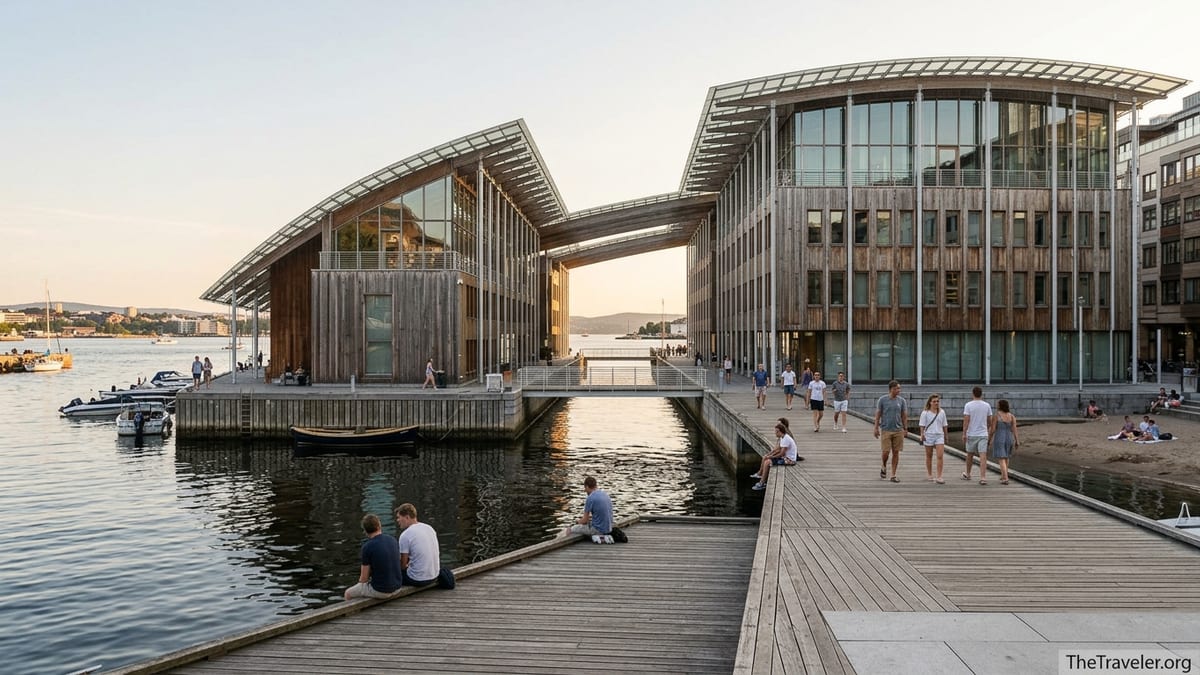
The Astrup Fearnley Museum of Modern Art is a privately owned contemporary art museum in central Oslo, founded in 1993 and now housed in a striking Renzo Piano building on Tjuvholmen. Its glass and wood structure is split into two pavilions divided by a canal, with a sweeping curved roof that resembles a sail when seen from the nearby harbor promenade. Travelers arriving from Aker Brygge often first notice the building before they see any art, as the complex anchors the outer tip of this redeveloped dockland area.
The heart of the institution is the Astrup Fearnley Collection, built up since the 1960s and widely regarded as one of the most significant European collections of international contemporary art in private hands. The collection includes works by artists such as Jeff Koons, Damien Hirst, Cindy Sherman and Anselm Kiefer, alongside key Nordic and Norwegian names. The museum alternates between showing collection highlights and hosting large temporary exhibitions, so repeat visits can feel quite different from one another.
The setting is also part of the appeal. Just outside the museum you step into Tjuvholmen Sculpture Park, with contemporary sculptures set directly against the Oslofjord and views back toward Akershus Fortress. In summer, locals swim at the small city beach next to the museum’s pier, and visitors can combine an hour or two with the art, a coffee at the on site restaurant, and a stroll along the waterfront back toward Oslo City Hall.
Unlike some larger national museums, Astrup Fearnley keeps a focused, compact footprint. Most visitors spend between one and two hours inside, which makes it an easy stop to add to a wider Oslo itinerary that also includes the nearby National Museum or the MUNCH museum across the bay.
Tickets, Prices and How to Buy
As of mid 2026, standard adult admission to the Astrup Fearnley Museum is typically in the region of 180 Norwegian kroner, with reduced tickets for students and seniors usually around 120 kroner and free or heavily discounted entry for children. Exact prices can change from season to season, especially during periods when only part of the museum is open, so it is wise to check the museum’s official site shortly before you visit or ask at your hotel’s front desk for the latest rates.
You can buy tickets directly at the museum entrance on the day of your visit, which is what many Oslo residents do when they decide to drop in while walking along the harbor. The ticket desk is just inside the main entrance, and payment by credit or debit card is standard. There is usually no need to book far in advance for general admission, and on most weekdays it is possible to walk up without waiting more than a few minutes.
For particularly popular exhibitions or peak weekend times, international visitors who prefer to plan ahead may want to purchase tickets online via the museum’s booking system. Online sales sometimes offer timed entry slots, which help regulate the flow of visitors during temporary blockbuster shows. For example, past major exhibitions featuring large scale installations or well known international artists have attracted significant local interest, so securing a morning or late afternoon slot can ensure a more relaxed experience.
Oslo city passes and some cruise shore excursion packages occasionally include Astrup Fearnley as part of a discounted bundle, alongside other museums and public transport. If you plan to visit several cultural sites in one or two days, it is worth comparing the standalone ticket price with a city card or combined museum ticket sold through the local tourism office before you buy.
Current Exhibitions and What You Can Expect to See
The museum program typically alternates between presentations of the Astrup Fearnley Collection and curated temporary exhibitions of Norwegian and international artists. At any given time, visitors can usually see a mix of collection works and one or two special shows, spread across the two main pavilions. In 2025 and 2026, for example, the museum has scheduled exhibitions that focus on Latin American perspectives, as well as group shows exploring how contemporary artists respond to digital culture and information overload.
When the collection is on display, travelers can expect to encounter sculptural works, large scale paintings, and conceptual installations. A visit might include well known pieces such as Jeff Koons’ shiny, mirror polished sculptures or works by Damien Hirst that examine the themes of life and mortality. These sit alongside Nordic artists whose names may be less familiar to international visitors but who offer insight into how contemporary art in Norway has developed over recent decades.
Temporary exhibitions can range from solo shows for mid career artists to thematic group exhibitions that span generations. For instance, recent years have seen the museum present exhibitions tracing the evolution of American appropriation art, or introducing Scandinavian audiences to artists from regions that are less frequently represented in major European institutions. Travelers who enjoy discovering new voices in contemporary art, rather than just ticking off famous names, tend to find the program rewarding.
Because the lineup is dynamic, the best way to know what will be on during your dates is to check the “Exhibitions” or “Program” section of the museum’s official website a few weeks before traveling. Many hotels in Oslo also stock small bilingual leaflets or Oslo art guides that list current shows at Astrup Fearnley, the National Museum and other venues, which can be a helpful quick overview if you prefer paper in hand.
Opening Hours, Best Times to Visit and How Long to Allow
The Astrup Fearnley Museum generally opens from late morning through late afternoon or early evening, with slightly different hours on weekdays and weekends. It is common for the museum to be closed on Mondays outside the highest tourist season, in line with many European art institutions, so travelers should avoid planning a Monday visit without double checking. Public holidays can also affect the schedule with shorter opening hours around Christmas, Easter and Norway’s Constitution Day on 17 May.
For the most up to date hours on specific dates, look at the “Visit us” or “Besøk oss” section of the museum’s official site during the week you plan to arrive in Oslo. As a practical reference point, many visitors find that arriving around 11:00 in the morning or after 15:00 in the afternoon offers a pleasant balance between daylight, quieter galleries and nearby restaurants that are open before or after your visit.
Mornings on weekdays outside school holidays are usually the calmest time to explore the exhibitions. You might share the galleries mainly with a handful of locals and occasional guided groups. Weekend afternoons, particularly on bright Saturdays when people are already walking along the harbor at Aker Brygge, can see a noticeable increase in foot traffic, though queues are rarely overwhelming by big city standards.
Most travelers find that 60 to 90 minutes is enough to see the exhibitions at a comfortable pace, with an additional half hour if you like to linger over wall texts or audio guides. If the weather is good, plan extra time afterwards to walk through the Tjuvholmen Sculpture Park, sit by the water, or have a drink or meal at one of the cafes and restaurants integrated into the museum complex and surrounding streets.
Location, How to Get There and Nearby Sights
The Astrup Fearnley Museum sits at Strandpromenaden 2 on Tjuvholmen, the small peninsula directly beyond Aker Brygge in central Oslo. From Oslo City Hall it is roughly a 10 to 15 minute walk along the harbor promenade, passing outdoor cafes, moored boats and public art along the way. Many visitors simply follow the broad wooden boardwalk in the direction of the fjord until they see the museum’s distinctive curved roof and glass facades at the tip of the peninsula.
Public transport access is straightforward. Several tram and bus lines stop near Aker Brygge or Nationaltheatret station, from which it is an easy walk. Oslo’s city bikes can be rented at docking stations around the harbor for those who prefer to cycle, and taxis can drive directly to the museum entrance, which is useful in winter or for visitors with limited mobility. Cruise passengers docking at central Oslo piers can often reach the museum on foot within 20 to 30 minutes, depending on the berth.
One of the advantages of the location is how many other attractions are within a short walk. From the museum you can stroll back toward the Nobel Peace Center, explore the shops and food halls at Aker Brygge, or continue along the waterfront in the opposite direction toward the modern residential neighborhoods around Filipstad. On warm days, the small Tjuvholmen city beach next to the museum turns into a popular swimming spot, combining an art visit with a dip in the Oslofjord.
For travelers planning a full culture day, a common route is to start at the National Museum or MUNCH in the late morning, enjoy a harbor side lunch at Aker Brygge, and then spend the afternoon at the Astrup Fearnley Museum before ending the day with an early dinner at the on site restaurant or one of the Italian or Nordic inspired eateries nearby.
Visitor Experience: Facilities, Access and Guided Options
Inside the museum, visitors will find a relatively open layout with high ceilings, pale wooden floors and plenty of natural light. Cloakrooms and lockers are typically located near the entrance, which is convenient during Oslo’s colder months when guests arrive with heavy coats and backpacks. Strollers are usually allowed in most gallery areas, though large bags may need to be stored in lockers to protect the artworks.
The building is designed with accessibility in mind, including elevators and ramps between different levels, so travelers with limited mobility can navigate the pavilions without difficulty. Visitor information and wall texts are commonly presented in both Norwegian and English, and staff at the front desk generally speak fluent English and can offer basic information in other European languages.
The museum shop is a highlight for many visitors, offering a curated selection of exhibition catalogues, art books, design objects and Norwegian stationery brands. If you are looking for a souvenir that is more distinctive than a standard keyring, this is a good place to browse. Prices range from affordable postcards and posters to higher end art prints and design pieces, making it suitable whether you want a small memento or a more substantial purchase.
Food and drink are available at the restaurant integrated into the museum complex, where you can expect typical Oslo prices for coffee, pastries and light meals. In practical terms, that can mean around 50 to 60 kroner for a cappuccino and 150 to 250 kroner for a simple lunch dish, in line with other waterfront venues in the city. In summer, the outdoor seating areas are particularly popular thanks to direct views over the fjord and evening sunlight that lasts late into the day.
Planning Tips for Different Types of Travelers
For art focused travelers, it can be helpful to combine a visit to Astrup Fearnley with other contemporary art spaces in Oslo. A morning at the museum, followed by an afternoon at the National Museum’s contemporary galleries or a smaller independent gallery in the city center, provides a broad overview of how Norwegian institutions present modern art. If you enjoy sculpture in outdoor settings, the Tjuvholmen Sculpture Park next to the museum and the Ekebergparken Sculpture Park east of the city center make for a compelling two day pairing.
Families with children often find Astrup Fearnley manageable because of its size and the proximity of open spaces and the beach outside. Younger visitors may not connect with every conceptual work, but large colorful installations, striking sculptures and the simple experience of walking over bridges and boardwalks between the pavilions help keep their attention. Checking in advance for any scheduled family workshops or weekend activities on the museum’s program can add an extra layer of engagement.
Cruise passengers with only an afternoon in Oslo can realistically fit the museum into a compact itinerary. A typical plan might involve walking from the ship to City Hall, continuing along Aker Brygge for lunch, visiting Astrup Fearnley for 60 to 90 minutes, and then returning via the same waterfront route. Because ticket purchasing and entry are usually quick, the museum works well as a flexible stop that does not require extensive advance booking.
Budget conscious travelers should keep in mind that while ticket prices and cafe costs are in line with Norway’s overall price level, it is always possible to enjoy the architecture and surroundings at no cost. Walking out to Tjuvholmen, admiring the building’s Renzo Piano design, exploring the free sculpture park and sitting on the pier to watch the ferries and small boats pass by can deliver a memorable experience even if you decide not to purchase a ticket on this particular trip.
The Takeaway
The Astrup Fearnley Museum of Modern Art offers a distinctive combination of waterfront architecture, ambitious contemporary exhibitions and an intimate visitor experience that rarely feels overwhelming. For many travelers, the museum stands out as a highlight not only for what is on the walls but also for how seamlessly it connects with the surrounding city and landscape.
Whether you are keen to catch a specific exhibition, curious about Norwegian contemporary art or simply looking for a rewarding way to spend a couple of hours near Oslo’s harbor, this museum is easy to recommend. With flexible ticket options, walkable access from the city center and a program that changes regularly, it can fit into a short layover or anchor a longer cultural stay.
Plan ahead by checking current ticket prices and opening hours shortly before you travel, then leave room in your schedule to enjoy the sculpture park, the pier and perhaps a coffee as you look back toward the city skyline. Astrup Fearnley is one of those places where art, architecture and everyday Oslo life meet, and that blend is precisely what makes it worth adding to your itinerary.
FAQ
Q1. Where is the Astrup Fearnley Museum located in Oslo?
The museum is on the Tjuvholmen peninsula at the far end of Aker Brygge, about a 10 to 15 minute waterfront walk from Oslo City Hall.
Q2. How much does a ticket to the Astrup Fearnley Museum cost?
As of 2026, adult tickets are typically around 180 Norwegian kroner, with reduced prices for students and seniors and free or discounted entry for children.
Q3. Do I need to book tickets in advance?
For most days you can simply buy tickets at the door, but for very popular exhibitions or busy weekend afternoons, advance online booking can help you avoid waits.
Q4. How long should I plan for a visit?
Most visitors spend 60 to 90 minutes exploring the exhibitions, with extra time if you want to read all wall texts or combine your visit with the sculpture park and beach outside.
Q5. Is the museum suitable for children and families?
Yes. The museum is compact, stroller friendly and right next to outdoor spaces and a small beach, which makes it easy to mix art with playtime along the waterfront.
Q6. What are the usual opening hours?
The museum is generally open from late morning to late afternoon or early evening and is often closed on Mondays. Exact hours vary, so check shortly before your visit.
Q7. Are there guided tours or audio guides available?
The museum periodically offers guided tours and educational programs, especially in connection with major exhibitions. Details and schedules are listed on its program and information channels.
Q8. Can I take photos inside the Astrup Fearnley Museum?
Non flash photography is often allowed for personal use in many areas, but specific works or exhibitions may have restrictions, so always follow posted signs and staff instructions.
Q9. Is the museum accessible for visitors with reduced mobility?
Yes. The building includes elevators, ramps and accessible restrooms, and the surrounding waterfront promenade is mostly flat and easy to navigate with wheelchairs or strollers.
Q10. What else can I do nearby after visiting the museum?
After your visit you can explore Tjuvholmen Sculpture Park, swim at the small city beach in summer, or enjoy food and drinks at the many cafes and restaurants in Aker Brygge.