


More news on this day
Travellers heading to Europe for the late August bank holiday weekend are being warned to brace for continued delays at EU border checkpoints, as the bloc’s new biometric Entry/Exit System combines with peak summer traffic and local disruption at key ports and airports.
Get the latest news straight to your inbox!
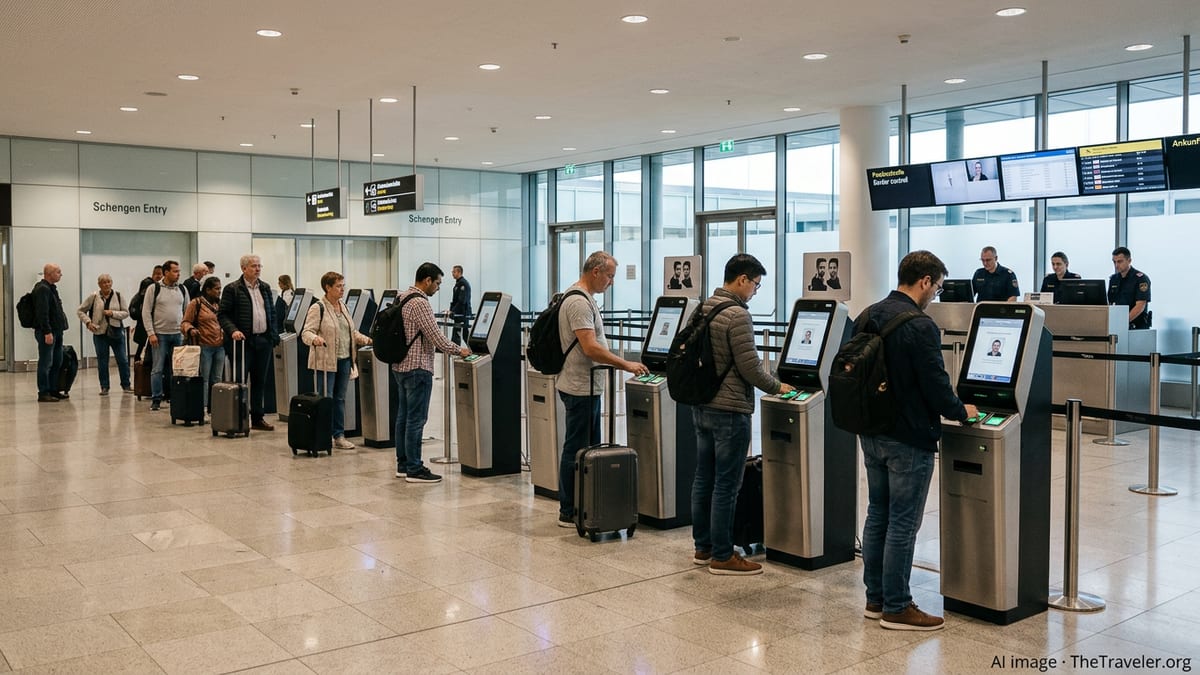
Biometric border checks keep queues high into late August
Publicly available EU documentation shows that the bloc’s new Entry/Exit System (EES), which records fingerprints and facial images for non-EU nationals entering the Schengen area, is now fully operational at border crossing points across participating countries. The system, fully deployed in April 2026 following a phased roll-out, has significantly changed the way third-country travellers, including visitors from the UK and United States, are processed at land, sea and air borders.
Industry analyses and parliamentary briefings indicate that the initial registration required under EES is lengthening processing times, particularly at busy external borders connecting the UK and mainland Europe. Airports Council International Europe has previously highlighted that, during the early stages of deployment, border control processing times increased by up to 70 percent in some locations, with queues stretching to several hours at peak periods.
While authorities stress that EES is intended to make border management more secure and efficient in the long term, evidence from recent holiday peaks suggests the transition remains challenging. Reports from major hubs point to recurring backlogs whenever large volumes of first-time EES users arrive simultaneously, a pattern expected to repeat over the August bank holiday weekend as leisure travel surges again.
With many travellers still unfamiliar with the new procedures, border agencies are continuing to rely on pre-registration kiosks, additional signage and staff redeployment to keep lines moving. However, forecasts for record passenger numbers across European routes indicate that these measures may only partially offset the extra time needed for biometric checks, especially where infrastructure remains constrained.
UK-continental pinch points under pressure
The busiest bottlenecks are forecast along key UK-continental corridors such as the Port of Dover, Eurotunnel services to Calais and major ferry routes to Spain and Ireland. Coverage from earlier bank holiday weekends this year showed long queues building at Dover as traffic volumes rose and EES-related checks were introduced, prompting temporary relaxation of additional procedures at times to ease congestion at the frontier.
Ahead of the late August holiday, UK motoring and travel organisations are again advising that any spike in demand could quickly translate into hours-long waits at these chokepoints. Commentaries from logistics and travel analysts point to a combination of factors: higher demand for cross-Channel getaways, limited physical capacity at port terminals, and the additional, individualised checks now required for many travellers entering the Schengen area.
Ports and operators have already implemented staggered check-in windows, extra marshals and revised traffic flows to prevent tailbacks from spilling onto local road networks. However, local authorities and industry observers note that such measures have limited flexibility when vehicle volumes approach or exceed design capacity, particularly at times when French and UK school holidays overlap with the bank holiday period.
In previous busy weekends, some operators have reported that relatively small disruptions, such as a temporary IT slowdown or staffing shortfall at border booths, quickly propagated into long waiting times across the network. With freight and passenger services sharing much of the same infrastructure, any widespread road congestion linked to border delays risks knocking on to supply chains as well as leisure travel.
Airports face bank holiday crowds amid staffing and schedule strains
Airports across Europe are also preparing for a sharp rise in passenger numbers around the August bank holiday, coinciding with the final phase of the continent’s traditional summer peak. Several regional airports have already flagged heavy volumes for earlier August holiday weekends, noting that flights to Mediterranean destinations are operating close to capacity and that terminal resources are stretched at peak times.
Recent operational updates from European airports and cargo operators highlight a combination of reduced staffing during the core holiday period, modified terminal handling times and adjusted summer schedules. For passengers, this translates into the potential for longer queues at check-in, security and border control, particularly at departure and arrival banks that already see dense clusters of flights.
Travel industry briefings suggest that EES-related checks at airport border control, while often more automated than at land crossings, can still contribute to bottlenecks when large numbers of third-country nationals arrive simultaneously. Airport associations have previously cautioned that without sufficient staffing or additional e-gates, new biometric steps may add several minutes to processing times per passenger during these peaks.
Some airport operators have responded by urging passengers to arrive earlier than usual, discouraging tight connections and advising travellers to ensure documentation is in order before reaching border booths. With the late August bank holiday aligning with high outbound demand from the UK and Ireland, as well as returning holidaymakers from across Europe, queues at popular hubs are expected to remain a prominent feature of the travel experience.
Rail and freight networks exposed to knock-on disruption
Beyond airports and seaports, rail and freight networks are also bracing for knock-on disruption from any border delays over the bank holiday period. Market updates from logistics providers indicate that European public holidays, including late August bank holidays in the UK and several territories, tend to reduce available capacity and extend transit times for freight throughout the region.
The combination of holiday staffing levels, altered operating hours for customs and administrative offices, and higher passenger demand can leave little margin in the system. Analysts warn that if vehicle queues at ports or tunnel terminals lengthen because of border checks, freight flows may be forced into holding patterns, delaying deliveries and tightening space on alternative routes.
Rail operators serving cross-Channel routes and key north-south corridors have also highlighted busy leisure travel patterns, with trains to coastal resorts and major cities expected to be heavily booked. Any build-up of passengers at terminal stations, particularly those integrating passport and security checks for international services, has the potential to slow boarding and increase the risk of knock-on delays across wider rail timetables.
Logistics briefings therefore recommend that shippers build additional slack into schedules and consider earlier departures where possible during the bank holiday window. For individual travellers, the message is similar: allow extra time for connections involving border crossings and be prepared for schedules that may be less resilient than during off-peak periods.
What travellers can expect at the border this weekend
For travellers setting off over the coming bank holiday, recent experience across Europe suggests that conditions at borders may vary significantly by location and time of day. Some ports and airports have reported relatively smooth flows once initial peaks subsided, especially where additional e-gates and pre-registration options helped spread demand. Others have seen more persistent queues when infrastructure or staffing struggled to keep pace.
Public guidance from airports, ports and travel operators in recent weeks has generally underscored a few consistent themes: arrive early, allow generous buffers for connections involving border checks, and stay alert to operator-specific advice. Many are providing near-real-time updates on social media and dedicated travel pages, enabling passengers to adjust arrival times or route choices if congestion builds.
Given the ongoing bedding-in of the Entry/Exit System, first-time visitors to the Schengen area since its introduction are likely to notice additional steps at passport control, including fingerprint and facial image capture in many cases. While subsequent trips should be faster for those already registered, travel industry analyses suggest that the combination of first-time users, staff learning curves and legacy infrastructure constraints will keep queues a recurrent feature of busy holiday periods in the near term.
As the August bank holiday approaches, forecasts from mobility analysts and logistics firms point to a European border system that is more digital and security-focused, but still adapting to the demands of peak-season travel. For now, passengers heading to and from the EU this weekend are being advised to expect the possibility of continued delays and to plan their journeys accordingly.
European Commission State of Schengen Report 2026
ACI Europe briefing on EES-related delays