


More news on this day
European travel plans for millions of non-EU visitors, including UK holidaymakers, have received a temporary reprieve after European Union institutions signalled that nine Schengen countries can continue delaying full implementation of the new Entry/Exit System following weeks of airport disruption.
Get the latest news straight to your inbox!
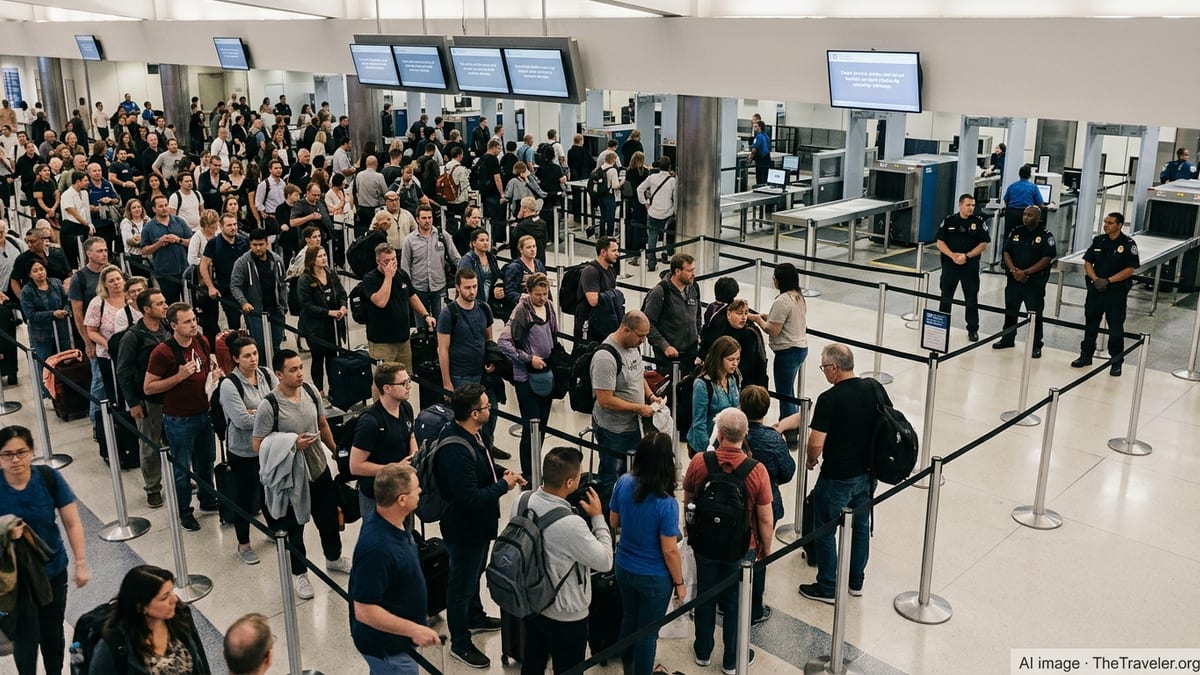
Grace period extended after summer queues
According to recent European media coverage, France, Belgium, the Netherlands, Germany, Greece, Malta, Portugal, Italy and Switzerland have been allowed to keep using an opt-out that lets them pause biometric checks at busy times in order to maintain border fluidity. The measure is linked to the rollout of the EU’s long-planned Entry/Exit System, which records non-EU travellers’ movements and biometric data at external Schengen borders.
Reports indicate that the flexibility was originally introduced as a temporary summer measure, designed to ease bottlenecks as airports and border posts adjusted to the new rules. The latest decision effectively prolongs that breathing space for the nine countries most exposed to heavy tourism flows and post-Brexit traffic from the United Kingdom.
Travel industry commentary suggests that national authorities argued they needed more time to upgrade equipment, refine procedures and increase staffing. They also pointed to the risk of renewed disruption during peak holiday periods if the grace period were allowed to lapse while technical issues remained unresolved.
The extension does not suspend the Entry/Exit System itself, which reached full operational status earlier this year. Instead, it allows local border authorities in the nine states to switch off or scale back live biometric checks temporarily when arrival halls become congested, reverting to more traditional passport processing to keep passengers moving.
Post-Brexit checks collide with new EU technology
The difficulties stem from the combination of post-Brexit requirements for UK nationals and the EU’s move to a fully digital border regime. British citizens are now treated as third-country nationals, meaning their stays must be recorded and, under the new system, supported by biometric registration the first time they enter the Schengen area after implementation.
The Entry/Exit System replaces manual passport stamping with an automated database that logs each entry and exit and stores biometric identifiers for several years. Official policy documents describe the system as a key tool for tackling overstays, improving security and harmonising border procedures across the Schengen zone.
However, aviation groups have repeatedly warned that capturing fingerprints and facial images at the border can add significant time to each transaction, especially when multiple family members must register and border posts were not built with additional space in mind. Airports Council International Europe has previously called for a review of the rollout in order to avoid systemic disruptions for passengers during busy travel seasons.
Post-Brexit changes have amplified these pressures at airports and ports with high volumes of UK traffic. Since British travellers no longer benefit from EU fast-track arrangements, they are funnelled into the same queues as other non-EU visitors, where initial biometric registration has proved slower than hoped in the early months of operation.
Scenes of airport chaos sharpen political focus
Throughout the summer, travellers and local media across Europe documented widespread queues, missed flights and hours-long waits attributed to Entry/Exit System bottlenecks. Social media posts and travel forums carried accounts of passengers spending much of a day in overcrowded terminals, with some reporting that long lines at border control forced them to abandon trips or rebook flights at their own expense.
Coverage in British and European outlets linked the disruption to the interplay between the new EU technology and post-Brexit obligations, particularly for routes between the UK and popular holiday destinations such as Spain, Greece and Italy. The combination turned routine peak-season pressure into what some commentators described as a stress test for Europe’s new border regime.
Airlines and airport operators have publicly highlighted the operational strain. Several carriers have advised passengers on affected routes to arrive significantly earlier than usual for departures to the Schengen area, warning that border checks could take far longer than before the system was introduced.
The mounting complaints have sharpened political attention in both Brussels and national capitals. While the core objectives of the Entry/Exit System remain largely unchallenged, discussion has increasingly focused on how to manage its real-world impact on travellers, particularly when airports already face staffing constraints and strong post-pandemic demand.
Nine countries at the centre of the flexibility move
The group of nine countries benefiting from extended flexibility contains some of Europe’s largest aviation markets and busiest holiday gateways. France and Italy are central hubs for traffic from the UK and long-haul markets, while Spain and Greece, although not listed among the nine, have themselves experienced notable strain during the biometric rollout as key destinations for summer tourism.
Belgium and the Netherlands handle dense short-haul networks and important rail and ferry connections, particularly to the United Kingdom. Germany and Switzerland function as major transit points, where delays at border control can ripple across connecting flights. Malta and Portugal, reliant on seasonal tourism, are especially sensitive to reports of bottlenecks affecting visitor experiences during peak months.
Publicly available commentary suggests that these states argued for discretion to suspend or reduce live biometric checks at short notice when operational conditions deteriorate. The opt-out lets them prioritise flow management in real time, rather than applying the new rules rigidly during periods when infrastructure or staffing cannot cope.
This tailored approach reflects a broader recognition that a uniform timetable for full implementation may not be realistic across such a varied group of border crossing points, from major international hubs to island airports and ferry terminals that were never designed for complex biometric capture.
What travellers should expect in the coming months
Travel advisories and industry guidance indicate that non-EU visitors, including UK nationals, should continue to plan for longer processing times when entering or leaving the Schengen area, even with the extended flexibility in place. The opt-out can ease the worst bottlenecks at certain times and locations but does not restore pre-Brexit conditions or remove the underlying requirement for biometric registration.
Passengers whose details are already stored in the Entry/Exit System are expected to pass through more quickly on subsequent trips, although technical issues at border kiosks have occasionally forced repeat enrolments. First-time registrants, families with children and travellers unfamiliar with the process remain more likely to experience delays.
Travel experts suggest allowing extra time at departure and arrival airports, checking carrier advice before travel and being prepared for variable experiences from one border crossing to another. Some airports have adjusted queue layouts, signage and staffing in an effort to smooth the process, but performance still depends heavily on local infrastructure and daily traffic levels.
The current extension for nine countries is widely viewed as a stopgap rather than a permanent solution. As the EU and national governments work to stabilise the new system, the coming seasons are likely to determine whether the Entry/Exit System can deliver its promised security and efficiency benefits without becoming synonymous with queues and chaos for travellers.