


More news on this day
Ports across Europe and the Caribbean are accelerating preparations for Legend of the Seas, Royal Caribbean International’s third Icon-class ship and, by several measures, the world’s largest cruise vessel set to enter service in mid-2026.
Get the latest news straight to your inbox!
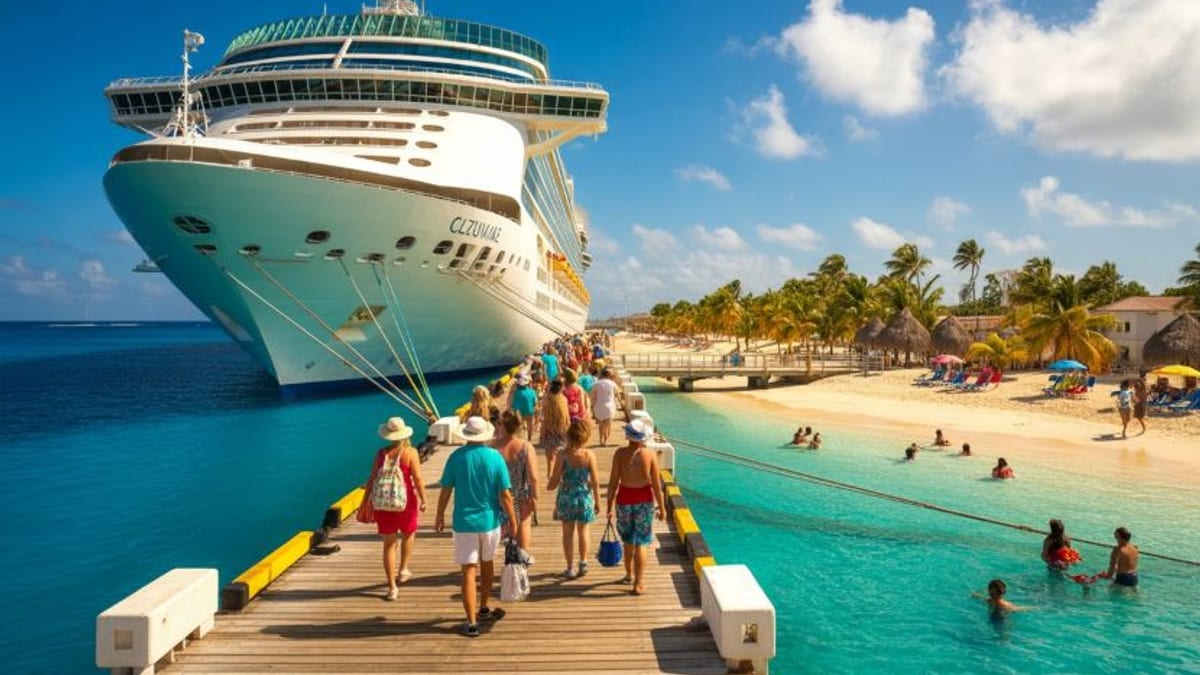
A New Flagship for the Mega-Ship Era
Legend of the Seas is the latest ship in Royal Caribbean’s Icon class, currently recognized as the largest cruise ship class ever built in terms of gross tonnage and capacity. Industry data indicates that Icon-class vessels measure around 250,800 gross tons and carry more than 5,600 guests at double occupancy, placing them at the top of global size rankings and symbolizing the continuing shift toward resort-style ships at sea.
Publicly available specifications show that Legend of the Seas will share a similar scale and layout with its predecessors while introducing refinements aimed at European and Caribbean deployment. The ship has been designed around distinct neighborhoods, from family-focused zones to adults-only retreats, combining elements that first appeared on Icon of the Seas with new concepts intended to handle large passenger volumes more efficiently on busy port days.
In early June 2026, Royal Caribbean took delivery of Legend of the Seas at Meyer Turku in Finland, marking a key milestone ahead of the ship’s inaugural season. Delivery confirms that work has moved from heavy construction to final outfitting and crew training, with sea trials already conducted to test systems, energy performance and maneuverability before the vessel welcomes paying guests.
Cruise industry trackers note that the arrival of Legend of the Seas extends Royal Caribbean’s dominance in the mega-ship segment. Icon of the Seas and Star of the Seas already appear at the top of most 2026 rankings by size, and the introduction of a third sister ship consolidates the company’s position in the high-capacity, high-amenity category that many competitors are still racing to match.
Luxury, Entertainment and Record-Breaking Attractions
Legend of the Seas is being positioned as both a mass-market resort and a luxury travel platform, with a combination of high-end suites and exclusive venues layered on top of large-scale entertainment. Cruise guides and company materials describe the ship as one of the most dining-intensive vessels at sea, with dozens of restaurants, bars and lounges designed to distribute crowds and create a range of price points and culinary styles.
Central to the ship’s appeal is Category 6, billed as the largest waterpark at sea and already familiar to travelers who have followed the Icon-class rollout. The complex features multiple record-chasing slides and splash zones aimed at multigenerational groups, underscoring how family travel continues to shape the design of the world’s biggest ships. Adjacent pool areas, including sprawling main pools and more intimate retreats, are intended to keep thousands of guests spread across the upper decks throughout sea days.
Beyond water features, Legend of the Seas will host an ice arena, immersive entertainment spaces and large-format theaters that support full-scale productions. Promotional materials reference Broadway-style shows alongside multimedia performances and live music programming, positioning the ship as a floating entertainment district where evenings can resemble a major city’s theater quarter.
At the top end of the market, suite neighborhoods and ship-within-a-ship concepts are expected to cater to luxury travelers who value privacy and personalized service but still want access to big-ship attractions. This blending of ultra-premium accommodations with mega-ship amenities reflects a broader industry trend in which high-spend guests are no longer confined to small luxury vessels, but instead seek elevated spaces aboard the largest ships in the world.
Europe Braces for a New Scale of Cruise Tourism
Legend of the Seas is scheduled to debut in the Western Mediterranean in summer 2026, with itineraries centered on seven-night cruises visiting marquee ports such as Rome, Barcelona and key gateways along the Spanish and French coasts. Port authorities and tourism boards are highlighting the arrival of the ship as a strategic opportunity, but also a logistical test, as handling an Icon-class call requires careful coordination of terminals, transport links and shore-excursion capacity.
Recent coverage from Spanish media underscores the heightened expectations, with Málaga positioning itself as an early-season showpiece for Legend of the Seas as the vessel transitions between the Caribbean and Mediterranean. Local tourism officials have pointed to the call as a milestone in the city’s efforts to attract larger and more globally visible cruise traffic, while also emphasizing the need to manage passenger flows through the historic center and nearby coastal areas.
In Italy, the Civitavecchia gateway for Rome is preparing for what cruise analysts describe as one of the largest single-ship embarkation operations in the Mediterranean. Existing terminals already handle thousands of guests each weekend during peak season, but an Icon-class ship operating regular turnarounds adds new pressure on ground transportation, baggage handling and security infrastructure. Travel advisors have been encouraging guests to build in extra transfer time and to consider pre- or post-cruise stays in Rome to ease the day-of-cruise bottlenecks.
Across the region, industry observers expect Legend of the Seas to intensify ongoing debates over overtourism in popular coastal cities. While the economic benefits of thousands of new visitors per call are significant, questions remain about how best to distribute guests beyond old towns and waterfronts, and how to align cruise schedules with local community priorities and sustainability goals.
Caribbean Homeports Compete for Mega-Ship Prestige
Before settling into its European summer schedule, Legend of the Seas is slated to operate Caribbean voyages that showcase its warm-weather design features and test its performance in established North American cruise hubs. Port planners in Florida and the greater Caribbean have spent much of the past decade adapting to increasingly larger ships, building purpose-designed terminals and expanding channel depths to accommodate vessels of Icon-class dimensions.
Caribbean-focused travel guides note that the region remains the single biggest market for large-ship cruising, making it a logical testing ground for new concepts in crowd management, private-island operations and shore programming. For Legend of the Seas, these early deployments are expected to emphasize beach breaks, water-based excursions and ship-focused experiences, reinforcing the idea that the vessel itself is the primary destination.
Competition among homeports is intensifying as each new mega-ship promises a surge in passenger volume, hotel nights and air traffic. Ports that secure regular calls from Legend of the Seas are likely to highlight the ship in marketing campaigns, positioning themselves as gateways to the world’s largest cruise experiences. At the same time, regional governments and tourism boards face pressure to ensure that expanded cruise traffic aligns with environmental protections, especially around coral reefs and sensitive coastal ecosystems.
Industry commentators point out that the Caribbean is also where cruise companies are rolling out new sustainability features most visibly, from alternative fuels to shore power connections and advanced waste-treatment systems. With Legend of the Seas designed to run on liquefied natural gas and equipped with next-generation efficiency technologies, its Caribbean operations will be closely watched as an indicator of how mega-ships can fit into emerging climate commitments.
Redefining Expectations for Global Ocean Voyages
The entry of Legend of the Seas in 2026 comes as cruise lines experiment with longer and more complex itineraries that combine regional seasons into extended journeys. While the ship will initially focus on weeklong Mediterranean and Caribbean routes, analysts anticipate that its size and amenities will make it a candidate for repositioning cruises across the Atlantic and, potentially, longer Grand Voyages that stitch together multiple regions over several weeks.
Travel publications have noted increasing demand for high-comfort, long-duration cruises that function as floating resorts with consistent accommodation and service levels across different continents. In this context, the design of Legend of the Seas, with its extensive dining choices, entertainment venues and suite offerings, is viewed as a platform capable of sustaining guest interest over journeys that stretch beyond traditional seven-night patterns.
The ship’s launch also feeds into a broader narrative about the evolution of luxury at sea. Rather than relying solely on small, ultra-luxury ships, the industry is leaning into layered experiences where luxury is defined as choice, space and access to diverse activities, even amid thousands of fellow travelers. Legend of the Seas, with its combination of record-breaking attractions and enclave-style premium zones, illustrates how cruise lines are seeking to reconcile mass scale with individualized service.
As 2026 unfolds, Europe and the Caribbean will serve as real-world test environments for this new vision of ocean travel. Passenger feedback, port performance and booking trends on Legend of the Seas are likely to influence future ship designs and deployment strategies, shaping how the next generation of global voyages balances spectacle, comfort and sustainability on the world’s largest cruise platforms.