


More news on this day
Air travel across Europe is facing fresh disruption as more than 1,400 flights are reported delayed and at least 77 cancelled, affecting major hubs in the Netherlands, Germany, the United Kingdom and other countries and disrupting schedules for carriers including Finnair, KLM and Lufthansa.
Get the latest news straight to your inbox!
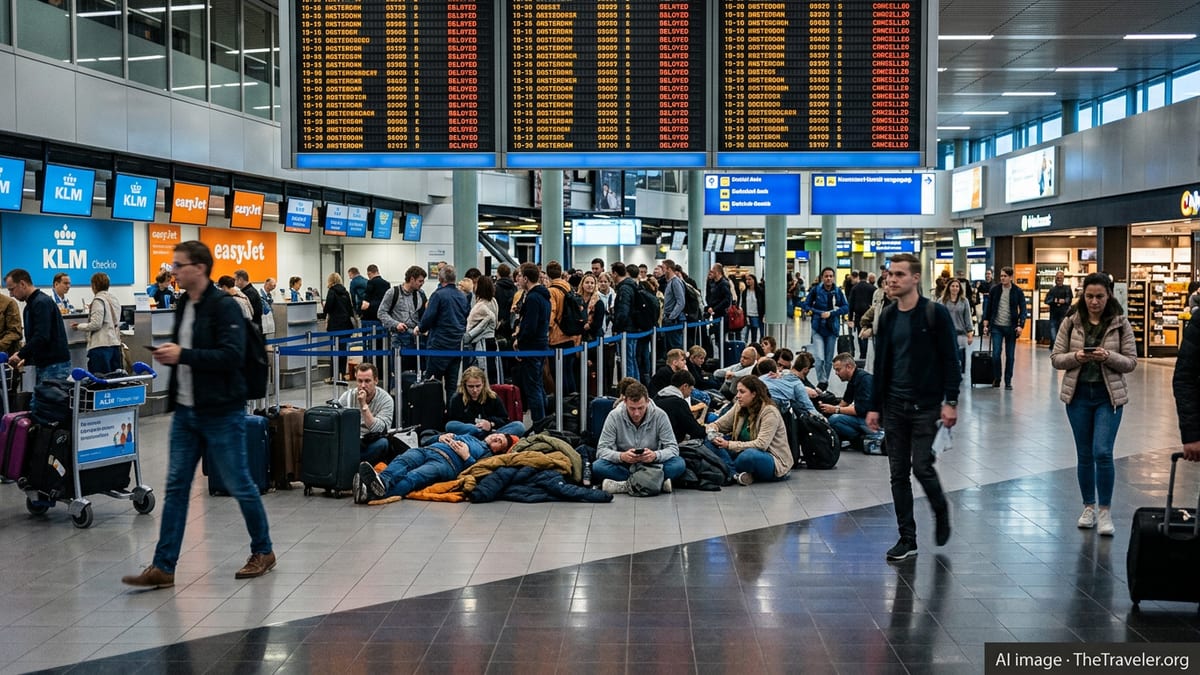
Airports Across Europe Struggle With Fresh Wave of Disruptions
Current operational data and airport monitoring services indicate that a combined 1,413 flights have been delayed and 77 cancelled across European airspace, with a concentration of problems in northwestern Europe. Amsterdam Schiphol and Frankfurt, two of the continent’s busiest hubs, are among the airports experiencing significant knock-on effects, while further disruption is being reported at airports in the United Kingdom and neighboring countries.
The latest figures suggest a pattern of rolling delays of 30 minutes or more on short haul routes, particularly those linking the Netherlands, Germany and the UK. These routes are frequently used by business travelers and transfer passengers, amplifying the wider impact as missed connections ripple through airline networks.
Monitoring platforms show multiple services between Frankfurt and Amsterdam either delayed or cancelled, including flights operated by Lufthansa and KLM and their codeshare partners. This has left passengers facing last minute gate changes, rebookings and extended waits at both hubs.
Industry data puts the scale of the disruption in context, noting that Amsterdam and London have already been among the European cities with the sharpest reductions in available seat capacity in recent summer periods, while Frankfurt has also seen a notable decline. The current wave of delays and cancellations reinforces this trend of constrained capacity and vulnerability to operational shocks.
Finnair, KLM, Lufthansa and Others Adjust Schedules
Publicly available travel updates show that several European carriers have been forced to again refine their schedules or caution travelers about potential disruption. Finnair’s travel advisory pages highlight ongoing risks of delays and cancellations linked to local operational factors and recent industrial action at key airports, adding to strain on already busy summer timetables.
KLM has in recent months announced reductions to parts of its European schedule and continues to warn travelers to monitor their bookings closely for last minute changes. Information on the airline’s disruption pages emphasizes that passengers should check flight status through official digital channels on the day of travel and be prepared for rerouting if a connection through Amsterdam is no longer feasible.
Lufthansa Group communications on its summer schedule have already outlined the need to trim frequencies on some high-density European and domestic routes, while also acknowledging the possibility of isolated single-day cancellations. Current airport boards at Frankfurt show a mix of delays and cancellations on short haul services, including to London Heathrow and other key business destinations.
Regional and low cost carriers are also affected, particularly on heavily used intra-European corridors that depend on punctual turnarounds. While exact numbers by airline shift through the day, network data indicates that disruption is shared across legacy and budget airlines, with codeshare arrangements extending the impact across alliances.
Amsterdam and Frankfurt Remain Pressure Points
Amsterdam Schiphol and Frankfurt Airport play critical roles as transfer hubs connecting Europe with long haul destinations in the Americas, Asia and Africa. When operations at these airports slow, delays spread rapidly as aircraft and crews fall out of position. Recent seasons have shown how quickly these hubs can become bottlenecks when hit by adverse weather, staffing constraints or broader system outages.
Amsterdam has previously recorded some of the highest levels of seat capacity cuts and irregular operations among major European airports, reflecting both structural constraints and repeated episodes of congestion and weather disruption. The current pattern of delayed departures and arrivals suggests that even modest operational disturbances can quickly translate into large numbers of affected passengers.
Frankfurt, similarly, has experienced episodic waves of cancellations and schedule adjustments, particularly on domestic German routes and busy links to the UK and neighboring states. Flight status records show repeated cancellations on certain Frankfurt to London and Frankfurt to Amsterdam services in recent weeks, underlining the sensitivity of these routes to wider traffic management and scheduling decisions.
Because many Finnair, KLM and Lufthansa flights feed traffic into these hubs for long haul connections, disrupted short haul legs can strand travelers far from their final destinations. Passengers whose feeder flights are cancelled or heavily delayed often face overnight stays, missed events and the need to rearrange rail or onward air travel across the continent.
Knock-on Effects for UK and Continental Travellers
The latest disruption is being felt keenly by travelers to and from the UK, where flights to Amsterdam, Frankfurt and other continental hubs are essential for reaching a broad range of European and intercontinental destinations. Aviation forums and traveler reports describe missed connections, complex reroutings through alternative hubs and crowded customer service points as airlines work within limited spare capacity.
On short UK-Netherlands and UK-Germany sectors, even small air traffic control restrictions can cause aircraft to be held on the ground, which in turn leads to late arrivals into hub airports and subsequent delays on onward flights. Such patterns have been observed repeatedly on services between UK regional airports and Amsterdam, where delays of an hour or more can cause passengers to miss long haul departures.
Rail operators are also reporting pressure on cross-Channel and near-Europe routes, as some travelers rebook from air to rail when flight disruption becomes prolonged. Eurostar, for example, has issued recent travel updates noting delays linked to border procedures and planned engineering works that could affect journeys between Belgium, France, the Netherlands and Germany, compounding the wider picture of strained transport infrastructure.
With summer travel demand traditionally high at this time of year, options for same-day rebooking are limited in popular markets. Travelers affected by cancellations at Amsterdam, Frankfurt or UK airports may find that alternative flights are either fully booked or only available from more distant airports, increasing both journey times and costs.
What Travellers Can Expect in the Coming Days
Based on current disruption patterns and earlier schedule adjustments announced by major airlines, observers expect that irregular operations could continue intermittently rather than resolving immediately. Airlines typically rebuild resilience by trimming frequencies, adjusting aircraft rotations and encouraging passengers to switch to flights at less congested times, but such changes can take days to stabilize network performance.
Travel advisories from carriers including Finnair, KLM and Lufthansa consistently urge passengers to verify their flight status on the day of departure and to allow additional time at the airport. For those already en route, airline apps and airport information boards remain the primary tools for tracking gate changes, revised departure times and rebooking options if a flight is cancelled.
Under European and UK passenger rights frameworks, travelers whose flights are delayed or cancelled may in some circumstances be entitled to assistance such as meals, accommodation and alternative transport, as well as compensation in specific cases. However, entitlement depends on the cause of the disruption, the length of the delay and the distance of the flight, and claims can take time to resolve.
With 1,413 delays and 77 cancellations already recorded in the current wave of disruption, passengers planning trips through Amsterdam, Frankfurt or major UK airports are being advised by publicly available guidance to build flexibility into their itineraries, consider earlier departures where possible and keep all travel documentation and receipts in case they need to pursue reimbursement or compensation at a later stage.