


More news on this day
Thousands of passengers across Europe are facing missed connections and long queues after a new wave of disruption produced 2,398 flight delays and 76 cancellations, centered on Madrid and a dozen other major airports, according to early operational reports and delay-monitoring services.
Get the latest news straight to your inbox!
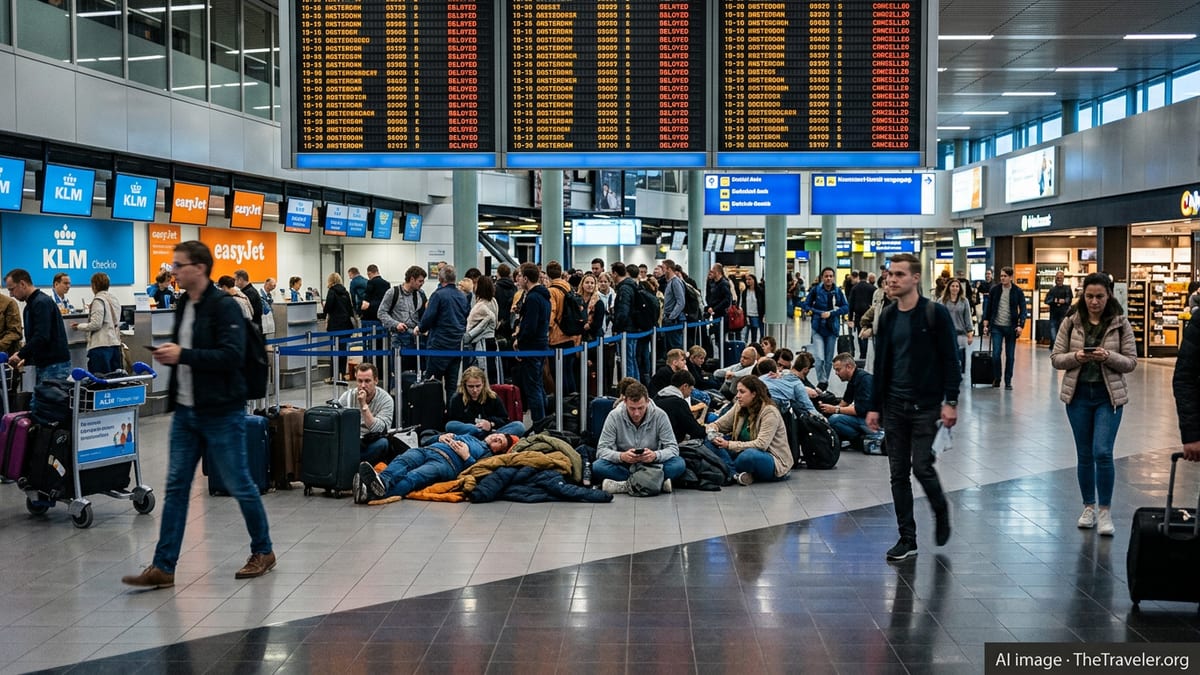
Madrid Again at the Heart of Europe’s Network Problems
Adolfo Suárez Madrid–Barajas Airport has emerged as one of the key pressure points in Europe’s air network in 2026. Publicly available operational data and consumer-rights monitoring sites point to repeated days of heavy disruption, with Madrid frequently among the continent’s worst performers for punctuality. On several peak travel days this summer, hundreds of flights passing through the Spanish capital departed late, contributing substantially to the 2,398 delays now being reported across Madrid and 12 other airports combined.
Earlier operational breakdowns give context to the current picture. On 25 May 2026, one major disruption day at Madrid generated 224 delayed flights and three cancellations as gate congestion and turnaround challenges slowed departures across the schedule. Published coverage from passenger rights platforms indicates that these problems were linked to a mix of high seasonal demand and broader congestion in European airspace rather than a single technical failure or strike. Similar patterns reappeared in mid-June, when another punctuality breakdown at Madrid contributed to widespread knock-on delays across the region.
The latest tally of 2,398 delays and 76 cancellations reflects not only flights originating in Madrid but also services operating to and from at least 12 other European hubs, where aircraft and crews rotated through the Spanish capital. As rotations slipped, late arrivals cascaded into late departures, a familiar chain reaction each summer as tightly scheduled fleets try to absorb even modest operational shocks.
Network Hotspots Stretch from Spain to Central Europe
Network-level reporting from Eurocontrol, the agency that coordinates air traffic management across much of the continent, shows that Spain remains one of Europe’s main generators of air traffic flow management delay minutes in 2026. Recent summer briefings describe Spain as accounting for close to a fifth of all en route delays across the network, with Madrid, Barcelona and Sevilla area control centers repeatedly flagged for capacity and staffing constraints amid strong traffic growth. These structural pressures mean that when local operational issues emerge at airports, they are layered on top of an already stretched system.
The 12 additional airports affected in the current disruption wave are understood to include other large hubs and busy leisure gateways that interlink with Madrid’s schedule. Earlier in the season, similar patterns of delay were seen on days when London, Amsterdam, Frankfurt, Zurich and several Iberian coastal airports simultaneously reported high numbers of late departures. Operational reports from June and July highlight how problems in one corner of the network can quickly translate into missed slots and stacking delays hundreds of miles away.
On one mid-July disruption weekend, for example, more than 2,500 delayed flights and over 50 cancellations were recorded across continental hubs in a single 24-hour period. Frankfurt and Zurich were among the hardest hit, but Barcelona and other southern European airports also registered significant punctuality issues. The latest cluster of 2,398 delays and 76 cancellations appears to fit the same pattern, with Madrid serving as both a cause and a conduit for network-wide disruptions.
Weather, Capacity and Scheduling Combine to Hit Punctuality
Multiple strands of publicly available information point to a combination of weather, capacity and scheduling as the main drivers of Europe’s current disruption cycle. Eurocontrol’s most recent summer updates show that average air traffic flow management delay per flight has oscillated between roughly 3 and 4 minutes on busy weeks, with a substantial share attributed to air traffic control capacity and staffing in a few key states, including Spain. While those averages may sound modest, they mask the fact that thousands of flights operate without delay while a smaller group experiences long waits that push the statistics upward.
Weather has also played a recurring role. Strong convective storms and periods of low visibility in parts of Western and Central Europe have repeatedly triggered flow restrictions, reducing the number of aircraft that can safely be handled in given sectors of airspace or on specific runways. Even relatively short suspensions of arrivals or departures can force airlines to hold aircraft on the ground, creating the kind of rolling timetable disruption that leads to the kind of figures now being reported across Madrid and its connected airports.
At the same time, airlines have been operating dense summer schedules designed to capture high-season demand. ACI Europe traffic snapshots for the spring described Spain as one of the best performing major markets for passenger growth, with Madrid and Barcelona among the few large hubs to show clear increases in traffic compared with the previous year. This growth, while positive for tourism and trade, leaves less slack in the system to absorb irregular operations. Tightly turned aircraft, full flights and minimal standby capacity mean that once delays take hold, recovery can be slow.
Knock-on Effects for Passengers Across the Continent
For travelers, the headline figures of 2,398 delays and 76 cancellations translate into a wide range of individual experiences, from minor schedule slips to missed long-haul connections. Past disruption days at Madrid have shown how issues at a single hub can ripple outward; late-running flights from the Spanish capital have been linked to secondary delays at airports in the United Kingdom, France, the Netherlands, Scandinavia and key holiday destinations in Portugal and Greece as aircraft arrive late and turn around behind schedule.
Consumer-rights organizations report that disruption on the scale now affecting Madrid and the 12 other airports often leads to crowded terminals, longer security and boarding lines and mounting pressure on customer-service desks as passengers seek rebooking, refunds or accommodation. On previous high-disruption days documented this season, some airlines have struggled to keep up with communication across multiple channels as operations teams focused on repositioning aircraft and crews.
With summer traffic still near its annual peak, even travelers whose flights are not among the 2,398 delayed or 76 canceled may encounter knock-on effects such as gate changes, tighter connection windows or last-minute schedule adjustments. Network operators and airlines have been emphasizing the use of capacity and weather-based planning tools to reduce en route delays, but the repeated appearance of Madrid and several other hubs in delay statistics underlines how fragile punctuality remains under heavy load.
What Travelers Can Do If Their Flight Is Affected
Passenger-advocacy sites and official guidance underline that travelers affected by delays or cancellations in Europe have specific rights under EU Regulation EC 261 and related national rules. These frameworks can provide compensation in some circumstances, as well as care such as meals, refreshments and accommodation when disruptions stretch into long waits. The exact entitlement depends on factors including flight distance, length of delay and whether the cause is considered within the airline’s control.
For those caught up in the latest wave of 2,398 delays and 76 cancellations, experts commonly recommend keeping boarding passes, booking confirmations and any written notification of disruption from the airline. Records of actual arrival times, receipts for meals or hotels and screenshots of flight-status updates can all prove useful if passengers later submit claims either directly to carriers or via specialist firms that assist with compensation processes.
Travel organizations also advise building additional margin into itineraries while Europe’s network remains under strain. Checking flight status 24 to 48 hours before departure, allowing more time for connections and considering earlier departures to reach critical events can help reduce the impact if schedules shift. Given the continued prominence of Madrid and a select group of other hubs in delay statistics, travelers with flexible options may also weigh connecting through alternative airports when booking new trips in the short term.
EUROCONTROL Summer 2026 Network Flash Briefing
EUROCONTROL European Aviation Overview, Week 23 2026
AirHelp: Madrid-Barajas airport disruption, 25 May 2026
AirHelp: Europe flight delays at Frankfurt and Zurich, July 2026