


More news on this day
A severe heatwave sweeping Europe is driving record temperatures, draining key rivers and exposing how closely the continent’s travel, trade and energy security depend on vulnerable waterways, as Italy, Hungary and other EU partners coordinate emergency responses and longer-term resilience plans.
Get the latest news straight to your inbox!
Heatwave Pushes Temperatures and Infrastructure to New Limits
Publicly available information shows that much of Europe has endured weeks of above-average temperatures, with Italy, the Balkans and Central Europe among the hardest hit. Italy recently placed all major cities on the highest heat alert as daytime readings climbed well above 35 degrees Celsius in places, and Austria reported a national temperature record during the same spell. Across the continent, the prolonged hot, dry conditions are intensifying wildfires, stressing power systems and disrupting river transport.
Reports indicate that the current event follows an exceptionally warm spring and earlier heat surges, compounding soil dryness and accelerating evaporation from rivers and reservoirs. The European Drought Observatory describes a broad hydrological drought affecting much of the Danube and Rhine basins, with low-flow conditions deepening through late July and early August. These trends are now feeding directly into constraints on energy production, cooling water supplies and freight movements.
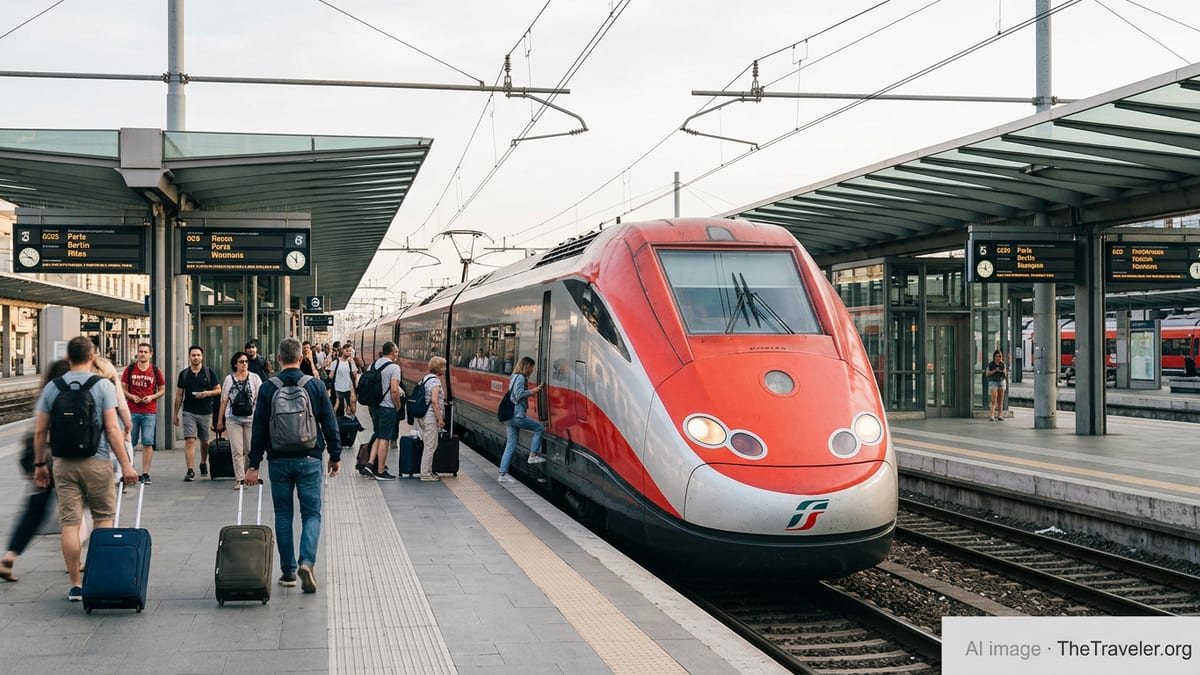
Travel infrastructure is also feeling the strain. Published coverage notes instances of airport operations being briefly curtailed because of grass fires near runways, as well as rail and road services slowed by heat-related speed restrictions and wildfire smoke in several countries. Tourism operators, from coastal resorts to inland river cruise lines, are having to juggle safety concerns, altered itineraries and higher operating costs as temperatures stay elevated.
Danube and Po Rivers Expose Europe’s Waterway Vulnerabilities
The Danube, stretching from Germany to the Black Sea and serving as a backbone for Central and Eastern European trade, has dropped to record or near-record lows along several stretches. In Budapest, levels recently fell well below previous all-time lows recorded in 2018, according to multiple news reports. In Romania, measurements reached the lowest point since the mid-1990s, prompting authorities there to restrict irrigation in some areas and report partial disruption to shipping and tourism.
Further upstream and downstream, low water has reduced cargo loads on barges, forced vessels onto shallower-draft configurations and, in some cases, made sections of the river difficult to navigate. Specialist maritime and logistics outlets describe operators scheduling extra sailings with lighter loads, building precautionary stockpiles along the Rhine and Danube corridors and warning customers of possible delays and surcharges.
Italy faces its own waterway challenges on the Po, the country’s longest river and a crucial artery for agriculture, inland shipping and hydropower. After repeated dry years, current high temperatures and a lack of sustained rainfall are again shrinking flows and exposing sandbanks. Italian media and regional authorities have highlighted growing concerns about irrigation supplies in the Po Valley and the knock-on impact on barge traffic, with some stretches becoming harder to transit safely at normal loads.
Tourism along Europe’s rivers is being reshaped in real time. River cruise industry reports show operators modifying itineraries, relying more heavily on coaches for certain segments and warning travelers that last-minute changes are increasingly likely during peak summer. Industry briefings describe declines in bookings on some Danube routes as prospective passengers weigh the risk of low-water disruptions.
Energy Security Under Pressure as Cooling Water Runs Low
The extreme heat and drought are colliding with Europe’s energy transition at a sensitive moment. The European Commission’s recent assessments of energy security highlight how climate-related shocks such as droughts and heatwaves can reduce hydropower output, constrain thermal and nuclear generation that depends on river water for cooling, and increase electricity demand for air conditioning.
Hungary has emerged as one of the most exposed countries in the current episode. Public reporting notes that the Paks nuclear power plant, which typically supplies close to half of Hungary’s electricity, has seen its cooling capacity strained by record-low Danube levels and elevated river temperatures. Officials have publicly discussed the possibility of reducing or even temporarily suspending output if conditions deteriorate further, a step that would likely increase reliance on imports and gas-fired generation.
Downstream, Romania has raced to protect its own nuclear capacity by reshaping the river itself. National coverage describes an operation to sink barges loaded with rock in the Danube to redirect more water toward the intake channels of a major nuclear plant, buying time before its second reactor might need to go offline. The episode illustrates how increasingly intensive engineering interventions are being used to eke out additional cooling capacity as rivers shrink.
Broader EU energy planning is being tested. New electricity market rules that took effect this summer are intended to strengthen resilience, encourage renewables and better shield consumers from price spikes. At the same time, recent analytical work commissioned by the European Union warns that electricity grids and cross-border interconnections must expand more quickly to keep pace with growing renewable capacity and more volatile weather, or risk bottlenecks during crunch periods like the current heatwave.
Italy, Hungary and EU Partners Coordinate Response
As the heatwave ripples across borders, Italy and Hungary are working within broader European structures to manage energy security and transport disruptions. Both countries are closely linked into the EU’s internal energy market, including regional electricity exchanges and, in Italy’s case, extensive gas pipeline and power interconnections with neighboring states. Published material from European institutions describes how these links, along with common rules and emergency coordination mechanisms, help shift electricity and gas to the regions most in need during extreme weather.
According to recent EU communications, member states have been encouraged to align their summer preparedness plans, accelerate gas storage refills ahead of winter 2026 to 2027 and improve information sharing on critical infrastructure risks. Italy’s position as a Mediterranean energy hub, increasingly connected to North African gas and planned hydrogen corridors, gives it a role in diversifying supplies for Central European partners, including Hungary, when river-based transport and domestic generation are constrained.
On transport, EU-level guidance is pushing river basin states along the Danube and Rhine to coordinate dredging, traffic management and contingency routing to keep freight moving as far as safety allows. Policy discussions sparked by recent summers of low water are now focusing more explicitly on climate adaptation, including reinforcing riverbanks, upgrading locks and modernizing fleets to operate at lower drafts.
Diplomatic and technical cooperation is also extending into civil protection and disaster risk management. Italy, Hungary and other affected governments are drawing on EU civil protection frameworks to share information on wildfires, drought conditions and infrastructure vulnerabilities, adding an extra layer of coordination to national response plans and bilateral agreements.
What Travelers and Businesses Need to Know Now
For travelers, the main immediate impacts are higher heat stress in cities, more frequent wildfire-related disruptions and increased uncertainty for river-based itineraries. Tourism boards and travel operators across Italy, Hungary, Austria, Germany and the Balkans are advising visitors to monitor local advisories, be prepared for timetable changes and pay close attention to heat and air-quality guidance, especially in urban centers under red alerts.
Rail and air travel across most of Europe remain broadly operational, but recent events show how quickly conditions can change. Past heat surges have produced short-notice rail speed restrictions and isolated cases of airport diversions or runway closures, often linked to wildfires or heat damage to infrastructure. Travelers moving through Italy and Central Europe in particular are being urged through public information campaigns to allow extra time for connections and to stay flexible on routes.
For businesses, the deeper concern is the cumulative impact on logistics and energy costs. Low river levels are increasing freight prices for bulk commodities such as coal, grain and industrial materials, while also complicating just-in-time supply chains that rely on barge transport. Industry analyses suggest that some manufacturers along the Rhine and Danube corridors are building up inventories, switching part of their transport to rail or road and re-evaluating their exposure to single-route river bottlenecks.
Looking ahead, climate and infrastructure specialists are emphasizing that this summer’s conditions are not an isolated shock but part of a pattern. As heatwaves grow more frequent and severe, Europe’s dependence on rivers like the Danube, Rhine and Po for cooling, shipping and tourism is likely to require sustained investments in adaptation, more cross-border energy and transport planning, and updated expectations for travelers and companies operating across the continent.