


More news on this day
Europe’s new digital border regime is colliding with peak holiday demand as the Entry/Exit System enters its first full summer, with early reports pointing to longer queues, missed connections and mounting pressure on airports to keep traffic moving.
Get the latest news straight to your inbox!
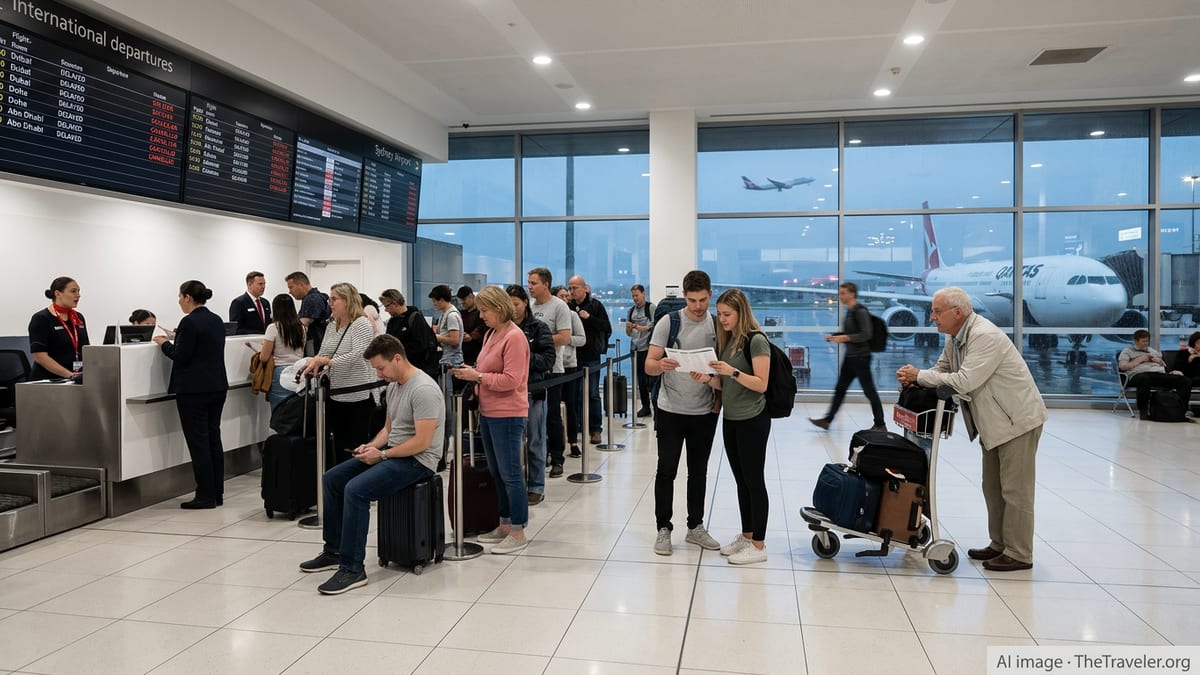
Biometric Border Checks Meet Peak Summer Demand
The European Union’s Entry/Exit System, a bloc wide database that replaces manual passport stamping for non EU nationals, became fully operational in April 2026 after a phased rollout that began in October 2025. The system records each crossing of the Schengen Area’s external borders by third country travellers, logging biometric and passport data in a central register intended to tighten security and track overstays.
Publicly available EU information describes EES as a cornerstone of a broader effort to digitise border controls and modernise infrastructure at airports, seaports and land crossings. Border posts are being equipped with self service kiosks, biometric scanners and automated gates designed to reduce repetitive checks and free staff for higher risk cases.
In practice, the timing of full deployment means that many holidaymakers will encounter the new formalities for the first time just as Europe enters its busiest travel months. Airports and airlines are warning that the system’s benefits may be slow to appear during the initial season, as passengers and staff adjust to unfamiliar procedures and uneven rollout across member states.
Industry groups have highlighted that processing times at some airports have already increased markedly during peak periods, with EES registration still required alongside traditional manual checks in a number of locations. The mixed regime can complicate staffing and queue management, particularly where infrastructure is not yet scaled for summer volumes.
Reports of Long Queues and Missed Flights
Published coverage from European outlets indicates that the first months of operation have brought a patchwork of experiences. At several major gateways, travellers have reported waits of up to two or three hours at passport control during busy waves, particularly for non EU arrivals who must complete biometric registration on their first entry.
Airport associations have pointed to case studies where average border processing times are said to have risen by as much as 70 percent at certain facilities compared with pre EES operations. These increases appear most acute at peak morning and evening banks, where large numbers of long haul flights arrive or depart in tight windows and infrastructure is still being fine tuned.
Individual complaints circulating in the travel press and on social media describe passengers missing departures after queuing for initial registration, especially where airlines and airports did not yet adjust standard check in advice. Some smaller regional airports with limited space for new kiosks and holding areas appear to be under particular strain, while larger hubs report more varied outcomes from one terminal to another.
While delays have not been uniform across the continent, the accumulation of anecdotes has raised concerns among tourism operators, who rely on predictable transfer times for connecting itineraries. Travel agents are beginning to factor in longer buffers when booking tight connections through certain airports that are still adapting to the new regime.
Industry Calls for Flexibility and System Review
The aviation sector has responded by urging European institutions to allow flexibility during the first full summer of EES. A recent joint communication from airport and airline groups, reported by industry publications, warned that maintaining strict registration thresholds during peak months risks creating chronic congestion at border control points.
In response to these concerns, publicly available information from Brussels indicates that member states have been granted scope to temporarily scale back or pause certain EES checks during defined high traffic periods. National authorities can, for limited windows, prioritise flow management by reverting to manual passport stamping for some travellers while infrastructure and staffing catch up.
The same sector groups are calling for a structured review of EES performance ahead of the heaviest travel weeks, including analysis of queue data, staffing models and equipment reliability. They argue that early lessons from problem airports should be rapidly shared across the network so that others can adjust layouts, signage and passenger information before summer peaks.
Observers note that the EU sees EES as a long term project that will ultimately sit alongside a new travel authorisation scheme, but that short term credibility now depends on managing the first holiday season without widespread disruption. A perception of chaos at border posts could risk undermining public confidence in the wider digital border agenda.
What Travellers Can Expect at European Airports
For most visitors from outside the EU, the biggest visible change under EES is an additional biometric registration step during their first entry after the system went live. This usually involves scanning a passport, providing facial images and in some cases fingerprints at a kiosk or border booth, followed by verification by a border guard before the traveller is cleared.
Once this data is stored, subsequent crossings should in principle be faster, as the system can match travellers to existing records and remove the need for manual passport stamps. However, travel reports suggest that the reality varies significantly between airports. Some hubs have deployed extensive banks of self service kiosks and automated gates, while others still rely heavily on staffed booths that can create bottlenecks during surges.
Airlines serving holiday routes into the Schengen Area are adjusting their guidance accordingly. Low cost carriers and long haul operators alike are advising passengers to arrive earlier than they might have done in previous summers, with recommendations of three hours or more at certain departure points where outbound border queues have grown.
Travel experts quoted in recent media coverage also urge passengers to check airport specific information before travel, as some facilities publish real time updates and tailored advice on which terminals or times of day are most affected. Those with tight onward connections are being encouraged to build in extra margin, particularly when connecting from non EU flights to Schengen destinations that require full external border checks.
Balancing Security Goals With Tourism Recovery
Behind the immediate operational challenges lies a strategic balancing act for European policymakers. EES is designed to address long standing security concerns about undocumented overstays, fragmented data and inconsistent checks across external borders, all while preparing for rising global travel volumes in the coming decade.
At the same time, governments are keen to protect the tourism sector, which remains a central pillar of many European economies after a fragile recovery from the pandemic years. With visitor numbers from North America, the United Kingdom and other long haul markets rising, any perception of unpredictable border delays could influence destination choice.
Tourism boards and airport operators are therefore working to reassure travellers that the current difficulties are transitional, pointing to previous examples where new technology initially created friction before yielding smoother flows. Experts in border management note that other jurisdictions experienced similar teething problems when introducing biometric gates and centralised databases, but that performance generally improved as systems matured.
For now, Europe’s first EES summer will serve as a live stress test of the new border architecture. How quickly airports, airlines and national authorities can refine procedures, share best practice and communicate clearly with passengers will help determine whether the system is seen as a long term facilitator of travel or remembered as an avoidable source of seasonal disruption.