


More news on this day
First-time visitors planning a trip to Europe from 2026 onward will encounter a very different border experience, as the region rolls out a fully digital system to record who enters and leaves its territory.
Get the latest news straight to your inbox!
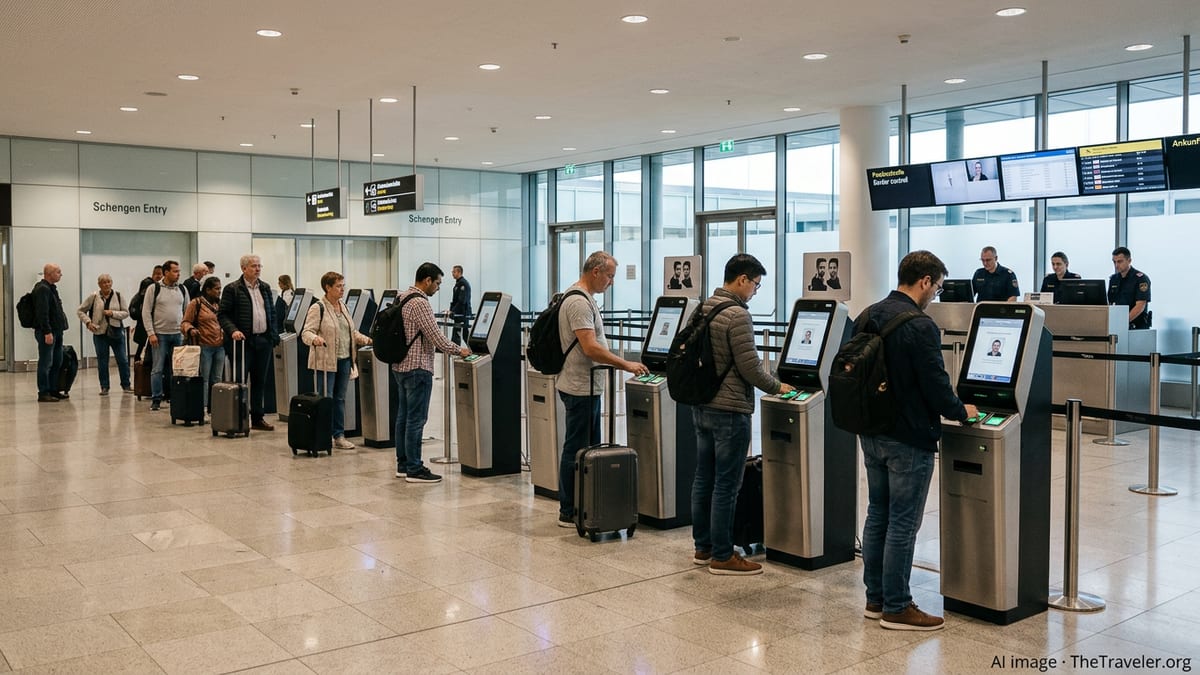
A New Era of Digital Checks at European Borders
Europe’s new Entry/Exit System, widely referred to as EES, is now fully operational at the external borders of the 29 European countries that use it, including almost all Schengen states and several closely associated nations. Publicly available information shows that the system replaces the long-standing practice of manually stamping passports for most non-EU travelers entering for short stays.
The EES is designed to automatically register each entry and exit for so-called third-country nationals, meaning visitors who are not citizens of European Union or Schengen-associated states. According to official explainers, this registration covers both travelers who need a visa and those who are visa-exempt for short visits of up to 90 days in any 180-day period.
Reports indicate that the new system records basic passport information together with the date, time, and border crossing point every time a traveler crosses an external border. The aim is to make it easier to identify overstays, streamline checks, and standardize procedures across airports, ports, and land crossings.
For first-time visitors, the most visible change is that border officers no longer rely on a collection of ink stamps to determine previous stays. Instead, travelers’ histories are held in a central database, and their permitted time in the Schengen area is calculated automatically during checks.
What Happens the First Time You Cross under EES
For a newcomer arriving in Europe after the system’s rollout, the initial border crossing will take longer than in subsequent trips, as this is when the EES profile is created. Based on European Union guidance, first-time travelers are asked to present their passport as usual and may be directed to dedicated EES kiosks or staffed counters, depending on the airport or border crossing.
At this first registration, the system typically collects a facial image and fingerprints along with the biographical data contained in the passport. Published information notes that these biometric details are stored securely and linked to the traveler’s record in the EES database for a limited period tied to the date of last exit.
Once the initial enrollment is complete, later trips should be faster, as the system can verify fingerprints or a facial image against the stored record and confirm that the traveler has not overstayed a previous visit. That means queues may move more quickly for returning visitors compared with those entering the system for the very first time.
Travel coverage across Europe continues to highlight that border authorities advise all non-EU travelers to allow extra time at busy airports and land crossings, especially during peak holiday periods. First-time visitors are encouraged to arrive earlier than they might have before the new system to accommodate potential bottlenecks while travelers and staff adapt to the procedures.
How EES Changes the 90/180-Day Rule for Tourists
The underlying rule for many non-EU visitors remains the same: stays of up to 90 days in any rolling 180-day period within the Schengen area are generally permitted for tourism and some short business activities, depending on nationality. What has changed is how this rule is monitored and enforced.
Under the previous system of ink stamps, travelers and border staff alike sometimes struggled to interpret crowded pages and count days correctly, particularly when visitors moved frequently between Schengen countries. With EES, each entry and exit is recorded electronically, and the system can calculate how many days a traveler has already spent in the area within the relevant 180-day window.
For first-time travelers, this means that once they pass through the external border and their initial entry is registered, the count toward the 90-day limit begins. If they leave and re-enter within the same 180-day period, the system will automatically tally all previous days spent in Schengen states, regardless of which specific country was visited.
Travel advisories suggest that visitors continue to track their own days in Europe to avoid unintentional overstays, but the electronic record now serves as the official reference. Those who previously relied on passport stamps as proof of travel history should be aware that future checks, including airline screenings and possible visa applications, may increasingly reference EES data instead.
ETIAS: The Upcoming Travel Authorisation for Visa-Exempt Visitors
Alongside the EES, Europe is preparing a second major border tool known as the European Travel Information and Authorisation System, or ETIAS. According to European Commission material and recent news coverage, ETIAS is scheduled to begin operating in the last quarter of 2026, following the full deployment of the Entry/Exit System.
Unlike EES, which works automatically at the border, ETIAS is a pre-travel authorisation that many visa-exempt visitors will need to obtain before boarding transport to Europe. This group is expected to include citizens of countries such as the United States, Canada, the United Kingdom, and several others that currently enjoy visa-free short stays.
Public information about the scheme indicates that travelers will complete an online application, provide passport and personal details, and pay a modest fee. In most straightforward cases, approval is expected to be issued rapidly, but authorities have signaled that processing could take longer in some situations, and applications should be submitted in good time before departure.
For first-time travelers, this means that once ETIAS is in force, planning a European trip will involve two separate steps: securing an ETIAS authorization in advance if required, and then undergoing EES registration at the border on arrival. Holding an approved ETIAS will not guarantee entry, but it will become a mandatory condition for boarding and a key part of Europe’s broader risk-screening architecture.
Practical Tips for First-Time Visitors Navigating the New Rules
For travelers heading to Europe for the first time under this new framework, preparation will be essential. Travel industry reports and official explainers suggest checking, several months before departure, whether an ETIAS authorization will be required for the planned travel dates and nationality once the system goes live.
Regardless of ETIAS status, first-time visitors should expect their initial border crossing to involve biometric capture under EES. To speed the process, travelers are advised to keep passports ready, remove hats or sunglasses when prompted for facial images, and follow instructions at any self-service kiosks or automated gates. Families should factor in additional time, as children may need assistance at the machines.
Passengers connecting through major European hubs should also consider longer layovers, particularly during the early years of the system, as airlines and airports adapt to new flows at border checkpoints. Published commentary from aviation and tourism groups notes that while average processing times are expected to fall as familiarity grows, surges are likely during school holidays and major events.
Finally, prospective visitors are encouraged to monitor the latest updates from official European information portals in the months leading up to travel. Timelines for ETIAS in particular have already shifted several times, and staying informed will help first-time travelers avoid last-minute surprises as Europe completes the transition to a fully digital border environment.