


More news on this day
After a series of high-profile baggage disruptions at London Heathrow, travelers are being urged to treat a missing suitcase as a time-critical problem rather than an inconvenience that will simply resolve itself.
Get the latest news straight to your inbox!
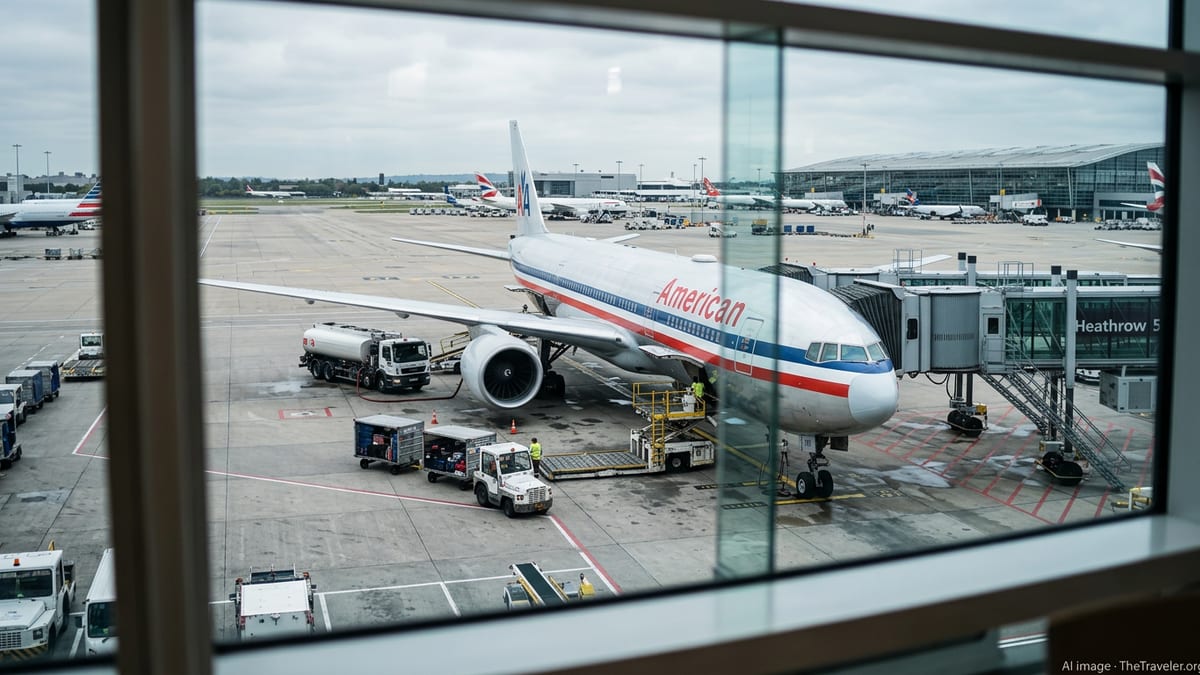
Report the missing bag before you leave baggage reclaim
Current guidance from Heathrow Airport and the UK Civil Aviation Authority makes one point clear: if your suitcase does not appear on the carousel, you should report it before you walk out of the baggage reclaim hall. Publicly available information from Heathrow explains that baggage handling is managed by airlines and their ground agents, and that most carriers have a dedicated desk in the reclaim area where delayed bags are logged and traced.
At the desk, staff will normally create a Property Irregularity Report, often called a PIR, and ask for your baggage tag number, flight details and a physical description of the suitcase. This report is the formal record that your bag was delayed at Heathrow and will be crucial if you later claim expenses or compensation through the airline, your travel insurer or a card provider.
If you realize after exiting that your bag never arrived, Heathrow’s own advice is not to attempt to re-enter the secure area but to contact your airline or its handling agent directly. Phones and information points in the arrivals halls can connect passengers to baggage services teams who can check whether a bag is still on the system at Heathrow or was misrouted in transit.
Travel analysts note that delays are especially common for transfer passengers, where bags must clear tight connection windows between terminals or airlines. That pattern has been reinforced in recent disruptions affecting major carriers at Heathrow, which left thousands of suitcases temporarily stranded in back-of-house baggage halls.
Give complete contact details and track progress
Once a delayed bag is reported, airline procedures usually involve tracing it across the global baggage system and arranging delivery to the address you provide. Heathrow’s public guidance stresses the importance of handing over accurate contact details, including a local mobile number and where you will be staying for the next several days, so that couriers can deliver once the suitcase surfaces.
Most large airlines serving Heathrow provide online baggage-tracing portals where passengers can check the status of missing luggage using the PIR reference. Industry reports indicate that bags which have simply missed a connection are often delivered within 24 to 72 hours, although complex itineraries or ongoing system disruptions can extend that timeline.
In recent months, travelers have increasingly used tracking devices such as AirTags to monitor bags left behind in Heathrow’s terminals. Public accounts shared on consumer forums describe tags showing luggage sitting in Terminal 3 or Terminal 5 while airlines worked through backlogs after system failures. Even when trackers reveal where a bag is, experts advise continuing to work through the airline’s official tracing process, as access to secure baggage stores is tightly controlled.
Heathrow directs passengers not to return to the airport to search for a bag unless specifically instructed by their airline. When bags are found and processed, delivery firms contracted by carriers typically transport them to the passenger’s hotel or home without additional charge.
Buy essentials and keep every receipt
While a bag is delayed at Heathrow, many travelers will need to replace basic items such as toiletries, a change of clothes or work equipment. Guidance from the UK Civil Aviation Authority and consumer-rights specialists indicates that airlines can be liable for “reasonable expenses” caused by delayed luggage under international rules governing air travel.
Those rules are set out in the Montreal Convention, which caps an airline’s liability for lost, damaged or delayed baggage at a level denominated in Special Drawing Rights, a currency unit used by the International Monetary Fund. Recent summaries of the convention and its revised limits indicate that the current cap for baggage claims is set at just over 1,200 Special Drawing Rights per passenger, which typically equates to around £1,300 to £1,400 depending on exchange rates.
In practice, airlines often reimburse modest, necessary purchases such as underwear, basic clothing and toiletries for the period before a suitcase is returned. Travel law specialists note that high-value discretionary shopping, such as designer outfits or luxury accessories, is more likely to be challenged, and passengers may be offered only partial reimbursement or have claims refused if costs are judged excessive.
Passengers are advised to keep all receipts, photograph key items and check their airline’s published conditions of carriage for any daily spending limits or timeframes for submitting claims. Travel insurance policies, especially those bought in the United States and Europe, may offer additional cover for delayed baggage at Heathrow, but usually require evidence that a PIR was filed and that a claim was first made to the airline.
Understand when a delayed bag becomes legally “lost”
According to widely cited interpretations of the Montreal Convention and consumer guidance from European and UK regulators, a bag that has not been delivered after 21 days is generally treated as lost, even if it is later found. At that point, the focus of any claim usually shifts from emergency purchases to the value of the items that were in the suitcase.
Airlines typically ask passengers to complete a detailed inventory of the bag’s contents, with approximate purchase dates and values. Under the liability rules, carriers are responsible for proven financial loss up to the convention’s limit, but not for purely sentimental value. Receipts or bank statements can strengthen a claim, though in practice many passengers rely on sworn declarations or approximate valuations for older items.
Legal commentary on recent cases indicates that airlines may scrutinize high-value claims closely, particularly where passengers have packed costly electronics, jewellery or cash in checked baggage, which most conditions of carriage specifically discourage. In such circumstances, some carriers argue that liability should be reduced, pointing to contractual terms that recommend keeping valuables in cabin bags.
If a passenger is dissatisfied with an airline’s handling of a baggage claim linked to Heathrow, the next steps often involve the airline’s internal complaints process, followed by referral to an alternative dispute resolution body or ombudsman where available. The UK Civil Aviation Authority operates a Passenger Advice and Complaints Team that can review certain disputes once the airline’s own process has been completed.
Know your rights if wider disruption is involved
Recent operational challenges at Heathrow have underlined how easily baggage problems can be tied to wider disruption such as flight delays, cancellations or technical failures. Separate from Montreal Convention rules on baggage, UK law incorporates a version of the former European Union Regulation 261, which can entitle passengers to compensation and care when flights are heavily delayed or cancelled.
Current UK guidance explains that, for eligible flights departing a UK airport or operated by a UK or EU airline into the country, passengers may have rights to meals, hotel accommodation and fixed-sum compensation when long delays are within the airline’s control. These protections apply to passengers, not to checked bags directly, but they can help offset costs when a disrupted schedule and delayed luggage are part of the same incident at Heathrow.
Consumer advocates stress that passengers should treat each aspect of a disrupted journey separately. A traveler whose bag is delayed at Heathrow after a missed connection, for example, may have a baggage claim under the Montreal Convention, a separate delay or cancellation claim under UK rules, and a further claim under their travel insurance policy. Each route has its own time limits, documentation requirements and potential payouts.
Specialist travel-law firms and passenger-rights organizations recommend that anyone affected by serious baggage disruption at Heathrow keep a written timeline, preserve boarding passes, baggage tags and PIR references, and act quickly if an airline refuses or limits payment. Time limits for bringing formal legal claims under the Montreal Convention can be as short as two years from the date of arrival, so delayed action may close off avenues for redress.