


More news on this day
Flight delays and weight restrictions tied to extreme heat are expected to become increasingly common as global temperatures rise, complicating airline operations and travel plans on some of the world’s busiest routes.
Get the latest news straight to your inbox!
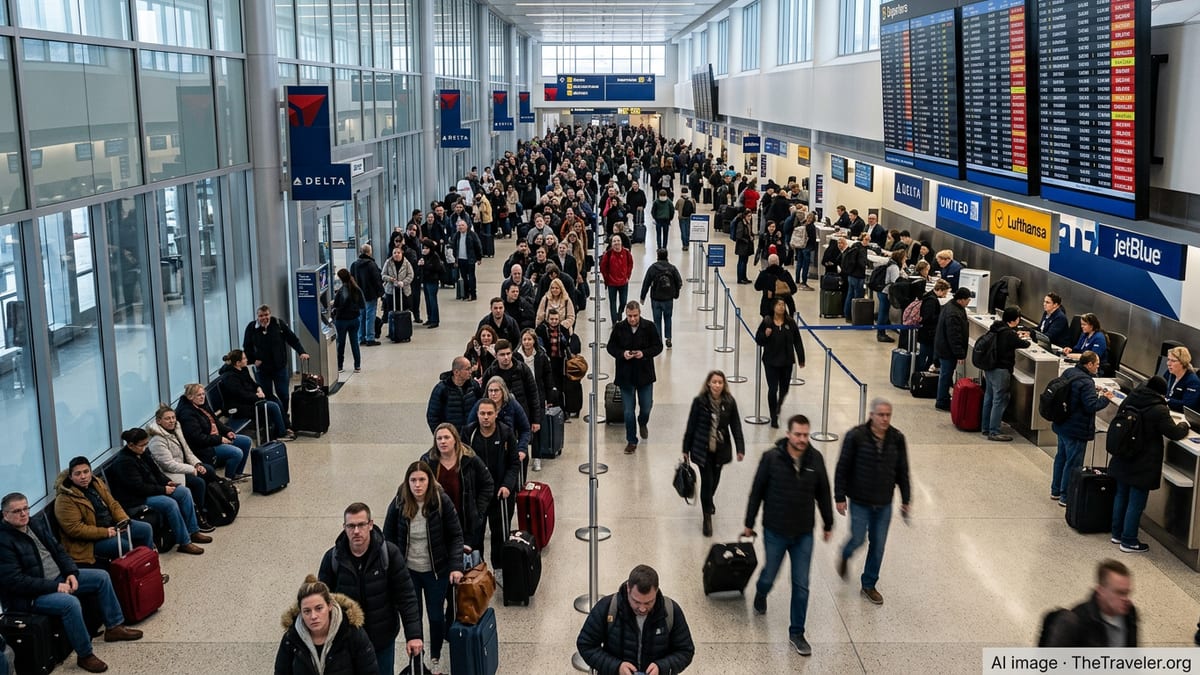
Hotter Days, Thinner Air and Reduced Aircraft Performance
Commercial jets are designed and certified using performance data that assume a standard atmosphere, with moderate temperatures at sea level. As air heats up, it becomes less dense, meaning wings generate less lift and engines produce less thrust at a given speed. To compensate, aircraft need longer runways, lighter loads or both. At landlocked or high-altitude airports, where runways and surrounding terrain already limit performance, this margin is shrinking.
Federal Aviation Administration material on performance planning notes that higher temperature effectively raises “density altitude,” requiring longer takeoff rolls and reducing climb capability. Airlines and pilots must therefore adjust for heat when calculating safe departure weights, a process that can result in last-minute payload cuts, particularly during afternoon departures in summer.
Recent peer-reviewed studies show that this is not just a theoretical concern. Research examining mid-century climate scenarios for major airports in North America, Europe and Asia projects that a growing share of summer flights will face weight restrictions during heat waves, especially for fully booked, long-haul services that are closest to their performance limits.
One widely cited analysis of 19 major airports found that by the middle of the century, between 10 percent and 30 percent of flights operating during the hottest parts of the day may require some level of payload reduction on particularly warm days, typically affecting between 0.5 percent and 4 percent of a flight’s possible payload and fuel. While individual restrictions are often small, their cumulative impact on airlines’ costs and schedules could be substantial.
Recent Heat Waves Offer a Glimpse of the Future
In recent summers, extreme temperatures in cities such as Phoenix, Las Vegas, Denver and parts of southern Europe have illustrated how heat can disrupt air travel. Publicly available weather records and news coverage show that when temperatures climb well above 100 degrees Fahrenheit, some operators have had to delay flights or remove passengers, baggage or cargo to maintain safe takeoff performance.
Reports from Phoenix Sky Harbor International Airport indicate that the city has averaged more than forty days per year at or above 110 degrees Fahrenheit since 2020, a sharp increase compared with past decades. During severe heat spells, several flights in the region have faced operational limits, with some travelers rebooked on later departures when cooler evening temperatures allowed heavier takeoff weights.
Similar patterns have been reported at Denver International Airport and at busy hubs in southern Europe and the Middle East. Afternoon departures are particularly vulnerable, because they coincide with both peak daytime temperatures and strong demand from connecting traffic. Shorter runways at some older metropolitan airports also leave less room to accelerate to higher speeds needed in thinner air.
Global climate assessments project that heat waves will become more frequent, intense and prolonged through the middle and latter parts of this century. As a result, the kinds of constraints seen sporadically over the past decade are expected to appear more often, and in more locations, during peak travel seasons.
Climate Studies Point to Growing Operational Risk
Beyond individual episodes, a growing body of academic research has quantified how climate change may reshape day-to-day airport operations. Recent climate risk assessments and aviation-focused studies have modeled temperature changes across multiple warming scenarios, then translated those projections into changes in takeoff distances and maximum allowable aircraft weights.
One study focusing on European airports projected that average takeoff distances during summer could increase by several percent by late century, even under moderate emissions scenarios. Another analysis examining Chinese airports under 1.5-degree and 2-degree warming pathways found that hotter conditions would reduce allowable takeoff weights, with the most pronounced impacts at airports that already operate near their performance margins.
System-level reviews of climate adaptation in aviation suggest that heat-related constraints may push airlines to alter schedules, favoring early morning or late evening departures during the hottest months. Network modeling work published in transportation journals indicates that by mid-century, the additional fuel burn, aircraft swaps, missed connections and passenger re-accommodation linked to more frequent heat disruptions could increase daily recovery costs for airlines by around one-quarter to nearly one-half compared with recent baselines.
These studies highlight that while individual payload reductions may appear modest, their ripple effects across interconnected networks can be significant, especially when combined with other climate-driven disruptions such as more intense storms and shifting wind patterns.
How Airlines and Airports Are Adapting
In response to mounting evidence, parts of the aviation sector are beginning to factor extreme heat into long-term planning. Publicly available airport design and certification guidance already require performance testing across a range of temperature conditions, but infrastructure built decades ago did not anticipate today’s rate of warming. New or expanded runways, where feasible, may be designed longer to preserve performance margins as typical summer temperatures rise.
Some carriers are adjusting schedules on their most heat-sensitive routes, favoring departures at cooler times of day during peak summer months. This approach is already visible in certain desert and tropical destinations, where early-morning long-haul departures have become more common. Airlines are also reviewing fleet mix decisions, with some analysts suggesting that newer aircraft types with more efficient engines and higher certified takeoff weights could offer greater resilience to hot-weather constraints.
At the same time, airports and regulators are paying closer attention to heat impacts on ground infrastructure and staff. High temperatures can soften runway and taxiway surfaces, increase cooling loads in terminals and put ramp workers at greater risk of heat stress. Industry reviews suggest that additional shade structures, improved cooling systems and revised shift patterns for ground crews may become increasingly important components of airport resilience strategies.
While these adaptations can reduce some of the risk, they also involve substantial investment. Smaller regional airports and carriers with limited resources may find it more difficult to upgrade facilities or overhaul schedules quickly, potentially widening disparities in how different parts of the air transport system experience climate-related disruptions.
What Travelers Can Expect
For passengers, the most visible consequences of increasing extreme heat will be more frequent, and sometimes less predictable, disruptions on very hot days. These may take the form of delayed departures while crews recalculate performance, requests for volunteers to take later flights, or occasional mandatory removal of passengers or baggage when the aircraft cannot safely depart at its planned weight.
Publicly available guidance from aviation regulators emphasizes that safety margins cannot be compromised, which means that when temperature thresholds are exceeded, operational decisions will prioritize performance calculations over schedule convenience. Travelers on mid-day summer flights from hot or high-elevation airports, particularly on smaller regional jets or heavily loaded long-haul services, are most likely to experience such measures.
Experts note that individual travelers can take limited but practical steps, such as opting for early-morning or late-night departures from known hot-weather hubs when schedules allow, and allowing extra connection time during peak summer months. However, the broader trend is driven by systemic climate factors that lie beyond individual control.
As global temperatures continue to climb, the intersection of aviation performance limits and extreme heat is expected to move from a niche operational concern to a regular feature of the summer travel landscape. For the industry, that means integrating climate projections into fleet, infrastructure and scheduling decisions. For travelers, it likely means adjusting expectations around reliability and timing when flying through the world’s emerging hot spots.