

More news on this day
Rail passengers across parts of the United Kingdom are being warned to delay or avoid non essential journeys this week as an intense heatwave triggers speed restrictions, reduced timetables and the risk of severe disruption on key routes.
Get the latest news straight to your inbox!
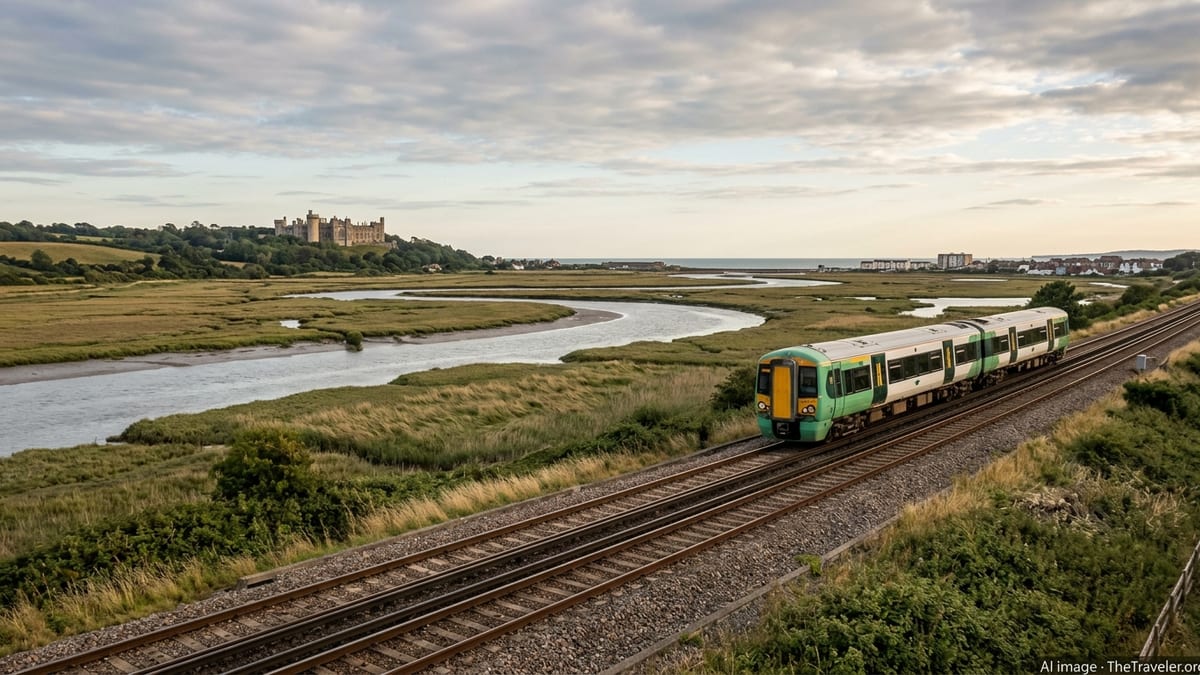
Red Heat Alerts Put Rail Network Under Strain
Publicly available information from the Met Office and other agencies shows that a rare red extreme heat warning now covers large areas of central and southern England, with temperatures forecast to approach or exceed 40 degrees Celsius on Wednesday and Thursday. The alert, in place through at least 25 June, signals a risk to life and a high likelihood of disruption to transport and other critical infrastructure.
Reports indicate that rail operators and infrastructure managers have activated extreme weather plans in response. Network-wide assessments point to higher than usual risks of track buckling, overhead line failures and signal problems as rails and equipment expand in the heat. As a result, passengers are being urged to check journey planners frequently and to be prepared for cancellations at short notice.
Regional updates from local authorities in London and the South East describe expected delays and cancellations across rail and air travel, along with wider disruption to daily life as the heatwave intensifies. Health agencies have issued parallel red heat health alerts, advising people to limit time in the sun, stay hydrated and reconsider non essential travel during the hottest parts of the day.
“Do Not Travel” and Reduced Service Messages
According to published coverage from UK and European outlets, several long distance and commuter operators are now advising passengers to travel only if essential on the hottest days of the week. National Rail guidance urges customers to avoid journeys where possible, warning that services which do run are likely to be busier than normal and subject to slower journeys due to heat related speed restrictions.
Media reports focused on London Euston indicate that services on some key intercity routes to and from the capital are being cut back in advance, with operators planning reduced timetables rather than cancelling trains at the last minute. Similar measures are described on lines in the Midlands, South Wales and along parts of the East Coast corridor, where red and amber warnings overlap.
In mainland Europe, reports from outlets such as Euronews describe parallel actions, including cancelled cross Channel services and slower timetables in the Paris region, where one in ten suburban trains has reportedly been withdrawn to protect overheating infrastructure. These developments highlight how the current heat event is affecting an interconnected network of rail services used by both domestic and international passengers.
Why High Temperatures Disrupt Train Services
Technical guidance from rail infrastructure managers explains that steel rails can reach temperatures 15 to 20 degrees higher than the surrounding air. When thermometers climb into the high 30s or low 40s, the rail temperature can therefore exceed the design limits assumed when many lines were laid, increasing the risk of rails expanding and buckling out of alignment.
Network Rail and other operators outline that to manage this risk, temporary speed restrictions are often imposed so that trains exert less force on heated rails and drivers have more time to react to potential faults. Overhead power lines can also sag in the heat, requiring slower running to reduce the chance of damage. These preventative measures help keep services safe but inevitably lengthen journey times and reduce the number of trains that can run.
Recent commentary from transport analysts, as summarised in specialist industry reports, notes that the current heatwave is again exposing the legacy of infrastructure built for a cooler climate. Concrete sleepers, ballast, signalling systems and station buildings are all tested by more frequent extremes, prompting renewed calls for accelerated investment in climate resilience across the rail network.
Advice for Passengers Planning to Travel
Based on publicly available travel advice, anyone who must travel by train during the heatwave is urged to plan carefully and to build in extra time. Journey planners and live departure boards should be checked both before leaving home and again on arrival at the station, as timetables may change at short notice while conditions evolve.
Guidance shared by National Rail and multiple operators recommends that passengers carry plenty of water, wear light clothing, and keep essential medication and chargers easily accessible in case of extended delays. Travellers are also advised to remain on board if a train becomes stranded, as tracks and adjacent infrastructure may remain live even when services are halted.
Consumer information services indicate that many operators are offering additional flexibility, such as allowing tickets to be used on alternative days or earlier and later services to help passengers avoid the hottest periods. Those with advance tickets are encouraged to consult operator specific guidance, as arrangements can differ between routes and companies.
Heatwave Highlights Long Term Rail Resilience Challenge
Beyond the immediate disruption, the current episode is adding to a growing body of evidence that European rail systems are increasingly exposed to extreme heat. A recent report from the EU Agency for Railways on climate resilience argues that expanding heatwaves, intense rainfall events and other climate related hazards will require substantial upgrades to keep rail travel reliable.
Transport commentators note that rail is often promoted as a lower carbon alternative to car and air travel, yet its infrastructure must itself be adapted to the changing climate if it is to remain a dependable backbone for sustainable mobility. Proposals discussed in policy papers include revising design standards for new track and signalling, retrofitting vulnerable sections of line, and expanding real time monitoring of rail temperatures.
For now, passengers across England, Wales and parts of mainland Europe are being asked to navigate another period of reduced and slower services as temperatures climb. The experience is likely to feed into broader debates about how quickly railways can be reinforced for a future in which extreme heat is expected to become a far more regular test of the system.