


Landing at Ezeiza International Airport is many travelers’ first encounter with Argentina, and the next big question is always the same: what is the best way to reach central Buenos Aires? The airport sits over 30 kilometers from downtown, and you will find a mix of official taxis, ride-hailing cars, shuttle buses, and public buses competing for your attention. This guide walks you through each option, with real-world prices, typical travel times, safety considerations, and recommendations tailored to popular hotel areas such as Microcentro, Puerto Madero, Recoleta, Palermo, and San Telmo.
Get the latest updates straight to your inbox!
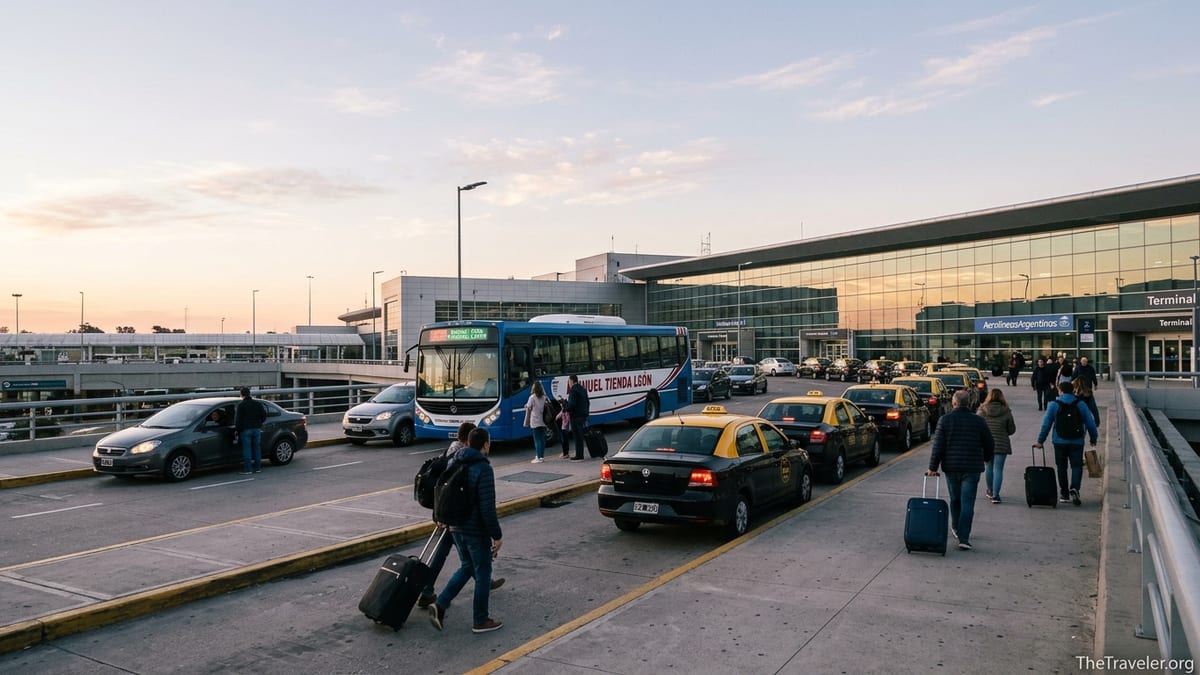
Understanding the Route from Ezeiza to Buenos Aires
Ezeiza International Airport, officially Ministro Pistarini, lies to the southwest of Buenos Aires in the province of Buenos Aires, roughly 32 kilometers from the Obelisco on Avenida 9 de Julio, which is a convenient reference point for the city center. Most road transfers into town use the Riccheri highway and then connect to the city’s expressways or major avenues before dropping you in central neighborhoods like Microcentro or Puerto Madero. On a clear day with light traffic this journey can take around 35 to 45 minutes by car. At peak hours or during heavy rain it can stretch to an hour or more, which is important to factor in if you have time-sensitive plans such as dinner reservations or a connecting domestic flight from Aeroparque.
Unlike many major capitals, Buenos Aires does not yet have a metro or train link from Ezeiza into the city. That means all current options rely on road transport: taxis, prebooked private transfers, ride-hailing services, shuttle buses like Manuel Tienda León, and public buses such as Línea 8. Each of these has its own balance of cost, comfort, and convenience. For instance, a solo backpacker heading to a hostel near Plaza de Mayo might happily spend over an hour on a cheap city bus, while a family of four with suitcases going to a Palermo Airbnb will almost always prefer a taxi, ride-hailing car, or private van.
Most international visitors stay in a fairly compact set of neighborhoods: Microcentro around Plaza de Mayo and the Obelisco, the waterfront district of Puerto Madero, the elegant avenues of Recoleta, the restaurant-packed streets of Palermo, and the historic cobblestones of San Telmo. The best transfer option can change slightly depending on where you are staying. Puerto Madero hotels, for example, are especially well served by shuttle buses that terminate near the docks, while Recoleta and Palermo are often better reached by direct car transfer or by combining a shuttle with a short city taxi or rideshare.
Before you choose your transfer, keep the wider context in mind. Argentina’s economy and currency are volatile, and prices in Argentine pesos change frequently. Even so, the basic hierarchy of options has remained steady in recent months: official taxis and private transfers sit at the upper end of the price spectrum but offer the greatest door-to-door convenience, ride-hailing services like Uber and Cabify are usually slightly cheaper and flexible, shuttle buses like Tienda León provide a reliable mid-range solution into downtown, and city buses remain the ultra-budget but least comfortable choice.
Official Airport Taxis and City Radio Taxis
Taxi is often the first transfer that comes to mind, and at Ezeiza there are two distinct ideas people sometimes confuse. One is the network of city taxis regulated by the Buenos Aires government, with black bodies and yellow roofs that you see everywhere in town. These run on regulated meters, with published daytime and nighttime fares, and are generally safe if hailed from official ranks. The other is the set of authorized airport taxi desks and remises counters inside Ezeiza, which sell fixed-price transfers into the city. Those fixed-price rides are usually calculated according to distance zones and tolls, not by the meter. For a typical journey from Ezeiza to central Buenos Aires, a licensed airport taxi or remise tends to cost the equivalent of a mid-range restaurant meal for two, with a surcharge at night and occasional adjustments as fuel costs change.
From a traveler’s point of view, the safest way to take a taxi from Ezeiza is not to follow unofficial touts in the arrivals hall but to go directly to the official taxi or remise counters just after customs or at the clearly signed desks near the exits. There you pay or register your ride, receive a printed slip and a vehicle number, and then are escorted or directed to a designated pick-up lane outside. The driver already knows your destination, and you do not pay anyone who approaches you in the hall. This process significantly reduces the risk of scams such as drivers running unregulated meters or proposing “cash-only” rides at inflated rates.
Travelers staying in Puerto Madero or Microcentro typically see ride times of 40 to 50 minutes by taxi in normal conditions. For Recoleta and Palermo, add another 10 to 15 minutes depending on the exact address and traffic on Avenida 9 de Julio or Avenida Libertador. As a practical example, a couple arriving mid-morning and heading to a hotel near the Obelisco might pay a fixed fare that, converted at informal market exchange rates, feels inexpensive by North American or European standards yet remains one of the pricier local options. For families or groups of three or four with large luggage, however, that single taxi fare often works out cheaper per person than buying individual shuttle bus tickets.
City radio taxis come into play mostly for your return journey from the city to Ezeiza or when connecting from neighborhoods not easily reached by shuttles. Hotels in Recoleta and Palermo will gladly call a trusted radio taxi or remise company for you, quoting an approximate price for the airport run based on current tariffs. Many locals use app-connected radio taxi companies that show the fare on screen and allow limited pre-booking, though after midnight you should always allow extra time. Because luggage space can be tight in standard sedans, groups carrying golf bags, musical instruments, or extra suitcases should request a larger vehicle class or two separate taxis.
Private Transfers: Comfort and Predictability
Private airport transfers, often booked through international platforms or directly with local companies, are an increasingly popular choice for travelers who prioritize comfort and predictability. These services typically quote a fixed price in foreign currency for a door-to-door ride, with options ranging from sedans for one to three passengers to minivans or minibuses for larger groups. A common scenario is a group of four friends flying from Europe, each with a checked suitcase and a carry-on, heading to a Palermo Soho apartment. Booking a private van in advance means a driver will be waiting with a sign in the arrivals hall, help with bags, and drive straight to the apartment without any payment discussion on arrival.
In the Buenos Aires market, private transfers from Ezeiza to central neighborhoods usually price slightly above an official taxi for one or two passengers but become competitive or better value as group size increases. Some operators now bundle extras such as a brief orientation chat in English, a stop at an ATM, or a short supermarket stop on the way to your accommodation. Given the fast-changing peso environment, you will often see rates quoted in US dollars or euros, with payment either online in advance by card or in cash on arrival. For many visitors this removes the stress of figuring out local fares or exchanging money immediately after landing.
Another advantage of private transfers lies in reliability for late-night or early-morning arrivals and for families with small children. A pre-arranged driver tracking your flight means you are not relying on finding a free city taxi or waiting in a rideshare pick-up lane at 3 a.m. Travelers with bulky sports gear such as surfboards or multiple suitcases also tend to find minivan transfers worthwhile, especially when hotels in neighborhoods like Recoleta or San Telmo are on narrow one-way streets where larger buses cannot stop comfortably.
For hotel-area-specific recommendations, private transfers shine for Palermo and Recoleta, which are a bit farther from the shuttle drop-off points than Microcentro and Puerto Madero. A typical pattern is to use a private transfer for the inbound journey when you are tired and loaded with luggage, then experiment with cheaper options or ride-hailing for the return leg once you are familiar with the city. If your itinerary includes a same-day connection from Ezeiza to Aeroparque for a domestic flight to Patagonia or the northwest, many transfer companies also sell combined airport-to-airport packages that factor typical traffic conditions into their timing.
Uber, Cabify and Other Ride-Hailing Apps
Ride-hailing apps such as Uber and Cabify now operate widely in Buenos Aires, and many visitors use them between Ezeiza and the city. Local travelers often recommend Cabify for its strong presence and relatively consistent service, while Uber remains more internationally familiar. Both connect you with drivers in regular cars, and fares are usually quoted in pesos within the app. In practice, prices fluctuate depending on time of day, traffic, and surge demand, but many travelers report that app rides from Ezeiza to central neighborhoods undercut official taxi desks by a noticeable margin, especially at off-peak hours.
The pick-up process from Ezeiza by rideshare is slightly more involved than a simple taxi rank. Apps typically direct you to specific meeting points outside the terminals, for example near particular doors or parking areas signposted for rideshare services. Because local regulations have been evolving, some drivers may ask you to sit in the front seat so the ride appears more like a private pickup than a commercial service, a practice visitors on recent trips have described. To reduce confusion, it is worth activating roaming or buying an eSIM that works on arrival so you can message your driver in the app and share your exact location.
A real-world example helps illustrate when ride-hailing makes sense. Imagine two friends arriving on a weekday afternoon and heading to a boutique hotel in Recoleta. The app may show an estimated fare equivalent to a casual lunch per person, significantly cheaper than a private transfer and slightly below the airport taxi counters. With moderate traffic, they might be in Recoleta in around 50 minutes. If they were instead heading to an address deep in Palermo Hollywood at rush hour, the travel time might stretch closer to an hour, but the app still offers the convenience of drop-off at a specific door on a residential street where few taxis queue.
For safety, the standard ride-hailing precautions apply: confirm the license plate and driver name in the app, avoid accepting offers from drivers outside the platform, share your trip with a friend using in-app features, and keep valuables out of sight. Because payment is usually processed in-app, you avoid carrying large amounts of cash or worrying about change. However, due to the country’s inflation and exchange-rate dynamics, make sure you understand whether your card will be charged at the official exchange rate or benefit from any special conversion scheme that may apply to foreign cardholders.
Manuel Tienda León and Other Shuttle Services
Manuel Tienda León is the best-known shuttle operator linking Ezeiza with Buenos Aires. The company runs a mix of large coaches, mid-size buses, and vans on scheduled services between the airport and a central terminal close to Puerto Madero and the downtown area. Buses usually run throughout the day at intervals that can be as frequent as every 30 minutes at busier times. Tickets can be bought at desks in the arrivals area or online in advance. As of recent months, travelers report that a one-way adult fare from Ezeiza into the city costs roughly the price of a simple café breakfast in a tourist neighborhood, while children’s fares and special offers occasionally bring costs down for families.
In practice, Tienda León works very well if you are staying in or near Microcentro or Puerto Madero. Many business hotels along Avenida Cordoba, Avenida Corrientes, and in the streets around Plaza San Martín are a short taxi or rideshare hop away from the downtown terminal. For instance, a solo traveler landing in the morning might ride the Tienda León bus into town in around 50 to 60 minutes and then take a 10-minute city taxi or rideshare to a hotel near the Obelisco, still spending less overall than a direct taxi from the airport. If your hotel is within walking distance of the shuttle terminal and you have manageable luggage, you might not even need the final hop.
The shuttle becomes slightly less attractive for areas like Palermo and parts of Recoleta because you inevitably need a second transfer leg. Consider a couple with two large suitcases heading to Palermo Soho. They might ride Tienda León to the downtown terminal, then order a Cabify or city taxi from there to Palermo. Provided they are comfortable handling luggage between vehicles, this two-step approach can be a good balance of cost and safety. For San Telmo, which lies just south of the city center, a short taxi or even a longer walk from the shuttle terminal is possible, though you should be cautious with valuables in crowded areas, especially after dark.
One practical tip is to check the schedule of the last bus of the day, especially if you are arriving late at night. While Ezeiza operates 24 hours, shuttle frequencies can thin out in the late evening. In the event of a long flight delay that pushes you past the last convenient Tienda León departure, you may need to fall back on a taxi, private transfer, or rideshare. For round trips, Tienda León also sells return tickets and in some cases combined services that link Ezeiza, the downtown terminal, and Aeroparque, which can be useful if you are connecting to domestic destinations.
Public Buses: Línea 8 and Other Colectivos
For ultra-budget travelers, public buses known locally as colectivos provide the cheapest way from Ezeiza into Buenos Aires. Several lines serve the airport vicinity, but the most practical for visitors heading to the city center is Línea 8, whose semi-rapid service links Ezeiza with downtown Buenos Aires and Aeroparque. Recent local sources describe a SUBE-card fare that is a fraction of the cost of even the cheapest shuttle bus, often comparable to a metro ticket in large cities and well under a US dollar at informal exchange rates. The flip side is that travel time can stretch to 60 to 90 minutes or more, and comfort is basic.
To use Línea 8, you must pay with a SUBE contactless card, which is the same card used across Buenos Aires buses, metro, and trains. You tap the card at the onboard reader when boarding and tell the driver your destination zone. For travelers arriving with no pesos and no SUBE card, this presents a complication. Buying a SUBE at Ezeiza is not always straightforward, as availability at airport kiosks fluctuates, and you also need to load credit onto the card. Because of this, public buses from the airport are best suited to those who already have a loaded SUBE from previous time in Argentina or those traveling light who are comfortable hunting down a card before boarding.
Safety on Línea 8 and other colectivos is similar to that of big-city buses elsewhere: during the day they are widely used by locals and can feel reasonably safe, but you should keep backpacks closed, phones out of sight near open windows, and luggage as close to you as possible. The buses are not designed for large suitcases, and you may need to stand or maneuver bags through narrow aisles. A solo backpacker staying in San Telmo or Microcentro might tolerate the extra hassle in exchange for significant savings, but a couple with rolling suitcases coming off a long-haul flight is likely to find a shuttle, taxi, or rideshare far more comfortable.
One real-world use case is a traveler on a long layover who wants to save money and does not mind a slower journey. They might board the Línea 8 semi-rapid bus at Ezeiza, ride to Plaza de Mayo or Avenida de Mayo, walk around the historic center for a few hours, then catch the same bus or another colectivo back towards the airport. Even here, time margins are important. Traffic on approach to the city can be heavy at rush hour, and the bus stops more frequently than a shuttle or car. For first-time visitors, especially arriving at night, most local advice still favors Tienda León, taxis, or ride-hailing over public buses.
Comparing Cost, Safety and Luggage Handling
Looking across the main options, clear patterns emerge in terms of cost. Public buses such as Línea 8 sit at the very bottom of the price spectrum, costing little more than a metro ticket in many countries. Shuttle services like Tienda León occupy the budget-to-mid range, with fares that remain affordable even for solo travelers and excellent value for couples. Ride-hailing apps like Uber and Cabify usually land in the mid-range, often cheaper than official airport taxis but more expensive than shuttles, particularly when surge pricing is active. Private transfers and official fixed-price taxis from inside the terminal tend to be the most expensive per ride, though they can still be attractive when split among three or four passengers.
Safety considerations push some options ahead of others depending on time of day and traveler profile. For late-night arrivals, prebooked private transfers, rides from well-known shuttle operators, or official airport taxis are generally preferred. They minimize walking outside with luggage and avoid the need to navigate unfamiliar streets or bus stops in the dark. Ride-hailing can also be safe, provided you follow standard precautions and meet the driver in well-lit areas. Public buses are widely used but can be crowded, and standing with suitcases near doors makes you more vulnerable to opportunistic theft.
Luggage handling is another major differentiator. Private transfers, taxis, and rideshares are fundamentally door-to-door and flexible, accommodating large suitcases and special items better than buses. Shuttle services like Tienda León are designed with travelers in mind, offering under-floor luggage storage and overhead racks, but they still require you to manage bags between the bus and your final transport in the city. Public buses are the least luggage-friendly, with limited space and no dedicated baggage holds; if you have more than one mid-sized bag, boarding and disembarking can be stressful.
For a practical comparison, imagine three different travelers arriving on the same morning flight. A solo backpacker staying at a hostel near Plaza de Mayo might accept the slow but ultra-cheap Línea 8, spending as little as possible on transport. A couple with rolling suitcases booked into a waterfront hotel in Puerto Madero could find Tienda León ideal: sit back on the bus, then walk or take a quick taxi to the hotel. A family of four headed to a Palermo Airbnb, juggling two large suitcases and smaller bags, would likely find a private minivan transfer or two ride-hailing cars the most efficient, even if it costs more than a shuttle and bus combination.
Best Options by Hotel Area
Where you are staying in Buenos Aires plays a big role in which transfer makes the most sense. For Microcentro, including areas around the Obelisco, Plaza de Mayo, and Florida Street, Tienda León is a standout option because its terminal sits close to the downtown core. From there it is a short taxi, rideshare, or even a 15-minute walk to many business and mid-range hotels. Official taxis or ride-hailing direct from Ezeiza are convenient alternatives, particularly if you are arriving late at night or prefer not to change vehicles with luggage.
Puerto Madero, home to many high-end international hotels along the renovated docks, is similarly well served by the shuttle. In several cases, hotels are within walking distance of the Tienda León terminal, making the journey almost as convenient as a direct taxi at a lower cost. For guests at luxury properties along the water who value comfort and service, arranging a private transfer through the hotel is also common; concierges typically work with trusted car services and can add the cost to your room bill.
Recoleta and Palermo, two of the city’s most popular residential neighborhoods for visitors, are a bit farther from downtown. Here, taxis, private transfers, and ride-hailing apps generally win out. From Ezeiza a rideshare to a Recoleta hotel near the famous cemetery might take around 50 minutes in moderate traffic. A private transfer offering a meet-and-greet service in English can be especially reassuring for first-time visitors. For Palermo, with its maze of one-way streets and boutique accommodations, direct car transfers are especially convenient because they drop you exactly at your building, avoiding the need to drag suitcases several blocks from a shuttle stop.
San Telmo presents a mixed scenario. Its central location just south of Microcentro makes it accessible from the Tienda León terminal via a short taxi or even a long walk in daylight, which can be a cost-effective combination. However, the area’s older streets and nighttime quietness on some blocks mean that many travelers prefer door-to-door transfers after dark. A common pattern is to use a shuttle plus short taxi combination on arrival during the day, then arrange a direct car back to the airport on departure when you may be leaving early in the morning with all your belongings. In every neighborhood, your accommodation’s front desk or host is usually a reliable source of current local advice on which services are operating smoothly and what typical travel times look like at different hours.
The Takeaway
Choosing the best way from Ezeiza International Airport to Buenos Aires city center is less about finding a single perfect option and more about matching your budget, comfort level, luggage, and hotel location to the choices available. Public buses like Línea 8 offer the rock-bottom price for experienced, light-traveling visitors who already have SUBE cards and are comfortable navigating local routes. Manuel Tienda León occupies a sweet spot for many travelers, providing a reliable, reasonably priced connection into the heart of the city, particularly handy for Microcentro and Puerto Madero stays.
Ride-hailing apps such as Uber and Cabify, along with official taxis and private transfers, dominate the mid to upper range of the market, offering door-to-door convenience that is especially valuable for neighborhoods like Recoleta and Palermo and for travelers arriving late or carrying heavy luggage. In Argentina’s fast-changing economic climate, specific fares in pesos may shift quickly, but the relative cost ranking of options has remained similar: buses cheapest, shuttles next, rideshares often slightly cheaper than taxis, and private transfers generally the most expensive but also the most predictable.
If you are unsure which to choose, use a simple rule of thumb. For a first visit, arriving after a long-haul flight with at least one suitcase, pick either a prebooked private transfer or a reputable shuttle service like Tienda León, followed by a short taxi to your hotel if needed. Once you have settled in and understand the city’s layout, you can experiment with ride-hailing and public buses for later journeys. With realistic expectations about travel times, a bit of planning around your specific hotel area, and an eye on standard safety practices, getting from Ezeiza to Buenos Aires can be a smooth and even enjoyable start to your time in Argentina.
FAQ
Q1. What is the safest way to get from Ezeiza Airport to central Buenos Aires?
The safest options for most travelers are official airport taxis booked at the counters inside the terminal, prebooked private transfers, or the Manuel Tienda León shuttle combined with a short licensed taxi ride to your hotel. These services are regulated, well signposted, and commonly used by both locals and visitors.
Q2. How long does the transfer from Ezeiza to downtown usually take?
In normal traffic a car or shuttle ride from Ezeiza to central neighborhoods like Microcentro or Puerto Madero typically takes 40 to 60 minutes. At rush hour, in heavy rain, or when there are roadworks, the journey can take longer, so it is wise to allow at least 90 minutes if you have a connection or fixed appointment.
Q3. Are Uber and Cabify allowed to pick up passengers at Ezeiza?
Uber, Cabify and similar apps are widely used by locals for airport transfers, and many travelers successfully request rides at Ezeiza. You will usually be directed to a specific meeting point outside the terminal, and drivers may ask you to sit in the front seat to help the ride appear less like a commercial service.
Q4. Is the Manuel Tienda León shuttle a good option if my hotel is in Palermo?
The shuttle is still useful, but you will need a second leg. A common approach is to ride Tienda León into the downtown terminal, then take a taxi or rideshare from there to Palermo. This can be cheaper than a direct airport taxi but involves handling your luggage between vehicles.
Q5. Can I pay for buses and shuttles with cash, or do I need a SUBE card?
City buses like Línea 8 require a SUBE card with credit; cash is not accepted on board. Shuttle operators such as Manuel Tienda León, official taxis, and private transfers, on the other hand, allow payment in cash and often by card as well, depending on the company.
Q6. Is it safe to take the public Línea 8 bus from Ezeiza with luggage?
During the day many locals and budget travelers use Línea 8 without problems, but comfort and security are more basic than with shuttles or taxis. The bus can be crowded, there is limited space for large suitcases, and you should keep belongings close and avoid displaying valuables.
Q7. Which transfer option is best for a family with children?
For families, prebooked private transfers or official airport taxis usually work best. They offer door-to-door service, space for child seats and strollers, and minimize stress after a long flight. If your hotel is near the Tienda León terminal, the shuttle plus a short taxi can also be a good value choice.
Q8. What is the cheapest way to reach Buenos Aires city center from Ezeiza?
The cheapest option is the public bus, typically the Línea 8 service, paid with a SUBE card. The fare is extremely low by international standards, but travel is slower and less comfortable, so it is mainly recommended for experienced travelers or those on very tight budgets.
Q9. How should I choose between a taxi and a ride-hailing app from Ezeiza?
If you value simplicity and do not mind paying a bit more, an official taxi booked at the airport counters is straightforward. If you have mobile data, are comfortable using apps, and want to save money, ride-hailing services like Uber or Cabify often provide lower fares and clear price estimates before you confirm the ride.
Q10. Which transfer option is best for late-night arrivals?
For late-night landings, the most reliable and secure options are prebooked private transfers, official airport taxis, or, if schedules align, the Tienda León shuttle. Public buses run less frequently and are not ideal when arriving very late with luggage, especially if you are unfamiliar with the city.