


Landing at Buenos Aires Ezeiza International Airport can be overwhelming, especially after a long-haul flight and in an unfamiliar language. Taxis and private cars are still the most convenient way into the city, but knowing which services are official, what you should expect to pay, and how to avoid informal drivers is essential to starting your Argentina trip safely and calmly.
Get the latest updates straight to your inbox!
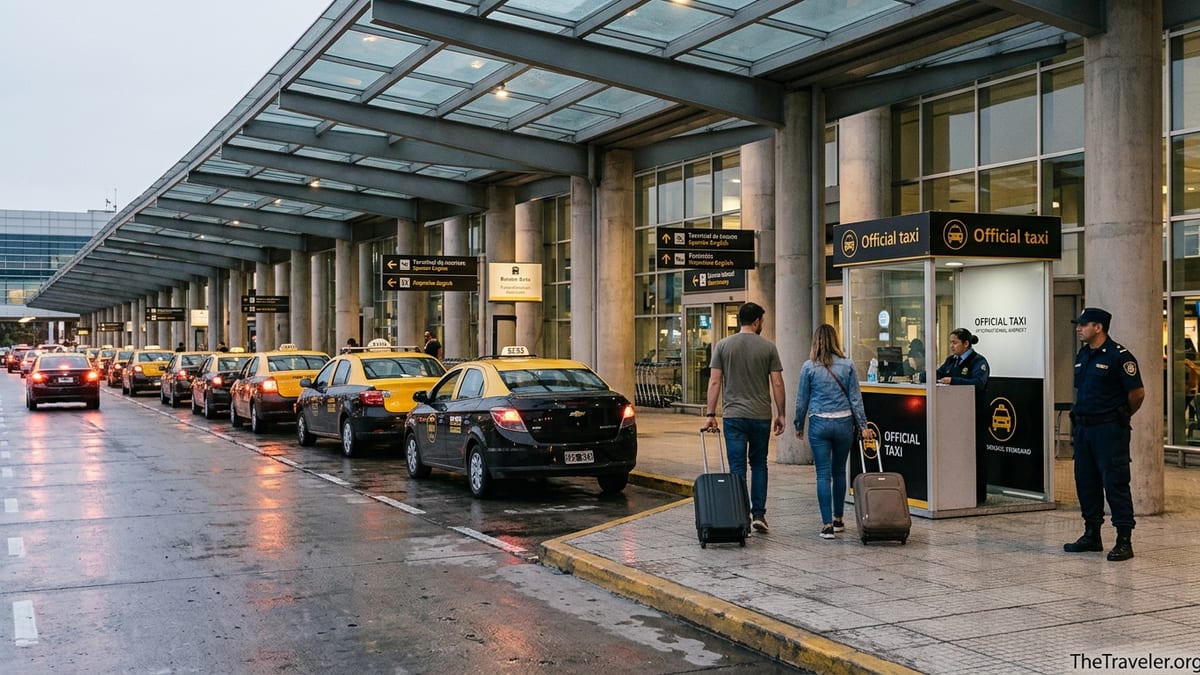
Understanding How Taxis Work at Ezeiza
Ezeiza International Airport, officially Ministro Pistarini International Airport, is about 30 to 35 kilometers from central Buenos Aires, depending on where you are staying. For most visitors, that means at least a 35 to 60 minute drive into neighborhoods such as Microcentro, Recoleta, San Telmo or Palermo, and longer during rush hour or in heavy rain.
The airport is operated by Aeropuertos Argentina, which regulates ground transport inside the terminal area. Licensed taxi and remis (car with driver) companies are allowed to have counters just after customs and in the arrivals hall, while other vehicles must pick up passengers in designated zones outside. This distinction matters because the official counters issue receipts, provide fixed or pre-quoted prices, and are subject to airport rules and inspections.
A common point of confusion for first-time visitors is the difference between taxis and remises. Taxis in Buenos Aires are metered yellow-and-black cars that can be hailed on the street in the city, although the vehicles that operate from Ezeiza belong to a specific airport taxi fleet. Remises are prebooked private cars with drivers that operate on fixed fares based on zones or neighborhoods, and they cannot circulate looking for passengers. At Ezeiza, both offer similar door-to-door services, but the way you hire and pay for them can differ.
Another fast-changing element is Argentina’s economic situation and inflation, which means fares are adjusted frequently. Rather than fixating on an exact figure you saw on a blog months ago, it is wiser to think in broad ranges and always confirm the final price directly at an official counter or inside a reputable app before accepting a ride.
Official Taxi and Remis Options Inside the Terminal
After clearing passport control and customs at Ezeiza, you will walk into the public arrivals hall. Here you will find several official transfer companies with branded booths or counters. These include airport-authorized taxi fleets and remis companies that sell rides into the city and beyond. They tend to be clustered near the exit doors and baggage carousels, and staff usually approach arriving passengers by calling out “taxi” or “remis,” but they should remain near their desks rather than roaming freely.
At these counters you typically give your destination address, the number of passengers, and how much luggage you have. The agent will quote you a fare, usually a fixed price for popular areas such as Microcentro, Puerto Madero, Recoleta or Palermo. You then pay at the desk in Argentine pesos, and in many cases by international credit or debit card. In return, you receive a printed ticket or receipt that you hand to the driver waiting outside at the corresponding stand. This process is designed to prevent on-the-spot bargaining and surprise surcharges when you reach your hotel.
Remis companies at Ezeiza often operate a similar system. You may see several brands offering private sedans, minivans and, for larger groups, vans that seat six to ten passengers. Families arriving with multiple suitcases, strollers and sports equipment often find these remis services more comfortable than a standard taxi. Because everything is agreed and prepaid at the counter, there is less risk of disputes over tolls, luggage or extra passengers mid-journey.
Visitors flying in late at night or very early in the morning generally find that at least one official counter remains open to meet arriving flights. Staff may be fewer and queues slightly longer right after multiple overnight arrivals, but you can still expect to find at least one well-marked desk inside the hall. If you are unsure which companies are official, a simple check is to look for a fixed desk with computer terminals and printed rate boards, rather than an individual walking around offering rides.
Expected Fares and How to Pay
Because Argentina experiences frequent price adjustments, taxi and remis fares from Ezeiza into Buenos Aires are best understood in ranges rather than precise numbers. As of mid 2026, many recent travelers arriving at Ezeiza and heading to central neighborhoods such as Recoleta, Microcentro or Palermo report paying the equivalent of roughly 20 to 35 US dollars for a standard car when paying in local currency at the official rate. In Argentine pesos this translates into amounts that can shift month by month, so it is normal to see different figures mentioned in online trip reports only a few weeks apart.
Some airport counters post their fares on boards showing zones like “Centro,” “Puerto Madero,” “Recoleta,” and “Palermo,” while others quote per address using a table or software. The price typically includes the driver’s time, fuel and normal tolls along the main highway into the city. Special detours or extra stops can increase the final cost. Minivans or premium cars usually cost more, often adding 30 to 60 percent above the basic sedan price, which can still be reasonable for a larger group sharing the fare.
Payment methods are another important part of planning. Official counters commonly accept Argentine pesos in cash and major credit cards. Some also accept foreign debit cards. If you have just arrived and have not yet used an ATM or exchanged money, it can be convenient to pay by card at the desk and keep your cash for smaller expenses in the city. Be aware that card payments are processed at the official exchange rate, which might differ from informal market rates you read about before traveling, but they are transparent and safer than carrying large sums of cash.
Inside the taxi or remis, drivers are accustomed to being paid in local currency if you did not prepay at the counter. If you are leaving from your hotel to return to Ezeiza, Buenos Aires yellow-and-black city taxis typically use the meter plus an additional airport supplement and tolls. In that scenario, it is sensible to ask your hotel reception for an approximate total before you leave, or to request a trusted remis company that will quote a fixed price in advance.
Staying Safe: Avoiding Informal Drivers and Common Scams
Ezeiza has improved its ground-transport controls in recent years, but like many large airports, it still attracts informal drivers who operate outside the official system. These are individuals who may approach you in the baggage hall or just outside customs, offering cheaper or faster rides, often claiming that the official taxi line is long or expensive. While some may simply be unlicensed drivers trying to make a living, others have been associated with overcharging, aggressive upselling, or at worst, unsafe behavior.
The safest practice is to ignore any unsolicited offers and head directly to a marked taxi or remis counter inside the terminal, or to the clearly signed official taxi stand outside if you already know which company you want. If someone insists on walking alongside you, politely decline and continue toward an airport employee in uniform or a booth with a visible company name and price list. Do not feel pressured to share where you are staying or show a booking on your phone to strangers who approached you first.
Reported scams involving taxis in and around Buenos Aires have included switching banknotes to claim a note is counterfeit, inflating fares for tourists unfamiliar with local money, or adding unexpected charges for luggage and night service. To reduce these risks, pay at the official counter when possible, or if you are paying the driver directly, keep a mental note of the agreed fare, ask for a printed receipt if available, and count cash carefully. If you feel uncomfortable, you can ask to be dropped at a public place near your hotel, such as a busy corner or a major hotel lobby, rather than on a dark side street.
Security also includes protecting your belongings. Keep passports, phones and wallets in interior pockets or zipped bags, not loose on the seat beside you. When loading luggage into the trunk, note how many pieces you have and watch them being placed inside. On arrival at your hotel, confirm everything is there before the driver leaves. Many visitors now keep their phones out of sight while the vehicle is stopped at traffic lights or in heavy traffic, as phone snatching through open windows can occur in big Latin American cities, including Buenos Aires.
Late-Night Arrivals and Solo Travelers
Many long-haul flights from North America and Europe land at Ezeiza late at night or in the very early hours. While this can feel daunting, official taxis, remises and ride-hailing services continue operating around the clock. In practice, late-night transfers often run more quickly because there is less traffic on the highway into the city, and drivers are used to meeting flights that arrive well after midnight.
For solo travelers and those unfamiliar with Spanish, the key is to reduce uncertainty before landing. One option is to prebook a remis or transfer service to meet you at arrivals, either through a known company recommended by your hotel or through a reputable airport transfer business. In this case, a driver usually waits with a sign showing your name and walks you directly to the car. The price is set in advance, and you typically receive contact details by email or messaging app in case of delays.
If you prefer to decide on arrival, stick to the bright, busy parts of the arrivals hall, where the official counters are located. Do not follow anyone into a side corridor or unlit parking area. When you reach your taxi or remis, check that the car is in good condition, that the driver confirms your destination and knows the neighborhood, and that license or company identification is visible inside the vehicle. Taking a quick photo of the taxi number or license plate before you get in, and sharing it with a friend or family member, is a sensible extra precaution.
Women traveling alone often report feeling safer when they either prebook with a recommended remis company or ask their accommodation to arrange a trusted driver who is used to working with international guests. Many boutique hotels and guesthouses in Palermo, San Telmo and Recoleta maintain lists of regular drivers and can send you their names and vehicle details in advance. While this may cost slightly more than shopping around on arrival, it can be a worthwhile trade-off for peace of mind when arriving in a new city at odd hours.
Using Ride-Hailing Apps and Hotel Transfers
Ride-hailing apps such as Uber and Cabify have become increasingly common in Buenos Aires, and many travelers now use them for both city rides and airport transfers. Experiences from recent visitors suggest that, when booked from Ezeiza into central neighborhoods, app rides can sometimes be cheaper than official airport taxis or remises, especially if you are paying with a foreign credit card linked to the app. However, pickup rules at airports can change, and some apps may require passengers to meet drivers in specific zones outside the main exit rather than at the closest curb.
If you plan to use a ride-hailing app, it is wise to activate mobile data or connect to airport Wi-Fi inside the terminal before stepping outside. Enter your exact hotel address, check the estimated fare, and only then request the ride. Take note of the driver’s name, car model and license plate, and verify these carefully before getting into any vehicle claiming to be your ride. If you do not see a clear match, cancel the request and try again. Avoid discussing the exact price or your accommodation details with bystanders while you wait.
Many mid-range and higher-end hotels in Buenos Aires, especially in popular areas such as Recoleta, Palermo and Puerto Madero, offer transfer services from Ezeiza. Sometimes these are provided by in-house drivers; other times the hotel partners with a trusted remis company. Booking through your hotel can cost a bit more than arranging a ride yourself, but it simplifies communication and provides a clear point of contact if anything goes wrong. For example, if your flight is delayed or your luggage is slow to arrive, you can message the hotel and they will coordinate with the driver.
Whichever method you choose, try to confirm all key details before you travel. That includes where exactly you will meet the driver, how the fare will be calculated, what payment methods are accepted, and whether tolls and airport parking are included. Keeping screenshots or written confirmations on your phone or printed out in your hand luggage can be very helpful if there is a language barrier or a misunderstanding at the curb.
Transfers Between Ezeiza and Aeroparque or Other Destinations
Some itineraries require a transfer between Ezeiza and Aeroparque Jorge Newbery, the city’s more central airport used for many domestic and regional flights. The distance between the two airports is significant and the route crosses the city, so it is important to allow ample time. Many seasoned travelers recommend at least four hours between landing at one airport and departure from the other, to account for immigration, baggage claim, potential queues at the taxi or remis stands, and city traffic.
For these airport-to-airport transfers, official taxis and remises are again the most straightforward option. You can book a car at the counters in Ezeiza or arrange a transfer in advance through a remis company or ride-hailing app. In this case, be explicit that you are going to Aeroparque and show the exact terminal information to the driver. Fares for this longer trip are naturally higher than going to central Buenos Aires, and prices fluctuate, but you should expect a noticeable jump compared with a simple Ezeiza to Palermo run.
Beyond the city, Ezeiza taxis and remises regularly serve destinations such as La Plata, the northern suburbs, or private estancias and hotels in the countryside. For example, travelers heading directly from the airport to a delta lodge in Tigre or to a polo club in the province usually book remises in advance, as these journeys are longer and can involve less straightforward routes. In such cases, agreeing the fare by email or message beforehand, and clarifying whether the price is per car or per person, avoids confusion.
Whatever your destination, building in a buffer of extra time is always wise. Protests, traffic incidents and sudden storms can all slow movement around Buenos Aires. If you need to connect to another flight or a long-distance bus, tell your driver in advance, but also be cautious about cutting it too fine. Missing a connection is usually more stressful and expensive than paying a little extra for an earlier departure.
The Takeaway
Getting from Ezeiza International Airport into Buenos Aires does not need to be stressful or unsafe, as long as you stick to official options and plan ahead. Use the airport’s authorized taxi and remis counters inside the arrivals hall, or arrange a transfer in advance with a reputable company, hotel or ride-hailing app. Expect fares to move within a broad range rather than matching an exact figure you saw online, and always confirm the final price and what it includes before accepting a ride.
Avoid unsolicited offers from drivers who approach you inside or just outside the terminal, and do not hesitate to walk away if a situation feels unclear or pressured. Protect your belongings, share basic ride details with a trusted contact, and keep your phone use discreet in traffic. For late-night arrivals and solo travelers, especially women, prebooking a transfer or using a hotel’s recommended driver can add an extra layer of reassurance.
With these simple precautions, your first journey from Ezeiza can be a straightforward and even pleasant introduction to Buenos Aires. A clear plan for that first taxi or remis ride means you can focus less on logistics and more on enjoying Argentina’s food, culture and neighborhoods as soon as you step out of the car.
FAQ
Q1. How much should I expect to pay for a taxi from Ezeiza to central Buenos Aires?
As of mid 2026, most travelers report paying the equivalent of roughly 20 to 35 US dollars in local currency for a standard car from Ezeiza to central areas like Microcentro, Recoleta or Palermo, depending on traffic, vehicle type and the exact exchange rate. Always treat this as a range and confirm the current fare at an official counter or in a ride-hailing app.
Q2. Is it safe to take a taxi from Ezeiza late at night?
Yes, using official airport taxis, remises or reputable ride-hailing apps is generally considered safe at any hour. The key is to avoid informal drivers who approach you directly, use only marked counters or pickup zones, verify the vehicle and driver details, and keep your belongings secure and out of sight when the car is stopped in traffic.
Q3. Should I book a transfer in advance or just get a taxi on arrival?
Both options work, but prebooking is often more comfortable if you arrive late at night, are traveling alone, or do not speak Spanish. An advance booking with a reputable remis company or through your hotel means a driver will be waiting with your name and the fare will be agreed beforehand. If you prefer flexibility, you can simply use an official counter in the arrivals hall when you land.
Q4. Can I pay for my airport taxi by credit card?
Many official taxi and remis counters inside Ezeiza accept major credit and debit cards, while drivers themselves usually expect cash if you did not prepay. Paying at the counter by card can be convenient if you have not yet withdrawn pesos or visited an exchange. Always ask which payment methods are accepted before confirming the service.
Q5. Are ride-hailing apps like Uber or Cabify allowed at Ezeiza?
Ride-hailing apps are widely used in Buenos Aires, and many travelers successfully use them for trips to and from Ezeiza. Pickup procedures can change, and you may need to meet your driver in a specific area outside the main exit. Always check the app for the designated meeting point, verify the car model and license plate, and be cautious of anyone claiming to be your driver without matching details.
Q6. How do I recognize official taxis in Buenos Aires?
Within the city, official taxis are typically yellow-and-black cars with a clear roof sign and license information displayed inside. At Ezeiza, airport taxi fleets may have distinctive branding but should still show company names, telephone numbers and some form of identification. Whenever possible, arrange your ride through an official counter or a recognized app rather than accepting an unmarked car.
Q7. What should I do if I feel a taxi is overcharging me?
If you suspect you are being overcharged, stay calm and ask the driver to explain the fare, including any tolls or supplements. Having an approximate price from your hotel or the airport counter in mind helps. At the end of the trip, pay what is reasonable based on what was originally agreed, request a receipt, and note the taxi’s license number. You can then raise the issue with your hotel, the taxi company or local consumer authorities.
Q8. Is it safe for women to take taxis from Ezeiza alone?
Many women travel alone from Ezeiza without problems, especially when using official taxis, remises or booked hotel transfers. Extra steps such as prebooking a driver, sharing the car’s license plate with a friend, sitting in the back seat, and keeping valuables out of sight can offer additional reassurance. Trust your instincts and do not hesitate to ask airport staff for help if anything feels off.
Q9. How much time should I allow for a transfer between Ezeiza and Aeroparque?
To comfortably connect between Ezeiza and Aeroparque Jorge Newbery, many experienced travelers recommend allowing at least four hours between flights. This accounts for immigration, baggage claim, potential lines at taxi or remis stands, city traffic and the need to check in again at the second airport. More time is advisable during peak traffic hours or in bad weather.
Q10. Can my hotel arrange a safe transfer from Ezeiza?
Yes, many hotels in Buenos Aires work with trusted drivers or remis companies and can arrange a transfer to meet you at arrivals. The hotel usually confirms the driver’s name, approximate fare and where you will meet. This service can cost a bit more than finding a ride yourself, but it streamlines communication, especially if you do not speak Spanish, and provides a clear point of contact if your flight is delayed or plans change.