


Landing at Buenos Aires Ezeiza International Airport after a long-haul flight can feel overwhelming, especially if you are worried about immigration lines, customs checks and making a connection. While wait times vary day to day, there are clear patterns and realistic benchmarks that can help you plan with confidence. This guide walks through every step of the arrival process at Ezeiza, explains typical wait times, highlights peak periods and shows how much time you should allow before catching a domestic flight or heading into the city.
Get the latest updates straight to your inbox!
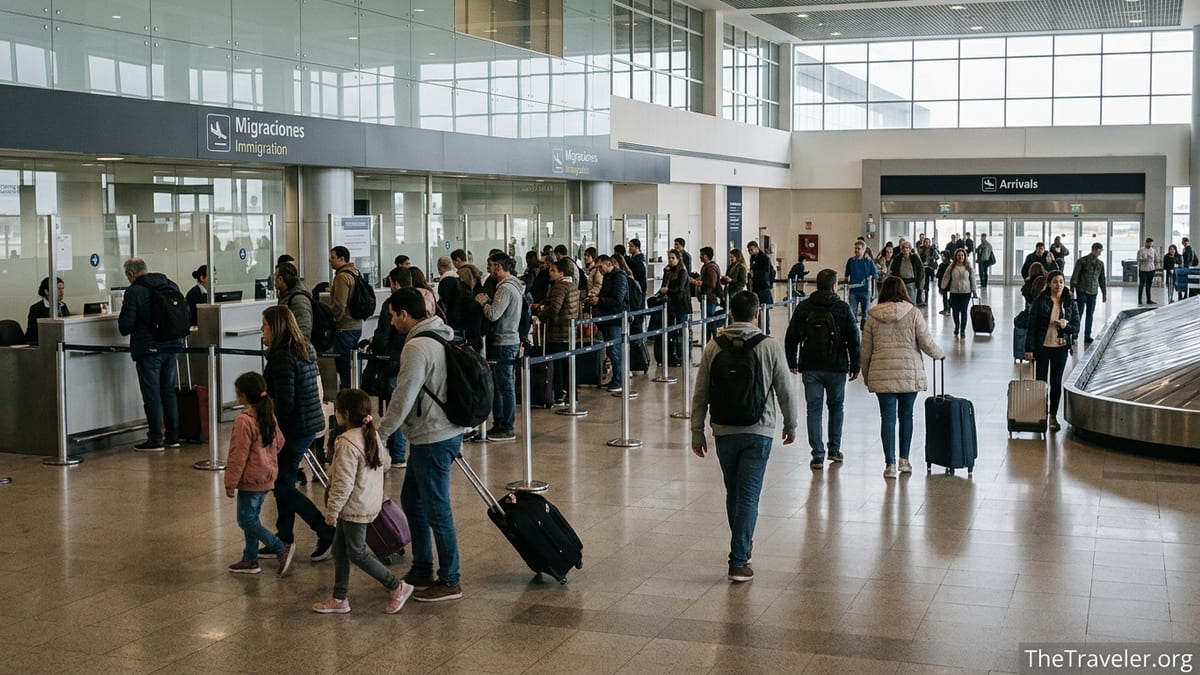
First Impressions: What Ezeiza Is Like on Arrival
Ezeiza International Airport, officially Ministro Pistarini International Airport, is Argentina’s main international gateway and sits about 22 kilometers from central Buenos Aires. Most long-haul flights from North America and Europe arrive here, which means that immigration and customs are designed for heavy international traffic. The arrivals experience feels more like a busy regional hub than a mega-hub such as London Heathrow or New York JFK, but at peak times the queues can still be substantial.
Arriving passengers disembark directly into the international arrivals area and follow clear bilingual signage in Spanish and English to “Migraciones / Immigration” and “Arrivals.” The corridor from the aircraft door to passport control is straightforward, and you will pass information screens showing baggage carousel numbers, plus restrooms along the way. If your flight parks at a remote stand, you may be taken by bus to the terminal, which can add 5 to 15 minutes before you even reach the immigration hall.
Most major carriers serving Buenos Aires, including Aerolíneas Argentinas, American Airlines, Delta, United, Air France and Iberia, tend to arrive in tightly packed banks in the early morning and again in the late afternoon or evening. When two or three widebody flights land within minutes of each other, the immigration hall fills quickly. This is why two travelers landing on different days at the same time can have very different experiences: one might breeze through in half an hour, while another spends well over an hour in line.
Over the last couple of years, the airport operator and Argentina’s National Directorate of Migration have invested in upgraded technology and additional booths to speed up processing. Automated e-gates are available for some passport holders, and more desks are opened during busy arrival waves. This has helped keep average wait times manageable, but travelers should still be prepared for bottlenecks during the morning rush.
Passport Control: How Long to Expect at Immigration
Passport control is the first major checkpoint after you leave the aircraft. You will enter a large hall divided into lanes for Argentine citizens, Mercosur nationals and foreign visitors. Electronic gates are available for some eligible passports, but many travelers will still need to line up for a staffed immigration booth. Officers typically check your passport, entry eligibility, and sometimes your return or onward ticket and accommodation details.
Based on recent crowd-level data shared by independent Ezeiza guides that track real passenger flows, immigration waits in the morning peak between roughly 7:00 and 10:00 can often range from about 30 minutes to 1 hour 15 minutes. In practical terms, a 7:30 arrival from Miami that lands on time might see you in line for 45 minutes, whereas if you land behind two Europe-origin flights, you could be closer to the upper end of that range. Midday and early afternoon tend to be calmer, with some travelers reporting they clear passport checks in under 25 minutes.
Evening and late-night banks around 18:00 to 23:00 are variable. Some days, particularly outside major holiday periods or long weekends in Argentina, lines can be moderate and move steadily. On other days, when multiple flights from Europe, Chile or Brazil arrive together, the queues can resemble the morning rush. As a rule of thumb, most recent traveler reports place typical immigration processing somewhere between 20 minutes in very light periods and 75 minutes at the busiest times, with around 40 to 50 minutes a realistic expectation for a long-haul arrival.
To avoid unnecessary delays at the booth itself, make sure your arrival card (if provided on the plane) is fully completed, keep your passport open at the photo page, and have any supporting documents ready. For example, if you are a US traveler entering visa-free as a tourist, have your return ticket and the address of your first hotel in Buenos Aires handy so you can respond quickly if the officer asks. Families are usually processed together, which can be more efficient, but it also means that the officer may spend a few extra minutes scanning multiple passports and confirming details for minors.
Baggage Claim and Customs: From Carousel to Exit
After passport control, you proceed down to the baggage reclaim hall. Screens clearly list flight numbers with assigned carousels, and the layout is compact compared with larger hubs, so walking distances are short. Bags from international long-haul flights typically begin appearing within about 20 to 40 minutes after landing, although it can be longer if the aircraft parked remotely or if you arrived during a busy wave when several widebody flights are being unloaded at once.
In practice, your time at baggage claim often overlaps with immigration wait times. For example, if you land from New York at 9:00, spend 50 minutes in the passport queue and reach the carousel at 9:50, your bags may already be circulating or about to appear, minimizing further waiting. On a quieter afternoon arrival where you clear immigration in 20 minutes, you might instead spend another 20 minutes waiting at the belt. Most recent experiences suggest that from leaving the aircraft to walking away with your luggage, 45 to 75 minutes is common, extending to around 90 minutes at particularly congested times.
Once you have your bags, you head toward customs. The layout is conventional: you roll your luggage through a final checkpoint where customs officers may either wave you through, ask some brief questions or direct you to the inspection area for x-ray scans. Argentina operates a standard green-channel / red-channel style system in practice, but even those who have nothing to declare may be asked to put their bags through a scanner. On an average day, this adds 5 to 15 minutes unless there is an unusually long queue or you are selected for a more detailed inspection.
Travelers bringing high-value electronics, professional camera gear or large quantities of items that could be considered commercial should allow for more time in case customs asks questions. For instance, if you are arriving with several brand-new laptops sealed in boxes, you may be pulled aside to explain whether they are for personal use or resale. Most leisure travelers with typical luggage contents experience a straightforward passage and are in the public arrivals hall shortly after clearing the scanners.
Peak Arrival Periods and Seasonal Surges
While exact daily patterns shift with airline schedules, a few broad trends hold true. The heaviest pressure on immigration and baggage systems tends to occur during the first major morning bank between about 7:00 and 10:00, when many overnight flights from North America and Europe arrive. A second busy window often appears in the early evening, particularly between 17:00 and 21:00, when some return services from regional South American hubs and additional long-haul flights land.
Seasonality also has a clear impact on wait times. During the Southern Hemisphere summer, roughly December through February, both international tourists and Argentine residents traveling abroad boost passenger numbers. Around Christmas and New Year, and again in late January when many Argentines return from holidays, immigration halls can feel crowded from early morning until late evening. If you are landing on dates such as late December, early January or during major local holiday weekends, building extra buffer time into your plans is sensible.
Conversely, shoulder months such as May or early September often see lighter loads. A traveler arriving from Madrid on a midweek afternoon in May might find only a short line at passport control and wait 20 to 30 minutes total before reaching baggage claim. Business-heavy days like Mondays and Fridays can swing either way: sometimes they are smooth because there are fewer leisure travelers with multiple bags, other times they coincide with full flights and long queues.
Weather and operational disruptions add another layer of unpredictability. Heavy storms around Buenos Aires can cause temporary ground stops or diversions, leading to several delayed flights landing over a compressed window once conditions improve. In these scenarios, normally moderate queues can balloon. Because of these variables, experienced travelers to Argentina often talk in ranges rather than guarantees: for a typical long-haul arrival they plan on one to one and a half hours from door-open to exiting customs, then build extra time around that if they have onward travel.
How Long to Allow Before Onward Flights and City Transfers
The most important planning question for many passengers is how much time to allow between landing at Ezeiza and their next leg, whether that is a domestic flight, a regional connection or an onward coach or private transfer into the city. For connections on a single ticket, airlines set minimum connection times based on historical performance and will usually rebook you if delays cause a missed connection. Even then, a realistic buffer is wise, especially if you are traveling during Argentina’s peak summer months.
For international arrival to domestic departure at Ezeiza on separate tickets, many recent guides and travelers suggest treating three hours as a sensible minimum. That three-hour window needs to accommodate taxi-in, passport control, baggage claim, customs, walking to the check-in area, dropping bags with your domestic airline, clearing security and reaching the gate. For example, if you arrive from Miami at 7:30 and plan to catch a separate-ticket domestic flight at 10:30, you would have exactly three hours. If the inbound lands on time and lines are average, you can usually make it, but a 45-minute delay or an unusually long immigration queue could put you under real pressure.
If your onward flight leaves from Aeroparque Jorge Newbery, the city’s domestic airport near downtown, you need to factor in ground travel between airports. In light traffic, the drive from Ezeiza to Aeroparque can be around 45 minutes to an hour, but at rush hour or during protests and road incidents it can stretch well beyond that. Many frequent travelers recommend planning for at least four to five hours between scheduled arrival at Ezeiza and departure from Aeroparque if you have checked baggage, and more if you do not want any stress. For example, landing at 8:00 and booking a domestic departure from Aeroparque at 13:00 or 14:00 generally feels comfortable.
For international connections departing again from Ezeiza, the conservative local habit of arriving at the airport around three hours before an international flight still holds. That means if you land on one airline and depart on another on separate tickets, you should ideally have a buffer of at least four hours between scheduled arrival and departure to cover arrival processing plus recommended early check-in. A traveler arriving from Santiago at 11:00 and catching an evening long-haul flight at 16:00, for instance, would usually have enough room even with moderate delays at immigration or baggage claim.
Realistic Timing Scenarios: From Plane Door to Taxi
Because conditions are variable, it helps to walk through realistic scenarios rather than rely on averages alone. Consider a common case: a long-haul flight from New York scheduled to land at 9:00. The plane touches down on time, but spends 10 minutes taxiing and waiting for a gate. You step off at 9:15, reach immigration at 9:25 and find a moderate queue. It takes 40 minutes to clear, so you are in baggage claim by 10:05. Your bags appear within 15 minutes, and customs adds another 10 minutes. By around 10:30, you are walking into the public arrivals hall, roughly 75 minutes after the aircraft door opened.
Now consider a tighter morning wave. You arrive from Madrid at 8:00, but two flights from the United States have just landed and another widebody from Europe is on final approach. The corridor to immigration is busy, and it takes a few extra minutes just to funnel into the correct lane. Once in the hall, you see lines nearly filling the space. In this case, it would not be surprising to spend a solid hour or more in the queue, exiting immigration closer to 9:20. If baggage handling is also under strain and bags take 30 minutes to reach the carousel, you might not clear customs until around 9:50 or 10:00, nearly two hours after landing.
On the other end of the spectrum, a shoulder-season arrival at an off-peak time can be remarkably smooth. Imagine a midweek afternoon flight from São Paulo landing at 14:00 in May. With fewer arrivals around you, passport control might take only 15 to 20 minutes. If you have hand luggage only, you could be through customs and in the arrivals hall by 14:30. Even with a checked bag, your total time might be 40 to 50 minutes. These are not guarantees, but real-world patterns travelers have reported over recent months.
For planning ground transfers into Buenos Aires, it is sensible to add at least 30 minutes of buffer beyond your best estimate of airport processing time. If you are booking a private car to pick you up, for example, and you land at 9:00 on a transatlantic flight in high season, telling your driver to expect you around 10:45 or 11:00 is reasonable. If traffic into the city is heavy, the drive itself can take 45 minutes to over an hour, so door-to-door from plane landing to hotel check-in in the city center can easily be two and a half to three hours.
Tips to Reduce Stress at Ezeiza Arrivals
While you cannot control how many flights land at the same time as yours, there are a few practical steps that make the arrivals process at Ezeiza smoother. Before you fly, double-check that your passport has sufficient validity for Argentina’s entry rules and that you have any necessary visas or documentation. Airlines occasionally deny boarding to passengers with incomplete paperwork, which is far more disruptive than any immigration queue.
On board, complete any arrival forms promptly and keep essential documents together in one easy-to-access pouch. When the seatbelt sign switches off, do not rush the aisle, but move with purpose once your row is called to disembark, especially if you know several large aircraft are landing around the same time. Reaching immigration even five or ten minutes ahead of the main crowd can make a noticeable difference to your wait.
If you are traveling with only carry-on luggage, you gain flexibility. You can walk straight from passport control to customs and out to the arrivals hall without waiting at a carousel, which can cut total time significantly. For instance, a hand-luggage-only traveler on a calm day could feasibly go from aircraft door to curbside in under 40 minutes. If checked luggage is unavoidable, pack valuables and an overnight change of clothes in your cabin bag in case baggage delivery is slow or your suitcase is delayed.
Finally, build realistic buffers into your plans. Resist the temptation to book a tight domestic connection on a separate ticket or schedule a non-refundable train or long-distance bus within an hour or two of landing. Many seasoned visitors to Argentina treat the day they land at Ezeiza as an arrival day only: they head into the city, rest, and take domestic flights or long-distance buses the following day. This approach eliminates much of the stress around variable immigration and customs wait times.
FAQ
Q1. How long does it usually take to clear immigration and customs at Ezeiza?
In normal conditions, most travelers take around 60 to 90 minutes from aircraft door to exiting customs, including passport control, baggage claim and a brief customs check.
Q2. What are the busiest times for arrivals at Ezeiza?
The main peak is typically between about 7:00 and 10:00 in the morning when many overnight long-haul flights land, with a second busy window in the early evening.
Q3. Is a two-hour connection at Ezeiza enough after an international flight?
Two hours can be risky, especially on separate tickets. A three-hour window is a safer minimum to allow for immigration, baggage, customs and security for your next flight.
Q4. How much time do I need to connect from Ezeiza to Aeroparque?
Plan for at least four to five hours between your scheduled arrival at Ezeiza and departure from Aeroparque, to cover airport processing, traffic and domestic check-in.
Q5. Are there automated e-gates at passport control in Ezeiza?
Yes, there are automated e-gates for some eligible passport holders, but many travelers will still use staffed booths, so you should be prepared for queues.
Q6. How long do bags usually take to arrive on the carousel?
Checked baggage from international flights typically appears within 20 to 40 minutes, though it can be longer during busy arrival waves when several widebody flights land together.
Q7. Will customs inspect all my bags at Ezeiza?
Most passengers simply pass bags through an x-ray scanner and are waved through. Detailed inspections are selective and usually focus on unusual or high-value items.
Q8. What if my flight arrives very late at night or early morning?
Late-night and very early-morning arrivals can be calmer, but if several flights are bunched together, you may still see queues. Processing is generally faster than in the main morning rush.
Q9. How much time should I allow before booking a car into Buenos Aires?
For a long-haul arrival in busy periods, assume around 90 minutes from landing to exit, then add a 30-minute buffer when telling your driver what time to expect you.
Q10. Is it realistic to arrive and take a domestic flight the same day?
Yes, but allow generous margins. Many travelers successfully connect the same day, but booking at least three hours after landing at Ezeiza, or longer in peak season, reduces stress.