


More news on this day
The Federal Aviation Administration is extending a directive that limits scheduled flights at Chicago O’Hare International Airport by roughly 10 percent through October 2027, a move intended to curb chronic congestion and reduce delays at one of the country’s busiest hubs.
Get the latest news straight to your inbox!
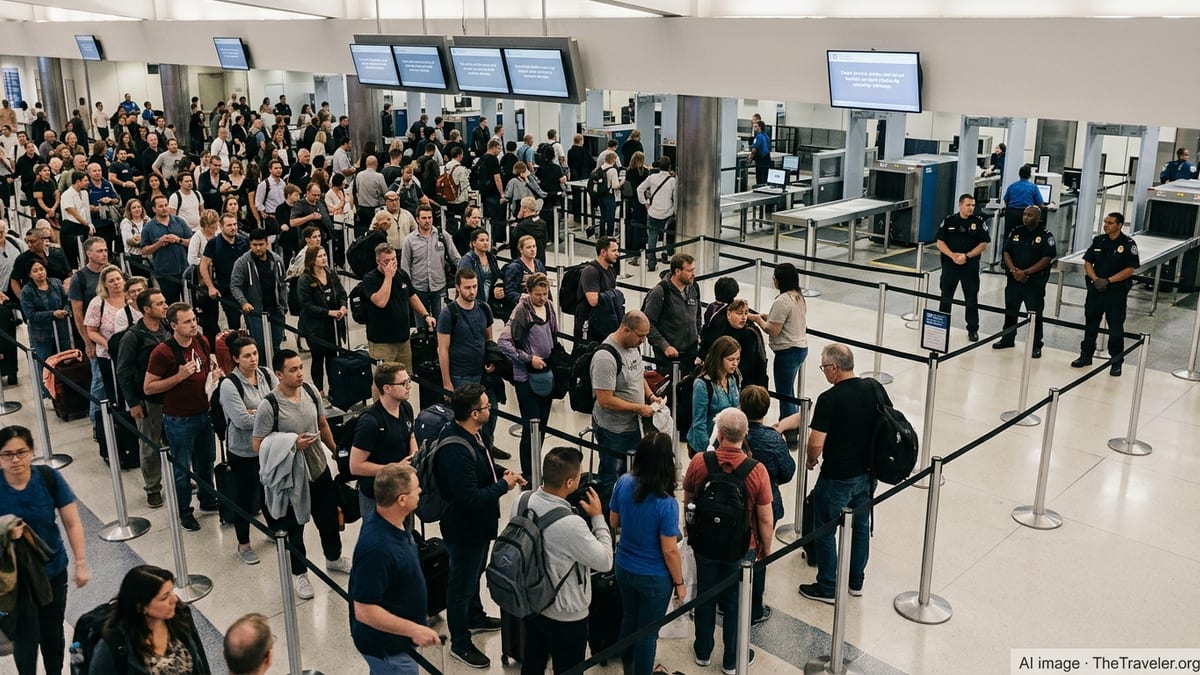
Longer Flight Caps Aim to Tackle Persistent Delays
Publicly available federal notices and recent industry coverage indicate that the extended cap will hold O’Hare’s daily flight schedule below what airlines had originally planned for the peak travel periods. The directive effectively continues a summer 2026 requirement that carriers trim operations by about 10 percent from proposed levels, converting what began as a seasonal adjustment into a multi‑year effort running through the end of October 2027.
The restrictions are described as a way to align airline schedules with the airport’s practical capacity, taking into account air traffic control staffing, runway throughput, and terminal constraints. Previous Federal Register notices on O’Hare operations show that similar caps have been used in earlier years when schedules were deemed likely to overwhelm the system, leading to cascading delays across the national network.
Reports indicate that the latest extension continues to target peak daytime and early evening hours, when demand at O’Hare is heaviest and congestion most acute. By flattening those peaks, aviation planners hope to shorten taxi times, reduce airborne holding, and lower the risk that relatively minor disruptions escalate into hours‑long delays for passengers.
The directive does not change O’Hare’s status as a major connecting hub. Instead, it seeks to spread traffic more evenly throughout the day and across seasons, with the expectation that a slightly smaller but more reliable schedule will be preferable to frequent last‑minute cancellations and missed connections.
Impact on Airlines and Route Maps
Major hub carriers at O’Hare, particularly United Airlines and American Airlines, are expected to bear the brunt of the extended limits, since they operate the largest banks of flights at the airport. Earlier coverage of the summer 2026 cuts described how airlines responded by trimming some regional routes, consolidating frequencies between nearby cities, and shifting certain connections to other hubs in their networks.
Industry reports suggest a similar pattern is likely to continue as the cap remains in place through 2027. Airlines may prioritize higher‑yield business routes and long‑haul international services from O’Hare while reducing the number of daily departures on shorter regional segments that can be served from alternative hubs. In some cases, travelers who once flew nonstop to Chicago may be rebooked through cities such as Dallas, Charlotte, Denver, or Washington, depending on carrier.
The extended directive is also expected to influence how airlines schedule aircraft and crews. With the number of peak‑time movements constrained, carriers may upgauge to larger aircraft on select routes to maintain capacity without adding more flights. That approach can mitigate the impact of the cap but may also lead to less schedule flexibility for passengers accustomed to multiple daily departure times.
Low‑cost and ultra‑low‑cost carriers that operate at O’Hare in smaller numbers could face tighter competition for scarce peak slots, which might push some of their flying to off‑peak hours or to Midway International Airport. Analysts note that any such shifts could subtly change the balance of domestic and international traffic at O’Hare over the next two years.
What Passengers Can Expect Through 2027
For travelers, the most visible change may be fewer flight options at the busiest times of day, especially on popular business routes. Advance schedule data already show flatter peak banks and more spread‑out departure times on some corridors. While that can mean less choice in departure hour, it is intended to translate into more on‑time departures and arrivals.
Passengers connecting through O’Hare may see slightly longer layovers built into itineraries as airlines adjust their banks to fit within the cap. Carriers are expected to focus on preserving key connection windows for transcontinental and international flights, but the days of extremely tight connections at the height of the evening rush may become less common.
Travel advisers note that travelers flying to or from O’Hare during the summer and holiday peaks should pay extra attention to schedule changes, as airlines continue to refine their operations under the extended limits. Rebookings and minor time shifts may be more frequent as carriers try to keep their schedules compliant while reacting to demand trends and operational challenges.
At the same time, aviation planners argue that a more realistic schedule, even with fewer daily flights, should reduce the risk of prolonged delays caused by overtaxed ground operations or air traffic control. If the directive achieves its goals, passengers may trade a bit of schedule flexibility for more predictable travel over the next several seasons.
O’Hare’s Role in the National Airspace System
Chicago O’Hare has long been one of the most critical nodes in the United States air transportation network, with delays in Chicago often rippling across multiple time zones. Academic studies and past government analyses of delay propagation have frequently cited O’Hare as a prime example of how congestion at a single hub can affect flights across the country.
The decision to keep the 10 percent cap in place through October 2027 reflects concerns that the current pace of traffic growth, combined with infrastructure and staffing realities, could once again push O’Hare to the edge of its operating envelope. By restraining schedule growth, the FAA aims to protect not only the reliability of flights to and from Chicago, but also the stability of the wider system.
The extended limits come at a time when air travel demand remains strong, and many airports are pressing ahead with terminal and runway projects. O’Hare itself continues a multi‑year modernization program to improve gate layout, terminal capacity, and airfield efficiency. Observers note that keeping a lid on schedules while these projects advance could help the airport avoid severe growing pains.
How effective the restrictions prove to be will likely be a focus of attention for airlines, local officials, and passenger advocates. Performance metrics such as on‑time arrival rates, average delay minutes, and cancellation levels at O’Hare over the next several peak travel seasons will offer a clearer picture of whether the 10 percent cut, now extended through 2027, has delivered the reliability improvements that planners intend.