


More news on this day
Air traffic control provider NAV Canada is warning travelers of delays at Montreal Pierre Elliott Trudeau International Airport after an Air Canada Boeing 737 Max operating flight AC774 from Los Angeles veered off a taxiway and came to rest on a grassy area following landing.
Get the latest news straight to your inbox!
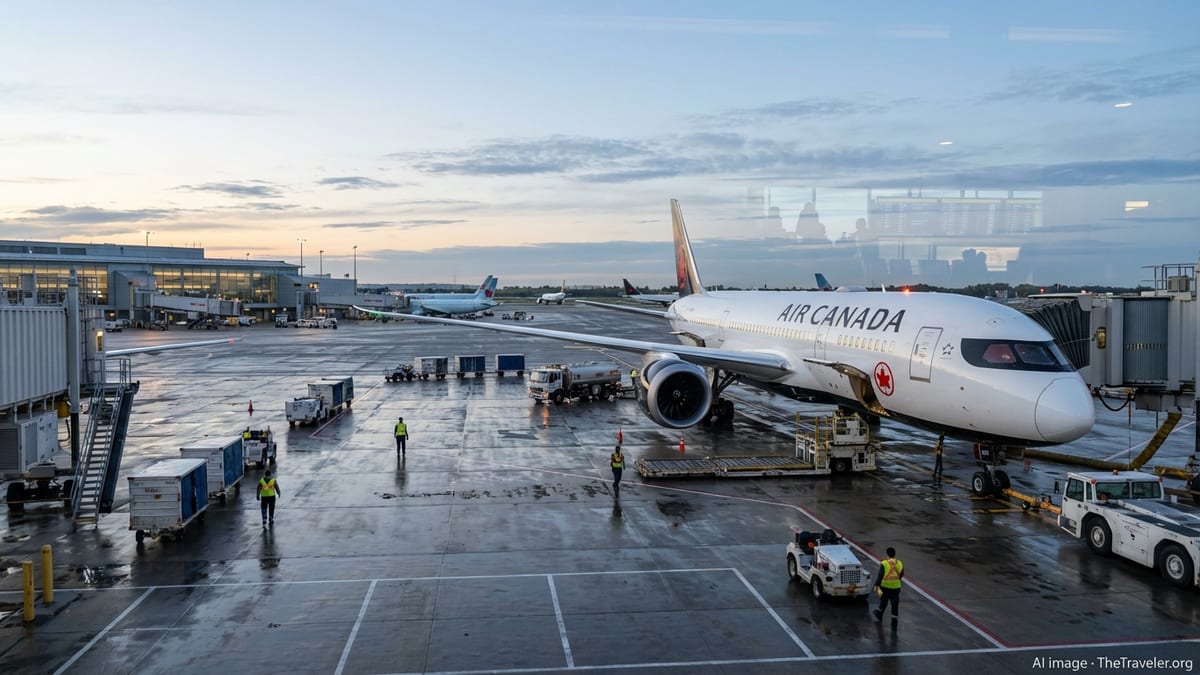
Incident Involving Flight AC774 at Montreal Trudeau
Publicly available information indicates that the incident occurred on the afternoon of July 9, 2026, when flight AC774 touched down normally at Montreal Trudeau before leaving the paved taxiway during its rollout. The aircraft, identified in aviation tracking data as a Boeing 737 Max 8, came to a stop on grass adjacent to the taxiway rather than on the runway itself.
Reports from Canadian and international news outlets describe the event as a taxiway excursion rather than a runway overrun. Images shared on social media and in local coverage show the aircraft stationary with its landing gear on uneven grassy ground, surrounded by airport emergency vehicles and maintenance crews.
According to published coverage, no fire, structural breakup, or fuel spill was observed, and the aircraft remained upright. The situation nonetheless prompted a rapid response from airport services and required a careful, staged deplaning process to move passengers safely back to the terminal.
Airport-focused reporting notes that the excursion occurred in the context of ongoing airfield works around Montreal Trudeau’s taxiway system, although there is currently no confirmed link between those projects and the path taken by the aircraft after landing.
Passenger Experience and Immediate Operational Impact
Accounts from travelers shared in media reports and on aviation forums suggest that passengers remained on board for an extended period while crews assessed the condition of the aircraft and the surrounding ground. Some travelers described waiting for mobile stairs and buses to be positioned in the grassy area so they could disembark without using the terminal’s jet bridges.
Subsequent reports indicate that all passengers and crew were eventually transported to the terminal, with no injuries reported. Medical personnel and airport teams were on scene as a precaution, but there have been no indications of serious medical issues linked to the event.
The removal of the aircraft from the grass required additional time, specialized ground equipment, and coordination between the airline, airport operator, and technical staff. This recovery effort limited the availability of certain taxiway segments and added complexity to ground movements for other aircraft.
Travelers scheduled to depart or arrive at Montreal Trudeau in the hours following the excursion reported delays and gate changes. Some flights appeared to wait for access to the main runway system, while others were repositioned as airport staff reconfigured traffic flows around the affected area.
NAV Canada Issues Delay Advisory for Montreal Airspace
Following the excursion, NAV Canada, the company responsible for air traffic control services across Canada, issued an advisory warning of operational delays at Montreal Trudeau. The advisory, referenced in aviation and travel industry reports, indicated that the event and the resulting airfield constraints could affect both arrivals and departures for a period after the incident.
NAV Canada communications seen in public notices typically highlight that such advisories are meant to help airlines, pilots, and passengers anticipate longer taxi times, holding patterns, and possible flight schedule adjustments. In this case, the taxiway excursion added to an already busy summer travel period, increasing the chance of knock-on disruptions.
Airline schedule data and traveler reports suggest that some flights into Montreal experienced extended arrival sequences, while certain departures were held at gates or on aprons as controllers managed traffic around the restricted area. The extent of the impact has varied by route and time of day, with peak travel periods most affected.
Published flight-tracking information shows that subsequent AC774 services between Los Angeles and Montreal have continued to operate, indicating that the incident has not resulted in a long-term suspension of the route. However, short-term schedule adjustments and aircraft substitutions remain possible as the airline manages inspections and maintenance for the aircraft involved.
Safety Record and Ongoing Investigation
Public statements from the airline and coverage by Canadian news organizations emphasize that there were no reported injuries among the passengers or crew, and that the aircraft’s landing was considered otherwise normal before the taxiway excursion occurred. In aviation safety terms, such events are often categorized as runway or taxiway excursions, which are subject to detailed technical reviews.
According to aviation safety practices, occurrences of this type typically trigger an internal investigation by the airline and possible review by Canadian transport and safety authorities. Key areas of focus generally include runway and taxiway conditions, braking performance, steering systems, and flight crew decision making during rollout and turnoff.
Specialist media covering the incident note that Montreal Trudeau has undergone a series of airside infrastructure projects this year, including work on taxiways referenced in NAV Canada aeronautical supplements. While no causal link has been established in public reporting, investigators are expected to consider airfield layout, signage, and surface conditions at the time of landing.
For travelers, the incident serves as a visible reminder that even non-injury events can have a meaningful impact on airport operations. Industry analysts quoted in broader coverage of runway excursions often point out that the majority of such events are resolved without harm to passengers, while still driving ongoing improvements in training, procedures, and infrastructure.
What Travelers Through Montreal Should Expect
In the wake of NAV Canada’s delay warning, passengers flying through Montreal Trudeau over the coming days may continue to encounter occasional disruptions as airport and airline operations normalize. Travel advisories recommend allowing extra time for connections, especially during busy afternoon and evening banks when transcontinental and international flights are concentrated.
Airline guidance shared in public channels typically encourages passengers to monitor their flight status through official apps or airport displays and to be prepared for gate changes or revised departure times. Even after the aircraft involved in the excursion is removed from the grass, lingering effects on schedule reliability can persist as airlines reposition crews and equipment.
Travel industry observers note that Montreal Trudeau has faced several recent periods of operational strain related to weather, infrastructure work, and high seasonal demand. The taxiway excursion involving AC774 adds another layer of complexity to managing traffic at one of Canada’s busiest international gateways.
For now, available information suggests that the primary impacts are schedule related rather than safety related. As investigations proceed and any findings are made public, the focus will likely shift from immediate delays to longer-term lessons for airfield design, aircraft handling procedures, and communication with passengers during irregular operations.