


More news on this day
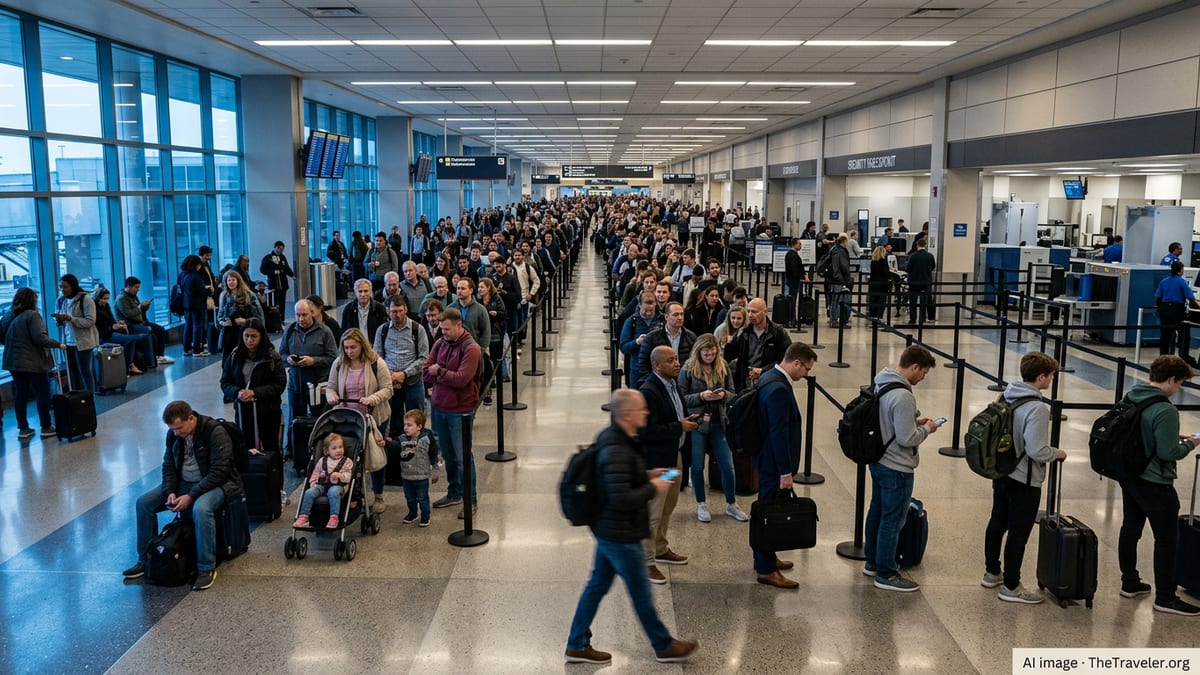
Passengers across Southern California are still grappling with cascading delays and cancellations after a rare nationwide Federal Aviation Administration ground stop halted flights Friday and left terminals at Los Angeles International Airport and other regional hubs overflowing, even as the order has since been lifted.
Get the latest news straight to your inbox!
Ground stop lifted after four hours, disruption lingers
According to a public statement from the Federal Aviation Administration, the nationwide ground stop was issued on Friday, November 13, 2026, after communication issues affected multiple Air Route Traffic Control Centers that manage high-altitude traffic across the United States. The measure temporarily halted departures nationwide as controllers worked to restore stable communications.
Published coverage from national outlets indicates that the halt lasted a little over four hours before the FAA began allowing flights to resume on Friday evening. This marked one of the most significant interruptions to U.S. air travel since the attacks of September 11, 2001, and the first coast-to-coast grounding since a January 2023 outage involving a critical pilot-notice system.
Once the ground stop was lifted, traffic did not immediately return to normal. Airlines had to re-sequence hundreds of flights, reposition aircraft and crews, and accommodate passengers who were already at airports or stranded on diverted flights. Industry tracking sites on Saturday showed continued congestion in major hubs, including those in Southern California.
By early Saturday, November 14, departures and arrivals were operating again at major U.S. airports, but passengers with flights during peak Friday and Saturday windows continued to report significant delays, equipment changes, and last-minute cancellations across multiple carriers.
Southern California airports hit hard
Los Angeles International Airport reported that departures were suspended during the nationwide ground stop, with flight information displays showing widespread delays and a growing list of canceled services. Local broadcast coverage from Los Angeles described crowds filling concourses and seating areas as travelers waited for updates while aircraft and crews remained out of position.
Regional airports including Hollywood Burbank, Ontario International, and John Wayne Airport in Orange County were also affected. Reports from Southern California outlets indicated that passengers at these facilities faced the same uncertainty as those at LAX, with some deciding to abandon trips altogether after learning that their flights had been delayed for hours or removed from schedules.
Los Angeles-based coverage described aircraft parked on taxiways and remote stands as LAX approached the limits of available gates and parking positions while the ground stop was in place. Some aircraft arriving from other cities reportedly waited on the tarmac for open gates, contributing to longer onboard delays for travelers who had technically landed but were unable to disembark.
Although most Southern California airports resumed operations after the FAA lifted the order, the backlog of aircraft and the complex web of connecting flights meant that the region continued to see elevated disruption into Saturday. Passengers booked on early morning departures sometimes found that crews had exceeded duty limits or that inbound aircraft had not arrived in time for scheduled turnarounds.
What travelers at LAX and nearby airports are experiencing
Coverage from regional newspapers and television stations on Friday night and Saturday morning described scenes of long lines, full gate areas, and travelers attempting to rebook at customer service counters as call centers and airline apps struggled to keep up with demand. Some passengers at LAX and Burbank reported spending much of the evening in terminals seeking alternative routings through less congested hubs.
Publicly available flight data showed heavy delays on transcontinental services, as well as on shorter intra-California routes such as Los Angeles to San Francisco and Sacramento. Travelers connecting through LAX to international destinations often faced missed connections, and in some cases were rebooked a day or more later, depending on airline capacity and available seats.
Passengers flying into Southern California also experienced ripple effects. Reports indicate that some inbound flights were diverted to other airports during the ground stop window, while others departed hours late from their origin cities, compressing Saturday morning schedules and tightening already short connection times.
For travelers currently holding reservations through LAX, Ontario, Burbank, Long Beach, or John Wayne, published advice from airlines and travel experts emphasizes regularly checking flight status, enabling notifications in airline apps, and arriving early, since security and check-in queues may remain longer than usual as airlines work through the backlog.
Technical issue behind the rare nationwide halt
In its statement on the event, the FAA linked the nationwide ground stop to communications failures affecting multiple regional control centers that manage en-route traffic across the national airspace system. Coverage from Washington-based outlets has described the issue as a widespread systems problem impacting how information flows between facilities, rather than a localized failure at a single tower or airport.
Transportation coverage on Friday and Saturday highlighted the rarity of the action. Nationwide halts have occurred only in extraordinary circumstances, including the immediate aftermath of the September 11, 2001 attacks and the January 2023 outage involving the Notice to Air Missions system. Analysts quoted in national reporting noted that the decision to stop departures across the country reflects the scale of the communications instability that regulators were facing.
While early political commentary has focused on responsibility for the outage and the resilience of aviation infrastructure, technical specialists cited in published reports emphasized that restoring reliable communications and safely sequencing thousands of flights in the sky and on the ground took priority over schedule integrity. That emphasis on safety helps explain why delays and cancellations stretched well beyond the moment the ground stop was formally lifted.
As of Saturday afternoon, official websites and statements acknowledged the disruption but did not yet provide a detailed public breakdown of the root cause or a final timeline for a full technical report. Lawmakers and aviation-focused committees have signaled interest in hearings and further review of the systems at the center of the failure.
What passengers should know if flying this weekend
Published guidance from airlines serving Southern California suggests that travelers whose flights were canceled because of the nationwide ground stop should be able to rebook without change fees, although specific policies vary by carrier and ticket type. Some airlines have posted travel waivers covering trips through affected dates, allowing passengers to move their journeys within a limited window without additional charge if they keep the same origin and destination.
For those departing from LAX and other SoCal airports on Saturday or Sunday, publicly available information indicates that schedules are operating but remain fragile. Travelers may find that departure times continue to shift throughout the day as aircraft arrive late or crew schedules are adjusted. Checking in online, monitoring airline apps frequently, and confirming gate assignments upon arrival at the airport can help reduce surprises.
Airport authorities in Los Angeles have recently highlighted ongoing construction and roadway changes around the central terminal area, which can add time for drop-off, pick-up, and transfers between terminals. With residual disruption from the ground stop still working through the system, allowing extra time to reach the airport and clear security is likely to be prudent for at least the next day.
While conditions are expected to gradually stabilize as airlines complete repositioning of aircraft and crews, the size of the U.S. air network means that some irregular operations may persist into the remainder of the weekend. Travelers with flexible plans may wish to consider later departures or alternative routings, while those with essential trips are being encouraged through published advisories to stay closely engaged with real-time updates from their airlines and airports.